
Starting a business means getting comfortable running in several directions at once. Most entrepreneurs figure out product, marketing, and sales early on - but taxes tend to become an afterthought until they become a problem. Here's what trips up new business owners most often, and how to get ahead of it.
What Do You Call Your "Guys Trips"?
- Quarterly estimated payments are due April 15, June 15, September 15, and January 15 - set the reminders now, because the underpayment penalty accrues by the day, not by the year.
- The safe harbor rule: pay in at least 100% of last year's total tax (110% if your adjusted gross income topped $150,000) and you avoid underpayment penalties even if this year's bill comes in higher.
- Collect a W-9 from every contractor before their first payment - the 1099 reporting threshold rose from $600 to $2,000 for 2026 payments, but you still need the paperwork on file for anyone who might cross it.
- Most states now trigger economic nexus around $100,000 in annual sales into that state - track where your revenue comes from, not just how much.
- Keep receipts and records for at least three years after filing - the IRS's standard audit window - and six if income was ever substantially underreported.
Tax Planning Should Start Before You File Your First Return
Most new business owners think about taxes once a year, usually in a panic sometime in March. That's the mistake.
Tax strategy isn't a filing exercise - it's an ongoing decision framework that affects how you structure your business, when you make purchases, and how you pay yourself. A good CPA who works with small businesses isn't just someone who fills out forms. They help you understand which entity structure - sole proprietor, LLC, S-Corp - minimizes your effective tax rate as revenue grows. That conversation is worth having in year one, not year three.
Understanding Debt Resolution Importance is part of that planning too. When tax obligations pile up faster than cash flow, knowing your options before you're in crisis beats figuring it out after the fact.

A Pride of America Cruise Will Change Your View of Hawaii
Pride of America Hawaii cruise review, the only US flagged, large cruise ship to sail in Hawaii.

Guys Night Out Ideas: 35 Fun Activities and Things to Do With The Boys
when planning a guys night out it is essential to focus on planning a night a as unique as the men invited

Highlights Of Thailand In 10 Days
A 10-day Thailand tour covering Bangkok temples, floating markets, an elephant sanctuary and Phuket beaches, ideal for culture and beach lovers.

Explore America's Great Inland Sea On Great Lakes Cruises
There's more to cruising than the west coast cruises we love so much.
Promoted by FlowAds

When quarterly estimates come due during a slow receivables month, a revolving business line of credit can bridge the gap so you avoid penalties; with Crestmont Capital funding flexibility, you can draw only what you need (often within 24-48 hours) with limits up to $500,000 and repay as cash comes in.
The Worker Classification Trap
The gig economy makes it tempting to classify everyone as a contractor. It looks cleaner on paper and saves money in the short run. The IRS doesn't care about convenience.
The question they ask: does your business control how, when, and where that person works? If you're setting hours, providing equipment, and directing day-to-day tasks - that's an employee, regardless of what the contract says. Getting this wrong means back taxes, penalties, and potential liability for the worker's unpaid benefits.
Before you bring anyone on, spend 20 minutes reviewing the IRS's behavioral control test. It's not complicated, and it can save you years of headaches.
What Sloppy Books Cost You
The IRS doesn't accept "I think I spent around that much." Every deduction requires documentation: receipts, invoices, bank statements, mileage logs. No paper trail means no write-off - and in an audit, missing records get interpreted in the government's favor, not yours.
Set up a dedicated business account from day one and run all business expenses through it exclusively. Use accounting software - QuickBooks, FreshBooks, Wave - and reconcile monthly. I've seen more entrepreneurs lose money to disorganized books than to any other mistake on this list. Trying to reconstruct a full year's transactions the week before tax filing is expensive, stressful, and avoidable.
State and Local Taxes: The Bill Most Entrepreneurs Forget to Budget
Federal taxes get all the attention, but state and local obligations can hit just as hard - and they vary dramatically depending on where your business operates.
If you're location-flexible - working remotely from Greece or working from a cruise ship - the picture gets more complex fast. Operating out of multiple states, even temporarily, can create nexus and trigger filing requirements most entrepreneurs don't discover until year-end. Add multi-state e-commerce sales and you're potentially dealing with economic nexus rules in states where you've never set foot.
Know the tax obligations in every state where you have employees, store inventory, or regularly conduct business. If that list is growing, an accountant who specializes in multi-state compliance costs far less than the penalties you'd stumble into without one.
The Prototype Trap: What Vibe Coding Gets Right and Wrong
I'll be honest - I love what AI tools have done for entrepreneurship. I can spin up a working prototype in a weekend now that would have taken a development team three months five years ago. That's real, and it's worth being excited about.
But there's a danger that comes with it, and I've watched enough cycles of tech enthusiasm to recognize the pattern. The term floating around now is "AI psychosis" - the mental state you can fall into when you've been deep in an AI-assisted build session, the thing is working, and your brain starts treating the demo as if it's the product.
It isn't.
The gap between a vibe-coded prototype and something production-ready is where a lot of young entrepreneurs run out of money, time, or both. Security hardening, error handling, compliance requirements, scalability, customer support infrastructure - none of that shows up in an overnight MVP. Neither does the user testing, the iteration cycles, or the unglamorous work of making something reliable enough that strangers will trust it with their data and their money. Budget assumptions built on "I can build this in a weekend" collapse fast when production reality arrives.
Here's what I'd tell any founder who just built something impressive in 48 hours: what you made is evidence that the idea works, not evidence that the product is done. Those are two completely different things - and confusing them is a financial planning mistake as much as it's a technical one.
The good news for those of us with a few miles on us: experience is worth more now than it was a few years ago, not less. I genuinely wasn't sure about that for a while. The combination of knowing how business actually works - process, workflow, marketing, customer behavior - with the ability to prototype rapidly changes the math entirely.
I no longer need 200 hours to build a proof of concept. But I do know what it takes to turn that proof of concept into something real. That knowledge is the bridge between the zeal and the execution, and right now it's one of the most valuable things an experienced operator can bring to the table.
Get the Basics Right Before You Trying To Build Big!
Tax trouble rarely arrives as one big surprise. It accumulates - missed quarterly payments, undocumented deductions, a contractor who probably should have been on payroll. The same is true of product development debt: it compounds quietly until it doesn't.
The fix in both cases is identical - treat compliance and planning as ongoing functions, not annual scrambles, and work with professionals who know what the full picture looks like before you're already behind it. The cost of getting ahead is always a fraction of the cost of cleaning up later.
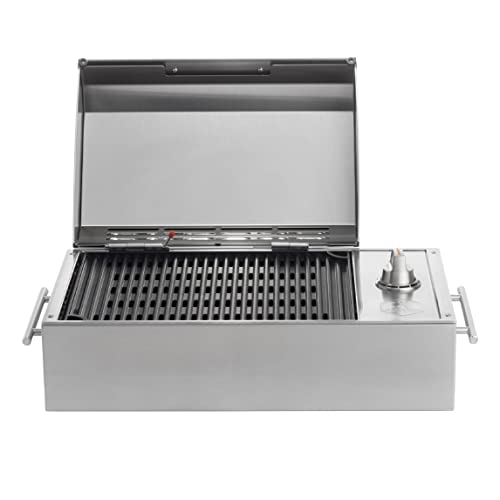
Kenyon City Grill Portable Stainless Steel Electric Grill
Why we picked it: a grill you can actually carry to the campsite, the tailgate or the cabin without borrowing a truck. Stainless, no propane tank to wrestle, and hot enough to cook for four guys rather than reheat for one.



Promoted by FlowAds
