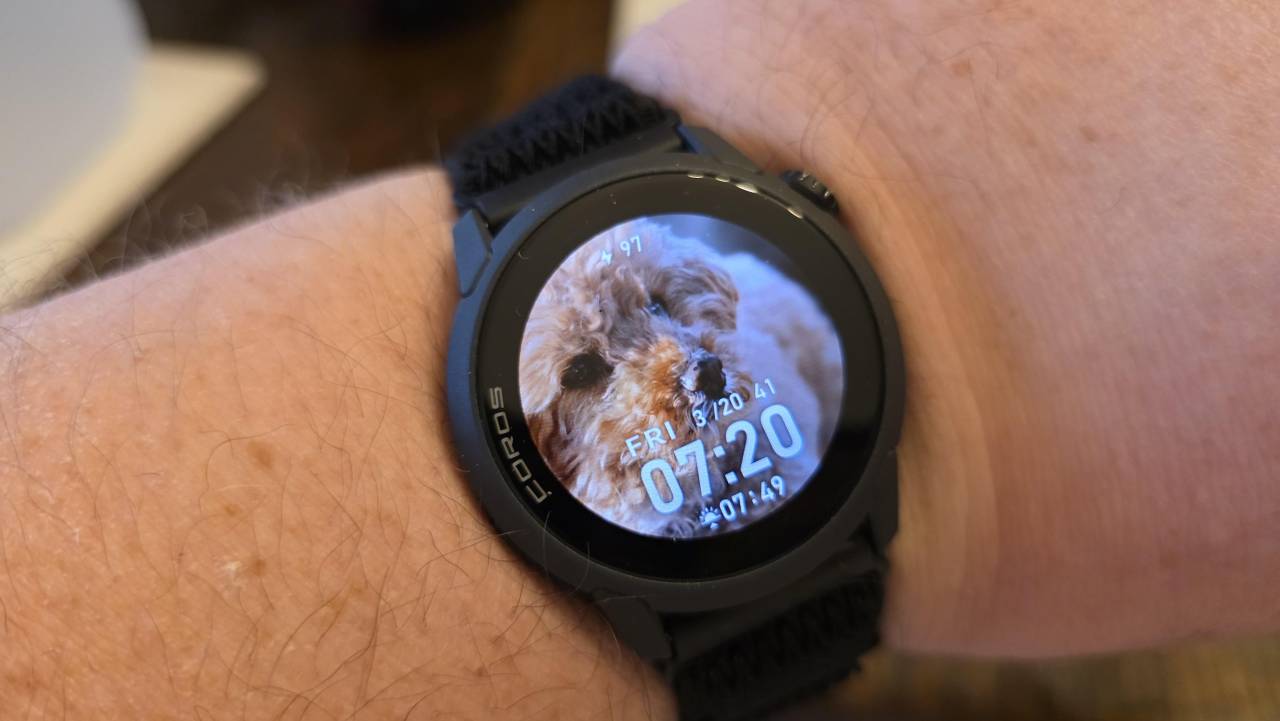
The COROS Pace 4 is a $249 GPS sport watch built for runners. I haven't run a race in my life. Three weeks in, I'm still not taking it off.
The COROS Pace 4 is available directly from COROS at an MSRP of $249, and you can also pick it up on Amazon.com.
- At 32 grams with the nylon band, the Pace 4 weighs less than a standard energy gel — and you can actually feel that difference on your wrist.
- The 1.2" AMOLED display delivers 164% higher resolution than the previous Pace 3 while still hitting 19 days of daily battery life.
- Because the watch doesn't rotate or slip on your wrist, heart rate and step data stay measurably more accurate than readings from heavier GPS competitors.
- The COROS recovery hub tracks sleep stages, HRV, and resting heart rate continuously — making the watch useful on rest days, not just active ones.
- At $249, it undercuts the Garmin Forerunner 165 by $50 while matching or beating it on GPS accuracy and battery life.
32 Grams — And Why That Number Changes Real-Life Accuracy
I've been deep in the smartwatch space lately, and my natural instinct is to reach for something bigger and more powerful — a Samsung Galaxy Watch Ultra, a heavily specced Apple Watch. The COROS Pace 4 pushed back hard on that instinct.
At 32 grams with the nylon band (40 grams with silicone), this watch is measurably, noticeably lighter than most of what I've worn. I also own and have reviewed the COROS Nomad, which comes in at 49g with the nylon band and 61g with silicone — the Pace 4 feels dramatically lighter on the wrist by comparison. That weight difference matters beyond comfort. I've had bigger watches rotate to the side of my wrist just raising a glass at dinner — much less during a workout. When a watch shifts off-center, every optical heart rate and step count reading gets noisier. The Pace 4 stays where you put it, which means the data it collects is consistently from the correct position on your wrist. Most fitness watch reviews skip past this. It's worth understanding.

COROS PACE 4 Ultralight Sport GPS Watch
The COROS PACE 4 is an ultralight GPS sport watch built for runners and athletes who want reliable tracking without extra weight.
Promoted by FlowAds

The Battery Life Nobody Warned Me About
My default assumption about AMOLED displays is that they cost you battery life. That assumption is partly right — but the Pace 4 complicates it in interesting ways. I went deeper on how AMOLED, MIP, and solar displays make different battery compromises in our GPS watch display types breakdown.
The short version here: the Pace 4 delivers 41 GPS hours on a single charge and 19 days of daily use. Mountaineer Journey logged over 50 trail runs and hikes with the Pace 4 and recorded 35+ real-world GPS hours with always-on display and multi-band GPS both enabled — close enough to COROS's spec to trust the number. My Apple Watch needs to come off at night. My other smartwatches need attention every day or two. I wore the Pace 4 through three weeks before I noticed the battery indicator had actually moved. For sleep tracking specifically, that behavioral change matters — you can't track sleep if you're pulling the watch off every night to charge it.
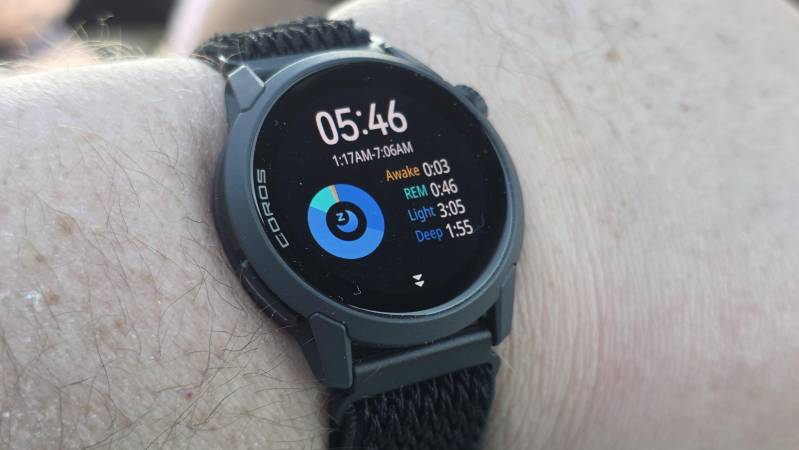
The AMOLED Display Doesn't Look Like a Compromise
Before testing, I assumed the Pace 4's screen would feel budget relative to heavier-hitter watches. It does not. Outside Online — reviewing it squarely for the runner market — called the AMOLED touchscreen "remarkably crisp and fast, if not faster than watches two-to-three times the price." That tracks with what I saw. The 1.2" display responds quickly to swipes and taps, auto-adjusts brightness well enough to read clearly outdoors without manual intervention, and the 11.8mm profile keeps the case flat against your wrist.
That slim profile means it disappears under a shirt cuff, which matters more in professional situations than most watch reviews will tell you.
What It Tracks When You're Not Training for Anything
The Pace 4 is positioned as a running watch first — race predictions, personalized marathon plans, virtual pacer, VO2 max, lactate threshold estimates. I don't use any of that. What I do use: step tracking, continuous heart rate monitoring, sleep stages, HRV, and the COROS app's recovery score. All of it functions cleanly on the Pace 4, and the app is easier to navigate than Garmin Connect for someone who isn't a data-obsessed athlete.
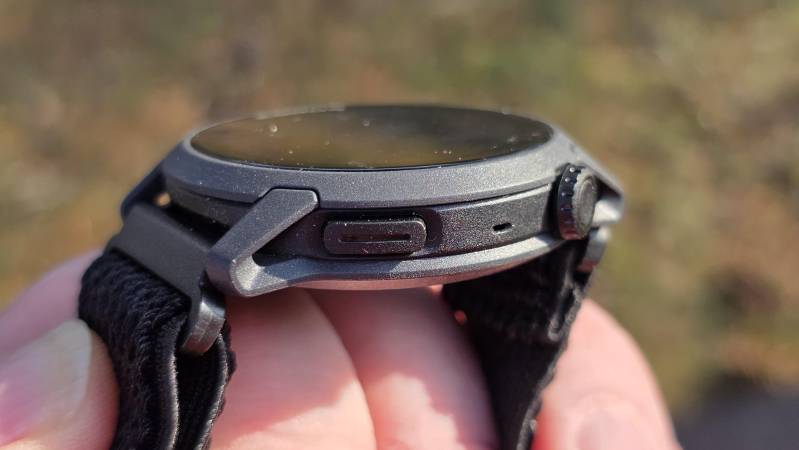
The built-in microphone for Voice Pins was the feature I expected least from a watch this light. You can record a short voice note mid-activity without stopping — flagging a location, a thought, a how-you-felt moment. I've started using it during weekend trail walks with the guys, and it's genuinely less friction than pulling out a phone. Small feature, but it changes how the watch fits into casual use.
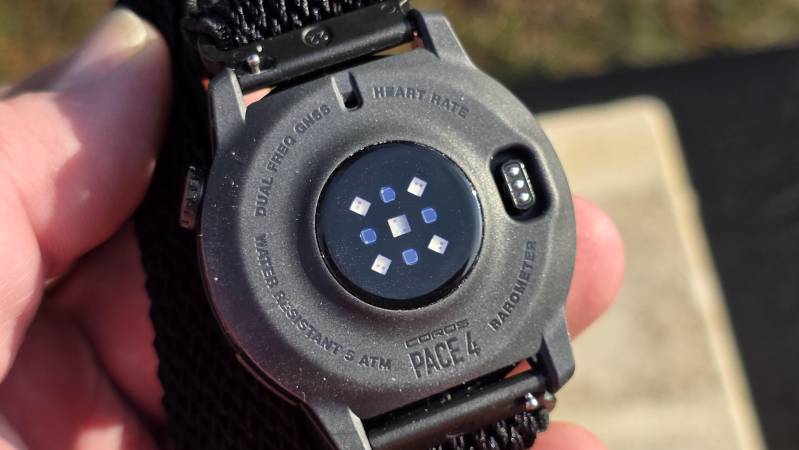
GPS dual-frequency satellite support locks signal fast in urban environments and holds it well on wooded trails. For anyone doing occasional hiking or running on weekends, that translates to reliable route data without configuration.
Where the Pace 4 Draws the Line
The Pace 4 does not have full offline mapping. If you need to load a detailed topo map and follow complex backcountry navigation, the COROS Nomad ($349) is the right tool and this watch is not. The Pace 4 has breadcrumb navigation for simple out-and-back routes, which covers most casual outdoor use — but serious backcountry hikers should know that ceiling before purchasing.
The Pace 4 has 4GB of onboard storage for MP3 files, playable via Bluetooth headphones — but no support for Spotify, Apple Music, or any streaming service. If your music library lives on a streaming platform, you're either controlling playback from your phone via the watch's media controls or running in silence. For most guys, that's the real-world limitation worth knowing.
The Watch That Works for Guys Who Aren't Runners
The COROS Pace 4 earned its place on my wrist by not overcomplicating things. At $249, with 19 days of battery life, a display that doesn't read as a budget compromise, and a weight that disappears during any activity, it's the most sensible daily fitness watch I've tested at this price. One practical note before buying: the Pace 4 uses a standard 22mm band, so any third-party strap you already own likely fits — and COROS charges via USB-C, meaning no proprietary cable to track down. The running toolkit is complete for anyone who wants it. For everyone else, the core watch - accurate, light, long-lasting - is worth the price without ever touching a training plan. For current pricing and availability, check Amazon.com.