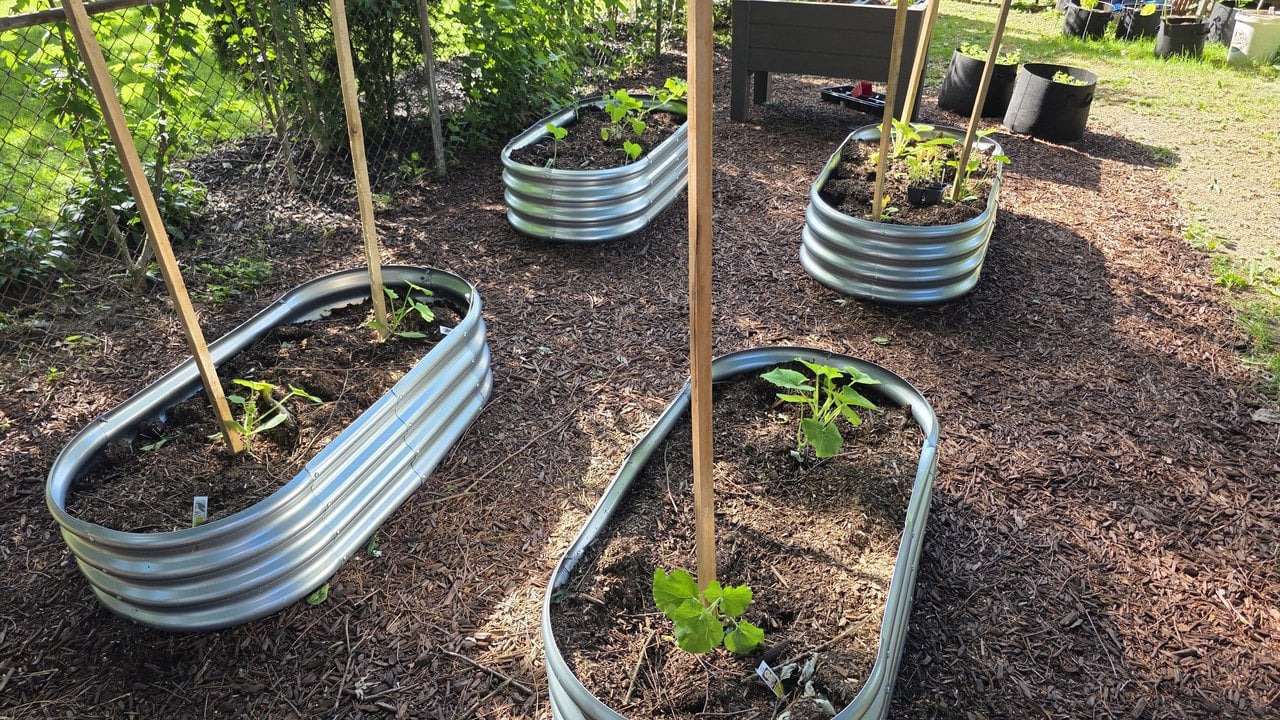
I went from a single herb garden to fifteen containers and four raised beds this year, and somewhere between the squash starts and the salsa peppers it hit me that I was in over my head. The soil was good and I'd picked the healthiest plants at the nursery, but I kept overlooking the thing that keeps a garden producing all summer: how and when you feed it. Fertilizer is where I got the most conflicting advice and made the most rookie mistakes, so this is the plain-English version - what the numbers on the bag mean and which fertilizer to reach for when, built around the two I keep on the garden cart all season.
What Do You Call Your "Guys Trips"?
Feeding plants well comes down to two decisions: what to put down, and when. Here's what this guide covers.
- The three numbers on every fertilizer label - nitrogen, phosphorus, and potassium - each control a different part of the plant, and knowing which is which tells you what to grab.
- Granular slow-release feed and liquid fish emulsion solve two different problems, so most gardens want both on hand.
- Miracle-Gro Shake 'n Feed runs a 10-5-15 analysis with added calcium, the nutrient that heads off blossom end rot on tomatoes and peppers.
- Alaska Fish Fertilizer's 5-1-1 emulsion mixes at about two tablespoons per gallon for most vegetables and gets reapplied every three to four weeks.
- One feed-from-planting-to-harvest schedule covers both raised beds and thirsty containers without the guesswork.
Let me be upfront: I'm not a master gardener. I'm a guy who jumped from a few herb pots to a real garden in one season, leaning hard on YouTube channels like The Millennial Gardener and Epic Gardening and on my longtime friend Kris over at Little Tech Girl, who has patiently fielded every dumb newbie question I've thrown at her. I figured fertilizer was just fertilizer, too - when I was setting up the garden I asked my father-in-law whether I should buy some or if he had any, and he waved me toward the garage: "yeah, we've got some out there somewhere." What was out there was lawn and flower food, which is the wrong thing for peppers, tomatoes, and squash. Most of what keeps my beds going rides on the same garden cart I broke down in my roundup of vegetable and herb garden gear. The fertilizer part took me the longest to sort out, so here's the part that matters - starting where every healthy plant starts.
Good Soil Comes First, Then You Feed It
Fertilizer supplements soil - it doesn't replace it. You can't out-feed dirt that's compacted, depleted, or draining wrong, so the first job is knowing what's in the bed before reaching for the bottle.
The split that matters most early on is garden soil versus potting mix. Raised beds run best on a topsoil-and-compost blend that holds moisture, nutrients, and the soil microbes that do half the feeding for you. Containers use a light potting mix built to drain fast - great for roots, but every watering flushes a little nutrition out the bottom. That single difference is why containers get hungry faster than beds and need feeding more often, no matter which fertilizer you use.

Gorilla Carts 2-Wheel Poly Dump Cart with Foldable Handle
A 4 cu ft poly dump cart that hauls up to 300 lb, ideal for gardeners who want easy dumping and storage.

Gorilla Carts Heavy-Duty Dump Cart with 600 lb Capacity
A steel-frame utility wagon with quick-release dumping and no-flat tires, great for garden, yard, and beach hauling.

Gorilla Carts Steel Utility Cart, 9 Cu Ft, 1200 lb Capacity
A heavy-duty towable steel wagon with removable side panels, ideal for yard, garden and landscaping hauling.
Promoted by FlowAds

Keeping that soil healthy is a year-round job, not a spring one. Work compost into the beds, don't let them sit bare and weedy over winter, and start each spring with fresh container mix rather than tired, salt-crusted dirt. This isn't the deep-dive soil article - that's a whole topic on its own - but the short version is simple: feed the soil first, and the fertilizer you add on top has something to build on. The beds you amend going into winter are the ones that start strong after the thaw.
What the Three Numbers on the Bag Mean
Every fertilizer label leads with three numbers - like 10-5-15 or 5-1-1 - and once you know what they stand for, you can read any product on the shelf without guessing. They're always in the same order: nitrogen, phosphorus, potassium. N-P-K.
Nitrogen, the first number, drives green leafy growth. It's what makes lettuce, herbs, and young transplants take off. Phosphorus, the middle number, drives root growth and flower set, which is why "bloom" formulas push it - though in decent garden soil you rarely need to chase that middle number. Potassium, the third number, does the structural work: it firms up cell walls, improves fruit quality, and helps the plant push through heat and dry spells without wilting.
That is where the garage mistake comes in. Lawn and flower food is heavy on the first number, because a lawn is supposed to grow nothing but green blades - all nitrogen. Pour that on a tomato and you get a four-foot jungle and no fruit. Vegetable formulas do the opposite, easing off the nitrogen and putting the weight on potassium, which is the whole reason a granular tomato feed and a fish emulsion look so different on paper.
Granular Feed Is the Slow-Release Base That Feeds All Season
A dry granular feed is the base layer for every bed and container, and the one I went with this year is Miracle-Gro Shake 'n Feed Tomato, Fruit & Vegetable. The analysis is 10-5-15 - moderate nitrogen, low phosphorus, and the highest number on potassium for fruit quality and plant vigor.
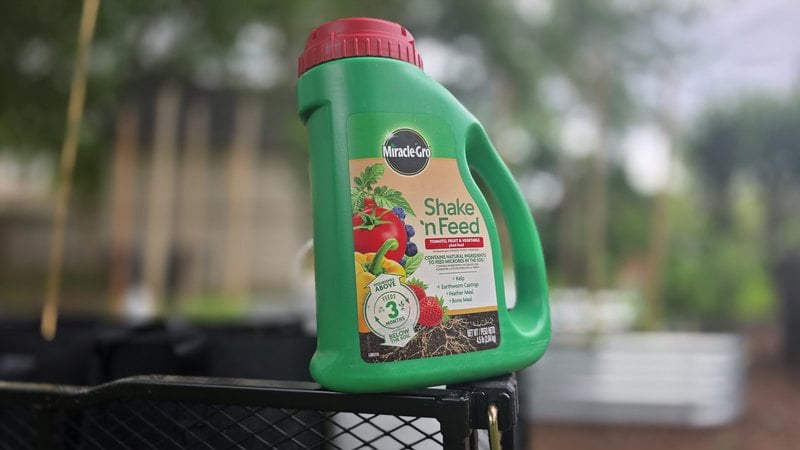
Two things make it an easy pick. It feeds for up to three months from a single application, which keeps a big container garden manageable. And it includes calcium - the nutrient that builds strong cell walls and heads off blossom end rot, the sunken brown patch on the bottom of tomatoes and peppers that comes from a calcium shortfall. It also leans on natural ingredients like kelp, earthworm castings, feather meal, and bone meal that break down into the soil instead of just dumping salts.
Application is simple. For an established bed, sprinkle roughly four tablespoons per four square feet, scratch it into the top inch or two of soil, and water it in - it goes down dry, with no pre-mixing. At planting, work it straight into the hole or the container mix. It keeps feeding for about three months and then it's spent, so it isn't a one-time job - refresh the dose when the first one runs out to keep the slow-release base working all season.

Promoted by FlowAds

Fish Emulsion Is the Gentle Booster Between Feedings
If the granular is the steady paycheck, Alaska Fish Fertilizer is the quick cash for when plants need a little extra, fast. It's a liquid fish emulsion with a 5-1-1 analysis, OMRI-listed for organic growing, and it behaves differently from the granular in a way worth understanding.
Instead of feeding the plant directly with a hit of synthetic salts, fish emulsion feeds the soil - a fast source of nitrogen and a buffet for the microbes and earthworms that turn organic matter into food roots can use. Because it's mild, there's effectively no risk of burning tender seedlings or roots the way a heavy synthetic dose can. The trade-off is that it doesn't last, so it's a feed-lightly-and-often tool, not a once-a-season one.
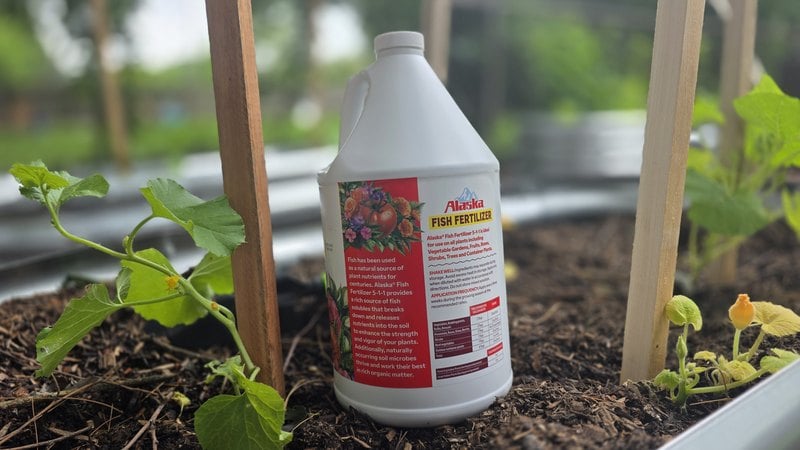
The mixing rate depends on what you're feeding. For most vegetables, use about two tablespoons per gallon of water; for herbs, drop to one tablespoon per gallon; and for transplanting seedlings, go weaker still, around a teaspoon per gallon. Feed outdoor plants every three to four weeks through the growing season. Fair warning: it is made from fish, and while the formula is deodorized, you will still know it's there for an hour after pouring. Most plants don't mind a bit.
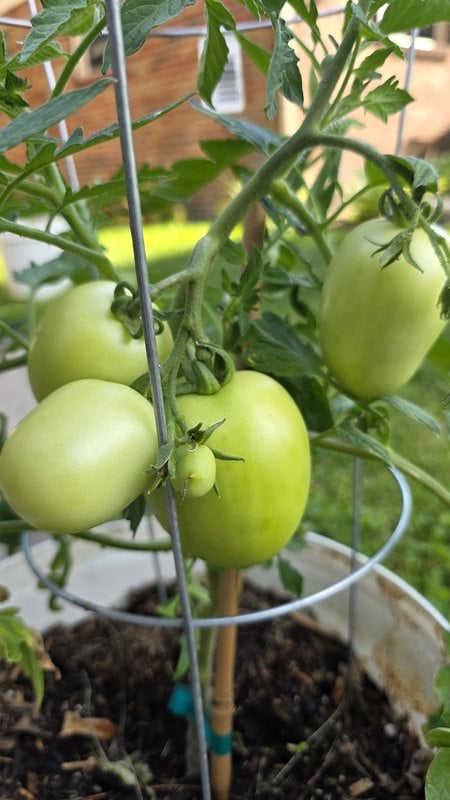
Feeding the Garden From Planting to Harvest
Put the two together and the "when do I use which" question mostly answers itself. Here's the schedule, from the day the beds get filled to the last harvest.
Build the Foundation Before Transplanting
Good feeding starts before a single plant goes in the ground. Get the soil right first - compost worked into the beds, fresh mix in the containers - then work the granular Shake 'n Feed into each bed and container at planting. That puts a three-month base of nutrition in the soil from day one, so roots have something to grab the moment they stretch out.
Feed Through the Season With Water-Soluble Fish Emulsion
A week or two after a transplant settles in, start the fish fertilizer at the light seedling rate, then move up to the regular vegetable rate every three to four weeks. Because it's water-soluble it acts fast and feeds the soil life, which makes it the right tool for a quick boost - a plant that looks hungry, or a container that's been watered hard. Containers need more attention than beds: that potting mix flushes nutrients out the bottom every watering, so feed the containers to every two weeks when they're loaded with fruit.
Refresh the Granular Every Few Months
The granular base isn't a one-and-done at planting. It feeds the soil for about three months and then it's spent, so scratch a fresh dose into each bed and container at the three-month mark - about once in a short Midwest season, twice if the garden runs long. The fish emulsion covers the quick hits in between; the granular keeps the steady supply topped up underneath it.
Match the Formula to the Growth Stage
The two formulas matter at different points in the cycle. Early on, plants are building leaves, stems, and roots - a nitrogen job - and the fish emulsion's 5-1-1 is almost all nitrogen, exactly what young growth wants. Once plants start flowering and setting fruit, the priority flips: too much nitrogen now means lush green growth and little fruit, so ease off the heavy feeding and let the granular's potassium - that 15 on the end - carry fruit quality. The plants show you which stage they're in: pale, yellowing lower leaves mean they are hungry for nitrogen, and a wall of dark green leaves with few flowers means too much.
Why a Jug of Fish Fertilizer Has Me Pricing Alaska Cruises
There's a reason that white jug of Alaska Fish Fertilizer keeps catching my eye on the cart. It's made from the same cold North Pacific fish that built Alaska's fishing fleet, and every time I mix a batch - landlocked in Michigan with the temperature climbing - I start thinking about how good an Alaska cruise would sound, watching the Inside Passage slide by instead of watering containers at seven in the morning.
For now the garden keeps me home. One tip that's easy to miss starting out: ease off the nitrogen as the season winds down. About a month before the first expected frost, stop the fish emulsion - it's mostly nitrogen, and late in the year nitrogen just grows leaves the plant won't have time to use. Let the granular's potassium carry the finish so the plant pours its last energy into ripening the fruit it's already set. That late-season taper is the difference between a green jungle in October and a counter full of salsa tomatoes.
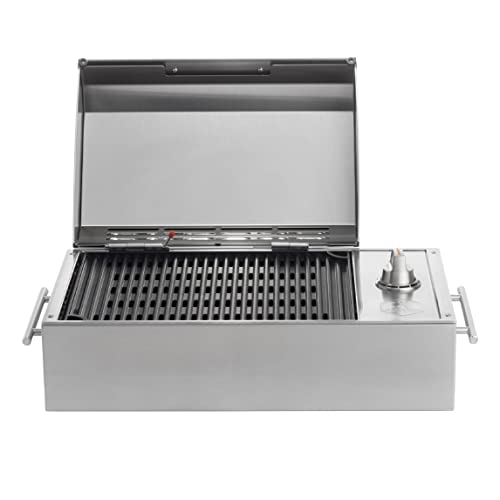
Kenyon City Grill Portable Stainless Steel Electric Grill
Why we picked it: a grill you can actually carry to the campsite, the tailgate or the cabin without borrowing a truck. Stainless, no propane tank to wrestle, and hot enough to cook for four guys rather than reheat for one.


Promoted by FlowAds
