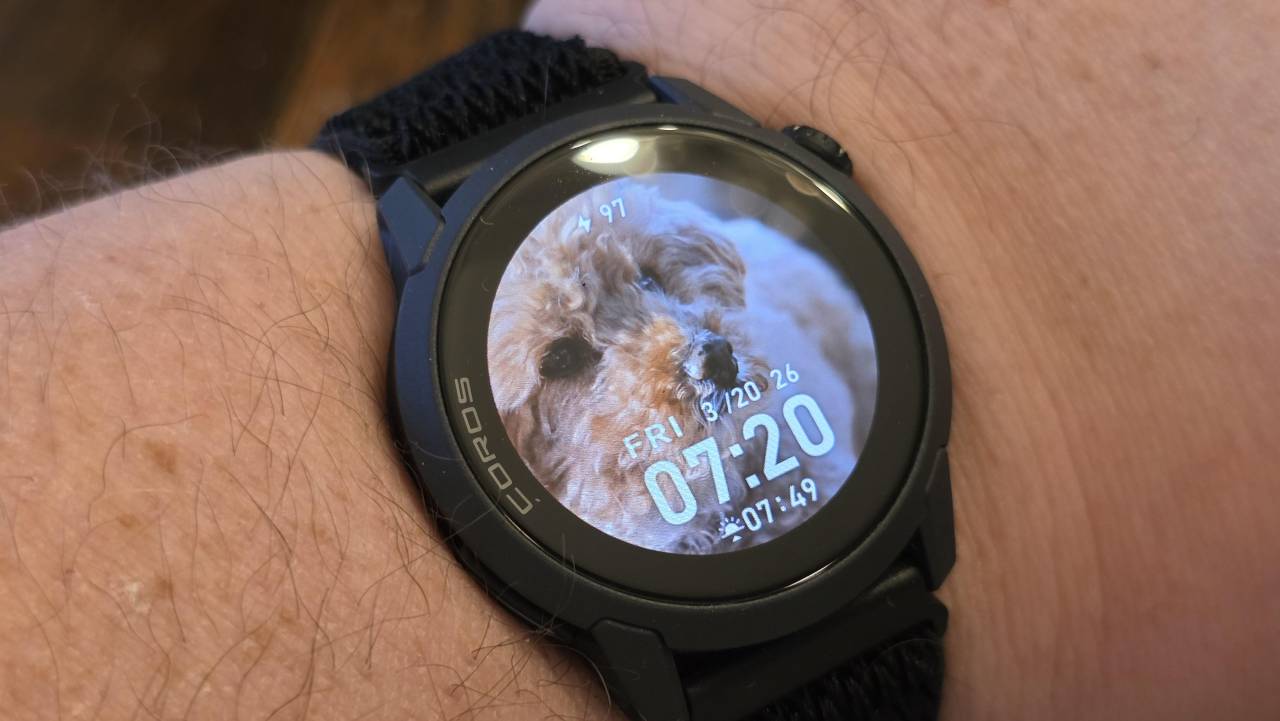
The type of display inside a GPS watch determines more than how it looks - it decides whether you're charging it once a week or once every three weeks, and whether you can read it while fly fishing in North Carolina under full afternoon sun or need to shade it with your hand just to check your pace. Most guys who've been through a smartwatch or two have a mental model of how these screens behave that was built on hardware from five or more years ago. That model is out of date - and it's steering some people toward the wrong purchase today.
What Do You Call Your "Guys Trips"?
- MIP (Memory-in-Pixel) displays work by reflecting ambient light and retaining pixel state without drawing power - which is how they stay on all the time while running 3+ weeks on a single charge.
- AMOLED displays generate their own light per pixel, producing deep blacks and high resolution, but they burn through battery in always-on mode - often 6 days versus 22 days for MIP on comparable hardware.
- The COROS NOMAD uses a 3rd-generation MIP display at 260×260 resolution with a 22-day daily battery; the COROS Pace 4 runs AMOLED at 390×390 with 1,500 nits and lasts 19 days in gesture mode or 6 days always-on.
- Garmin's solar-equipped MIP models - the Instinct 3 Solar and Fenix 8 Solar - add a transparent photovoltaic layer that extends battery life further during outdoor use, a combination that isn't possible with AMOLED.
- MicroLED is the display category worth tracking: the Garmin Fenix 8 Pro (2025) was the first GPS watch to deploy it, aiming to deliver MIP-level efficiency with AMOLED-level visual quality.
The first wave of mainstream smartwatches trained a generation of guys to expect a screen that was mostly off.
When the Huawei Watch 2 launched in 2017, it was genuinely one of the better entries in that early market — IP68 water resistance, GPS, Android Wear, two-day battery when you weren't pushing it hard. Worth reviewing. Worth wearing. But like every smartwatch of that era, the OLED display went dark between interactions to conserve battery. You tapped it or raised your wrist, waited a beat, read what you needed. The screens were dim by today's standards, battery life was measured in hours to a day or two at most, and the whole experience trained you to expect a screen that was mostly off. For guys coming from a quality mechanical chronometer or a serious field watch, that behavior was a step backward in the most basic wrist-glance usability. A lot of people tried a first-generation smartwatch around that time, decided the screen didn't hold a candle to an analog dial, and moved on. That's a reasonable conclusion - for 2017.
The watches available now are fundamentally different products. Apple's LTPO display technology, which allows the screen refresh rate to drop to 1Hz when idle, made practical always-on displays possible starting with Apple Watch Series 5 in 2019. Current Apple Watch Series 11 peaks at 2,000 nits. The Samsung Galaxy Watch 8 hits 3,000 nits. The COROS NOMAD's 3rd-generation MIP panel is sharper and higher-contrast than any MIP display from five years ago. Even the entry-level end of the category is better than the premium end was at the start of this decade.
The guy who wrote off smartwatches after a frustrating early experience isn't wrong about what he tried. He just hasn't seen what the category turned into.
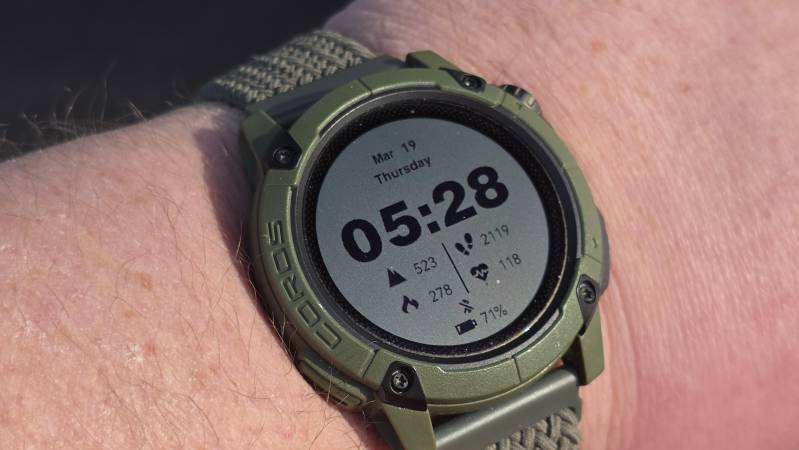
MIP Displays: Weeks of Battery, Always Readable in Sun
Memory-in-Pixel technology doesn't generate light - it reflects it, the way a printed page reflects the light in the room. Each pixel contains its own memory circuit and holds its state without continuous power draw. The result is a display that can stay on around the clock without meaningfully impacting battery life.
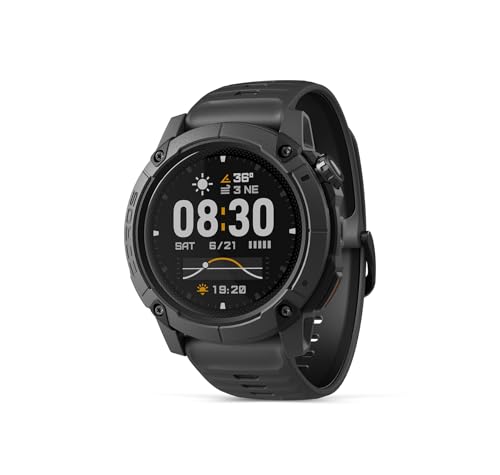
COROS NOMAD Outdoor GPS Smartwatch
COROS NOMAD outdoor GPS smartwatch built for adventurers who want reliable navigation and tracking on every outing.
Promoted by FlowAds

Glance at your wrist on the Davidson River in bright afternoon sun, mid-cast with both hands occupied, and your time and data are just there. No gesture, no wrist flick, no waiting for the screen to wake. The COROS NOMAD runs a 3rd-generation MIP display at 260×260 pixels and averages 22 days of daily battery life, including sleep tracking and regular GPS sessions. The COROS APEX 4 and Garmin Fenix 8 Solar use the same underlying technology at their respective price points.
The honest trade-off: MIP resolution is lower than AMOLED. Colors are less vivid in indoor lighting, and custom photo watch faces show the lower pixel density. For navigation data, fitness metrics, and time at a glance - the watch's actual jobs - MIP handles it cleanly. For looking sharp at a work dinner or a weekend out with friends, it's not competing with what a modern AMOLED screen delivers.
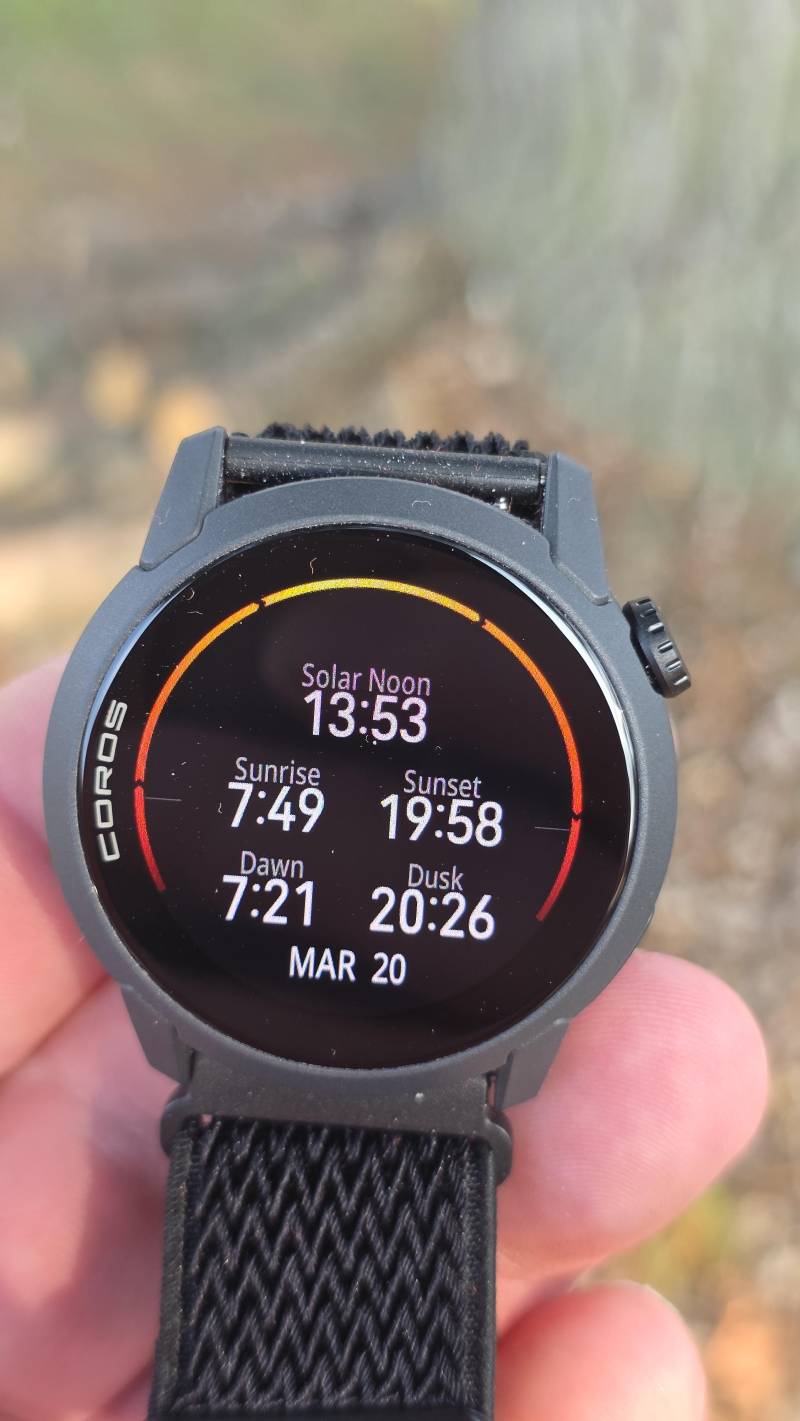
AMOLED: The Screen That Wins at the Gym and the Airport
AMOLED displays light each pixel individually. Black pixels draw zero power. Bright pixels draw more. The result is deep contrast, vivid color, and significantly higher resolution than MIP at comparable display sizes.
The COROS Pace 4 puts an AMOLED display with 390×390 resolution and 1,500 nits peak brightness into a $249 watch that weighs 32 grams on the nylon band. The Apple Watch Series 11 and Samsung Galaxy Watch 8 both use AMOLED - at 2,000 and 3,000 nits respectively - and they look genuinely good on the wrist in professional settings, at the gym, or a Saturday out with friends. For a watch that lives mostly in social and professional situations where a charger is reliably nearby every few days, AMOLED is the stronger experience.

COROS PACE 4 Ultralight Sport GPS Watch
The COROS PACE 4 is an ultralight GPS sport watch built for runners and athletes who want reliable tracking without extra weight.
Promoted by FlowAds

The battery math is what it is. The COROS Pace 4 gets 19 days in gesture mode but drops to 6 days always-on. An Apple Watch Series 11 with always-on enabled gets 24 hours - a full day, charged every night by design. Take that watch on a fly fishing trip with the guys in the Smokies for four days and you're carrying a cable or watching it die on day two. That's not a knock on the watch - it's the trade-off AMOLED makes at this battery size, and it's a reasonable one if the rest of your life keeps you close to an outlet.
Solar MIP: Garmin's Play for Extended Outdoor Battery
Garmin is the primary brand taking solar charging seriously in GPS watches. The Instinct 3 Solar and Fenix 8 Solar layer a transparent photovoltaic panel into the watch glass, sitting on top of the already-efficient MIP display. Under sustained direct outdoor sun, the solar panels add charge that extends an already-long battery further.
The caveat is real: solar charging requires consistent outdoor exposure to matter. Three hours of midday sun with the Garmin Fenix 8 Solar adds several days of battery life. In winter, or a week spent mostly indoors, that benefit shrinks substantially. For guys spending real time outside with wrists exposed - hiking, fly fishing in the Smokies, trail running - solar is a legitimate extension of MIP's already-strong baseline. For a lifestyle that's 80% office and commute, it won't move the needle much.
One mechanical fact worth knowing: solar charging is only compatible with MIP displays. The photovoltaic layer doesn't function over AMOLED, which is why Garmin offers the Fenix 8 as two separate models with meaningfully different battery profiles.
Matching the Display to What You Actually Do
The display decision isn't really about specs - it's about how the watch fits into how you actually live and move.
If the watch lives mostly in professional settings, the gym, and weekend situations where a charger is reliably nearby, AMOLED gives you a better-looking, more responsive experience for that life. The COROS Pace 4 at $249 is the clearest value in that category right now. Apple Watch and Samsung Galaxy Watch add broader smartwatch ecosystem integration if that matters, at the cost of more frequent charging.
If the watch regularly goes on multi-day trips - fishing in the Smokies with the guys, a week-long Alaska cruise where the charging cable stays in the bag, backcountry hiking, road trips where outlet access is unpredictable - MIP is the practical choice. The COROS NOMAD at $349 adds offline maps and adventure logging on top of the MIP foundation. The Garmin Fenix 8 Solar at $1,099 brings the same philosophy to a higher feature tier with solar extension.
Garmin also sells the Fenix 8 in an AMOLED version at $999 for those who want the full feature set with different display priorities. The difference between those two models is mostly battery: the 47mm Solar MIP is rated for 21 days in smartwatch mode against 13 days always-on for the AMOLED - and both drop faster with regular GPS use.
Where the Industry Is Heading
The two-technology landscape is already starting to shift, and it's worth knowing what's coming before making a multi-year purchase decision.
MicroLED is the most significant development. The Garmin Fenix 8 Pro (2025) was the first GPS watch to ship with a MicroLED display, and the early reports describe a screen that delivers noticeably better brightness and color than traditional MIP without the always-on battery penalties of AMOLED. The goal the industry has been chasing for years - outdoor-readable, always-on, visually compelling, efficient - is what MicroLED is built to achieve. It's expensive right now and the Fenix 8 Pro sits at a premium price, but second-generation MicroLED will matter more than the first. Apple has been pursuing MicroLED for the Apple Watch Ultra line as well, which would bring that technology to a much wider audience when it arrives.
On the AMOLED side, the efficiency gains are real and continuing. Current panels from Samsung and Apple already perform dramatically better than the early OLED screens that gave smartwatches a battery reputation problem. LTPO technology - the variable refresh rate approach that drops to 1Hz when the watch is idle - is now standard across Apple Watch and increasingly common in Android wearables. The result is AMOLED watches that can hold always-on displays for 6 to 18 days depending on settings, compared to 18 to 36 hours from early models.
MIP isn't standing still either. The 3rd-generation panel in the COROS NOMAD is sharper, higher contrast, and more readable indoors than earlier implementations. The gap between MIP and AMOLED in low-light conditions has narrowed. Solar MIP, well-implemented by Garmin, points toward a scenario where some outdoor-focused watches need charging measured in months under the right conditions rather than weeks.
The practical takeaway: any watch purchased in the last two years is a better display experience than anything available five years ago. The choice between display types is now genuinely about lifestyle fit rather than tolerating a lesser option.
Smart Watch Display Compromise: What's Most Important To You ... Charging Rhythm, Good Looks, Or A Little Bit of Both
The screen type doesn't just change how the watch looks - it sets the entire rhythm of how it fits into daily life. MIP means always-visible data in direct sun and three weeks between charges. AMOLED means sharper visuals and more frequent charging, from 6 days to a few weeks depending on screen settings and brand.
There's no wrong answer here, only mismatched ones. A watch that looks great at a client dinner and needs a charge every five days is the right call for some guys. A watch that disappears into daily wear for three weeks at a stretch and doesn't care whether you're standing in a Colorado canyon in August or reading a map in the rain is the right call for others. The only real mistake is buying the one that looks better on the shelf when your actual weekends are spent somewhere a charger isn't.
For current pricing on the COROS NOMAD, check Amazon.com.