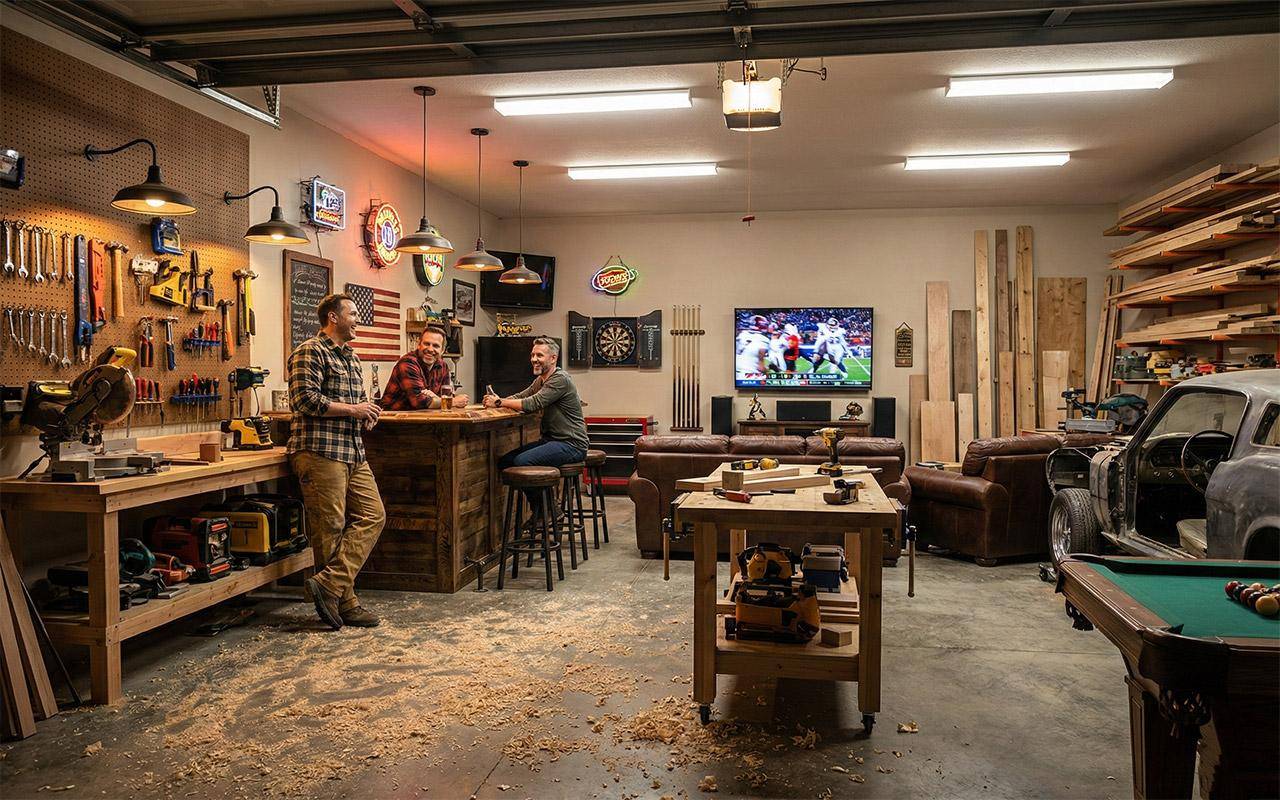
A well-designed garage workshop isn't just storage with a workbench thrown in - it's a functional space that makes projects easier, faster, and more enjoyable. After years of refining my own setup, I've found that the difference between a frustrating workspace and one that actually works comes down to intentional planning in four key areas: layout, power, equipment, and personalization.
What Do You Call Your "Guys Trips"?
A well-organized garage isn't about aesthetics - it's about efficiency, protecting your investment in tools, and actually being able to find what you need when a project calls.
- Proper tool organization cuts project start time significantly - no more 20-minute searches for the right socket when the guys are waiting to help with your buddy's engine swap.
- Climate control considerations protect power tools, especially battery packs that degrade in temperature extremes common in uninsulated garages.
- Dedicated circuits prevent the frustration of tripped breakers mid-cut - a 20-amp circuit costs around $500-700 to install but saves years of headaches.
- Workbench positioning matters more than size - proper lighting and outlet access beat a massive bench in a dark corner every time.
- A logical zone system (automotive, woodworking, general repair) means everything has a home and actually gets put back after guys night projects.
The smell of sawdust, the satisfying click of a well-organized tool wall, the space to actually spread out on a project - that's what separates a garage you tolerate from a workshop you look forward to spending time in.
Planning Your Layout
The biggest mistake most guys make is buying tools before they've mapped out the space. Grab a roll of masking tape and mark zones on your garage floor before moving anything. I've found this simple step saves weeks of reorganization later.
Your layout needs three distinct areas. The "dirty zone" - table saw, sanders, grinding stations - belongs near the garage door for ventilation and easy cleanup. Your bench zone is command central; maintain at least 36 inches of clear walking paths around your main workbench. The storage wall uses vertical space through French cleat systems or pegboards, keeping frequently-used tools at eye level and off the floor.
When the guys come over to help with a project, you'll appreciate having clear traffic flow that doesn't require everyone to squeeze past each other.
Getting Power and Lighting Right
Standard garage electrical setups are usually inadequate. Outlets on far walls mean long extension cords you'll trip over or drive across. Running a table saw and shop vac simultaneously on a 15-amp circuit is asking for a tripped breaker mid-cut.
A dedicated 20-amp circuit is your safest long-term investment - typically $250-900 depending on distance from your panel and local labor rates. If you're planning to weld or charge an EV, add a 240V outlet. For computer equipment or sensitive electronics, install GFCI outlets to protect your gear. Check out these garage lighting ideas for inspiration on illuminating your space properly.
Replace flickering incandescent bulbs with high-output LED shop lights in the 4000-5000K range - that "daylight" color temperature reduces eye strain during detail work. Four-foot LED strips mounted above your workbench eliminate shadows where you need visibility most.
The Tools That Actually Matter
What constitutes a "modern workshop" depends on what you're building. For DIY and woodworking, start with the fundamentals: a quality cast-iron vise, a reliable impact driver, a 4-foot level (short ones don't cut it for most projects), and a flexible steel measuring tape with spring-loaded housing for solo measuring on longer pieces.
If your projects lean more technical, invest in heavy-duty Bluetooth speakers that can compete with power tool noise, noise-cancelling headphones for focused work, and a wall-mounted smart TV or tablet for YouTube tutorials while you work. When your hands are covered in grease, voice control becomes more than a convenience.
Climate control matters if you're running computer equipment, 3D printers, or spending extended time in the space. A mini-split system runs $2,500-5,000 installed but transforms a seasonal workspace into a year-round retreat.
When Your Garage Isn't Enough
Sometimes the limitation isn't organization - it's the four walls themselves. If your existing garage can't fit both the family SUV and your project car, it's time to think bigger. Expanding can be complicated depending on local codes, structural requirements, and permits.
A post frame garage builder Baltimore OH residents depend on would have to account for snow loads and frost depth in truss sizing and post embedments. A builder in Texas focuses on wind resistance, moisture exposure, and drainage. Local expertise matters - they'll handle permits and ensure the structure meets regional requirements.
For serious hobbyists or anyone starting fresh, a purpose-built workshop designed for your specific needs beats converting inadequate space every time. Ohio guys trips to the workshop become a lot more enjoyable when there's actually room to move.
Making the Space Your Own
Function comes first, but the details that make a workshop genuinely yours matter too. Heavy-duty Bluetooth speakers that bypass miter saw noise turn solo projects into enjoyable sessions. A small fridge tucked under a workbench with a couple of industrial bar stools transforms work time into social time when buddies stop by.
Try building pipe shelves for an industrial look that adds both storage and character. Vintage signs, framed blueprints, even a few records on the wall - these touches make the space feel intentional rather than just functional. And don't underestimate a single plant (even artificial) for bringing some visual calm to a space full of hard edges and metal.
Building It Right Takes Time
Creating a workshop that actually works is an ongoing project, not a weekend transformation. Start with solid planning - zones, power, lighting - then refine over months as you learn what your specific projects demand. The best workshops I've seen evolved through use, with owners continuously optimizing based on real experience rather than magazine layouts. Your future self, surrounded by organized tools and adequate lighting, will thank you for the patience.