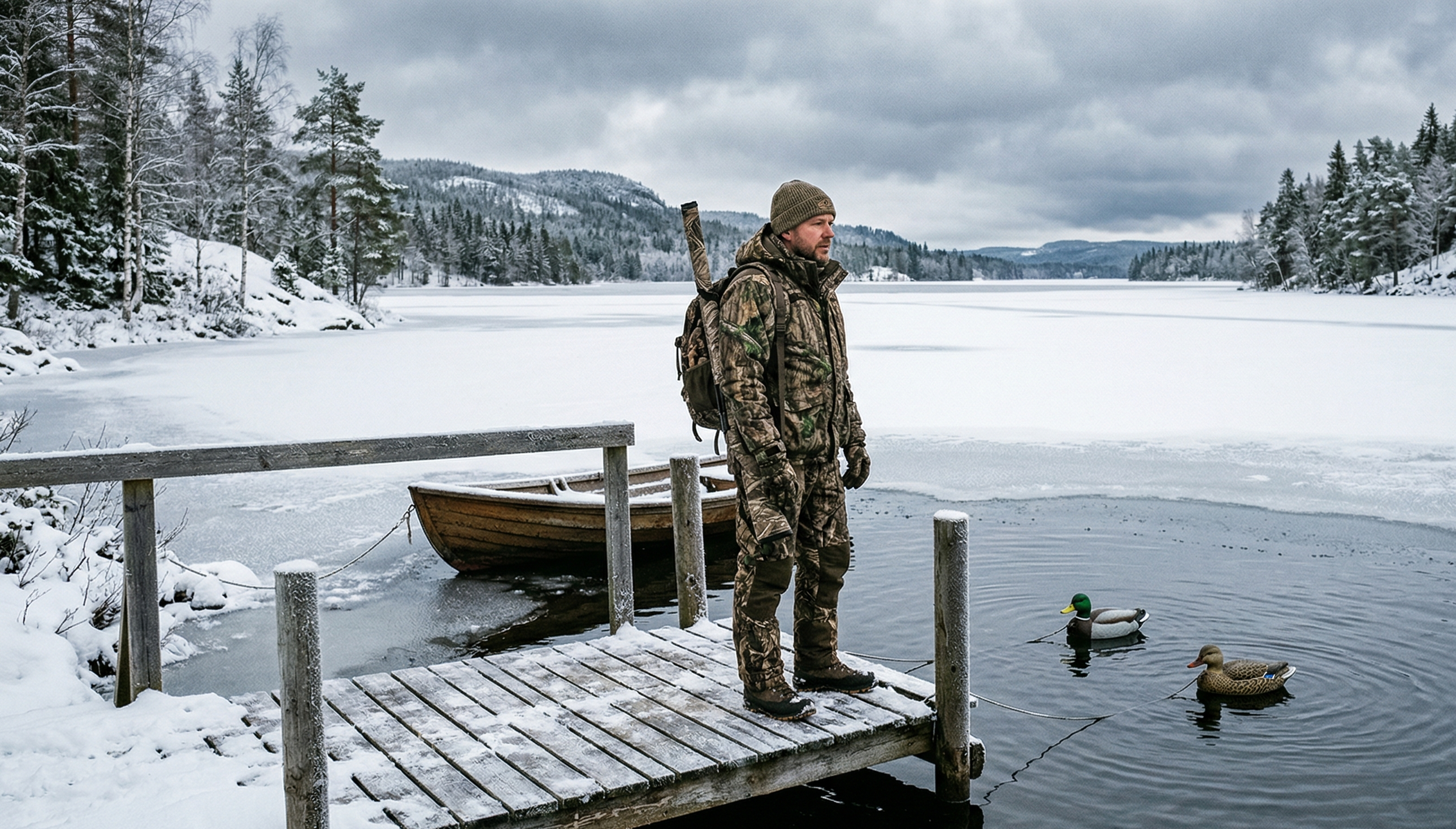
When a hard freeze locks up shallow water, an ice eater becomes less of a convenience and more of a strategic tool. The right setup maintains a huntable opening, supports safer water movement, and reduces the winter stresses that build up in small ponds under prolonged ice cover.
For readers comparing options, this overview of the best ice eater for duck hunting explains what matters most - from pond size and depth to power source and late-season weather patterns.
Open or partially open water changes how a pond behaves in winter. Water movement and gas exchange reduce the stagnation that builds when shallow water stays locked under ice for weeks at a stretch.
What an Ice Eater Actually Does
An ice eater is not a heater in the usual sense. It's a water-moving device that circulates slightly warmer water from below, disrupting ice formation near the surface. For duck hunting, the practical goal is straightforward: maintain an opening large enough to keep a pond or impoundment usable during freezing weather - not to keep the entire water body open.

Guy's Trip on MSC World America: European Luxury Meets Caribbean Adventure
Men who appreciate a perfect balance of adrenaline-pumping activities, premium dining experiences, and sophisticated nightlife options will find MSC World America to be the ultimate floating playgroun
Eight Dangers To Avoid On A Mexican All-Inclusive Resort Guys Getaway
Discover essential safety tips for your Mexican all-inclusive resort vacation. Learn how to avoid common dangers while maximizing fun at top destinations in Cancun, Cabo, and beyond.

12-Day Vietnam Discovery Tour
A 12-day Vietnam tour from Hanoi to Ho Chi Minh City covering Halong Bay, Hoi An, Cu Chi Tunnels and the Mekong Delta. Ideal for first-time visitors.
Promoted by FlowAds

That distinction matters. A hunter managing a small blind hole, a farm pond edge, or a protected cove doesn't need the same output as a marina owner protecting long dock lines. Choosing a unit that's too small leads to disappointing performance - and in ponds with fish, an undersized unit can actually worsen winterkill conditions by increasing oxygen consumption without restoring enough dissolved oxygen to compensate. Choosing a unit that's too large wastes energy and creates more open water than the site or hunting setup actually needs.
Why Open Water Matters During Cold Weather
Open water becomes disproportionately valuable when the surrounding shallow wetlands freeze. During early winter freezes, ducks seek refuge in lakes, ponds, rivers, streams, and estuaries that don't freeze as readily. When ice tightens the landscape, the remaining accessible water becomes far more relevant to bird movement.
The reasoning holds for habitat placement too. Waterfowl respond to openings that are usable and visible - not every artificially maintained hole becomes a honey hole, but a properly placed one is a legitimate advantage. Weather, pressure, food, and flight lines still matter. The opening just puts you in the game.
Man Gear Pick of the Month
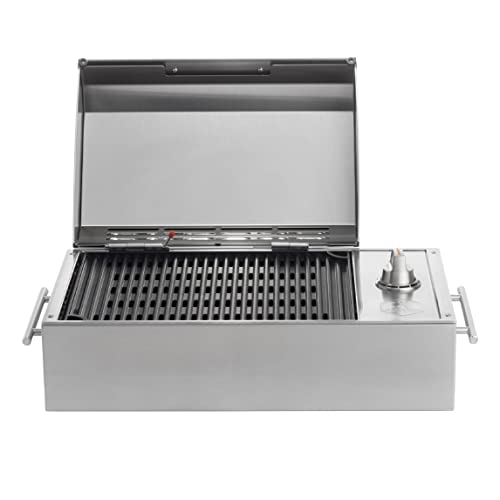
Kenyon City Grill Portable Stainless Steel Electric Grill
Why we picked it: a grill you can actually carry to the campsite, the tailgate or the cabin without borrowing a truck. Stainless, no propane tank to wrestle, and hot enough to cook for four guys rather than reheat for one.
 August's Pick LiberNovo Maxis Electric Big and Tall Ergonomic Office Chair, Graphite 52cm $1,283.00
  July's Pick Powerful Propane Torch Gun, Adjustable Flame Thrower Gun, Kitchen Torch with Detachable Design, Flamethrower Blow Torch for BBQ, Searing Steak, Welding, Camping Charcoal Lighter(Tank Not Included) $42.99
  June's Pick OYASUMI Funny BBQ Man Hot Dog Holders, 4 PCS Reusable Stainless Steel Sausage Stands, Portable Hot Dog Roasters, Barbecue Grill Accessories for Camping & Party Gifts $7.98
 Promoted by FlowAds

Matching the Ice Eater to Your Pond Size and Setup
The first filter is scale. A small timber hole, levee corner, or pocket pond requires a very different approach from a broad impoundment or multi-acre duck pond.
For small ponds and tight blind holes, focus on controlled circulation and manageable openings. The goal is to preserve a landing pocket, not create a giant moat. In smaller water, oversizing works against concealment and can shift bird behavior in ways that aren't helpful.
For mid-sized ponds, placement becomes as important as motor size. A unit mounted near the downwind side of a target opening maintains a more reliable pocket than one placed dead center, regardless of prevailing wind or shoreline shape.
For larger ponds or irregular impoundments, a single heavy-duty unit may still be insufficient if the opening is poorly positioned. In most cases, it's smarter to protect the highest-value section of water - the part birds already want to use - than to try to brute-force a much larger area.
Depth, Mounting Angle, and Water Movement
This is where a lot of buyers get burned. The best ice eater isn't the one with the biggest motor - it's the one that matches your water depth, shoreline geometry, and intended opening size.
In deeper water, circulation more effectively pulls relatively warmer water upward than in very shallow flats. For most installations, you want at least four to six feet of depth for vertical mounting; in colder climates, six to eight feet is the more reliable target. In shallow, muddy basins, aggressive agitation can create instability or move sediment in ways you don't want. Sizing and placement matter more than the spec sheet.
Angle matters too. A unit aimed nearly straight up behaves differently from one angled to push water across a shelf or toward a shoreline edge. I've found the setups that work best keep a defined pocket open while preserving nearby ice for concealment, decoy control, and access. A massive, sloppy opening may look impressive, but in the marsh it's the mechanical equivalent of wearing patent leather boots in a cattle yard.
Thin Ice Is a Real Risk - Plan Around It
Any system that keeps water open in freezing weather creates a safety hazard. Winter aeration produces unpredictable ice edges - areas where the transition from solid to open water isn't obvious until you're already on the wrong side of it.
Plan your access routes, retrieval paths, dog work, and boat launch points before the unit goes in - not after the first cold snap. If other people use the property, post warning signs and communicate clearly. Thin ice doesn't care how many years you've been hunting that pond.
When Winter Conditions Make the Investment Worth It
Not every pond needs winter circulation every year. If yours stays mostly open or only ices up occasionally, aeration may not move the needle much. During a hard winter - ice thickening, snow accumulating - it's a different story.
The mechanism is straightforward. As long as a pond is open or partially open, oxygen levels remain higher because air diffusion and wind agitation continue. Once long-term ice cover sets in, those inputs are cut off and oxygen levels drop. Prolonged low oxygen, especially under persistent ice and snow cover, can lead to winterkill in vulnerable ponds. Shallow ponds are especially vulnerable when snowfall blocks sunlight, further limiting photosynthesis beneath the ice.
For duck hunters, the best approach is proactive rather than reactive. Waiting until a pond is already locked down and oxygen-stressed leaves you chasing conditions instead of managing them.
Power Source and Site Logistics
Most buyers end up choosing between dependable electric operation and the complications of being far from power. If your blind pond sits near utility access, a hardwired electric unit is the more predictable option for sustained winter performance.
Where power is limited, site logistics become the real decision. Extension cord runs, generator routines, and serviceability in harsh weather all matter more than they do on a product page. In remote settings, cold-weather reliability and ease of maintenance take precedence over theoretical maximum coverage.
Different brands are built for different duty cycles, mounting options, and use cases. Compare output, mounting flexibility, service access, and cold-weather reputation - not just headline specs.
Size It Right, Place It Right, Run It Early
In practical terms, the best ice eater for duck hunting does four things well: it matches the pond's size and depth, maintains a controlled opening instead of an oversized one, runs reliably through cold snaps, and is installed with full respect for thin-ice risk.
The hunters who get the most out of these units aren't running the biggest motor on the market - they're running the right motor in the right spot, turned on before the hard freeze arrives. Get the sizing right, position it where birds already want to land, and don't wait until January to find out if it works.

Promoted by FlowAds
