One of the biggest budget choices on a guys cruise is whether to splurge on unlimited Wi-Fi or spend that money on the things that build memories - lobster excursions, Brazilian steakhouse dinners, and a respectable bar tab. My buddy Sujeet and I took a Canada and New England cruise on Norwegian Getaway last year as guests of WMS Cellular at Sea, where we tested the AT&T and Verizon cruise day passes ($20/day) and the Cruise+ eSIM data plan from GigSky. We also tried NCL's Wi-Fi to figure out which connectivity option fits which kind of guy at sea.
Understanding connectivity options helps you spend money where it counts. NOTE: While this article was originally written over a year ago, coming from a brand trip hosted by WMS Cellular At Sea, I held off on publishing it till this year instead. The simple reason was a conflict that I sometimes have to deal with as a blogger / influencer - brands have very specific goals for what content they want produced and how the information is articulated. I respect that and I understand the reasoning. Nothing we publish will ever (intentionally) be published with false or misleading information and this activation is the same way. However, both Norwegian Cruise Line and WMS were very sensitive to discussing weaknesses that continue to make internet communication at sea challenging, the price that comes with what is an absolutely amazing technology, and the fact that Cellular at Sea does compete directly with the massive profit center that Wifi packages offer as an upsell to cruisers. With that being said, I stand by all earlier articles and content that we published but the simple reality is that you don't always need a high-speed internet connection, Cellular at Sea does a great job of filling in the gaps, and that leaves extra money to spend on experiences to turn your guys trip cruise from a "getaway" into an "epic adventure" ... Eating right and staying fit is easier than you think on a cruise if you choose to make smart choices. Set sail on a vibrant journey through the stunning coastlines of Mexico, where sun-soaked days and lively nights await. Experience the unique charm of each port while enjoying the luxurious amenities onboard. Cellular at Sea Cruise+ offers practical alternatives to cruise WiFi packages. Seven-day test of Verizon, AT&T, and GigSky options reveals secure, cost-effective connectivity for voice and data at sea. Promoted by FlowAds At its most basic, Cellular at Sea is a cell network that lives on the cruise ship, and while first-time cruisers often wonder how the internet works at sea, the answer is really simple - it's just a radio. On land, your phone talks to a cell tower, and your calls and data travel over fiber-optic cable. At sea, your phone talks to the ship's onboard cell network, and that network sends your calls and data over the ship's satellite link, which on many ships, NCL's included, now means Starlink. WMS (Wireless Maritime Services), the company behind Cellular at Sea, launched the first cellular network on a cruise ship more than 20 years ago. Only in the past couple of years, since WMS became the first to integrate cruise ship cellular service with Starlink's low Earth orbit satellites, has satellite connectivity become affordable and reliable enough for packages like the ones we tested on this cruise. To test the carrier day passes, Sujeet and I both used phones connected to AT&T and Verizon service. Our own personal mobile services are T-Mobile and Comcast but at the time of writing neither offered a cruise day pass, so we both loaded the Cellular at Sea Cruise+ eSIM that can be installed on compatible iPhones and Android phones through the GigSky app, with no physical SIM card needed. Once installed, it connects to the Cellular at Sea network at sea and switches to local land networks during port stops without any manual setup. Why we picked it: a screen big and bright enough to double as a photo frame, a titanium and sapphire build that came through a month of daily wear without a scratch, and battery life that still runs weeks between charges. Promoted by FlowAds It's a data-only service (use WhatsApp or Signal for voice calls), sold in fixed data packages that last your whole cruise. One important caveat: Cellular at Sea only switches on once the ship is several nautical miles from shore (NCL puts it at about six), so the onboard network doesn't interfere with the cell networks on land. On most routes that means about an hour after leaving port. On this cruise, though, we spent a lot of time hugging the coast - cruising along Long Island after leaving New York and then along the coasts of Maine and Massachusetts. The "about an hour" rule usually holds on Caribbean cruises, but you may run into the same coastal gaps we did on Alaska and Canada and New England itineraries. If you need always-on internet for family or work reasons, you may want to buy an internet package from your cruise line. For most guys cruises, that means using cellular day passes on the sea days you need them ($20-40 total) and port Wi-Fi on land, which leaves about $170 per person compared to a week of ship Wi-Fi. Back in the day, cruises were dead zones where you didn't worry about connectivity, it was too expensive, too slow, or too unreliable to bother with. Today the Wi-Fi isn't what you'd find at a land-based resort, but it's pretty darn good, and NCL has one of the better internet offerings at sea. Text home that you're alive, verify the occasional email, maybe upload a photo. That takes minutes, not hours of unlimited streaming. If you're betting on games or handling money, you want a secure connection. A cellular day pass gives you an encrypted connection that's better suited to financial apps than shared ship Wi-Fi, where thousands of passengers connect at the same time. If something urgent happens at home, people need to reach you through calls and texts. Five minutes to check scores - doable in port on free Wi-Fi, or with one cellular day pass if you're at sea during Sunday games. An unlimited package for things that don't add to the guys trip. Ship Wi-Fi has real value for some uses - streaming movies during a bachelor party suite night, video calling home for a special occasion, or working remotely if you're mixing business with leisure. If you're not doing those things, there are cheaper ways to stay connected. When we used limited connectivity instead of being online all day, nothing bad happened. We experienced the ports without phones in our faces, had real conversations at Cagney's instead of scrolling, and evening entertainment felt more social. The world didn't end when we didn't answer emails right away - we checked in once a day and everything was fine. Staying reachable mattered too. I could still get a call from Heather if she needed something right away, and WhatsApp and other messaging apps worked on the data-only eSIM plan for messages and calls. We were reachable for emergencies without staring at screens for hours. I'm addicted to my phone, but it was liberating not feeling glued to the screen and spending more time hanging out and doing fun stuff on this cruise. WMS Cellular at Sea sponsored our cruise to test cruise connectivity technology, so Sujeet and I ran the full spectrum across our 7-day itinerary: New York departure, sea day to Halifax, Saint John, Portland, Boston, Newport, and back to New York. We activated AT&T and Verizon day passes ($20 each), made calls home, checked messages, and used mobile banking apps. Both passes include 500MB of high-speed data per day, which is plenty for moderate use, plus unlimited calls and texts (Verizon's covers calls to the U.S., and AT&T's unlimited talk and text applies when the pass is added to an unlimited plan). After 500MB, speeds slow down but still handle messaging and email. The passes run on Cellular at Sea, which WMS says is available on more than 200 cruise ships across 26 cruise lines. Your phone connects to the ship's own cell network over an encrypted connection, the same kind of security you get on land-based cellular networks, and better than shared ship Wi-Fi for sportsbook or banking apps. AT&T's International Day Pass covers land and sea for the same $20 on a day you use both, and a land-only day is $12. Verizon's Cruise Daily Pass covers sea only. On land in Canada, Verizon customers use TravelPass at $6 per day, or the Canada and Mexico roaming that many Verizon Unlimited plans include. When we docked in Halifax at 7 AM, the AT&T line and the eSIM both switched automatically from the ship's network to Canadian land networks, and we used our phones during our 9-hour port day just as we would back home. In Saint John, we took a maple syrup farm tour at Elmhurst Outdoors on the Kingston Peninsula and learned how maple syrup is made. The farm itself had limited cell signal of any kind, but on the bus ride back we uploaded photos and caught up on email, which I couldn't have done if I'd relied only on a cruise Wi-Fi package. Your 500MB goes much farther than you think with these settings: With those settings, data went much farther than I expected. Even voice chats on WhatsApp and Facebook and VoIP phone services used far less data than I anticipated. The bonus is that you can always end a call quickly by saying, "Hey, I wish I could talk longer, but I'm chewing through my international roaming data!" Skip a week of ship Wi-Fi and keep about $170 per person; if your fare includes NCL's Free at Sea or More at Sea package, you still have its block of included Wi-Fi minutes for anything that needs a real connection. That money can go toward: Ship Wi-Fi and cellular passes do different jobs. Ship Wi-Fi has value for some needs, so the question is whether you need it for your guys trip. Cellular at Sea is a great option for most guys, unless you need fast, unlimited, always-connected internet. Carrier day passes cost $20 per 24-hour period, and you only pay on days you use your phone at sea. Our 7-day Canada and New England itinerary had one full sea day, about $20 on a day pass, plus a pass charge on any other day you use your phone while the ship sails between ports. In the Canadian ports, the AT&T pass and the eSIM kept working, and in the U.S. ports (Portland, Boston, and Newport) your home carrier works normally. Sujeet and I tested the full spectrum. The Verizon and AT&T day passes worked well, and the GigSky Cellular at Sea Cruise+ eSIM gave reliable connectivity for carriers like T-Mobile and Comcast mobile that don't offer cruise day passes, switching between the ship's network and land networks during excursions. Ship Wi-Fi has its place for streaming, remote work, or heavy bandwidth needs, but we didn't need it for our trip. Visit cellularatsea.com before your guys cruise to confirm your ship and compare the options. Learn more about Cellular at Sea connectivity options and put the money you save toward lobster, steak, and the bar tab. Why we picked it: seven days of glaciers with the sailing done overnight, so you wake up somewhere new without losing a day to travel. The northbound run ends in Anchorage if you want to add land time. Promoted by FlowAds Promoted by FlowAds

Here's How Easy It Is To Eat Right and Stay Fit on Your Cruise Vacation

Hollywood Sunsets & Mexican Horizons Cruise

Five Ways We Used Cellular at Sea Cruise+ on Our Canada and New England Cruise

How Cellular At Sea Works
Man Gear Pick of the Month

COROS Pace 4 Pro GPS Sport Watch
 October's Pick Made In Cookware - Cleaver - Full Tang With Olive Wood Handle - Crafted in France $199.00
 August's Pick LiberNovo Maxis Electric Big and Tall Ergonomic Office Chair, Graphite 52cm $1,393.00
 July's Pick Powerful Propane Torch Gun, Adjustable Flame Thrower Gun, Kitchen Torch with Detachable Design, Flamethrower Blow Torch for BBQ, Searing Steak, Welding, Camping Charcoal Lighter(Tank Not Included) $39.99

Ship WiFi And Cellular At Sea Compared
Feature Ship WiFi (7-day cruise) Cellular at Sea (carrier day passes or Cruise+ eSIM) Cost About $210 ($29.99/day × 7) $20-40 total for 1-2 sea days on a day pass Best For Heavy streaming, remote work, multiple consecutive sea days Light to moderate use, checking in, secure transactions Coverage Works everywhere on the ship At sea once the ship is offshore. AT&T's $20 pass also covers land that day, Verizon's covers sea only, and the Cruise+ eSIM works at sea and in port Security Shared network (thousands of users) Encrypted cellular connection Data Limits Unlimited during the 24-hour pass Day passes: 500MB high-speed per day, then slower speeds. Cruise+ eSIM: a fixed data package Setup Purchase onboard or pre-cruise Add the day pass or install the eSIM before you sail Billing Charged for every day of the pass Day passes charge only on days you use your phone at sea 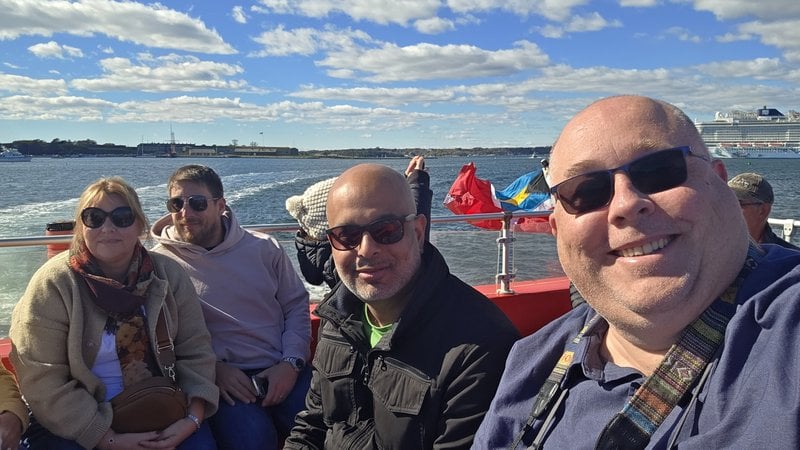
What We Needed Connectivity For
Quick Check-Ins
Mobile Sportsbook And Banking Apps
Emergency Reachability
Fantasy Sports Updates
What You Might Not Need
Testing Cellular At Sea On Norwegian Getaway
AT&T And Verizon Day Passes At Sea

Port Days In Canada
How To Make 500MB Last Longer
Where The $170 In Savings Goes
When To Use Ship WiFi vs Cellular Passes
When Ship WiFi Makes More Sense
A Connectivity Plan For A Guys Cruise

Is Cellular At Sea Worth It Over Ship WiFi?

7-Day Voyage of the Glaciers (Northbound)