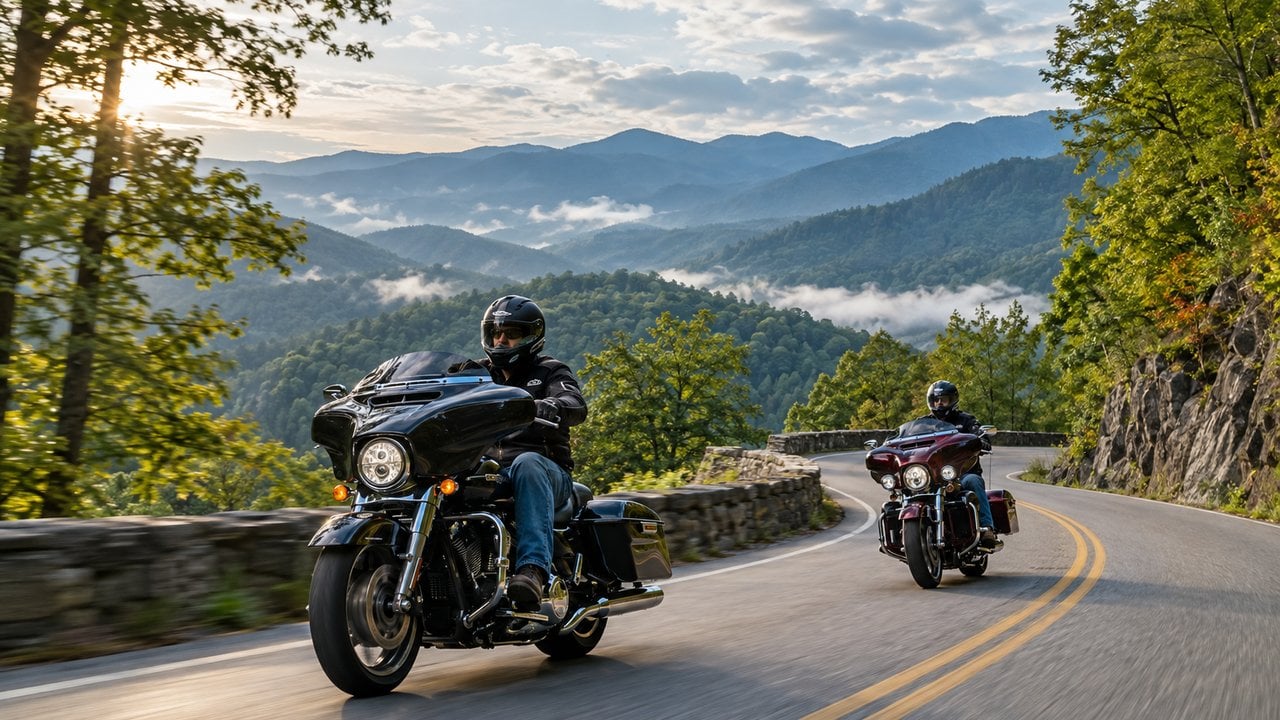
Most motorcycle trips that go sideways don't fail on the road. They fail in the garage the week before, when nobody measured the fuel range, the saddlebags got packed top-heavy, or the plan assumed 400 miles a day on a bike that numbs your hands by lunch.
Distance, load, weather, and fatigue all work harder against you on two wheels than in a car. Each one can be managed with some preparation, and these tips cover the practical side of touring, from picking the bike to riding in a group to reading the road ahead.
Choose a Bike Built for Distance
Not every bike suits a long trip. Compare seat comfort, wind protection, fuel range, and payload capacity. Touring and adventure models are built for big miles, while most sport bikes start punishing your wrists and back after an hour or two.
Take a long test ride before you commit. Sit on the bike for at least 30 minutes if the dealer allows it. Numb hands and a sore lower back show up fast, and it's far better to find that out in the parking lot than 200 miles from home.
Things To Do In Ketchikan Alaska On A Cruise Ship Visit
Ketchikan Alaska is the salmon capital of the state and has tons of great stuff to do on a cruise ship visit.

Bachelor Party Ideas In Dubai
Men's guide to Dubai bachelor parties: Ultimate luxury experiences from desert safaris to yacht charters. Experience skydiving and exotic car racing. Perfect for groups seeking premium adventures in this opulent destination.

Siam Overland: Discover Ancient Thailand by Bike
Guided motorcycle tour through ancient Thailand, from Pai's curves to Sukhothai ruins. Suits seasoned riders and adventurers seeking hidden roads.

7 Days Trip Discover Northern Thailand
A 7 day guided journey through northern Thailand covering Chiangmai, Mae Sariang, Mae Hong Son, Pai, Thaton and Chiangrai, ideal for culture lovers.
Promoted by FlowAds

Budget is the limit for many riders. If your credit is rough, review bad credit motorcycle loan options before you shop. Knowing your approved range keeps you focused on bikes you can afford to load up and ride, instead of falling for one that blows the budget before you've bought a single piece of gear.
Plan Your Route Around Fuel and Fatigue
The brochure range is an estimate, so measure your own. Fill the tank, reset the trip meter, and note the distance when the fuel light comes on. Then plan your stops at about 80 percent of that figure, because gas stations get scarce exactly where the riding gets good.
Fatigue slows your reactions long before you feel tired. Stop every 90 to 120 minutes, drink water, and stretch your wrists, hips, and neck before you get back on.
Man Gear Pick of the Month

COROS Pace 4 Pro GPS Sport Watch
Why we picked it: a screen big and bright enough to double as a photo frame, a titanium and sapphire build that came through a month of daily wear without a scratch, and battery life that still runs weeks between charges.
 October's Pick Made In Cookware - Cleaver - Full Tang With Olive Wood Handle - Crafted in France $199.00
 August's Pick LiberNovo Maxis Electric Big and Tall Ergonomic Office Chair, Graphite 52cm $1,393.00
 July's Pick Powerful Propane Torch Gun, Adjustable Flame Thrower Gun, Kitchen Torch with Detachable Design, Flamethrower Blow Torch for BBQ, Searing Steak, Welding, Camping Charcoal Lighter(Tank Not Included) $39.99
Promoted by FlowAds

Set a realistic daily limit. Many newer tourers hold good form for 200 to 250 miles a day, and experienced riders can push further on open highway. Either way, build in a buffer day for weather or repairs. For a longer haul, the cross-country motorcycle trip guide covers route and legal planning in more depth.
Check the forecast along the whole route, not just at the start. Mountain passes and coastal stretches can change in an hour. Download offline maps before you leave, since cell coverage drops fast in remote areas, and carry a paper map as a backup.
Pack Light and Balance the Load
Weight changes how a bike steers and brakes, so a loaded bike needs a few setup changes before it leaves the driveway. A few rules keep it predictable:
- Check the owner's manual for maximum payload, and remember it includes you and any passenger
- Keep heavy items low and close to the bike's center
- Split weight evenly between the left and right sides
- Keep the tank bag light
- Set rear tire pressure and suspension preload to the loaded spec
- Store rain gear, a tire repair kit, and a basic tool roll where you can reach them
Take a short test ride with the full load, then adjust before you leave town.
Inspect the Bike Every Morning
Long miles shake things loose. A five-minute walkaround before you ride catches most problems while they're still small:
- Tire pressure and tread depth
- Front and rear brake feel
- Headlight, brake light, and turn signals
- Oil and coolant levels
- Chain tension and lube, or drive belt condition
- Leaks under the bike
- Bolts on racks, bags, and mirrors
Small issues are much easier to fix in the motel parking lot than on the shoulder of a highway.
Wear Gear That Works at Speed
Per mile traveled in 2024, NHTSA found that motorcyclists were almost 27 times more likely than car occupants to die in a crash.
Wear a DOT-compliant helmet every ride. Add an armored jacket, riding pants, gloves, and boots that cover the ankle, and choose bright colors or reflective panels so drivers can see you.
Plan for temperature swings, too. Vented liners help in the heat and a thermal layer helps in the cold, and both extremes wear down your focus. Pack a rain suit even when the forecast looks clear.
Ride Smart in a Group
Keep the group to five to seven riders. Larger groups should split into smaller ones, each with its own lead and sweep rider.
Use a staggered formation on open roads, holding about two seconds behind the rider directly ahead in your lane position. Move to single file on tight curves, in heavy traffic, and on rough surfaces.
Agree on hand signals before you leave, share the route and fuel stops with everyone, and set a meeting point in case someone gets separated.
Stay Ready for Road Hazards
Gravel, painted lines, tar snakes, and expansion joints all reduce grip. Look well ahead and pick a smooth line early, especially on twisty mountain roads like the ones around the Great Smoky Mountains.
Slow down before a turn, not in it. On wet roads, brake early and use both brakes smoothly.
In deer country, avoid riding at dawn and dusk when you can. That's when deer are most active, and the low light makes them hard to spot until they're on the road.
Finally, confirm that your roadside assistance plan covers motorcycles, and save the number in your phone before you roll out.
Ride Prepared
The checklist is short: a bike that fits the distance, a load that's balanced and tested, a quick inspection every morning, and full gear on every ride. Add a route built around fuel and rest stops, and most of the surprises on a long trip become manageable ones.
With those basics handled, your attention can go where it belongs on a long ride: the road surface, the traffic around you, the weather building over the next ridge, and the scenery you came to see.

Promoted by FlowAds
