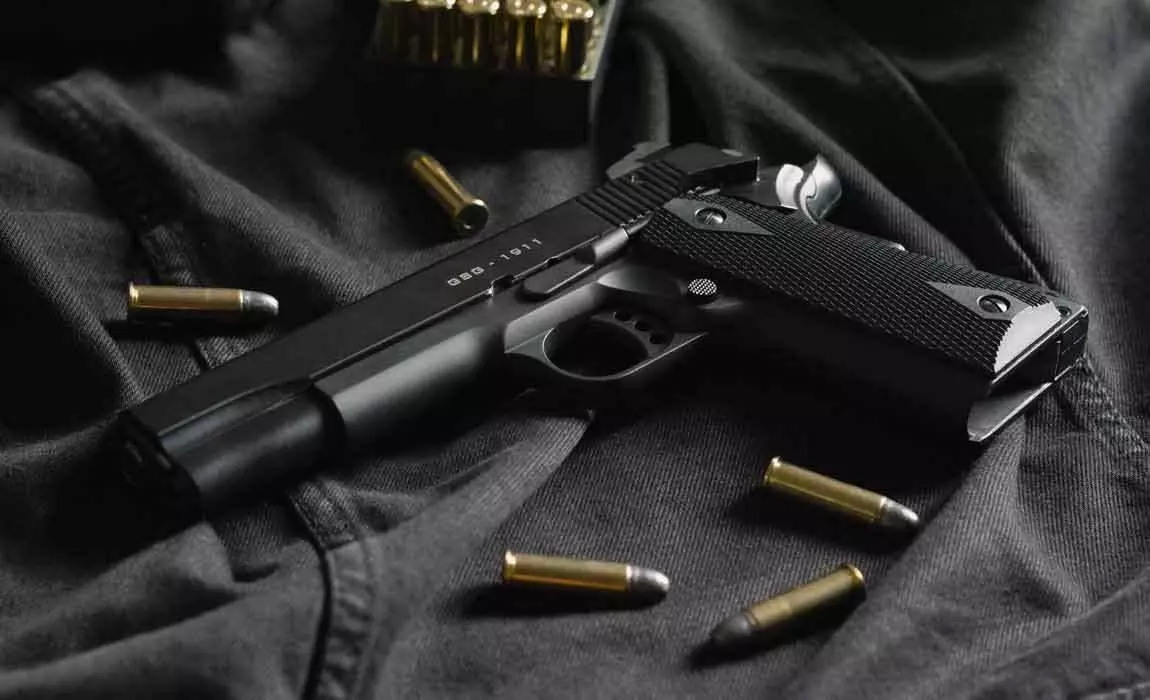
Gun sales have climbed steadily for years, and the most common reason people give is home protection. Most of those buyers walk into a gun store with a vague idea of what they want and leave with whatever the counter guy steered them toward. A more useful approach is understanding the actual tradeoffs across weapon types before you spend $500-1000 on something you'll live with for decades.
What Do You Call Your "Guys Trips"?
- Budget should account for the gun plus training ammunition plus storage - a $600 firearm you can't afford to train with regularly is a worse investment than a $400 platform you shoot monthly.
- Indoor acoustics are a real factor most buyers never consider: an unsuppressed rifle fired in a dark hallway without hearing protection produces a muzzle blast disorienting enough to affect your follow-up shot.
- Shotguns deliver serious stopping power and deterrent effect, but over-penetration with 12 gauge loads in a suburban home is a genuine concern when family members are sleeping in adjacent rooms.
- Pistol caliber carbines occupy an underrated middle ground - longer barrel for accuracy, lower recoil than a handgun, less muzzle blast than a rifle, and often magazine-compatible with your existing pistol.
- The right weapon for your household is the one every capable adult in it can operate confidently - which means testing with your partner before committing to any platform.
What follows is a straight assessment of each option - what it does well, where it falls short, and who it actually makes sense for.
Your Budget Defines Your Real Options
Start here because it eliminates half the conversation. A reliable home defense weapon with proper storage runs $500-800 all in for most buyers. Going cheaper than that means gambling on reliability with something that needs to work flawlessly on the worst night of your life. Going significantly higher is fine if you're an experienced shooter who knows what you want - it's not where first-time buyers should start.
The number that matters more than purchase price is total cost of ownership including ammunition. Quality defensive hollow-points run $1-2 per round regardless of caliber. Practice ammunition varies significantly - 9mm runs roughly $0.35-0.50 per round, .45 ACP runs a bit more. Over a year of monthly range sessions at 100 rounds per visit, that gap adds up to real money. The platform that costs less to train with tends to be the one people actually train with - and training is where home defense capability actually lives.

Alaska Words And Phrases That You Might Hear When You Visit
Here are some Alaska words, slang terms, and phrases that you might hear when you visit Alaska.

Ten Reasons Why Guys Love a Viking River Cruises Rhine Getaway
ManTripping: Men's Travel and Lifestyle Blog for busy men who love to travel.

12-Day Vietnam Discovery Tour
A 12-day Vietnam tour from Hanoi to Ho Chi Minh City covering Halong Bay, Hoi An, Cu Chi Tunnels and the Mekong Delta. Ideal for first-time visitors.

Cruise Ship Wi-Fi Explained for First-Time Cruisers
First-time cruiser connectivity made simple: ship Wi-Fi versus cellular day passes, which cruise lines include internet, security considerations for banking, and practical strategies to match your usage without overspending.
Promoted by FlowAds

Handguns: The Default Choice for Most Situations
Pistols and revolvers dominate home defense purchases for practical reasons: they're maneuverable in tight spaces, easier to store in a quick-access safe, and manageable across a wider range of household members than long guns. For most suburban homes with families, a quality handgun is the right starting point.
The old argument for large-caliber handguns has largely been put to rest by modern ballistics. The FBI's 2014 testing confirmed that quality 9mm defensive loads perform comparably to .45 ACP in terminal effectiveness - and the capacity and recoil advantages of 9mm are genuine differentiators in a home defense scenario. A Glock 17 gives you 17+1 rounds. A standard 1911 in .45 ACP gives you 8+1. Under stress, with the possibility of missed shots, that matters.
That said, if you've trained extensively with a .45 ACP and shoot it accurately under pressure, the heavier round's terminal performance is real. Jim Hupp, who has spent years at gun shows watching buyers work through this exact decision, puts it plainly: "With a .45, you put a bigger hole in people, and they'll probably get knocked down instead of standing back up." The full 9mm vs. .45 ACP breakdown is worth reading separately - the caliber comparison covers it in detail if you're still working through that call.
Man Gear Pick of the Month
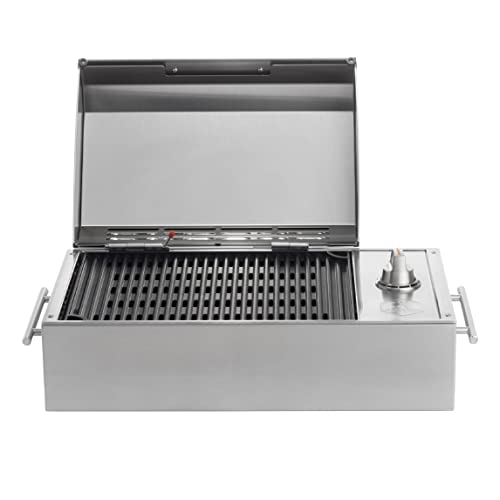
Kenyon City Grill Portable Stainless Steel Electric Grill
Why we picked it: a grill you can actually carry to the campsite, the tailgate or the cabin without borrowing a truck. Stainless, no propane tank to wrestle, and hot enough to cook for four guys rather than reheat for one.
 August's Pick LiberNovo Maxis Electric Big and Tall Ergonomic Office Chair, Graphite 52cm $1,283.00
  July's Pick Powerful Propane Torch Gun, Adjustable Flame Thrower Gun, Kitchen Torch with Detachable Design, Flamethrower Blow Torch for BBQ, Searing Steak, Welding, Camping Charcoal Lighter(Tank Not Included) $42.99
  June's Pick OYASUMI Funny BBQ Man Hot Dog Holders, 4 PCS Reusable Stainless Steel Sausage Stands, Portable Hot Dog Roasters, Barbecue Grill Accessories for Camping & Party Gifts $7.98
 Promoted by FlowAds

One underrated option worth mentioning: revolvers for anyone in the household with arthritis or limited hand strength who struggles to rack a semi-auto slide. A .38 Special revolver eliminates the manual-of-arms complexity entirely while still delivering adequate stopping power at home defense distances.
Shotguns: Right for Some Situations, Not All
The pump-action shotgun has one advantage no other home defense weapon can match: the sound of the action cycling. Anyone who recognizes it knows exactly what you're holding. Beyond the deterrent factor, shotguns are simple to operate and devastating at close quarters.
I've shot both 12 and 20 gauge in home defense drills, and my honest take is that the 12 gauge is oversold for the typical suburban home. The over-penetration risk through interior walls with buckshot is real - those walls separate you from the people you're trying to protect. Recoil on a 12 gauge is also the heaviest in this category, and without consistent training it affects follow-up shots in ways a handgun doesn't.
The 20 gauge is the better call for most homeowners. Meaningfully lower recoil, solid stopping power at home defense distances, and more manageable for other household members who might need to use it. If you're set on a shotgun platform, start there rather than defaulting to 12 gauge because it sounds more serious.
The clear situation where a shotgun earns its place without qualification: a larger home with long sightlines, a rural property, or anywhere the engagement distance might exceed what a handgun handles confidently. For a two-bedroom apartment or a typical suburban layout, a quality handgun or pistol caliber carbine will serve you better.
Semi-Auto Rifles: Almost Never the Right Answer for Home Defense
There's a reason so many first-time home defense buyers gravitate toward AR-15 style weapons - they look serious, they carry a military association, and holding one gives you an immediate sense of security. I get it. I've felt it too at the range with the guys. But that feeling and the reality of using one inside your home at 3 a.m. are very different things.
Fire an unsuppressed .223 or 5.56 rifle inside an enclosed space without hearing protection and you'll understand the problem immediately. The muzzle blast is blinding in a dark hallway. The sound reflection is disorienting enough to affect your ability to assess the situation and take a follow-up shot. These weapons are designed for distance, and they're awkward to maneuver and bring to bear quickly in tight indoor spaces. Over-penetration through interior walls is also a more serious concern with rifle calibers than with handgun rounds or managed shotgun loads.
The exception is genuine - but it's specific. If you're on a rural property where home defense means defending a perimeter, dealing with threats at distance, or protecting livestock and pets from predators like coyotes or bears, a semi-auto rifle in .223/5.56 is the right tool. Defending your homestead from threats that might reach your property before they reach your door is a different problem than clearing a hallway. In that context, the range and accuracy advantages of a rifle platform make real sense. For the average suburban or urban homeowner, the rifle stays at the range where it belongs.
Pistol Caliber Carbines: The Option Most Buyers Overlook
This is the category experienced home defenders often end up recommending and first-time buyers almost never consider. Pistol caliber carbines - shorter barreled rifles chambered in common handgun calibers like 9mm - solve several home defense problems at once in ways that neither handguns nor shotguns fully address.
The longer barrel compared to a handgun increases muzzle velocity and accuracy while keeping the round at velocities where over-penetration is more predictable and manageable than rifle calibers. Recoil is lower than either a handgun or shotgun - I've put new shooters on a 9mm carbine who were struggling with a full-size handgun and watched their accuracy improve immediately. The muzzle blast is manageable compared to a rifle, which matters for low-light situations where you need to maintain situational awareness after the first shot.
The magazine compatibility angle is also practical in ways that matter: a Ruger PC Carbine or Kel-Tec Sub-2000 chambered in 9mm uses the same magazines as a Glock 17 or 19. One caliber to stock, one training regimen, two platforms that complement each other. The only real tradeoff is length - a carbine requires more space to maneuver in tight hallways than a handgun, which is worth testing at the range before committing.
For guys who want more than a handgun but find shotgun recoil a genuine obstacle, the pistol caliber carbine is worth serious consideration before defaulting to a platform that's harder to shoot well.
Storage Is Part of the Weapon Decision
A loaded home defense firearm in an unsecured location isn't a home defense strategy - it's a liability, particularly once kids are in the picture or guests with kids visit regularly.
Quick-access keypad or biometric safes from Vaultek or Fort Knox in the $150-300 range mount to nightstands or inside cabinets and give you fast access in an emergency while keeping the firearm secured the other 99.9% of the time. Budget for this from day one, not as a future upgrade.
The Actual Weapon Matters Less Than Your Skill and Comfort Level Using It
Every weapon type discussed here works for home defense in the right hands. What I've found after years of these conversations - and what Jim Hupp consistently sees at gun shows watching buyers wrestle with the same decision - is that experience and training determine the outcome more than platform selection does.
"Main thing is their experience," Jim says. A handgun you shoot accurately under stress beats a shotgun you've fired twice. A 9mm you can afford to train with monthly beats a .45 ACP collecting dust because ammunition costs make range trips feel like a splurge.
Buy the platform you can afford to train with consistently, store it properly from day one, and get at least one session with a certified instructor before you need it in the dark. The gun is just the tool - the person behind it is what home defense actually depends on.

Promoted by FlowAds
