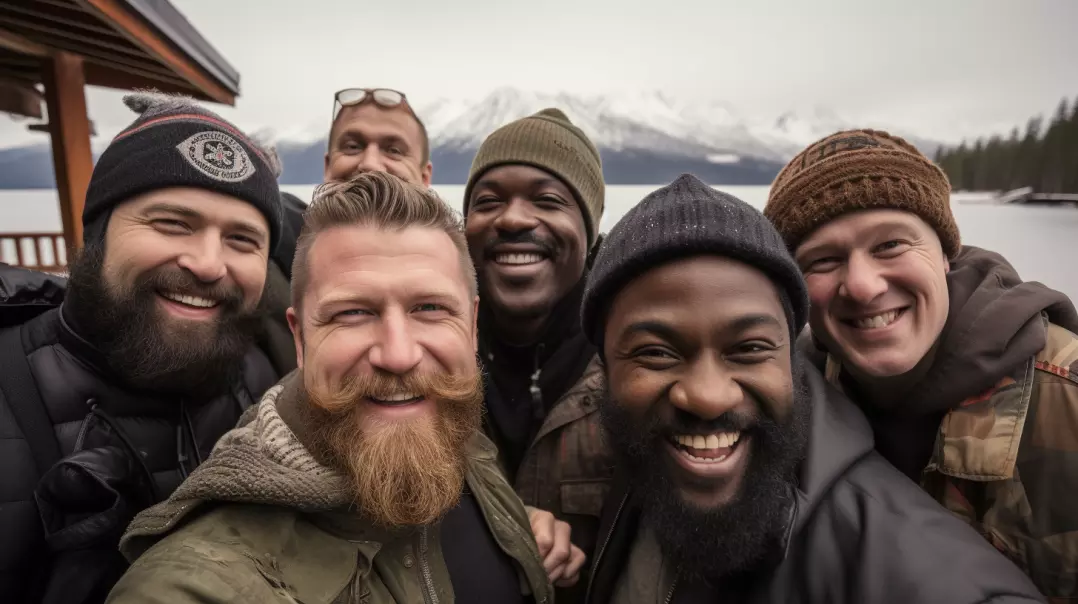
Ryan Gosling, Jason Statham, and Idris Elba all rock beards - but they're working with completely different face shapes and styles. The difference between a beard that sharpens your look and one that throws off your whole appearance comes down to understanding your face shape and choosing styles that actually complement your features rather than fight against them.
Here's what most guys get wrong: they pick a beard style based on what looks good on someone else without considering that the celebrity or friend they're copying might have a completely different face shape. That's why we're breaking down what actually works for each face type - and just as importantly, what doesn't.
What Do You Call Your "Guys Trips"?
- Saves you weeks of growing out a style that doesn't actually work for your face
- Helps you look sharp for professional settings, date nights, and casual weekends
- Understanding your face shape applies to haircuts, sunglasses, and hat choices too
- A well-chosen beard style can balance features and strengthen your overall appearance
- Knowing what to avoid is just as valuable as knowing what works
Most guys have been there - you see a beard style that looks great on someone else, spend weeks growing it in, and realize it just doesn't work on you. That frustration usually comes from not accounting for face shape, which is the single biggest factor in whether a beard style lands or falls flat.

Awesome UAE Mancation Ideas in Abu Dhabi, Dubai and Beyond
Here's why the United Arab Emirates (UAE) makes a great place for a mancation. Legendary cities like Abu Dhabi and Dubai have everything guys could imagine.

Golf, Rum, and Fishing on an Ultimate Caribbean Mancation Cruise
Golf, Rum, and Fishing are all waiting you on an awesome Caribbean cruise to the Eastern Caribbean islands of Antigua, St. Maarten, Barbados, and Saint Lucia.

Book your next cruise with Heather at Flow Voyages
Flow Voyages is a travel advisor specializing in cruises and resorts.

Tours and Transportation in Sri Lanka
Customized Sri Lanka tours built around your preferences, ideal for travelers wanting flexible itineraries and unique activities.
Promoted by FlowAds

How to Identify Your Face Shape
Before committing to a style, you need to know what you're working with. There are two approaches: the mirror method (quick and practical) or the measurement method (more precise).
The Quick Mirror Method
Stand in front of a mirror with your hair pulled back. Look at the overall outline of your face and compare it to these shapes:
Oval - Your face is longer than it is wide, with a gently rounded jawline and forehead slightly wider than your chin. Think Ryan Gosling or George Clooney.
Man Gear Pick of the Month
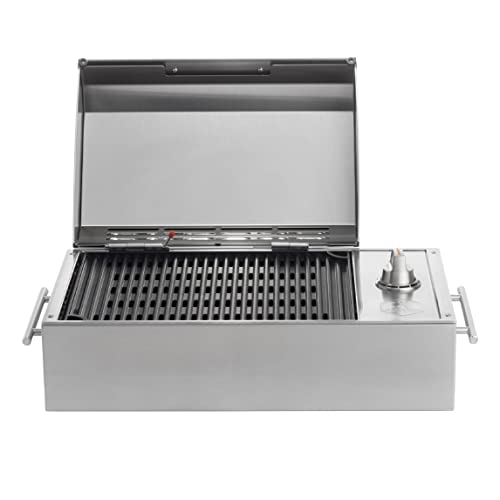
Kenyon City Grill Portable Stainless Steel Electric Grill
Why we picked it: a grill you can actually carry to the campsite, the tailgate or the cabin without borrowing a truck. Stainless, no propane tank to wrestle, and hot enough to cook for four guys rather than reheat for one.
 August's Pick LiberNovo Maxis Electric Big and Tall Ergonomic Office Chair, Graphite 52cm $1,393.00
  July's Pick Powerful Propane Torch Gun, Adjustable Flame Thrower Gun, Kitchen Torch with Detachable Design, Flamethrower Blow Torch for BBQ, Searing Steak, Welding, Camping Charcoal Lighter(Tank Not Included) $42.99
  June's Pick OYASUMI Funny BBQ Man Hot Dog Holders, 4 PCS Reusable Stainless Steel Sausage Stands, Portable Hot Dog Roasters, Barbecue Grill Accessories for Camping & Party Gifts $7.98
 Promoted by FlowAds

Square - Your jawline is strong and angular, with your face width and length roughly equal. Jason Statham is the textbook example.
Round - Similar proportions to square, but your jawline and cheekbones are softer and more curved. Gerard Butler falls into this category.
Rectangle/Oblong - Like a square but longer, with your face length noticeably greater than width. Adam Levine and Ben Affleck have this shape.
Diamond - Cheekbones are the widest part of your face, with a narrower forehead and pointed chin. Johnny Depp is a classic example.
Heart - Wide forehead and cheekbones that taper to a narrower, sometimes pointed chin. Ryan Reynolds has heart-shaped features.
Triangle - The opposite of heart - your jawline is wider than your forehead and cheekbones. Less common but distinctive.
The Precise Measurement Method
For more precision, grab a flexible tape measure and record four measurements:
Face Length - Bottom of chin to center of hairline
Jawline - Side of chin to just below your ear (multiply by two for full jawline)
Cheekbones - Across your face at the widest point near your eyes
Forehead - From the arch of one eyebrow to the other
Compare these numbers: if face length is greatest and cheekbones second, you're likely oval. If all measurements are roughly equal with a strong jawline, you're square. If cheekbones are widest with a pointed chin, you're diamond.
What Works for Oval Faces
Oval faces have balanced proportions that work with almost any beard style - you're the lucky ones. The key is not to throw off that natural balance with something too extreme.
The Full Beard
The classic full beard covers cheeks, chin, and connects to a mustache. On an oval face, you can go thick or trimmed, long or short - it all works. Robert Downey Jr. rocks this look regularly. Expect 2-4 months of growth depending on how full you want it.
The Stubble Beard
Three to five days of growth, kept neat with regular trimming. This low-maintenance style works for professional settings while still adding some edge. It's also the easiest way to test whether facial hair suits you before committing to something longer.
The Soul Patch
A small triangular or square patch just below the center of your bottom lip. It's minimal but adds a touch of personality without overwhelming your features. Works well if your beard grows patchy on the cheeks.
What Doesn't Work: Overly long beards that extend well past your chin can make an oval face look too elongated. Keep things proportional.
What Works for Square Faces
Your strong jawline is an asset - don't hide it under too much facial hair. The goal is to soften the angular lines without losing that masculine structure.
The Full Goatee
A mustache connected to a chin beard, leaving cheeks clean. This lengthens the chin slightly and draws the eye to the center of your face rather than the wide jaw. Think Walter White in Breaking Bad's later seasons. Allow 4-6 weeks for proper definition.
The Chevron Mustache
A thick mustache that angles down toward the corners of your lips, with the rest of the face clean or with light stubble. This classic style works great for square faces because it doesn't add width to an already strong jawline.
The Circle Beard
A mustache and goatee that connect to form a circle around your mouth. It's sometimes called a "door knocker" and softens hard angles while keeping things neat. About 3-4 weeks to establish the shape.
What Doesn't Work: Full beards with heavy growth on the sides will make your face look blocky. Keep the sides trimmed shorter than the chin.
What Works for Round Faces
The strategy here is creating angles and length to slim and elongate a naturally circular face shape.
The Van Dyke Beard
Named after the 17th-century painter Anthony van Dyck, this style combines a pointed chin beard with a separate mustache - the two don't connect. The point at the chin creates the illusion of a longer face, while keeping the cheeks clean avoids adding width.
The Van Dyke is probably the most underrated style out there. I've recommended it to dozens of round-faced guys over the years, and it's the one that gets the most "why didn't I try this sooner" responses. Expect 6-8 weeks to get the length right.
The Anchor Beard
Picture an anchor shape - pointed beard along the chin connected to a soul patch, with a separate mustache above. Robert Downey Jr. as Tony Stark made this style iconic. It defines the chin and adds structure to softer features.
The Extended Goatee
Similar to a standard goatee but with the beard extended slightly along the jawline toward the ears. This creates a more angular appearance without the maintenance of a full beard.
What Doesn't Work: Full, bushy beards that grow outward will emphasize roundness. Anything that adds width to your cheeks works against you.
What Works for Rectangle/Oblong Faces
Your face is already long, so the goal is adding width and avoiding anything that elongates further.
The Mutton Chops
Bushy sideburns that extend down the jaw, often connecting to a mustache while leaving the chin clean. This adds width to the middle of your face and balances the length. It's a bold choice, but on the right guy, it commands respect. Allow 6-8 weeks for proper fullness.
The Short Boxed Beard
A full beard kept short (under an inch) with defined lines along the cheeks and neck. The fullness on the sides adds width, while keeping it trimmed prevents adding length below the chin. About 4-6 weeks of growth.
The Chin Strap
A thin line of beard that follows your jawline from ear to ear. This defines your jaw without adding length and works well for guys who can't grow full coverage on their cheeks.
What Doesn't Work: Long goatees or pointed chin beards will make your face look even longer. Skip the Van Dyke and anything that adds length without width.
What Works for Diamond Faces
Diamond faces need to round out the pointed chin without emphasizing already-prominent cheekbones.
The Garibaldi Beard
Named after Italian general Giuseppe Garibaldi, this is a full, wide beard with a rounded bottom. It softens the pointed chin while the fullness balances narrow features. Expect 4-6 months of growth to achieve the proper length - this isn't a quick look.
The Full Beard with Rounded Bottom
Similar concept to the Garibaldi but shorter. Keep the chin area full but round rather than pointed, and avoid sideburns that puff out and emphasize wide cheekbones. About 2-3 months.
The Verdi Beard
A medium-length rounded beard with a thick, prominent mustache. Named after the Italian composer, this style draws attention upward to the mustache rather than the pointed chin. The sides stay relatively short.
What Doesn't Work: The Van Dyke and other pointed styles will accentuate your already-pointed chin. Skip anything that comes to a sharp point at the bottom.
What Works for Heart-Shaped Faces
With a wider forehead and narrow chin, the goal is adding substance to the lower face without softening your features too much.
The Classic Sideburns
Medium sideburns with light stubble or a clean face otherwise. This is subtle but adds visual weight to the lower portion of your face. Works well in professional settings where full beards might be too much.
The Verdi Beard
The prominent mustache draws attention to the center of your face, while the medium-length beard adds width to a narrow chin. This is one of the most forgiving styles for heart-shaped faces. Plan for 2-3 months of growth.
The Balbo Beard
A floating mustache (not connected to the beard) with a beard that covers the chin and part of the jawline, but no sideburns. Named after Italian aviator Italo Balbo, this style adds definition to the lower face. About 6-8 weeks to establish.
What Doesn't Work: Full beards with heavy growth on the sides will emphasize your wide cheekbones. Keep sideburns minimal.
What Works for Triangle Faces
Triangle faces have the opposite challenge of heart shapes - a wider jaw that needs to be balanced with visual weight higher on the face.
The 5 O'Clock Shadow
Light stubble all over, kept at 2-3mm. This adds texture without emphasizing your already-strong jawline. It's the safest option for this face shape and the easiest to maintain.
The Olde English Beard
A full beard with distinct sideburns that are kept separate - it's a mix between a full beard and mutton chops. The visual weight on the sides balances the wide jaw.
Light Stubble with Mustache
Keep the lower face at stubble length while growing a more prominent mustache. This draws the eye upward and balances the proportions.
What Doesn't Work: Heavy beards that emphasize the jaw. Some barbers actually recommend triangle faces consider going clean-shaven, since facial hair tends to emphasize the widest part of the face.
The Patchy Beard Reality Check
Not every guy can grow every style - and that's fine. If your cheeks grow patchy while your chin comes in thick, you're actually a perfect candidate for goatees, Van Dykes, and anchor beards. Work with your growth pattern, not against it.
I've seen guys spend months trying to force a full beard when a cleaner style would have looked sharper from week two. The goal isn't growing the most beard possible - it's finding what actually works for your face and your growth pattern.
How to Make Any Style Work Better
Your face doesn't fit perfectly into geometric categories, and individual features matter too. A style that works perfectly on someone with the same face shape might look different on you based on beard density, growth patterns, and the specific proportions of your features.
The only way to know for certain is to grow it out and see. Give any new style at least 4-6 weeks before judging - beards go through awkward phases, and most guys give up too early. If you're planning a guys trip to Colorado or have an important event coming up, time your beard experiments accordingly.
Learning to use the right tools makes a significant difference too. A quality trimmer with multiple guard lengths, a boar bristle brush, and proper beard oil can transform a mediocre beard into something sharp. Beardbrand and Honest Amish make solid entry-level oils if you're not sure where to start. Understanding the difference between a beard comb and brush - the comb detangles and shapes, the brush distributes oils and trains hair direction - is basic knowledge that pays off.
For tips on keeping your look maintained when you're traveling, check out how to keep your hair and beard sharp on any trip. The right travel grooming kit makes the difference between looking polished and looking like you've been living in the woods.