Mounjaro - the brand name for tirzepatide - has become one of the most talked-about medications in metabolic health, and for good reason. But the conversation around it has gotten tangled up with Ozempic, Wegovy, Zepbound, and a growing list of GLP-1 drugs that all seem to do similar things under different names. This guide cuts through the confusion: what these drugs are, how they differ, what to realistically expect, and what to ask your doctor before you make any decisions. I've been watching this category explode for the past few years and the amount of misinformation circulating - even among guys who are already on these medications - is significant.
What Do You Call Your "Guys Trips"?
The GLP-1 medication landscape has exploded in the past few years, and the brand names alone are enough to make anyone's head spin. Here's what separates the hype from the facts.
- Mounjaro and Zepbound are the same drug (tirzepatide) marketed under different names for different FDA approvals - one for diabetes, one for weight loss - and the same is true for Ozempic and Wegovy (semaglutide).
- Tirzepatide targets two hormone receptors while semaglutide targets one, and in the head-to-head SURMOUNT-5 trial that difference produced 20.2% body weight loss against 13.7%.
- There are now three GLP-1 pills on the US market, and the newest one can be taken any time of day with no food or water restrictions at all.
- Direct-purchase pricing reset the math in January 2026 - Wegovy and Zepbound now run roughly $299 to $350 a month self-pay, with oral starting doses near $149.
- Canada is the first major market to approve generic semaglutide, but British Columbia bars non-residents from buying by mail, and tirzepatide is not going generic there at all.
Always consult your physician before starting, changing, or stopping any prescription medication. This article is for informational purposes and does not constitute medical advice.
What Is Mounjaro - and Why Does This Drug Have So Many Names?
Mounjaro is the brand name for tirzepatide, a prescription injectable developed by Eli Lilly and FDA-approved in May 2022 to manage blood sugar in adults with type 2 diabetes. But there's a companion brand you've almost certainly also seen: Zepbound. Same drug, different name, different FDA indication - Zepbound is the tirzepatide version approved specifically for chronic weight management and, as of 2024, obstructive sleep apnea.
This dual-brand pattern repeats across the entire GLP-1 category. It's a pharmaceutical reality, not a coincidence - and it explains most of the name confusion.

The Ultimate Guide to Planning the Perfect Philippines Guys Trip
blog post about tips for planning an epic Philippines guys trip this year

Five Awesome Reasons to Visit North Dakota This Year
ManTripping: Men's Travel and Lifestyle Blog for busy men who love to travel.

Multi day Kayak Expedition Sitka, Alaska
Multi day kayak expedition in Sitka, Alaska with wildlife, pristine forests and Tlingit and Haida history, ideal for adventurous paddlers.

7 Days Private Guided Tour in Sri Lanka
A 7 day private guided tour of Sri Lanka weaving history, culture and adventure with hidden gems, ideal for curious travelers.
Promoted by FlowAds

The GLP-1 Brand Name Breakdown
Two active ingredients drive every major GLP-1 medication on the market right now. Understanding this clears up nearly every brand name question you're likely to have.
Semaglutide (Novo Nordisk)
Semaglutide appears under three brand names:
- Ozempic - weekly injection, FDA-approved for type 2 diabetes
- Wegovy - weekly injection and daily pill, approved for chronic weight management and cardiovascular risk reduction
- Rybelsus - daily oral pill, approved for type 2 diabetes
Tirzepatide (Eli Lilly)
Tirzepatide appears under two:
Man Gear Pick of the Month
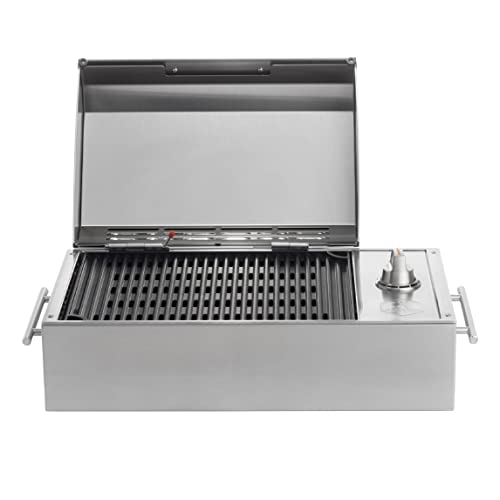
Kenyon City Grill Portable Stainless Steel Electric Grill
Why we picked it: a grill you can actually carry to the campsite, the tailgate or the cabin without borrowing a truck. Stainless, no propane tank to wrestle, and hot enough to cook for four guys rather than reheat for one.
 August's Pick LiberNovo Maxis Electric Big and Tall Ergonomic Office Chair, Graphite 52cm $1,393.00
  July's Pick Powerful Propane Torch Gun, Adjustable Flame Thrower Gun, Kitchen Torch with Detachable Design, Flamethrower Blow Torch for BBQ, Searing Steak, Welding, Camping Charcoal Lighter(Tank Not Included) $42.99
  June's Pick OYASUMI Funny BBQ Man Hot Dog Holders, 4 PCS Reusable Stainless Steel Sausage Stands, Portable Hot Dog Roasters, Barbecue Grill Accessories for Camping & Party Gifts $7.98
 Promoted by FlowAds

- Mounjaro - weekly injection, approved for type 2 diabetes
- Zepbound - weekly injection, approved for weight management and obstructive sleep apnea
The practical takeaway: Ozempic and Wegovy are the same molecule at different doses and approvals. Mounjaro and Zepbound are identical medications aimed at different diagnoses. Which one your doctor prescribes often has as much to do with your insurance coverage as your actual health needs - because coverage rules follow FDA approvals, and the approvals distinguish "diabetes drug" from "weight loss drug" even when they contain the same compound.
For a lot of guys navigating this conversation with their doctors - whether they're dealing with type 2 diabetes, carrying weight they haven't been able to move for years, or both - that distinction matters for what insurance will actually cover. Ozempic in particular carries its own set of considerations for men, from side effect differences to questions about reproductive health, which we break down in the risks and rewards of Ozempic.
How These Drugs Work in Your Body
GLP-1 stands for glucagon-like peptide-1, a hormone your gut releases naturally after eating. It signals the pancreas to produce insulin, slows digestion, and sends fullness cues to your brain. GLP-1 medications mimic this effect - and they stay active far longer than the hormone does on its own.
Semaglutide activates the GLP-1 receptor only. Tirzepatide activates two: GLP-1 and GIP (glucose-dependent insulinotropic polypeptide), which enhances insulin response and further reduces appetite by targeting a second pathway entirely.
That dual action shows up in outcomes. In the SURMOUNT-5 head-to-head trial published in the New England Journal of Medicine, patients on tirzepatide lost an average of 20.2% of their body weight at 72 weeks versus 13.7% on semaglutide - both on highest tolerated doses, both combined with diet and exercise. Nearly 20% of the tirzepatide group lost at least 30% of their body weight, against 6.9% of the semaglutide group. Real-world results in routine care typically land lower, but even 5-8% sustained weight loss produces meaningful improvements in blood pressure, metabolic markers, and cardiovascular risk.
Beyond blood sugar and weight, emerging research is examining GLP-1 medications for their effects on chronic inflammation linked to metabolic disease. Wegovy already holds FDA approval for reducing major cardiovascular events in adults with heart disease and obesity, and a 2025 approval expanded Wegovy's indications to include treatment of metabolic fatty liver disease (MASH). Zepbound has approval for moderate-to-severe obstructive sleep apnea. For men already using CPAP therapy for sleep apnea, that approval is worth raising at your next appointment. The clinical applications are broadening.
Pens, Pills, and Syringes: How These Medications Are Delivered
Most people picture a weekly injection when they hear GLP-1. That's still the primary format - but it's no longer the only one.
Prefilled injection pen: The most common delivery method. Devices like the Mounjaro KwikPen are designed for ease - the process takes under a minute and most people get comfortable with it after the first or second dose. Injection sites are typically the abdomen, front of the thigh, or upper arm, rotated each week.
Vial with syringe: Some clinical settings and - during the shortage period - compounding pharmacies offered tirzepatide and semaglutide in vials requiring a standard insulin syringe. This format requires more preparation and precise dosing. It's largely uncommon in the US now, particularly since the FDA's enforcement actions against compounders (more on that below).
Oral pill: There are now three, and they are not equivalent. Rybelsus has been available as a daily semaglutide tablet for diabetes management since 2019. The FDA approved a Wegovy pill on December 22, 2025, the first oral GLP-1 cleared for weight loss, and it reached pharmacies in early January 2026. Both are peptide formulations with the same absorption problem: taken first thing in the morning on an empty stomach with no more than 4 ounces of plain water, and a 30-minute wait before eating or drinking anything else.
Orforglipron is the one that breaks that pattern. Approved on April 1, 2026 and sold as Foundayo, it's a small-molecule drug rather than a peptide, so it can be taken any time of day with or without food or water. In its 72-week trial, patients on the highest dose who stayed on treatment lost a mean of 12.4% of body weight. That's less than the injectables deliver, which is the honest tradeoff for never handling a needle.
Side Effects: What's Common, What's Manageable, and What to Flag
The most reported side effects from GLP-1 medications are gastrointestinal - nausea, diarrhea, constipation, reduced appetite, and stomach discomfort. These tend to be most pronounced when starting or after a dose increase, and for most people they ease as the body adjusts.
The standard approach is gradual dose escalation. Mounjaro starts at 2.5 mg weekly, typically increasing in increments over several months to a maintenance dose, with a maximum of 15 mg. Rushing that schedule is the most common reason people have a rough first few weeks.
Less common side effects include fatigue, acid reflux, hair thinning (usually a side effect of rapid weight loss rather than the medication itself), and injection-site reactions. Rare but serious risks include pancreatitis and gallbladder issues, which is why ongoing medical supervision matters.
Both semaglutide and tirzepatide carry an FDA black box warning for a rare type of thyroid tumor - medullary thyroid carcinoma - based on animal studies. That link has not been established in humans, but the warning is required and is part of why family history matters in the prescribing conversation.
Who These Medications Are Not Appropriate For
GLP-1 medications are generally not recommended for anyone with a personal or family history of medullary thyroid carcinoma or Multiple Endocrine Neoplasia syndrome type 2 (MEN 2), known hypersensitivity to tirzepatide or semaglutide, or those who are pregnant or breastfeeding. Anyone with a history of pancreatitis warrants a careful clinical conversation before starting.
This is not a category of medication to start based on a recommendation from a work colleague or because something you read made it sound straightforward. The screening is real and matters.
What GLP-1 Medications Cost in 2026
The pricing picture changed more in the first half of 2026 than it did in the previous three years, and most of what you'll find online still quotes 2024 numbers. List prices haven't moved much - Wegovy still carries a list price north of $1,300 a month and Zepbound around $1,270 - but almost nobody pays list anymore.
Under the most-favored-nation agreements announced with Eli Lilly and Novo Nordisk, both manufacturers now sell directly to patients at a fraction of list. Through the federal TrumpRx channel that launched in January 2026, Wegovy runs roughly $350 a month and Zepbound roughly $346, with Zepbound self-pay starting near $299 depending on dose. Injectable Ozempic and Wegovy land in a $199 to $350 range depending on the strength you're prescribed.
The oral options undercut all of it. The Wegovy pill starts at $149 a month for the lowest dose and tops out near $299. Orforglipron opens at $149 for its lowest dose, with commercial-insurance copays as low as $25 for eligible patients.
Medicare matters here too. Beginning in mid-2026, Medicare covers injectable GLP-1 medications for beneficiaries with severe obesity or a qualifying related condition, at roughly $245 a month to the program and a capped $50 monthly copay for the patient.
Two things follow from this. The manufacturer savings programs are no longer a footnote - for a self-pay patient they're now the main event, and you should ask about them by name. And the price gap that made international sourcing compelling has narrowed sharply.
Compounded GLP-1s: What Happened to the Cheaper Versions
During the period of significant drug shortages from roughly 2022 through 2024, the FDA allowed compounding pharmacies to produce versions of semaglutide and tirzepatide. These became widely available through telehealth platforms at prices well below brand-name list prices - a meaningful option for people who couldn't access or afford the originals.
That window has largely closed. The FDA resolved the semaglutide shortage in February 2025 and removed tirzepatide from the shortage list in late 2024. With the shortages declared resolved, the legal basis for broad compounding no longer applies. In September 2025, the FDA issued warning letters to more than 50 companies for misleading promotion of compounded GLP-1 products - including claims that compounded versions are "generics" or contain "the same active ingredient" as FDA-approved drugs.
The pressure kept building through 2026. The agency ran another coordinated enforcement wave in March 2026, and on April 30, 2026 proposed leaving semaglutide, tirzepatide, and liraglutide off the 503B bulks list, which would close large-scale outsourcing-facility compounding for good. Major telehealth platforms including Hims and Ro exited compounded semaglutide entirely.
Compounding under strict 503A rules still exists in limited circumstances - when a prescriber determines a patient's specific needs can't be met by an FDA-approved product. But the landscape is narrow, enforcement is active, and the long-term availability is not guaranteed. If you're considering a compounded version, verify the pharmacy holds a 503A state license, uses pharmaceutical-grade ingredients with a Certificate of Analysis, and that the prescription comes from a licensed clinician who has evaluated you in person.
Generic Semaglutide Is Landing in Canada First
Canada is the first major market where semaglutide goes generic, and it happened partly by accident. Novo Nordisk's Canadian patent on the molecule lapsed years ago over an unpaid maintenance fee, and the company's data exclusivity there ran out on January 4, 2026. Health Canada approved its first generic semaglutide products in April and May 2026.
What that means at the pharmacy counter is still settling. Manufacturers including Sandoz and Dr. Reddy's were asked for additional data, and broad availability is expected to take shape through the third quarter of 2026 rather than arriving all at once. Canadian pricing rules let generics fall to a fraction of the brand price once several manufacturers are competing, so the expectation is a monthly cost well below what brand Ozempic runs in Canada today.
One limit worth being clear about: this is generic semaglutide only. Tirzepatide - the molecule in Mounjaro and Zepbound - is not affected. Eli Lilly's patents there are intact, and there's no generic Mounjaro coming to Canada on this timeline. If tirzepatide is what your doctor wants you on, the generic story doesn't apply to you at all.
Getting GLP-1s From Canada or Mexico: Costs, Risks, and Customs Rules
The price gap that drove this conversation for years has narrowed, and for a lot of readers it has closed entirely. Canadian pharmacy prices for brand Ozempic run roughly $250 to $380 a month. Mexico runs lower, with Ozempic commonly $200 to $300 and tirzepatide products $400 to $500. Set those against $299 to $350 for direct-purchase Zepbound or Wegovy in the US, or $149 for an oral starting dose, and crossing a border stops making financial sense for a lot of people. Run your own numbers at your own dose before assuming the trip saves you anything.
Canada and Mexico are also not equivalent options.
Canadian pharmacies operate under strict federal regulation and require valid prescriptions - the safety framework is comparable to the US, the prices are just lower. But access rules tightened specifically because of American demand. British Columbia enacted a regulation in 2023 barring pharmacies from selling semaglutide to non-residents by online or mail order, and the province later extended that restriction to tirzepatide and dulaglutide. Dispensing to US residents in BC fell more than 99% after the original rule took effect. Non-Canadians can still buy in person at a pharmacy, but the prescription has to be signed by a Canadian doctor or nurse practitioner.
Mexico is more complicated. Pharmacies are technically prescription-only, but enforcement varies. The counterfeit risk is meaningfully higher - the FDA has documented cases of fake GLP-1 products with incorrect labels, missing active ingredients, or products from pharmacies that simply don't exist. Major chains like Farmacia Benavides and Farmacia San Pablo in border cities are generally more reliable than smaller operations, but vetting still matters.
What to Know Before You Cross the Border for a Prescription
If you're going to do this, treat it like a trip with a logistics problem rather than a quick errand.
- The prescription is the bottleneck, not the pharmacy - a US script alone won't fill in British Columbia. Budget time for a Canadian telehealth or walk-in appointment, or confirm the pharmacy's requirements in writing before you drive.
- Verify the pharmacy before you go - CIPA certification is the practical vetting mark. A pharmacy willing to ship without a prescription is telling you something about how it operates.
- Injectables need cold chain - unopened pens store between 36 and 46 degrees Fahrenheit. Bring an insulated case with gel packs. A long drive home in a warm car is a real risk to medication you just paid for.
- Fly with it in your carry-on, never checked - TSA exempts medically necessary liquids and gel packs from the 3.4-ounce limit, and cargo holds have no temperature control. Declare it at the checkpoint and keep it in the original labeled packaging.
- Ninety days is the practical ceiling - US Customs generally permits personal importation of a 90-day supply with a valid prescription in English and original packaging. That's a customs enforcement practice, not an FDA endorsement, and a provider letter listing the medication and dose makes the conversation at the border much shorter.
If you're seriously considering international sourcing, bring it up with your doctor. They can help you evaluate legitimate options and ensure your monitoring doesn't get disrupted in the process.
Starting a GLP-1: Have a Plan Before You Start
For men in their 40s and 50s navigating weight that's accumulated through years of demanding professional schedules, less active routines, and the general drift that married life can bring to diet and exercise habits, GLP-1 medications represent a genuinely different tool than anything that existed before. The clinical results are real, and understanding why weight loss after 40 behaves differently is worth doing before you start.
But these are long-term medications for chronic conditions, not a course you run and then finish. For most people managing obesity or type 2 diabetes, stopping the medication means the weight returns - studies consistently show this. That's not a flaw in the drug; it reflects how metabolic disease works. The link between diet and diabetes doesn't stop mattering once you're on a prescription.
Before starting anything, talk to your physician about your full health picture, what you're trying to accomplish, how progress will be monitored, and what sustainable long-term management looks like for you. Ask about manufacturer savings programs - both Novo Nordisk and Eli Lilly offer self-pay pricing that brings costs significantly below list price for eligible patients who aren't using insurance.
The Questions to Ask Your Doctor Before Your First Prescription
Walking in with a brand name is the weakest version of this conversation. Walking in with questions is the strong one. These are the ones that change the outcome.
- Which molecule fits my diagnosis, and why that one - semaglutide and tirzepatide aren't interchangeable, and the answer should be about your metabolic picture.
- Are you writing this against the diabetes approval or the weight approval - the same drug under the other brand name can be the difference between covered and denied.
- What does my insurance require, and who handles the prior authorization - ask who in the office files it and how long it typically takes.
- What's my escalation schedule, and who do I call if week three is rough - most miserable first months come from moving up too fast.
- Does an oral option make sense for me - a fair question now that there are three pills on the market instead of one.
- What are we monitoring, how often, and what would make you stop treatment - name the labs and the intervals out loud.
- Does my family history rule anything out - thyroid cancer and MEN 2 specifically.
- What happens if there's a supply gap or I miss doses - ask before it happens, not during.
- What's the plan for stopping, and what should I expect if I do - the question most people skip and most regret skipping.
- What am I doing besides the injection - protein intake, resistance training, and sleep all change the quality of the weight you lose.
Start With the Prescription, but Commit to the Plan
Mounjaro, Zepbound, Ozempic, and Wegovy each have a real place in modern metabolic treatment - and the research behind them is strong and continuing to expand. But with three oral options now available, compounding rules still tightening, generic semaglutide arriving in Canada before it arrives here, and a branded landscape engineered to create confusion, the only reliable way through it is with a physician who knows your full picture and a plan that goes beyond the first fill.
One practical note before you go: if cost is what has been stopping you, check the direct-purchase price at your specific dose before you do anything else. The number you remember from 2024 is almost certainly wrong, and for a lot of guys the gap between "can't afford it" and "can afford it" closed sometime this year without any announcement they happened to see.
The prescription gets you started. Whether it works long-term comes down to the monitoring plan, the lifestyle changes you build around it, and a physician who's paying attention to your numbers - not just renewing the script every 90 days.

Promoted by FlowAds
