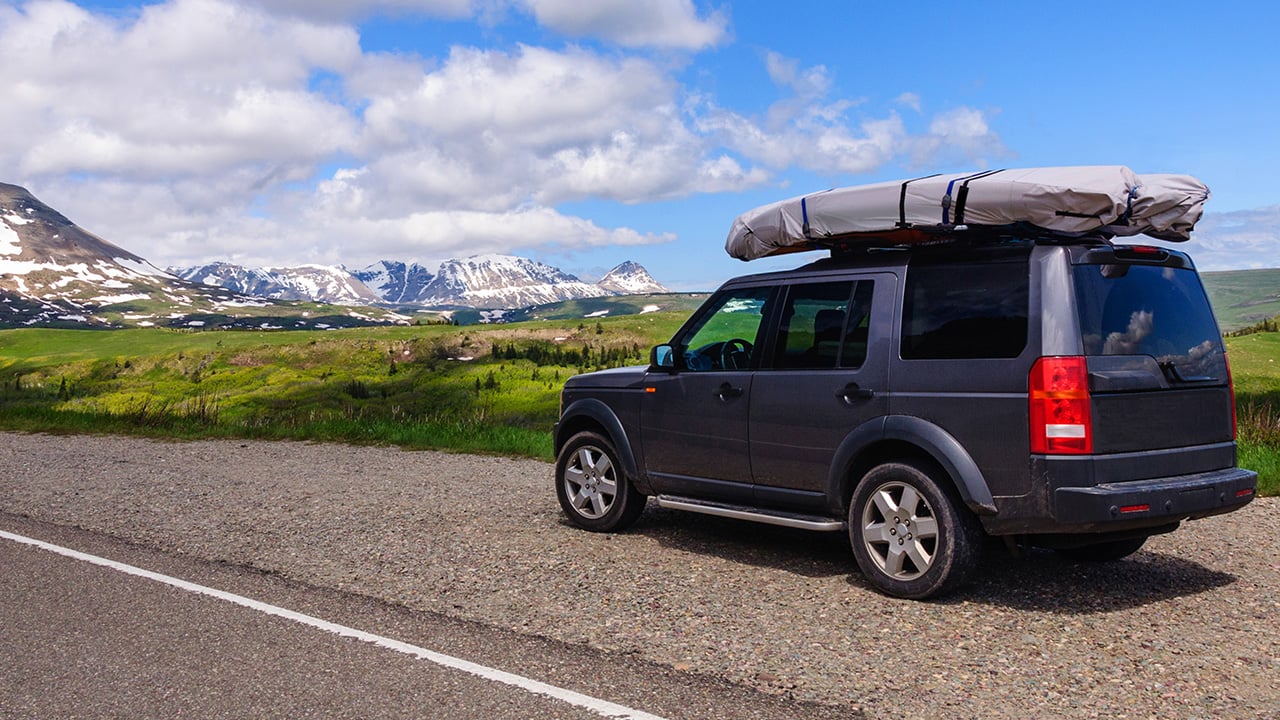
Going on an adventure is fulfilling, but it involves some prior planning. If you're considering different getaway ideas such as road trips, overlanding, national parks, or simple weekend escapes, you'll need the right vehicle. It needs to be strong enough to withstand the different conditions of the journey.
Tires matter just as much. You won't get far if they fail in the middle of nowhere. They need to be the right fit for your adventure in terms of durability and grip, and that's why many drivers opt for the 255/75R17 tire size — it offers the best of both worlds.
What Does 255/75R17 Actually Mean?
At first glance, the 255/75R17 tire size doesn't seem to convey much — it's just a bunch of numbers and letters. But that sequence carries most of what you need to know about the tire.
If your adventure involves off-roading, you'll prefer a wider tire. That's what the 255 stands for — the tire's width in millimeters. A wider tire offers more tread detail, making it a better choice for road trips over dirt, mud, and rocky terrain.
The second number, 75, matters most when your itinerary involves uneven surfaces. It's the aspect ratio — the sidewall height as a percentage of the width. The higher the number, the taller the tire.
The final number, 17, denotes the wheel's diameter in inches. A tire with this number can only be mounted on 17-inch wheels, so choose carefully — you won't be journeying anywhere without the right fit on your car.
The letter R indicates construction, which directly affects performance. In this case, it's a standard radial — the right build for safe handling on both pavement and diverse terrain.
Reading the sidewall markings is worth the minute it takes. It tells you whether to stick to the pavement on your trip or allow yourself a short off-road detour.
Why This Size Is So Popular
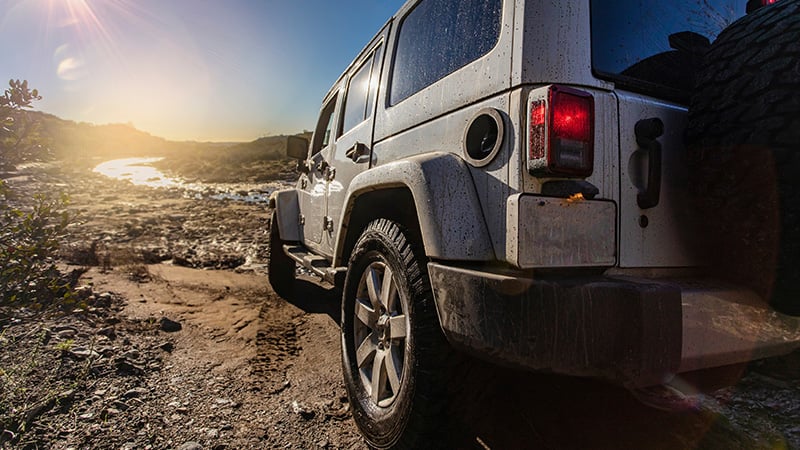
We've already mentioned that many drivers choose the 255/75R17 tire size. But why is this the case? The short answer is that it's very practical. A tire's dimensions directly affect its performance, so different sizes work better for different uses and conditions.
Tires that are 255 mm wide offer a wider contact patch and more room for tread elements. That combination grips hard on varied terrain — letting you explore less-accessible spots that would give narrower tires trouble.
Wider tires and wheel offsets also allow for a more aggressive stance. With a few complementary modifications, you get a more distinctive look — and beyond aesthetics, the vehicle gains real stability and grip for different landscapes.
A larger aspect ratio like 75 also buys you better ground clearance — more space between the ground and the undercarriage. Uneven terrain is less likely to damage anything down there on off-road weekend escapes, and the ride stays comfortable.
The 75 aspect ratio pays off in a second way: a taller sidewall flexes more, which cushions the ride. That's the difference between overlanding all day and getting beat up by every rut.
Real-World Use Cases
Because of its popularity, the 255/75R17 tire size shows up on plenty of SUVs and light trucks. The specific tread design of these tires expands usability and broadens where you can take the vehicle.
Some models are tuned for pavement, keeping road noise down and smoothing out bumps — good for a national park trip with the family.
Other models are built for camping trips that take you to quieter sites, far from traffic and noise, where the fun happens around a fire instead of a hotel lobby.
Tackling more challenging surfaces is also possible with tires featuring a more aggressive tread. That makes them capable on dirt roads, trails, and other terrain depending on the specific type.
Types of 255/75R17 Tires
Since these tires can cross versatile terrain, knowing which type you actually need matters. Selecting the right tires for your off-road venture is the difference between a safe trip and an expensive one.
If you plan to drive mostly pavement with occasional off-road sections, all-terrain tires are the go-to option. They're aggressive enough for road trips without sacrificing highway manners.
Mud-terrain models help on messier trails — the tread design clears itself out and keeps forward motion even when the ground is working against you. A solid choice for the long-haul adventure.
Rugged-terrain tires are the hybrid — balancing comfort and off-road performance. That makes them ideal for camping trips where you want a quiet ride to the site and confidence once you're off the blacktop.
For guys who want adrenaline, extreme-terrain tires are the most aggressive of the bunch. They open up the difficult stuff — the kind of overlanding where a less capable tire would have quit two miles back.
More Than Numbers on a Sidewall
Take everything together and 255/75R17 is more than a size code — it's a decent shortcut to safer, more capable adventures.
What makes these tires work is the sweet spot: big enough to boost capability and confidence, practical enough for long road trips. That's why the size isn't going anywhere.