UGREEN sent over its new Air line - two MagFlow Air magnetic power banks and two Nexode Air wall chargers - and I have been traveling with them for a few months now. We have been running UGREEN NAS hardware in our own network for a while, so build quality was never the question. What I did not expect was that the thinnest power bank would stop traveling altogether and just live in my car.
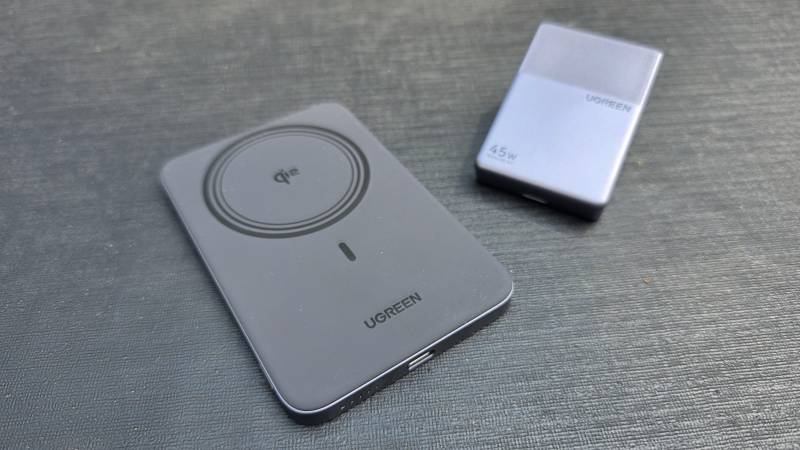
- UGREEN MagFlow Air 5000mAh Qi2 Power Bank - 8.6mm and 127 grams, thin enough to hold with the phone still in your hand.
- UGREEN MagFlow Air 10000mAh Qi2 Power Bank - double the capacity at 13.9mm, with a USB-C cable built into the body.
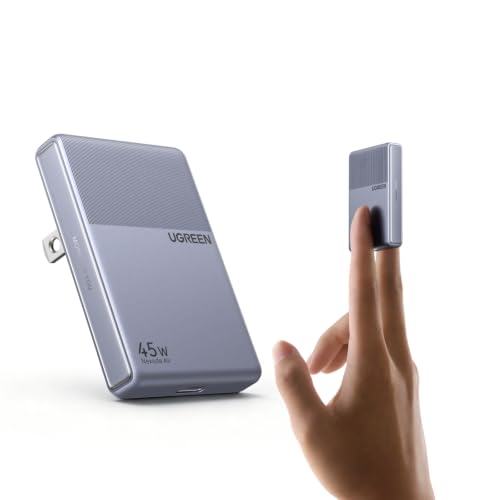
- UGREEN Nexode Air Slim 45W USB-C Charger - 0.57 inch thick and flat, with prongs that fold flush.
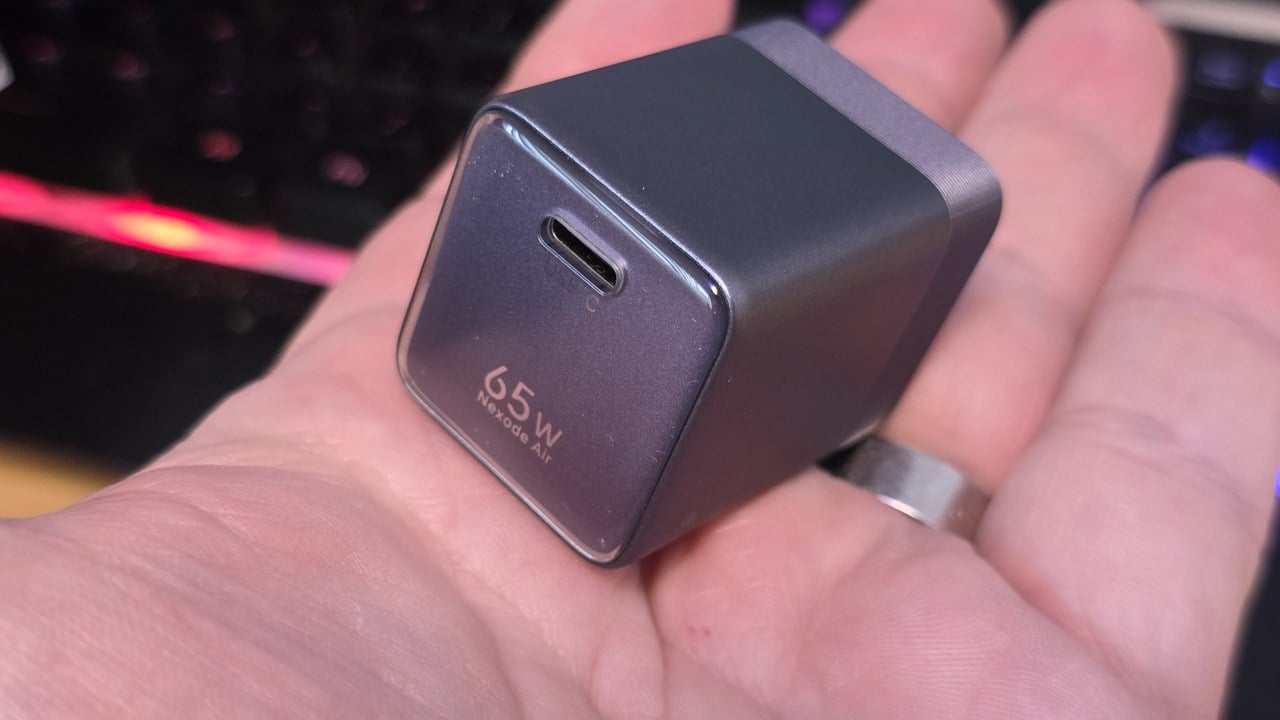
- UGREEN Nexode Air 65W GaN Charger - enough output for a MacBook Air, and a 3.3ft cable in the box.
Thin is easy to advertise and hard to get right, and the specs that decide this purchase are not the ones printed largest on the box.
- Read the box contents before you compare prices - a charger that ships without a cable is not cheaper than one that includes a good cable, it is only priced that way.
- Treat port count as the spec that matters - wattage tells you how fast one device charges, port count tells you how many people are happy.
- Insist on Qi2, not "MagSafe compatible" - magnets on their own get you attachment and nothing else, and the certification is what guarantees the 15W handshake.
- Check the input speed, not only the output - a bank that takes 30W in refills in a couple of hours, while one capped at 5W is an overnight job every time.
- Measure thickness against the pocket, not the spec sheet - the number that settles this is whether it disappears into the jacket you own, and no reviewer can answer that for you.
- Look up the watt-hour figure, not the milliamp hours - airlines regulate Wh, and the 100Wh cap at the gate is the only battery number they care about.
UGREEN has been in my house for a while now. The NASync DXP4800 GT runs our storage, and I reviewed the Nexode 200W charging station for the desk, so when the Air line arrived the question was never whether it would work. It was whether anything this thin could take over from gear I already trusted on the road.
The Airline Power Bank Rules Changed In March
Power banks stopped being a pure convenience item this spring. As of 27 March 2026, rules endorsed by the ICAO Council and adopted by its member states allow power banks only in the cabin, not in the overhead bin. They have to stay somewhere you can reach them, which in practice means the seat pocket, the bag under the seat, or your person. You also cannot recharge a power bank from the aircraft, and you cannot use one to charge a device in flight.
Two per passenger is the general ceiling; each under 100 watt-hours without prior approval. Individual airlines are free to be stricter than that, so check yours before you pack. I keep hearing more and more stories about travelers getting bulky packs pulled aside, and that is where thin stops being a luxury. A 25000mAh brick does not go into a seat pocket at all. The 10000mAh MagFlow Air works out to roughly 37 watt-hours and the 5000mAh to around 18, so neither is close to the limit, and both fit where the rules now say they have to sit.
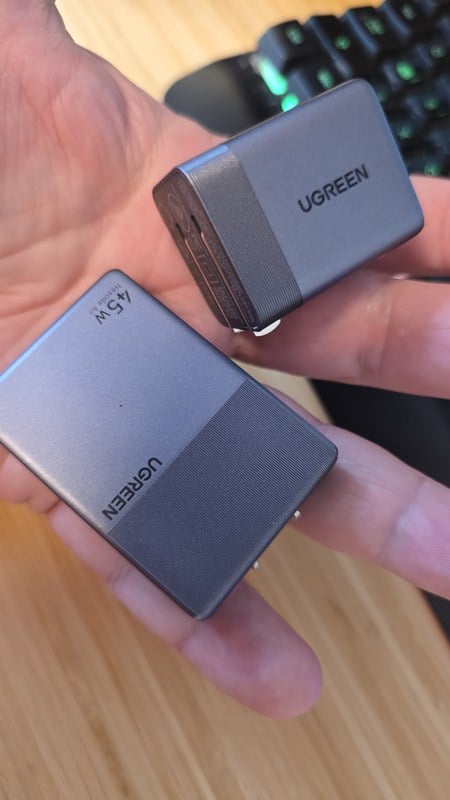
Four UGREEN Air Chargers And Power Banks I've Been Carrying With Me All Summer
What I love about each of these is that they are small in size, light in weight, but there's no compromises when it comes to capability. These are perfect for traveling, whether that's on a road trip to see your parents or a cruise with your buddies.

Promoted by FlowAds

UGREEN MagFlow Air 5000mAh Qi2 Power Bank
This is the one that stopped traveling. At 8.6mm thick and 127 grams, the MagFlow Air 5000 is thin enough to stick to the back of your phone with its magnet while you still use the phone one-handed, and the same is true even in the car on road trips, which is why it now lives in my car full-time.
My Passport has a wireless pad built into the console and I had hoped that would cover it. It is convenient right up until you want the phone in your hand, and then you are back to a cable or a compromise. Snapping this on instead means the phone charges and stays usable at the same time.
Qi2 certification is what makes that work - a locked 15W wireless connection rather than a slow charge that slides out of alignment. Over USB-C it moves 20W in both directions, so it refills fast enough to be ready again the next morning, and UGREEN finishes it in silicone instead of gloss, which is the correct choice for something meant to be held. Five thousand milliamp hours is a top-up, not a day of power, which is the right expectation for something this thin.

Promoted by FlowAds

UGREEN MagFlow Air 10000mAh Qi2 Power Bank
UGREEN describes this one as looking like a 5000mAh pack that happens to hold 10000, and that is a fair summary. It is 13.9mm thick in an aluminum body, so you pay about five millimeters over its smaller sibling and double your capacity for it.
The part that matters on a long day is the built-in USB-C cable, which pulls out of the body and doubles as a carry strap. That cable runs 30W, there is a separate USB-C port alongside it, and the wireless pad works at the same time, so the bank can feed three devices at once. UGREEN rates it at 1.6 full charges for an iPhone 17 Pro Max, and Qi2 gets that phone to 32 percent in half an hour. It also refills itself in about two hours on a 30W input, which is short enough to actually finish between dinner and bed.
For a long travel day or a weekend with the guys, the 10000 is what I want in the shoulder bag, where the phone is running navigation, photos, and group texts at once and there is no outlet in sight.
Promoted by FlowAds

UGREEN Nexode Air Slim 45W USB-C Charger
The 45W Slim is the flat one. At 0.57 inch thick with the prongs folded, it lies down in a dopp kit or a laptop sleeve instead of jutting out of it, and UGREEN's own pitch is that it will ride in a wallet like a card.
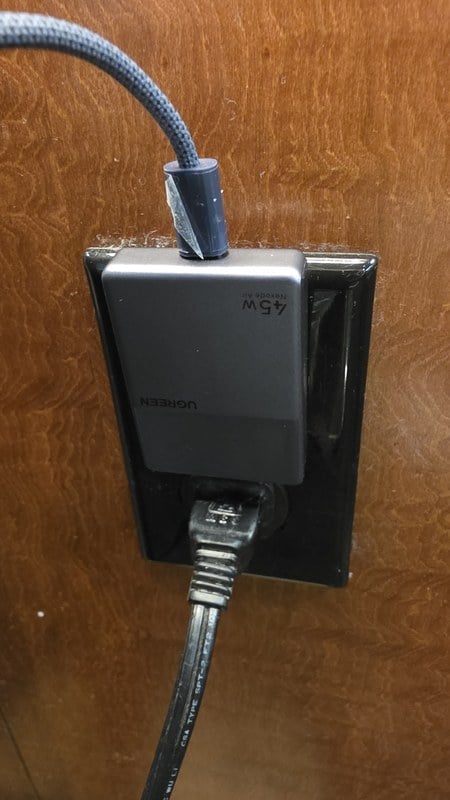
Forty-five watts covers a phone with room to spare and handles a lot of laptops. UGREEN puts an iPhone 17 at roughly 70 percent in 30 minutes, and the GaN chip is what keeps that output in a body this size without cooking itself, backed by Thermal Guard and eight active and passive protections. One caution worth knowing before you order: the box holds the charger and the manual, and no cable. Plan for that if you are buying it as the spare that lives in your bag for the trip you forgot to pack for.

Promoted by FlowAds

UGREEN Nexode Air 65W GaN Charger
The 65W is what you bring when the laptop is coming. It is a small block rather than a flat card, still with folding prongs, and UGREEN rates it at roughly 55 percent on a MacBook Air in 30 minutes. That covers a lunch break.
It also ships with a 3.3ft USB-C cable, which is the practical difference between the two chargers here. Buy the 65W and you have a complete kit in one box. Like the 45W, it runs a single USB-C port, so if you are traveling with work colleagues and someone needs a plug, you are lending out the whole charger instead of a spare port.
How To Pick The Right UGREEN Air Charger For Your Trip
These four are not competing with each other. They answer different questions, and the fastest way to choose is to work backward from where the thing has to live and what else is already in the bag.
I usually carry a big behemoth multi-outlet wall charger, but it tends to fall out of the wall easily unless the socket is very tight. On the other hand, this super slim one sits flush against the wall, and I love it since, when not in use, it's small enough to fit into a zipper compartment in my bag with nothing sticking out.
Start With Where The Battery Will Sit
If the answer is a car console, a jacket pocket, or a jeans pocket, take the 5000mAh at 8.6mm - anything thicker gets left at home, and a power bank you leave at home has no capacity at all. If the answer is a shoulder bag, a backpack, or a seat pocket on a travel day, the 10000mAh is the better trade for five extra millimeters.
Match The Charger To What Is Already In The Bag
Pick the 45W Slim if you already carry USB-C cables and want a charger that stops taking up space, and it is the better second charger to leave in a dopp kit permanently. Pick the 65W if the laptop travels with you or if you would rather have one box that arrives complete. Road trips tend to favor the 65W for the same reason - one brick at the hotel that charges everything overnight.
They Say It's Not How Big It Is, But How You Use It - The UGREEN Air Line Proves This Is True For Powering Mobile Devices On Trips Too
Both Nexode Air chargers have a single USB-C port, which normally means one device at a time from one outlet. Pair either charger with the 10000mAh MagFlow Air and that stops being true. The charger feeds the bank at 30W, and the bank simultaneously runs its built-in cable, its second USB-C port, and its wireless pad.
One outlet in a crowded hotel room, three things charging, no extra cables in the bag. On a guys trip to Vegas where the room has two working outlets and four people, that is the difference between taking turns at the wall and everybody waking up charged.