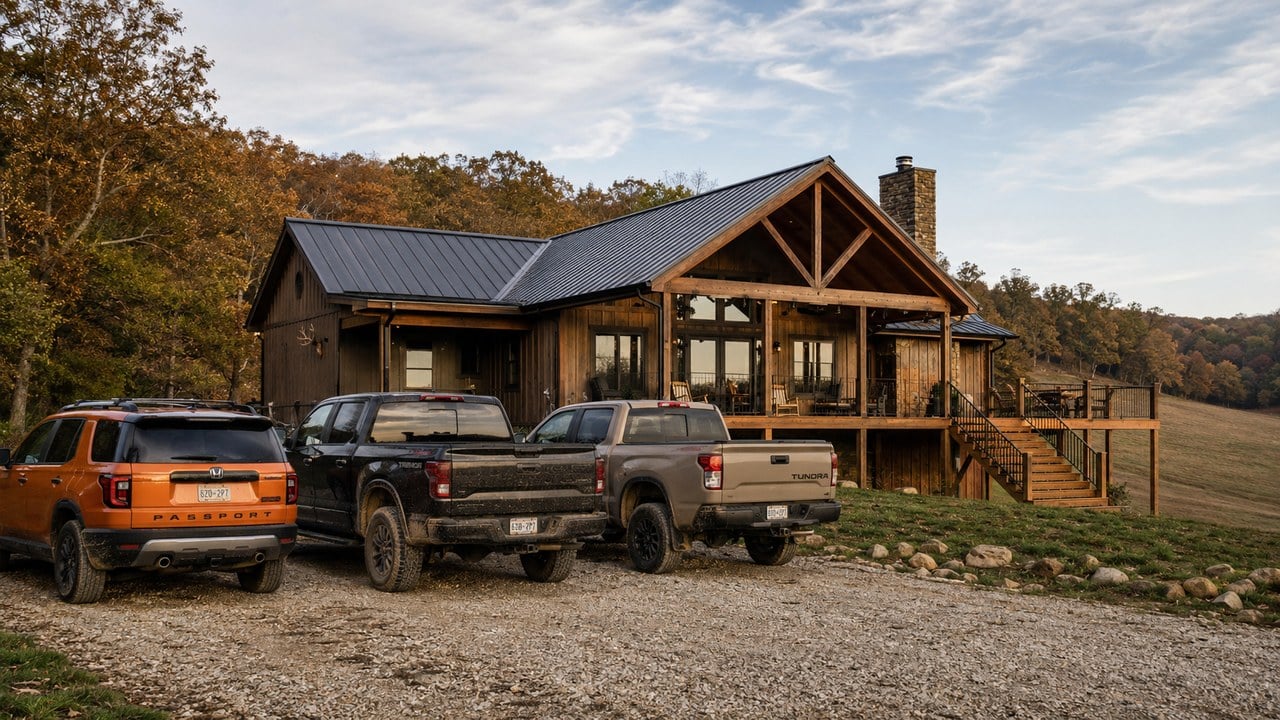
A hunting cabin looks like a simple build - four walls, a woodstove, a place to dry your boots. The gap between the cabin a you think you need today and the one you, your group of guys and extended family will still use twenty years from now almost always traces back to a short list of decisions, and nearly all of them get made before the first post goes in the ground. Let's take a look at some factors you need to consider before you even start talking with contractors and architects to design your dream vacation cabin.
Let's start with an easy destination - rural middle Tennessee is a good place to see how those decisions play out. Cheatham County, just west of Nashville around Ashland City, Kingston Springs, Pegram, and Pleasant View, holds the 20,810-acre Cheatham Wildlife Management Area, where deer and turkey hunting pull people onto the land every fall. It's also geographically accessible for both driving from the most populated areas of the country and you've also got a great airport in Nashville for folks to fly into.
We're going to use this destination as part of our discussion but the same logic holds whether you build in Cheatham County, the hardwoods of Northern Michigan, the Texas Hill Country, or a valley in Montana.
Work through the questions below in order. Land and access come first, then the legal side, then the build itself, because a beautiful cabin on the wrong parcel is a lot harder to fix than a plain one on the right ground.
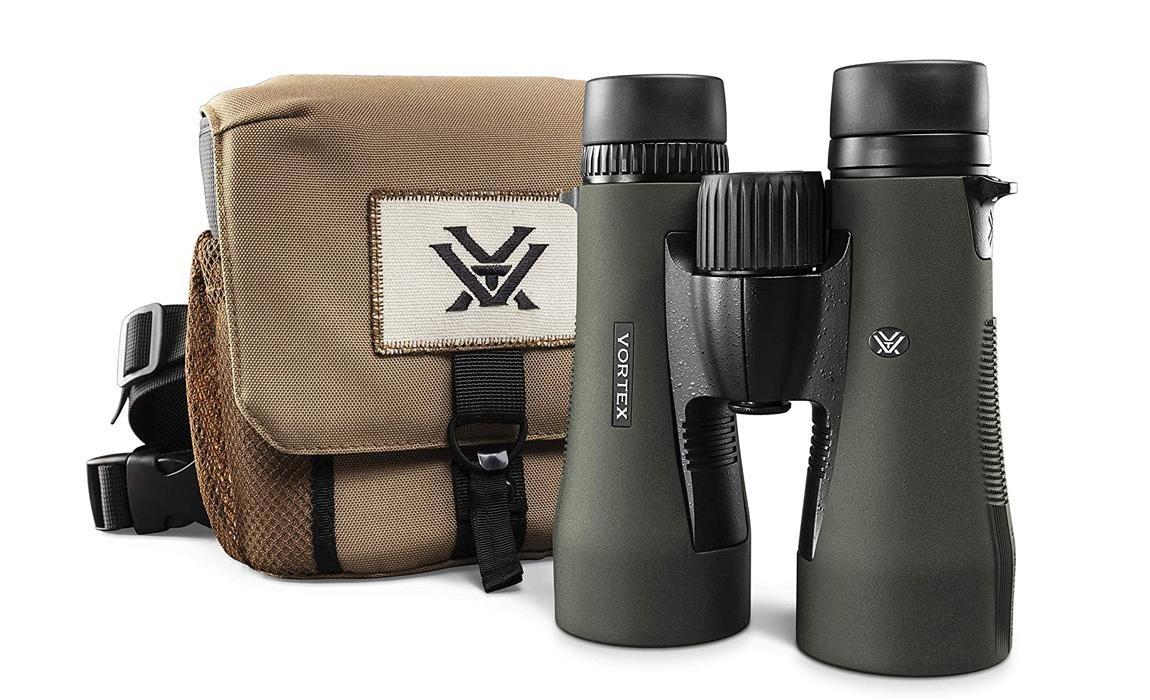
Witness Alaska's Wonders: Top 5 Travel Binoculars for Your Cruise
The five best travel binoculars for Alaska Cruise offer majestic views of wildlife, such as whales and polar bears, and the site scenery.
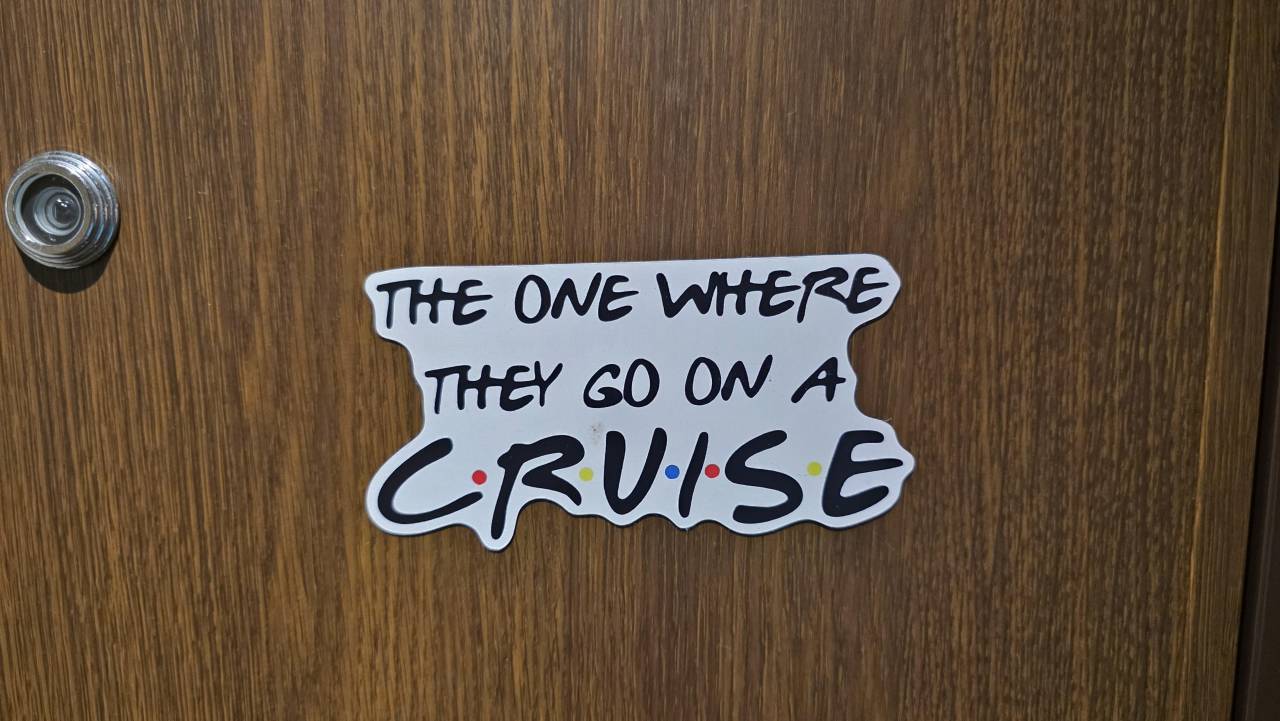
From Carnival to Norwegian: Cruise Hacks We Love That Cruise Lines Keep Trying to Ban
Cruise hacks for power strips, radios, door decorations, and more - plus which lines allow them and which don't. Real tips from 30+ cruises on Carnival, Norwegian, Royal Caribbean, and Disney.

12-Day Vietnam Discovery Tour
A 12-day Vietnam tour from Hanoi to Ho Chi Minh City covering Halong Bay, Hoi An, Cu Chi Tunnels and the Mekong Delta. Ideal for first-time visitors.

10-Days in Bangkok & Chiang Mai in Thailand
A 10-day tour of Bangkok and Chiang Mai with temples, street food, boat and tuk tuk rides, plus free time each day. Great for independent-minded travelers.
Promoted by FlowAds

What to Sort Out Before You Build a Hunting Cabin
These are the questions that shape every later choice. Answer them straight before you fall in love with a floor plan.
Start With the Land, Not the Floor Plan
Where you build decides almost everything else - what you can hunt, how the cabin sits, and what it costs to run power and water to it. In the middle-Tennessee example, rural Cheatham County offers wooded parcels within an easy drive of Nashville and close to Cheatham WMA's deer and turkey ground. Walk the property in the season you plan to hunt, not on a mild spring afternoon when every lot looks good.
Drive Time and Honest Access
A cabin you can reach in ninety minutes gets used far more than one that takes half a day. Map the real drive from home, then look harder at the last mile: gravel roads, a locked gate, a creek crossing, or a grade that turns to soup after a hard rain. If you cannot get a truck in during a wet November, it is a fair-weather cabin no matter what the listing says.
Man Gear Pick of the Month
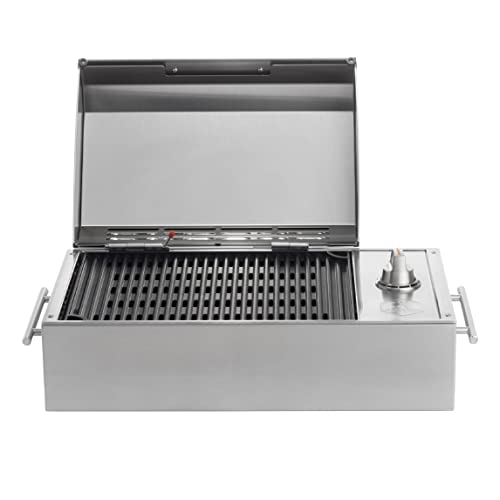
Kenyon City Grill Portable Stainless Steel Electric Grill
Why we picked it: a grill you can actually carry to the campsite, the tailgate or the cabin without borrowing a truck. Stainless, no propane tank to wrestle, and hot enough to cook for four guys rather than reheat for one.
 August's Pick LiberNovo Maxis Electric Big and Tall Ergonomic Office Chair, Graphite 52cm $1,393.00
  July's Pick Powerful Propane Torch Gun, Adjustable Flame Thrower Gun, Kitchen Torch with Detachable Design, Flamethrower Blow Torch for BBQ, Searing Steak, Welding, Camping Charcoal Lighter(Tank Not Included) $42.99
  June's Pick OYASUMI Funny BBQ Man Hot Dog Holders, 4 PCS Reusable Stainless Steel Sausage Stands, Portable Hot Dog Roasters, Barbecue Grill Accessories for Camping & Party Gifts $7.98
 Promoted by FlowAds

Your Own Acres or Nearby Public Land
Decide early whether you are hunting your own ground or leaning on public land nearby, because it changes how much acreage you need. Middle Tennessee stacks up well here: Yanahli WMA near Columbia in Maury County connects to roughly 12,000 acres of managed land, Old Hickory WMA across Wilson and Sumner Counties mixes forest, cropland, and strong waterfowl habitat, and Percy Priest WMA wraps more than 10,000 huntable acres around the lake near Murfreesboro, Smyrna, and La Vergne. A small parcel next to a big WMA can hunt far larger than its deed suggests.
Permits, Septic, and Season Rules
Before you build, confirm what the county requires - a building permit, a septic perc test, a well, and setbacks from property lines and water. On the hunting side, learn the seasons, licensing, and unit rules for wherever you will actually hunt; on Tennessee WMAs like Cheatham, camping is allowed during deer and turkey seasons for active hunters, which affects whether you even need a bunk your first year. These rules vary by state and county, so verify them locally rather than assuming a neighbor's setup was done by the book.
Cabin Style and How It Gets Framed
Timber frame, conventional stick-built, and pre-cut kits each carry different costs, timelines, and looks, and the right pick depends on your budget and how handy the group is. A cabin built with timber frame construction pairs well with heavy insulation and settles into the woods, but it asks more of the build than a simple stick frame. Match the method to how you will use the place, because a season-only camp and a year-round retreat justify very different framing.
Utilities and Building It to Last
Power, water, heat, and insulation separate a cabin you can use in December from a plywood box you abandon after October. Decide whether you are running a line to the grid, going off-grid with solar and a generator, or drilling a well, and price those early, since they often cost more than the structure. Insulation and a real heat source, a woodstove at minimum, are what let a group use the place through the whole season.
Hunting Cabin, or a Weekend Getaway With the Guys?
This is the fork that changes the whole budget. A pure hunting basecamp and a weekend getaway destination are two different buildings, and it pays to decide which one you are after.
Decide the Cabin's Real Job
A bare hunting camp needs bunks, a stove, a place to clean game, and not much else. A getaway that pulls the group in for more than opening weekend needs room to cook, hang, and sleep comfortably, the kind of place guys want to drive to even when nothing is in season. Be honest about which one your group will use, because building the wrong one wastes the most money.
The Porch and Deck Make the Getaway
Once you are building a getaway, the outdoor living space is where the group spends its time: coffee before dawn, cards and a fire after dark. A covered porch and an elevated deck sized for the whole group turn a cabin into a destination, which is why a middle-Tennessee build like this is a natural job for a custom deck contractor Portland TN, who can work the deck and porch into the design from the start rather than bolting them on after the cabin is closed in.
Spend Where the Group Gathers
After the deck, spend on what gets used hard: a real kitchen or a solid outdoor cook setup, and a fire pit with room around it. Skip the touches that photograph well but sit idle the rest of the year. On a weekend getaway with the guys, the kitchen and the fire pit log more hours than anything with a screen.
Don't Design For Today - Build the Cabin You'll Still Want in Ten Years
The cabins that get handed down are rarely the fanciest ones. They are the ones on the right ground, easy enough to reach, and comfortable enough that the group keeps coming back.
If you do one thing before breaking ground, spend a full season on the land first, a fall and a winter, so you learn the prevailing wind, the morning sun, and the way the deer move before you settle on a spot. Get that right in Cheatham County or anywhere from Michigan to Montana, and the build is the easy part.

Promoted by FlowAds
