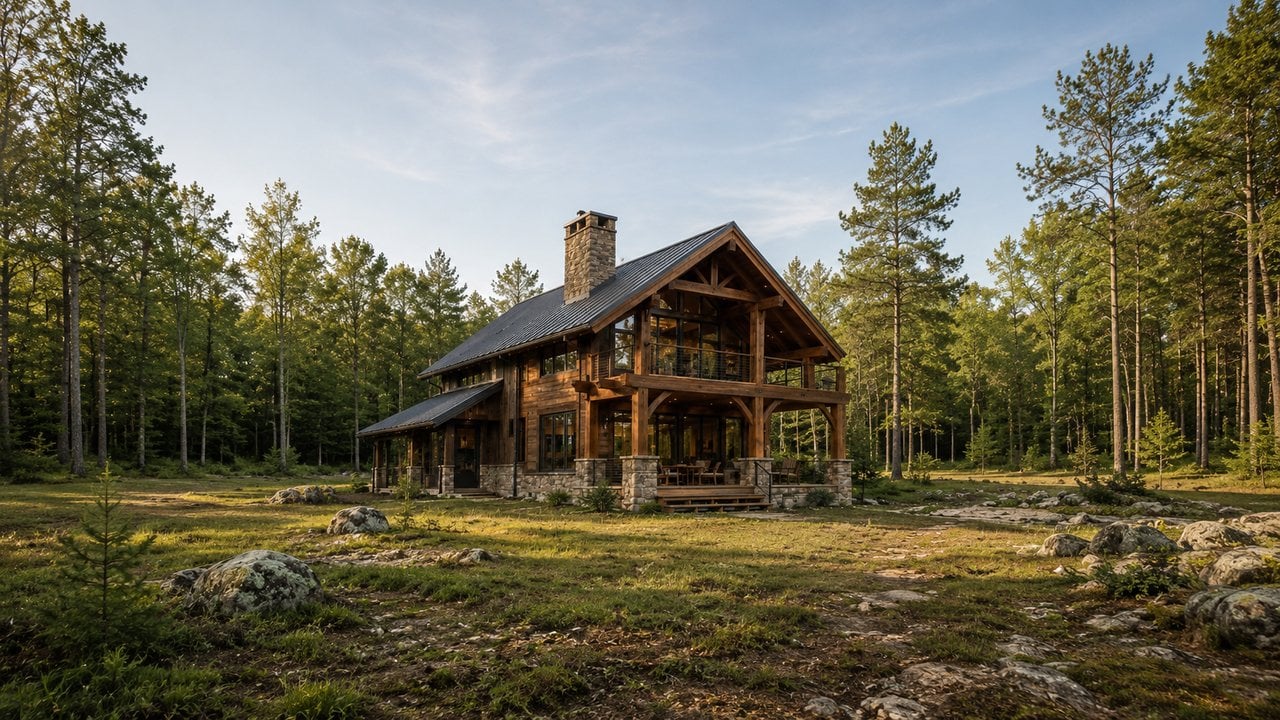
For as long as I've thought about how I'd build a hunting cabin if I had the opportunity to build one, my default answer was metal. Steel goes up fast, it shrugs off weather, and a pole barn or a quonset kit gets you a weathertight shell for a fraction of what anything else runs. What I never did was pressure-test that assumption against the alternative, a proper timber frame cabin, until recently. Here is what I found once I stopped guessing and started looking at the real numbers.
What Do You Call Your "Guys Trips"?
Before you fall in love with a look or a price tag, five things decide which build method fits your land and how you plan to use it.
- Budget splits hard at the shell stage: a bare metal building can start around $10 to $20 a square foot, while a finished timber frame cabin is a premium build from the first beam.
- Climate does the choosing for you - snow load in the Pennsylvania mountains and year-round humidity in the Smokies punish the wrong envelope in completely different ways.
- A seasonal deer camp and a four-season family cabin are two different buildings, even on the same foundation.
- Speed and permanence pull against each other: a quonset can be dried in over a long weekend, and a timber frame is built to outlast the guy who signs the loan.
- Resale and short-term rental value swing more on the feel of the structure than most first-time builders expect.
The thing that finally made me look closer was browsing the work over at Tuscarora Timber Frame, a family-owned shop out of the Tuscarora Valley in southern Pennsylvania. Their custom timber frame homes and barns have that heavy-post, exposed-beam look I had always filed under "expensive log cabin" without thinking much about it, and once I started reading how they build, the metal-versus-wood question got a lot more interesting than my gut answer. So I dug into the costs, the build times, and what each option quietly gives up.
The Metal Building Camp: Pole Barns, Steel Kits, and Quonset Huts
The reason metal keeps winning the first round is simple: it is cheap, fast, and nearly maintenance-free. When guys talk about throwing up a hunting cabin in a season, this is the family of buildings they mean, and it is worth being precise about the three flavors.
- Pole barns (post-frame) - wood posts anchored to the ground carry the load, wrapped in steel siding and roofing. Big clear spans, no interior support walls, and shell pricing that runs $15 to $45 a square foot installed.
- Steel-frame kits - a red-iron or light-gauge steel skeleton bolts together from numbered parts. Bombproof against rot, fire, and carpenter ants, and popular where you want a big shop bay under the same roof as the bunks.
- Quonset huts - arched corrugated steel where the walls and roof are one curved piece, so there is no interior skeleton to buy. Kits start around $10 to $20 a square foot, about as cheap as a permanent building gets. Most guys frame out square rooms inside the arch and use the low, curved space along the edges for storage, gear, or a workbench.
The honest tradeoffs show up after the shell. Bare metal sweats, so a hunting cabin you plan to heat needs real insulation and a vapor plan or you will fight condensation dripping off the ceiling every cold morning. And there is no getting around the look. A steel box reads as a utility building, which is fine for a bare-bones deer camp and a lot less fine if you ever want to rent it out or hand it down.
Beyond Detroit: Best Places In Michigan For A Guys Trip
Discover Michigan's best guys trip destinations, from Grand Rapids' brewery scene to outdoor adventures in Pictured Rocks and Copper Harbor.

Interview with Vegas VIP Host Manny Kess
Manny Kess is a Vegas VIP host who can help plan the ultimate Las Vegas bachelor party or guys weekend.
Las Verandas Hotel and Villas
Come stay at the unique Las Verandas Hotel and Villas! Experience the beautiful beaches of Roatan, Honduras, along with exceptional amenities, including an 18-hole golf course.

Best Walkie-Talkies for Cruises in 2026
The five best Walkie-Talkie for a Cruise Ship allows you to stay connected on a cruise ship and make your trip perfect fun.
Promoted by FlowAds

What Timber Frame Is, and Why It Looks the Way It Does
Timber frame is not a log cabin, and it is not the stick framing behind your drywall at home. It is a skeleton of heavy wooden posts and beams joined with mortise-and-tenon joinery and locked together with wooden pegs, then wrapped in an insulated shell, usually structural insulated panels. The frame carries the whole building, which is why the posts and beams stay exposed on the inside instead of getting buried in a wall.
That exposed structure is the entire point. You get the warmth and craft of timber with wide-open floor plans and big glass, which is the modern-classic look in that cabin photo up top - the stone base, the black metal roof, the timber gable soaring over a wall of windows. It is the classic log-cabin feeling with a cleaner, more current build. Shops like the one out in the Tuscarora Valley cut it all from Eastern white pine, hemlock, Douglas fir, or oak, deliver it as numbered parts with assembly drawings, and a well-cut frame goes together faster than most people assume once the pieces are on site.
Cost, Build Time, and the Tradeoffs You Cannot Dodge
Here is the part that reset my thinking. As a bare shell, nothing touches the metal options - quonset kits in the low teens per square foot, pole barn shells in the $15 to $45 range. A finished timber frame cabin, by contrast, starts around $200 to $300 a square foot and climbs from there with custom joinery and higher-end finishes.
Man Gear Pick of the Month
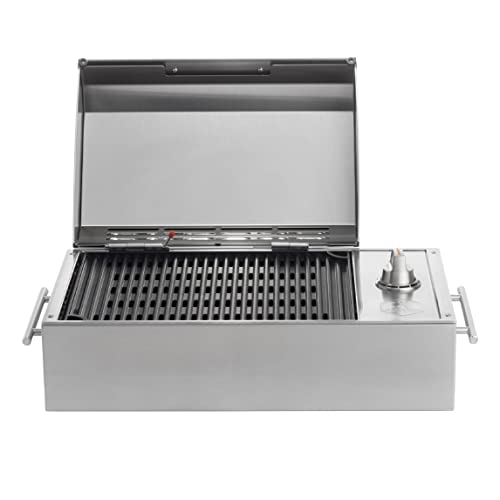
Kenyon City Grill Portable Stainless Steel Electric Grill
Why we picked it: a grill you can actually carry to the campsite, the tailgate or the cabin without borrowing a truck. Stainless, no propane tank to wrestle, and hot enough to cook for four guys rather than reheat for one.
 August's Pick LiberNovo Maxis Electric Big and Tall Ergonomic Office Chair, Graphite 52cm $1,283.00
  July's Pick Powerful Propane Torch Gun, Adjustable Flame Thrower Gun, Kitchen Torch with Detachable Design, Flamethrower Blow Torch for BBQ, Searing Steak, Welding, Camping Charcoal Lighter(Tank Not Included) $42.99
  June's Pick OYASUMI Funny BBQ Man Hot Dog Holders, 4 PCS Reusable Stainless Steel Sausage Stands, Portable Hot Dog Roasters, Barbecue Grill Accessories for Camping & Party Gifts $6.98
 Promoted by FlowAds

That gap looks brutal until you remember a shell is just a shell. The moment you insulate, wire, plumb, and finish a pole barn into something you would actually sleep in through a Pennsylvania November, you are up in the $150 to $250 range yourself, closing on timber frame territory faster than the sticker price suggests.
The metal building still wins on raw cost and on speed, since you can dry it in and walk away for the season. What you are really buying with the timber frame premium is a tighter, quieter, better-insulated envelope thanks to those panels, plus a frame of oak or Douglas fir that can carry the building for a century instead of a few decades.
Which One Fits a Hunting Cabin
The right call depends less on the money than on what the place is for. A bare deer camp in the Pennsylvania Big Woods, used hard for a few weeks around rifle season and shut down the rest of the year, is exactly the job a pole barn or quonset was made for. Cheap, tough, snow-shedding, and nobody cares that it looks like a shop.
But a lot of guys are not building a bare camp anymore. They are building a basecamp. A cabin in the Pennsylvania mountains gives you a launch pad well beyond deer season - whitewater rafting the Lehigh Gorge out of Jim Thorpe or the Youghiogheny down at Ohiopyle, poking around railroad history at Steamtown in Scranton or the Horseshoe Curve and the Railroaders Museum near Altoona, then landing back at the fire with your buddies.
Same story if your land is down in the Tennessee mountains, where a four-season Smoky Mountains cabin pulls double duty as a hunting base and a shoulder-season rental. For a cabin like that, one people want to spend a long weekend in, the timber frame premium buys something you use every visit: a warmer, quieter room with the wood structure on display instead of a bare steel ceiling. It is also where the humidity of the Smokies rewards a tight, well-sealed envelope over a metal box you are constantly fighting to keep dry.
Where I Landed After Thinking It Through
If the goal is a stripped-down deer camp on a tight budget, I still think the metal family is hard to argue with, and I would run a pole barn or quonset without losing sleep over it. But once the cabin becomes a place you plan to keep, share, and maybe rent - the kind you want your group driving hours to reach for a long weekend - the calculus flips, and that modern take on the log cabin is worth the extra money.
One concrete tip if you go the timber frame route: get the frame and shell dried in before your first winter. A timber frame delivered as a numbered kit from a Pennsylvania shop like Tuscarora goes up on your schedule, but a wet frame sitting through a freeze is a headache you can skip. Order it in late winter, pour the foundation as the ground thaws, and you can have it standing and closed in before the leaves turn and the season opens.