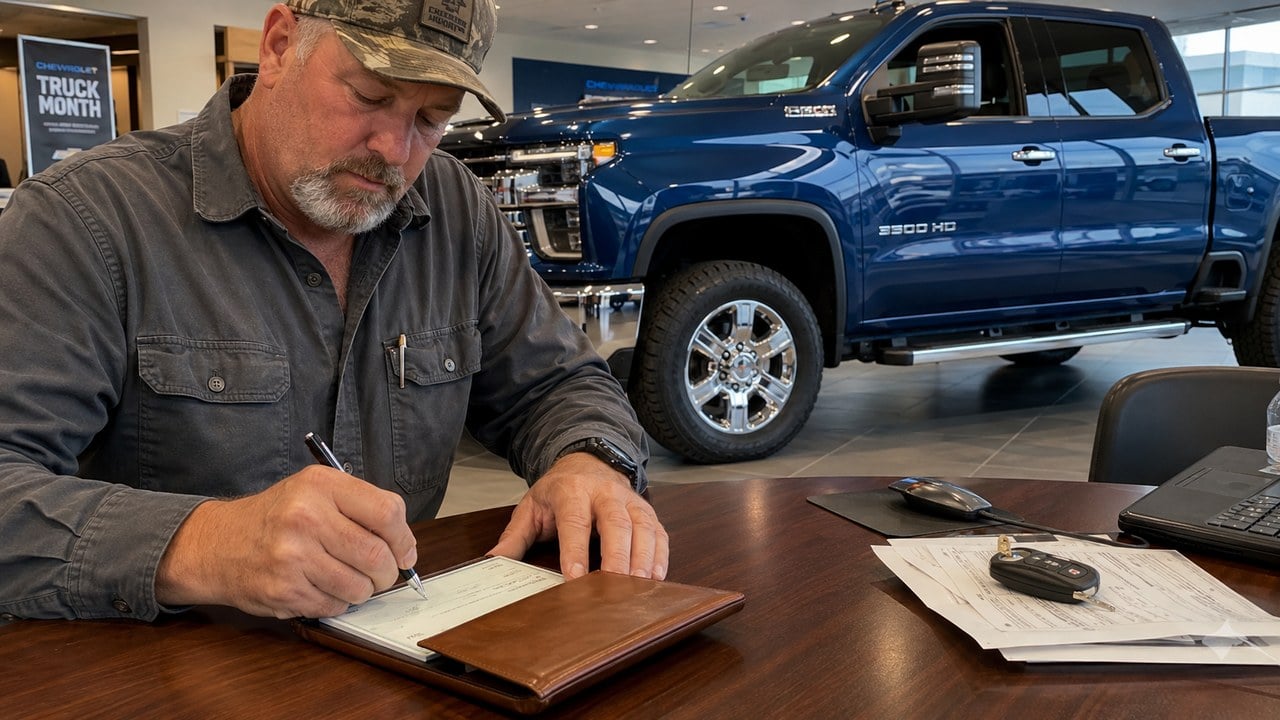
Investments get the spotlight. Side hustles get the credit. The checking account, somehow, gets ignored - even though every paycheck, every bill, and every truck payment moves through it. The right setup quietly compounds over years. The wrong one quietly bleeds money in $35 increments while you focus elsewhere.
What Do You Call Your "Guys Trips"?
Checking accounts seem too basic to think about, which is exactly why most guys leave money on the table. The setup matters more than the balance - and most of the wins are one-time fixes that pay for years.
- The 2025 average overdraft fee was $26.77 per Bankrate's survey, with major banks charging $35 - and 94% of accounts still charge them.
- SoFi members with direct deposit earn 0.50% APY on checking and 3.30% on savings, which is real money on five-figure balances sitting in cash.
- Automation handles the boring decisions - direct deposit, scheduled bill pay, automatic transfers - so willpower never enters the picture.
- Multiple accounts (one for bills, one for spending, one for the next truck or cruise) create budget separation without needing a spreadsheet.
- Cold-storage crypto wallets like Ledger and Trezor live in a different security category from your bank login - the same two-factor habits don't cover both.
Your checking account is where every financial habit lives - what you spend, what you save, how often you actually look. Treat it as a control center and the rest of your money picture organizes itself around it. Treat it as somewhere paychecks land, and you will quietly lose ground year after year.
Most guys treat the account as plumbing. Money flows in, money flows out, nobody pays attention until something bounces. The cost of that mindset is real. Bank of America, Wells Fargo, Chase, and the other major institutions still charge overdraft fees in the $35 range, and roughly 94% of US accounts still do per recent Bankrate data. Multiply that across a year of inattention and you are looking at $200 to $500 you never needed to spend. The reverse is also true. A clean setup with a buffer, automation, and a halfway decent yield turns the account into a quiet wealth builder rather than a slow leak.
What to Look for in a Checking Account
The right account fits how you actually live - not how a banker thinks you should live. The features that matter for a freelancer differ from the ones that matter for a married guy with a mortgage and a teenager in driving school.

11 Father-Son Trip Ideas: Male Bonding Through Inter-Generational Travel
Looking for cool father-son trip ideas? Explore unique destinations and activities, from adventurous mountain getaways and scenic bike trails to cultural explorations and relaxing cruises, perfect for

Why Men Should Pick A Dominican Republic All-Inclusive Resort For A Caribbean Guys Trip
Reasons men should consider an all-inclusive resort in the Dominican Republic for their next guys trip.

7 Days Private Guided Tour in Sri Lanka
A 7 day private guided tour of Sri Lanka weaving history, culture and adventure with hidden gems, ideal for curious travelers.

14 Days Private Honeymoon Trip to Thailand
A 14 day private honeymoon trip to Thailand for couples. Enjoy Krabi beaches, snorkeling, a floating market visit and a Grand Pearl river cruise.
Promoted by FlowAds

Three things separate the keepers from the time-wasters: fee structure, ATM access, and what the account does for you while it sits there. Look for accounts with no monthly maintenance fee or a clearly waivable one. Look for in-network ATMs that match where you actually go - if the closest in-network machine is 40 miles away, the "no fee" label is a paper victory. And look at whether the account earns anything. Decent online accounts now pay yield on checking balances, which used to be unheard of.
Many modern options like SoFi's checking account bundle these together - 0.50% APY on checking with direct deposit, no monthly fee, 55,000-plus Allpoint ATMs, and an overdraft cushion up to $50 through the SpotMe feature. The setup works well for guys who want efficiency without managing it daily.
The right fit also depends on your phase of life. Bachelor days call for low minimums and good app design. Married life with kids calls for joint-account features and easy bill-pay. A guy who travels frequently for work needs low friction with foreign transactions. Picking the wrong setup at 30 quietly costs money for two decades.
Man Gear Pick of the Month
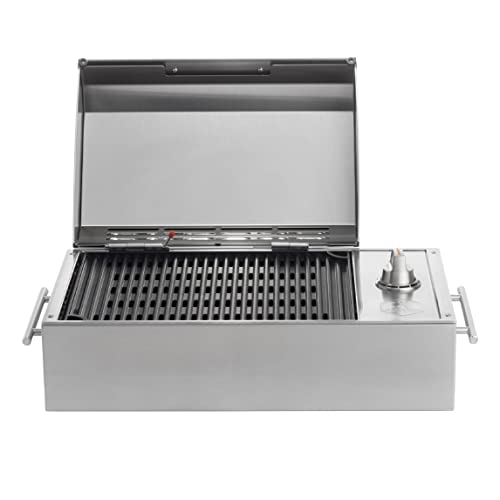
Kenyon City Grill Portable Stainless Steel Electric Grill
Why we picked it: a grill you can actually carry to the campsite, the tailgate or the cabin without borrowing a truck. Stainless, no propane tank to wrestle, and hot enough to cook for four guys rather than reheat for one.
 August's Pick LiberNovo Maxis Electric Big and Tall Ergonomic Office Chair, Graphite 52cm $1,466.00
  July's Pick Powerful Propane Torch Gun, Adjustable Flame Thrower Gun, Kitchen Torch with Detachable Design, Flamethrower Blow Torch for BBQ, Searing Steak, Welding, Camping Charcoal Lighter(Tank Not Included) $41.99
  June's Pick OYASUMI Funny BBQ Man Hot Dog Holders, 4 PCS Reusable Stainless Steel Sausage Stands, Portable Hot Dog Roasters, Barbecue Grill Accessories for Camping & Party Gifts $14.98
 Promoted by FlowAds

Habits That Compound Over Time
A great account does nothing if you keep treating money decisions like they require willpower. Automation is the cheat code.
Automation takes the daily decisions out of your hands and lets the system run. Set direct deposit so income lands without you intervening. Schedule bill payments to run before due dates. Set automatic transfers - $500 a month, $100 a week, whatever your number is - flowing from checking into savings or investments the day after payday. The point is to remove the decision entirely.
Buffer management is the other underrated habit. Keeping one paycheck-equivalent floating in checking means a surprise expense - dental work, a transmission, a busted water heater - does not trigger a chain reaction of overdrafts and credit-card juggling.
Tracking takes ten minutes a week. Pull up your transactions every Sunday night, scan for anything weird, and notice the patterns. Most guys discover they are spending two to three times what they thought on one specific category - usually food delivery, subscriptions they forgot about, or convenience-store runs. Once you see it, you can adjust without overhauling your life.
Cutting the Fees That Quietly Drain Your Cash
Bank fees are the easiest money you will ever earn back, because earning them back just means not paying them in the first place.
The big three: overdraft fees, ATM surcharges, and monthly maintenance. The 2025 average overdraft fee landed at $26.77 per Bankrate's annual survey, but most major banks still charge $35 - and Americans paid roughly $5.8 billion in overdraft fees alone last year. None of that money was unavoidable.
The fixes are simple. Set up low-balance alerts at whatever threshold makes you nervous. Link a savings account as backup so an overdraft turns into a transfer instead of a charge. Use in-network ATMs only - or pick a bank that reimburses out-of-network surcharges. And confirm your account either has no monthly fee or that the waiver condition is something you meet without thinking about it. A weekend's worth of cleanup typically eliminates $200 to $500 a year of recurring leakage.
Stacking Accounts for Bigger Goals
The single-account approach works for the basics. The moment you start saving for big things - a new truck, a cruise vacation, a down payment on a lake house - it falls apart.
Holding multiple checking accounts is the cleanest way to make progress on big purchases without stealing from operating cash. The mental math is the same as a project budget at work: separate buckets, separate timelines, separate rules. A practical setup looks like three checking accounts and at least one savings account: one checking for fixed bills (rent, utilities, insurance), one for daily spending (groceries, gas, the random Amazon impulse), and one that holds the truck payment or cruise deposit when those payments hit.
Naming the savings account by the goal makes a measurable difference. A line item labeled "2027 Alaska Cruise" or "GMC Sierra trade-in" is easier to leave alone than one labeled "Savings." Most online banks let you create unlimited sub-accounts at no cost, which is the only reason this works without a spreadsheet.
The same logic extends to recurring guys-trip funds. A separate sub-account for the annual fishing trip or fall college football road trip means the money is there when the group locks in dates - and it does not get accidentally drained by a Tuesday DoorDash run.
Protecting What You Have, Including Your Crypto
Bank security and crypto security are different problems with different solutions, and treating them the same way is how guys get burned.
On the bank side, the basics still work: a password that is not reused elsewhere, two-factor authentication enabled (preferably via an authenticator app, not SMS, which is too easy to hijack), and a habit of checking the account at least once a week. Most fraud catches happen because the account-holder noticed something off, not because the bank's algorithm did.
Crypto is a different game. The custodial accounts you hold on Coinbase, Kraken, or another exchange are protected by the exchange's two-factor and login system, but the exchange itself is a centralized target. Anything you actually want to hold long-term belongs in a hardware wallet - Ledger and Trezor are the two recognized standards - which keeps the private keys offline. The phrase "not your keys, not your coins" covers it: if the exchange goes down or freezes withdrawals, custodial assets are stuck.
The practical setup: keep operating crypto on the exchange for trades, but move serious holdings to cold storage. Write the seed phrase on paper, store it somewhere fireproof, and never type it into a website. The whole point of the hardware wallet is that nothing connected to the internet can authorize a transfer.
Checking Accounts Don't Have To Be Complicated But You Need To Always Pay Attention!
Pull the last three months of checking-account statements and add up every fee - overdraft, ATM, maintenance, foreign transaction. If the total is over $50, the account is the wrong account. If you cannot find the fees easily, the bank is counting on you not looking. Do this once, fix what it surfaces, and re-run it in a year. Guys who run that loop annually average a four-figure net pickup over five years compared to those who never look. That is a long weekend in Vegas, paid for by twenty minutes of attention.

Promoted by FlowAds
