
A solo trip to Australia has a way of rewriting your plans. You head over for the surf, a bucket-list run up the East Coast, or a guys' trip that takes an unexpected turn - and somewhere along the way you meet someone worth changing your time zone for. It happens more than you'd think: a trip turns into a relationship, the relationship turns into a marriage, and the question stops being "when's the flight home" and becomes "how do we actually live on the same continent."
That last part runs through immigration law, not romance. If you marry an Australian and want to build a life Down Under, you - the American spouse - are the one who applies for a partner visa, with your Australian partner as your sponsor. And the waiting in between wears on a couple in ways that go well past missed holidays: sleep suffers, stress stays elevated, and decisions about work, housing, and kids stall out. A spouse visa is the lawful way to close that gap and get back to an ordinary, shared routine - which is exactly what a long-term relationship needs to hold together.
Legal Ground
Immigration status shapes far more than travel dates. It affects employment rights, rental options, access to services, and the ability to plan medical care, schooling, or future plans. For couples trying to end a long separation, an Australian spouse visa can provide a legal route that supports shared residence, steadier routines, and stronger day-to-day security over time.
Daily Security
Stable partnership life usually comes down to ordinary things done well. Rent gets paid on time, medical appointments are easier to keep, and work shifts can be coordinated without guessing the next departure date. That certainty eases the chronic stress that often shows up as poor sleep, irritability, lost focus, and fatigue. During illness, pregnancy, or a job loss, that legal clarity matters even more.

Quirk Hotel: The Perfect Dog-Friendly Stay for a Guys' Trip in Richmond, Virginia
Quirk Richmond is a dog friendly hotel.

American Cruise Lines Music Cities Cruise is For Guys Who Love BBQ, Whiskey, and Music
American Cruise Lines Music City cruise from Memphis to Nashville is for lovers of music, bbq, and whiskey.

The "Classic" National Park Tour
A guided van tour from Gatlinburg through Great Smoky Mountains history, scenic overlooks, and Newfound Gap, ideal for history and nature lovers.

Vietnam Package Tours - Hanoi Green Travel
We serve small groups to ensure service quality requirements - We use a model bus for you to feel comfortable - Enthusiastic and experienced guide
Promoted by FlowAds

Visa Paths
Australia offers several partner pathways, each suited to a different stage of commitment or to where the applicant is when they apply. The main options are the onshore 820 and 801 visas, the offshore 309 and 100 visas, and the prospective-marriage 300 visa. Married spouses, de facto partners, and engaged couples can each qualify under different rules. In every case, the partner who isn't Australian is the applicant, and the Australian partner is the sponsor - so reviewing your situation early helps you choose the right path.
Onshore Path: Subclass 820 and 801
This is the route when the applicant is already inside Australia - say you flew over for a solo trip to Melbourne, met your partner, married, and decided to stay rather than fly home. A temporary 820 visa is assessed first, with permanent residence (801) generally considered later, often around two years after the original application. That sequence lets a couple stay together while the case moves through the system, instead of stringing together repeat tourist entries and hoping the timing holds.
Offshore Path: Subclass 309 and 100
These apply when the applicant is outside Australia at the time of filing - the more common situation for an American who came home after the trip and is now applying from the States. Like the onshore path, it starts with a temporary visa before permanent residence is reviewed. It often suits couples whose relationship was built largely overseas and now needs a lawful transition into living together. Detailed records help show the relationship is continuous, serious, and genuine.
Man Gear Pick of the Month
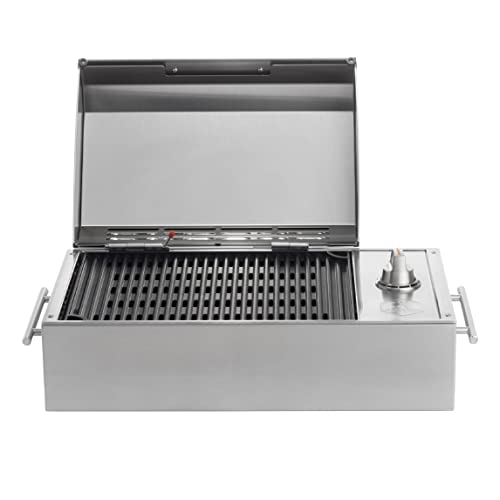
Kenyon City Grill Portable Stainless Steel Electric Grill
Why we picked it: a grill you can actually carry to the campsite, the tailgate or the cabin without borrowing a truck. Stainless, no propane tank to wrestle, and hot enough to cook for four guys rather than reheat for one.
 August's Pick LiberNovo Maxis Electric Big and Tall Ergonomic Office Chair, Graphite 52cm $1,393.00
  July's Pick Powerful Propane Torch Gun, Adjustable Flame Thrower Gun, Kitchen Torch with Detachable Design, Flamethrower Blow Torch for BBQ, Searing Steak, Welding, Camping Charcoal Lighter(Tank Not Included) $42.99
  June's Pick OYASUMI Funny BBQ Man Hot Dog Holders, 4 PCS Reusable Stainless Steel Sausage Stands, Portable Hot Dog Roasters, Barbecue Grill Accessories for Camping & Party Gifts $7.98
 Promoted by FlowAds

Proof of Commitment
Decision-makers look across several parts of a relationship rather than at one single document. Shared finances, living arrangements, social recognition, and future plans all matter, and a marriage certificate rarely tells the full story on its own. Joint bills, travel records, regular communication, and statements from family can show a genuine bond that has held up through ordinary life and changing circumstances.
Checks and Timing
Health and character checks are standard in most family migration cases. Delays usually happen when records are missing, dates don't line up, or answers conflict across forms. Because the assessment moves in stages, timing matters from day one. Careful preparation cuts avoidable stress for both partners and lowers the risk of a longer separation - and a bigger legal bill - down the line.
Safety Clauses
Family migration law also includes safeguards for people facing violence within a relationship. In some cases, a person may still qualify for permanent residence even if the partnership ends after abuse. That protection matters for safety, dignity, and health: fear of losing legal status can trap someone in harm, so these provisions help reduce coercion and support a safer way forward.
Children and Schooling
Children often absorb uncertainty before adults fully recognize what's happening. Unclear status can affect school planning, access to care, travel decisions, and the emotional tone at home. Once a clearer visa pathway is in place, routines get easier to hold - regular attendance, steadier friendships, and better planning for childcare or study tend to follow from that legal certainty.
Money Planning
Long-distance relationships cost more than couples expect at first. Flights, short-stay accommodation, duplicated rent, and missed workdays chip away at savings over time. Even the occasional getaway to Sydney to reconnect stacks another round of flights and hotel nights onto the tab. A partner visa won't erase every expense, but it can cut the repeated travel and let you run one household budget instead of two. Over several years, that shift can protect income, career momentum, and retirement planning.
Permanent Future
Permanent residence changes daily life in practical, measurable ways. Couples can make longer-term housing decisions, take stable jobs, and put down real roots in a community. The energy that once went into visa deadlines moves back into actually enjoying the place - a long weekend on a wine tour through Australia's premier wine regions instead of another stress-filled call with a caseworker. For a lot of households, that lowers the chronic strain and improves day-to-day wellbeing simply because life becomes more predictable.
Closing the Distance
A spouse visa is the unglamorous part of a story that usually starts with something a lot more fun - a solo trip to Australia, a chance meeting, a wedding you didn't see coming when you booked the flight. But long-term commitment needs legal stability as much as it needs the spark, and shared residence is what makes healthier routines, reliable care, and real planning possible. Whether you met your partner while traveling through Australia (and apply onshore via the 820 and 801 route) or you're applying from back home in the States (the offshore 309 and 100 route), the partner pathways - including the 300 visa for engaged couples - give couples a structured way to close the distance. The paperwork is detailed and the timelines are long, so most couples bring in a migration professional rather than risk a misstep that drags the separation out. Get it right, and the trip that changed your life turns into the place you get to live it.