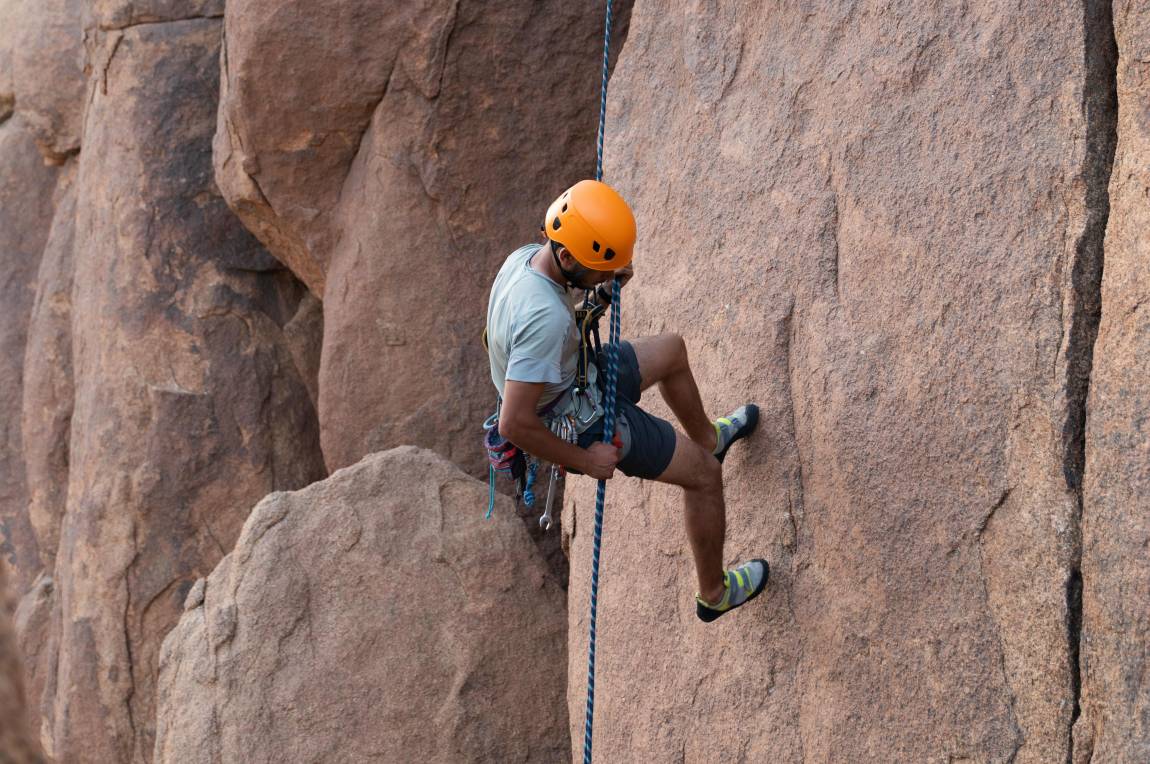
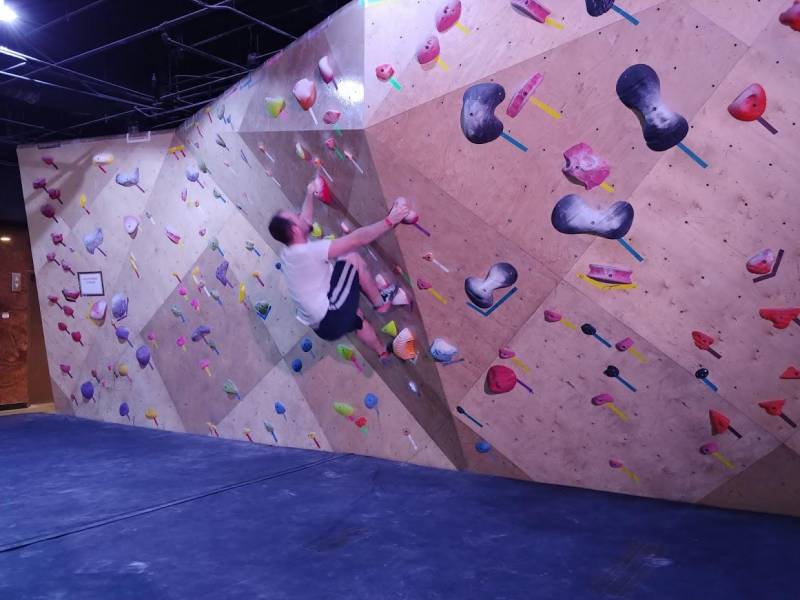
Rock climbing has two entry points, and neither one requires owning a rope. A gym intro class puts you on a top-rope in rented shoes and a rented harness in about two hours; a bouldering wall lets you work problems a dozen feet up over a padded floor with no rope at all. Here is the gear worth buying first, how to read the grades before you pick a route, and the beginner-friendly crags worth planning a weekend around once you move outside.
What Do You Call Your "Guys Trips"?
- Buy your first shoes in a shop, not online - climbing shoe sizing has no fixed relationship to your street size and varies between brands, so the first pair has to go on your foot before you pay for it.
- Expect a belay check before you hold anyone's rope - gyms will not let you belay until you pass one, and it is the cheapest feedback on your technique you will ever get.
- Start at 5.5 to 5.8 outdoors - that is the Yosemite Decimal System band where holds are obvious and mistakes stay cheap, roughly French 3 to 5.
- If you buy one rope, buy a dynamic one - static rope is a different standard built for a different job, and top-roping a climber on it is the most dangerous gear mistake a beginner can make.
- Pack a headlamp for any outdoor day - approach trails and descents routinely run longer than planned, and nobody budgets for finishing in the dark.
When we mapped out active guys trip ideas, climbing made the list on the strength of one thing: a guiding outfit matches top-rope and bouldering routes to whoever shows up, so a total beginner and a buddy who is already hooked can share the same day on real rock. It is also the fastest way to find out whether you like the sport before you spend a dollar on gear.
Footwork, Grip Strength, And The Figure Eight Follow Through
New climbers pull with their arms and burn out in fifteen minutes. The fix is unglamorous: stand on your feet. Climbing shoes have a stiff edge along the inside of the big toe, and learning to weight that edge instead of the middle of your foot is the biggest jump in basic climbing technique most people make in their first month.
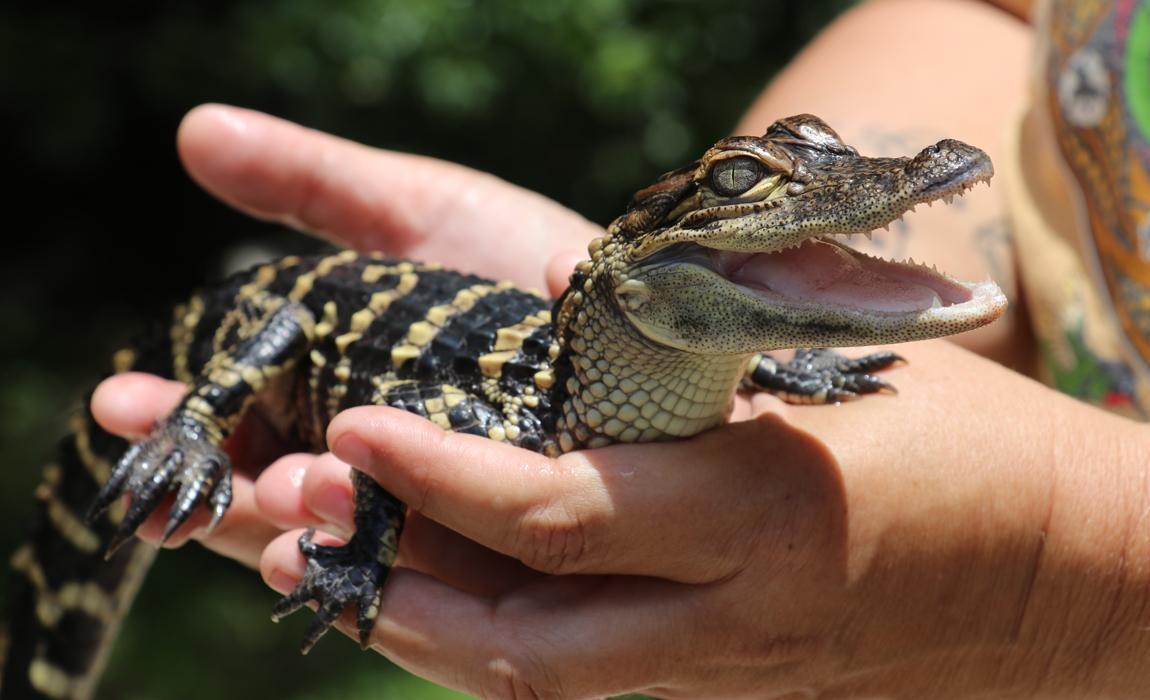
Natural Florida Up Close on a Babcock Ranch Eco Tour
The Babcock Ranch Eco Tour gives you an opportunity to explore the vibrant natural wonders of the Florida swamp including alligators, birds, and more.

Explore Alaska with Virgin Voyages: Adventure Awaits on the 2026 Alaskan Itineraries
Virgin Voyages brings adults-only style to Alaska in summer 2026 with adventure-focused itineraries aboard Brilliant Lady.

Tours and Transportation in Sri Lanka
Customized Sri Lanka tours built around your preferences, ideal for travelers wanting flexible itineraries and unique activities.

American Cruise Lines Music Cities Cruise is For Guys Who Love BBQ, Whiskey, and Music
American Cruise Lines Music City cruise from Memphis to Nashville is for lovers of music, bbq, and whiskey.
Promoted by FlowAds

Grip is the other half, and it is the half that gets injured. Finger tendons strengthen far slower than the muscles pulling on them, which is why experienced climbers spend twenty minutes on easy routes before touching anything hard.
Then there is the knot. You will tie a figure eight follow through every time you clip into a rope, and it is the one knot a beginner has to own cold: trace a figure eight, feed the tail back through it, dress it flat, and leave at least six inches hanging out the back. Your partner checks yours, you check theirs, and nobody leaves the ground until both are done.
Man Gear Pick of the Month
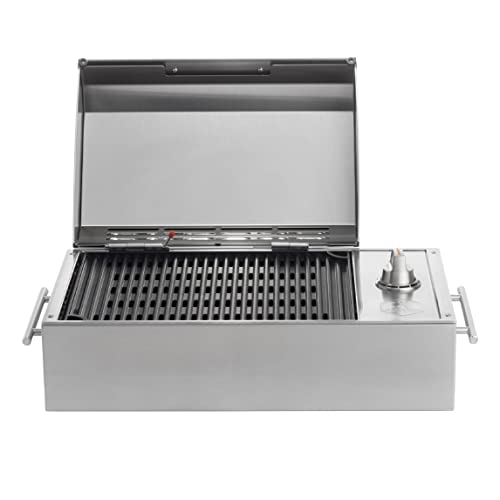
Kenyon City Grill Portable Stainless Steel Electric Grill
Why we picked it: a grill you can actually carry to the campsite, the tailgate or the cabin without borrowing a truck. Stainless, no propane tank to wrestle, and hot enough to cook for four guys rather than reheat for one.
 August's Pick LiberNovo Maxis Electric Big and Tall Ergonomic Office Chair, Graphite 52cm $1,466.00
  July's Pick Powerful Propane Torch Gun, Adjustable Flame Thrower Gun, Kitchen Torch with Detachable Design, Flamethrower Blow Torch for BBQ, Searing Steak, Welding, Camping Charcoal Lighter(Tank Not Included) $41.99
  June's Pick OYASUMI Funny BBQ Man Hot Dog Holders, 4 PCS Reusable Stainless Steel Sausage Stands, Portable Hot Dog Roasters, Barbecue Grill Accessories for Camping & Party Gifts $14.98
 Promoted by FlowAds

The Gear You Need For A First Climb, And What You Can Rent
Almost all of this rents for a few dollars a day at any climbing gym, and renting is the right call until you know which kind of climbing you like, with shoes as the one exception.
Climbing Shoes
Buy these first. Rental shoes have been stretched by hundreds of other feet and sized loose on purpose, so they smear and edge badly. Look for a snug fit with your toes barely curled and no dead space at the heel, tight enough that you would not walk to lunch in them but not so tight you pull them off between climbs. Beginners want a neutral, flat-lasted shoe rather than an aggressive downturned one; the downturn helps on steep overhangs and hurts everywhere else.
Harness
The harness ties you to the rope and catches you when you fall. Any current model from a known brand is safe, so what varies is comfort: adjustable leg loops, enough padding that hanging in it for ten minutes is tolerable, and four gear loops for a belay device and a couple of carabiners.
Climbing Rope
Buy a single dynamic rope, and only a dynamic rope. Dynamic rope stretches under load to absorb the force of a fall. Static rope stretches less than five percent and sends that force straight into your spine and your anchor, which is why it belongs on rappels, hauls and fixed lines and nowhere near a climber who might fall on it.
One rope in the 9.5mm to 10mm range handles both top-roping and lead climbing, so there is no beginner reason to own two. Sixty meters covers most sport routes and seventy is the safer default at newer crags. Check the tag for UIAA 101 or EN 892 certification, which is the dynamic single-rope standard; low-stretch static rope is certified to EN 1891 instead, and the two are not interchangeable.
Helmet
Here is the one piece of gear where indoors and outdoors differ. On rock the risk is not only your own fall; it is a fist-sized stone knocked loose by the party above you, and a swinging fall that puts your head into the wall. An indoor gym has neither hazard, which is why nobody wears a helmet in one and everybody should at a crag. Look for ventilation, a fit that stays put when you shake your head, and the UIAA 106 or EN 12492 mark.
Belay Device
An assisted-braking device is worth the extra money for a beginner. It clamps onto the rope automatically when a load comes on fast, which covers the one thing new belayers reliably get wrong: freezing instead of pulling the brake strand down. A tube-style device works fine and weighs less, but it depends entirely on the belayer's hands doing the right thing under stress.
Carabiners
You need locking carabiners, screwgate or auto-locking, for belaying and for clipping into anchors. Two or three cover a beginner's needs. Non-lockers have their place further up the learning curve, on quickdraws and for racking gear.
Chalk and Chalk Bag
Chalk keeps sweat off your fingertips, which is the difference between holding an edge and sliding off it. Loose chalk in a bag clipped to the back of your harness is the standard setup; a ball inside the bag makes less mess, and some gyms require it. It is the cheapest thing you will buy and the fastest improvement to your grip.
How To Read Climbing Grades Before You Pick A Route
Two systems cover almost everything a beginner will meet: the Yosemite Decimal System in the United States, and the French system in Europe and across much of the international sport circuit. Grades are consensus opinions rather than measurements, so the same route can feel a full grade harder on a cold morning or on tired fingers.
Yosemite Decimal System (YDS)
The YDS sorts terrain into classes: 1 and 2 are hiking, 3 is scrambling, 4 is easy climbing where a rope starts to make sense, and 5 is technical roped climbing. Everything a climber calls climbing lives in class 5, and the number after the decimal is the difficulty inside it, running from 5.0 up to 5.15d at the sharp end of the sport. From 5.10 upward each number splits into a, b, c and d, so 5.10a sits a meaningful step below 5.10d.
Start at 5.5 to 5.8. That is the band where holds are large enough to be obvious, the moves are readable from the ground, and a mistake costs you a swing instead of a fall you remember.
Some routes carry a protection rating after the grade: R means sparse or marginal protection, X means a fall could be fatal. As a beginner, skip anything with either letter on it.
French Grading System
The French system uses one open-ended number with a, b or c and an optional plus, so 6a+ is harder than 6a, and the hardest routes in the world currently sit at 9c. Unlike the YDS, the number reflects the whole route: technical difficulty, endurance, the hardest single move, and whether there is anywhere to rest. That is why a French grade tells you more about how tired you will be at the top, and a YDS grade tells you more about the single hardest move.
The beginner band here is 3 to 5.
The Safety Checks To Run Before Every Climb
Climbing is unusually safe for a sport with this much exposure, and the reason is that the routines are strict. Run these out loud, every time.
- Partner check the knot and the device - you look at their tie-in and their belay device, they look at yours, before either of you leaves the ground.
- Close the system - tie a knot in the free end of the rope, so a rope that turns out to be too short cannot run through the belay device.
- Agree on commands first - "on belay," "climbing," "take," "lower." Sorting that out mid-route with wind and forty feet between you does not work.
- Inspect the soft goods - rope sheath, harness webbing and belay loop are the parts that wear. Fuzzy is fine; exposed core is retirement.
- Warm up before you pull hard - easy routes first, every session. Overgripping on cold tendons is how most beginner injuries happen.
Beginner-Friendly Crags In The US And Canada
A gym teaches you to move and to belay. It does not teach you to read weather, find an anchor, or walk out in the dark, which is why the first few outdoor days go better with a guide or an experienced partner. These are the areas that make that first trip easy: short approaches, deep stocks of low-grade routes, and outfitters who run beginner days.
Eight Crags Worth The Drive
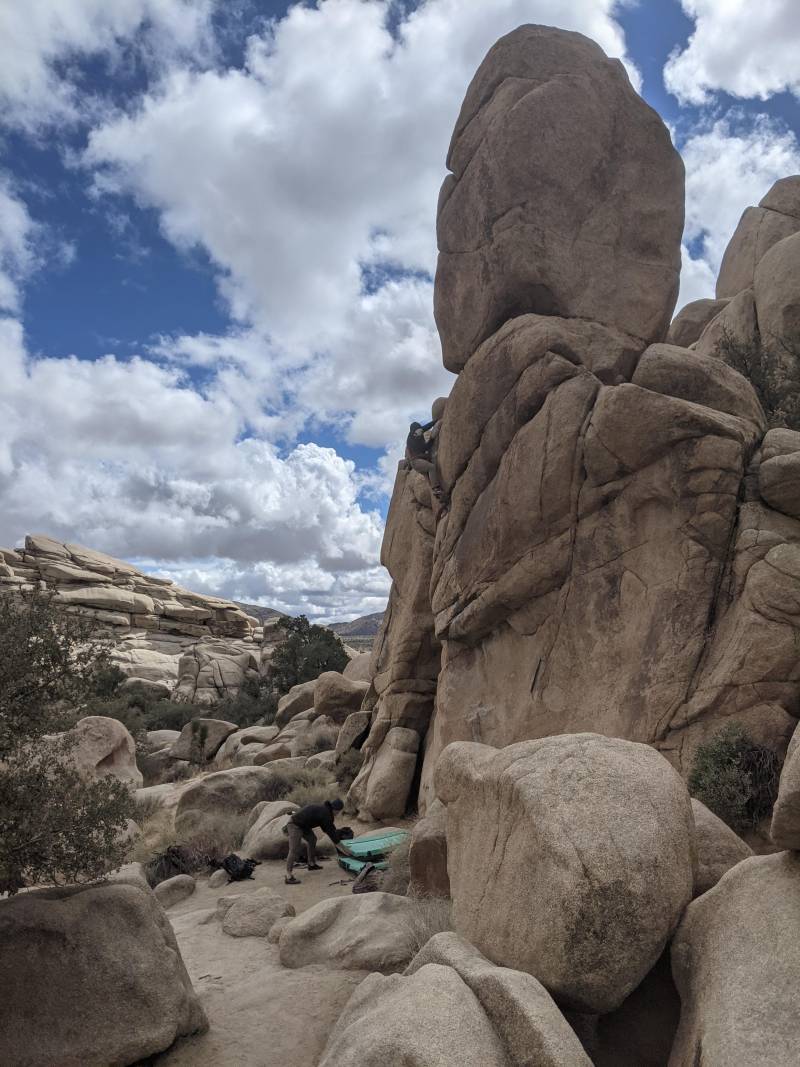
Joshua Tree National Park, California
Joshua Tree is granite domes and boulder piles, often close enough to the road that the climbing starts a few minutes from where you parked. It leans heavily traditional rather than bolted, so go with a guide or a partner who can build anchors. It also doubles as one of the better California guys trip basecamps, since the park is an easy drive from Palm Springs.
The Gunks, New York
The Shawangunk Mountains, about ninety miles north of New York City, are one of the premier climbing areas in the US and unusually friendly to new climbers: quartz conglomerate rock with big horizontal holds, and a large stock of top-rope and low-grade routes. Add the Hudson Valley breweries on the drive home and it turns into one of the easier New York guys trip weekends to sell to a group.
Smith Rock, Oregon
Smith Rock is where American sport climbing effectively started, and it carries more than a thousand routes across every grade on welded volcanic tuff. New climbers get a dedicated beginner area rather than leftovers, and Bend sits about twenty-five miles away with the brewery density to match, which is why it keeps turning up on Oregon guys trip lists.
Red River Gorge, Kentucky
The Red is sandstone, heavily bolted, and about as accessible as good sport climbing gets, with most crags a short walk from a pullout. Grades start low and the concentration of routes means a group of mixed ability can share one wall all day. Miguel's Pizza is the unofficial hub and campground, and the Gorge is the best argument for a Kentucky guys trip that is not about bourbon.
Yosemite Valley, California
El Capitan gets the attention, but Yosemite has plenty of moderate roped climbing and one thing most areas do not: Yosemite Mountaineering School and Guide Service, running lessons and guided climbs out of the valley itself. For a first outdoor day on granite with someone qualified holding the rope, it is hard to beat.
Skaha Bluffs, British Columbia
Skaha, just outside Penticton, is mostly bolted sport climbing across roughly a thousand routes, with maintained crags and marked approach trails. It sits in the Okanagan wine belt, which makes it the rare climbing area you can sell to a group that is only half interested in climbing, and a straightforward addition to a British Columbia guys trip itinerary.
Banff National Park, Alberta
Banff covers sport, trad and bouldering, with guided beginner days available and Tunnel Mountain and the Lake Louise area as the usual first stops. The guiding infrastructure is the draw: Canadian mountain guides are certified through the ACMG, an IFMGA member since 1972, so a beginner day here comes with credentials attached. Pair it with Calgary or Canmore and it becomes a Canada guys trip that only half the group has to climb on.
Cape Enrage, New Brunswick
Cape Enrage puts you on sea cliffs above the Bay of Fundy, which has the highest tides in the world. There is an adventure operator on site running guided climbing and rappelling, so it works as a one-day introduction rather than a trip you have to plan gear around.
If you do not have a partner yet, the gym's board and Mountain Project's partner finder are how most people solve that, and booking a guided day solves it outright.
Crag Etiquette And Why Access Depends On It
A lot of climbing happens on ground that could close tomorrow: private property, city watershed, park acreage with seasonal wildlife restrictions. Access gets negotiated, and it gets renegotiated based on how climbers behave.
- Leave no trace, including the chalk - pack out tape, brush off tick marks, stay on the approach trail, and do not widen the base of a climb by trampling it.
- Respect seasonal closures - peregrine and eagle nesting shuts down routes at many crags every spring. Climbing through a closure is how whole areas get lost.
- Keep the noise and the dog under control - you are sharing a small piece of ground, sometimes with hikers who did not sign up for your playlist.
- Support the local climbing organization - the groups that buy access, build trails and negotiate with landowners run on memberships. The Access Fund is the national one; most areas have a local coalition too.
Rent Everything Except The Shoes For Your First Season
The honest advice is to buy shoes, buy a chalk bag, and buy nothing else until you know whether you are a boulderer, a sport climber, or the kind of person who wants to be on a multi-pitch route at sunrise. Those are three different sets of gear, and a gym will rent you the rest for less than the price of guessing wrong.
The one thing to spend money on early is instruction, specifically the move outdoors. A gym belay card certifies that you can operate a device on a fixed anchor somebody else installed. It says nothing about building that anchor on rock, and rigging a top-rope is the step where a mistake hurts somebody. Book a gym-to-crag course or a guided day for that, and let someone whose job it is watch you do it the first time.

Promoted by FlowAds
