Touring mansions on a guys trip isn't a historic-house assignment dragged out by your wife. The right mansion at the right moment is one of the most masculine experiences America offers - rooms designed for billiards, smoking, gun cabinets, and quiet whiskey, built by men whose names still move products today. Vanderbilt. Pabst. Walker. Rockefeller. Ford. Hearst. The houses survive. And they're surprisingly easy to fold into the trips guys are already planning.
What Do You Call Your "Guys Trips"?
A mansion is a specific kind of building defined by size, pedigree, and design intent - and the houses below tell the story of how American industrial fortunes used architecture as a power display.
- A mansion is a private home of more than 5,000 square feet - though in some real-estate markets the threshold runs to 8,000 or 10,000 - with multiple wings, formal rooms designed for specific purposes, and the kind of materials and craftsmanship that don't pencil out economically
- What separates a mansion from a McMansion is pedigree: a known builder, a recognized architect, design intent, and craftsmanship that a 12,000 square foot tract house can't replicate at any size
- Most American mansions worth touring were designed by Richard Morris Hunt, Julia Morgan, Charles Follen McKim, or Stanford White, and built for men whose names you still know - Vanderbilt, Pabst, Walker, Rockefeller, Ford, Hearst
- American mansion-building peaked in the Gilded Age (1870-1910), when industrial fortunes from steel, rail, oil, mining, beer, rubber, and shipping created a generation of men spending unprecedented money on the most visible asset available: the family home
- Guys are drawn to mansions partly for the architecture and engineering, partly for the history of the men who built them, and partly because the rooms themselves - billiard rooms, gun rooms, libraries, smoking parlors - were designed around how powerful men spent their leisure

Historic Highlights with the Gilded Age Van Tour
A private 90-minute narrated van tour of Newport's Gilded Age history for up to 5 guests, ideal for history lovers.

Marble House,The Breakers&Downtown Newport 1-Day Tour
A day trip from Boston to Newport, Rhode Island, visiting The Breakers and Marble House mansions, ideal for history and architecture lovers.

Newport Gilded Age Mansions Trolley Tour w/ Breakers Ticket (8+)
A 3-hour trolley tour of Newport's Gilded Age mansions with a 90-minute Breakers visit, ideal for ages 8 and up.
Promoted by FlowAds
Newport, RI - The Vanderbilt Empire
Newport became the summer playground of the Gilded Age's wealthiest families, and the Vanderbilts in particular commissioned palaces along Bellevue Avenue that would have looked at home in Renaissance Italy. Three are open for public tours and they sit within ten minutes of each other, which makes Newport the most concentrated cluster of true mansions you can visit anywhere in the country. Build a Newport mancation around the cliff walk, the harbor, and these three.
The Breakers
Cornelius Vanderbilt II's 70-room Italian Renaissance summer cottage on the Atlantic cliffs is the largest and most-visited mansion in Newport, with a great hall that runs 50 feet to a glass ceiling and a billiard room paneled in green Cipollino marble. If you only see one Newport mansion, this is it.
Marble House
William K. Vanderbilt's wedding gift to his wife Alva cost $11 million in 1892 dollars and used 500,000 cubic feet of marble in the construction. The Gothic Room and the men's smoking parlor together make a strong case for what robber-baron interior masculinity looked like.
Rosecliff
Modeled on the Grand Trianon at Versailles for Nevada silver heiress Tessie Oelrichs and completed in 1902, Rosecliff is best known to most guys as the ballroom from the 1974 Great Gatsby and True Lies. The horseshoe-shaped staircase alone is worth the stop.
The Great Lakes - Industrial Barons of America's Heartland
The Great Lakes region built this country - manufacturing in Detroit and Cleveland, mining on the iron range, shipping out of Duluth, brewing in Milwaukee, distilling in Walkerville, and farming everywhere in between. These lakes and rivers allowed the United States to become an industrial powerhouse and the men who built those industries left mansions that make fantastic anchor points for guys visiting the region for fishing trips, brewery weekends, and game-day road trips to take a step back in time. These great houses, mansions, and estates are among the most underappreciated stops in America.
Pabst Mansion (Milwaukee, WI)
Captain Frederick Pabst's 1892 Flemish Renaissance Revival on Wisconsin Avenue still has the original 14 fireplaces, a music room paneled in carved African mahogany, and a library that smells faintly of cigars 130 years later. Tack it onto a Milwaukee brewery weekend and you're touring the home of the man whose name still moves cases of beer.
Willistead Manor (Windsor, ON)
I visited Willistead on a romantic weekend in Windsor with my wife and walked out thinking about the men who built it - the dark wood pool room, the leather chairs, the drams of whiskey poured by the guys distilling Canadian Club a few hundred yards away. Guys are guys, even 100 years removed, and this 36-room Tudor Revival is one of the most quietly masculine spaces I've toured anywhere.
Glensheen (Duluth, MN)
Iron-range mining baron Chester Congdon built this 39-room estate on the Lake Superior shoreline in 1908, and the property became infamous nationally after the unsolved 1977 murder of his daughter and her caregiver. The house tours run year-round and the grounds include a third of a mile of Superior frontage, which makes it a natural pairing with a North Shore fishing weekend.
Meadow Brook Hall (Rochester, MI)
Matilda Dodge Wilson, widow of Dodge Brothers Motor Company co-founder John Dodge, built this 110-room Tudor Revival in 1929 with one of the largest residential pipe organs in America in the great hall. Pair the tour with a Detroit auto-history weekend and the scale of what the Dodge fortune actually bought becomes legible.
Stan Hywet Hall (Akron, OH)
F.A. Seiberling, founder of Goodyear Tire and Rubber Company, built this 65-room Tudor Revival on 70 acres in 1915 with a billiard room, an indoor swimming pool, and a music room designed around a 4,400-pipe organ. Thirty minutes from downtown Cleveland makes it an easy add to a Rock and Roll Hall of Fame weekend.
The Hudson Valley - Robber Barons Above the Tappan Zee
The Hudson Valley north of New York City was the country residence of choice for the men who built America's railroads, oil refineries, and banking empires. Three of their estates are open for public tours and they sit within an hour of each other along the river. A Friday afternoon train up from Manhattan and a rented car gets you to all three in two days.
Vanderbilt Mansion National Historic Site (Hyde Park, NY)
Frederick Vanderbilt, grandson of the Commodore, built this 54-room Beaux-Arts country house in 1899 as a spring and fall escape from the Newport social calendar. Tours are free as a National Park Service site, which makes it the easiest Vanderbilt entry on the list.
Lyndhurst Mansion (Tarrytown, NY)
The Gothic Revival fortress of railroad robber baron Jay Gould perches above the Hudson with a clear view straight across to the Tappan Zee Bridge. Stop for the bowling alley and the carriage house alone.
Kykuit (Sleepy Hollow, NY)
John D. Rockefeller's six-story stone mansion above the Hudson holds four generations of Rockefeller art collection, including a basement gallery of Picasso tapestries. The garage holds the family's collection of horse-drawn carriages and early automobiles.


Promoted by FlowAds
Virginia and the South - The America 250 Mansion Corridor
Virginia is the densest concentration of presidential estates in America, and 2026's America 250 celebrations make this the right year to do the corridor as a single road trip. Mount Vernon, Monticello, Montpelier, and Williamsburg sit within a three-hour drive of each other and tell the story of how the men who founded the country actually lived. Then drop south into North Carolina for the largest privately owned house in America.
Mount Vernon (Mount Vernon, VA)
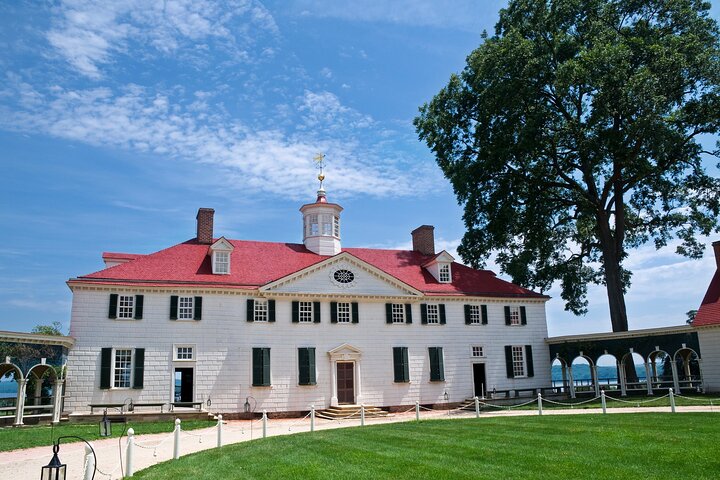
George Washington's plantation home on the Potomac is where he experimented with crop rotation and ran the working distillery that's been reconstructed and operates today. The whiskey from the distillery is bottled and sold on site and the small batches sell out fast.
Monticello (Charlottesville, VA)
Thomas Jefferson designed and redesigned his hilltop home over 40 years, and the result is the only American house on UNESCO's World Heritage list, alongside the University of Virginia. The wine cellar tours and the working vineyards on the property both pair naturally with a Charlottesville weekend.
Montpelier (Orange, VA)
James Madison's home and where he drafted much of what became the Constitution sits on 2,650 acres of central Virginia hill country with hiking trails and a fly fishing stream on the grounds. Often missed by guys doing the Mount Vernon-Monticello run.
Colonial Williamsburg (Williamsburg, VA)
Not a single mansion but the Governor's Palace and the Carter, Wythe, and Peyton Randolph houses make Williamsburg a mansion-hopping town in itself. The natural last leg of the Virginia presidential corridor and a critical America 250 stop.
Biltmore Estate (Asheville, NC)
We're including this one even though Biltmore Estate in Asheville, North Carolina isn't a presidential estate. It is one you won't want to miss though!
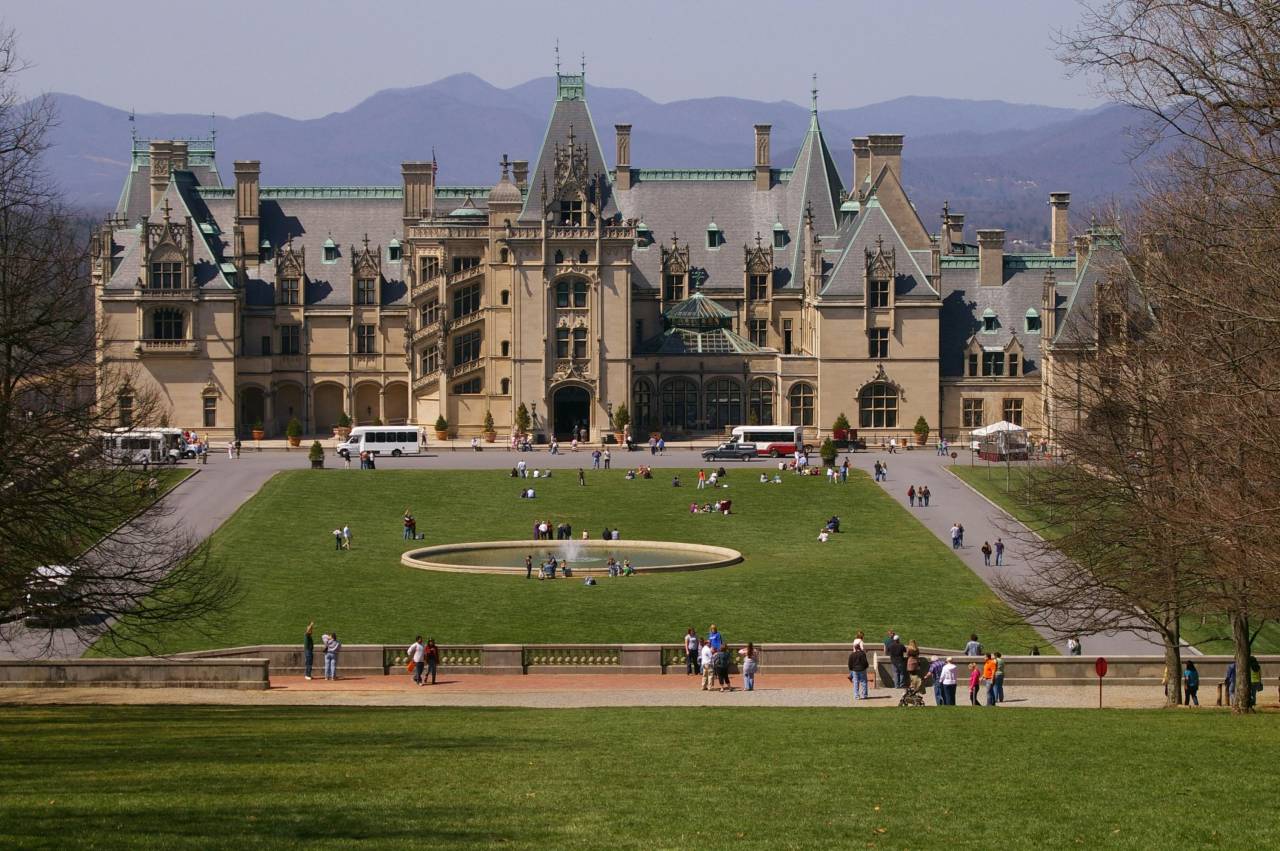
George Vanderbilt's 250-room château on 8,000 acres is the largest privately owned house in America, and the property functions as a full guys trip destination on its own - resort hotels, fly fishing in the Pisgah, the Biltmore winery, and the Land Rover Driving Experience running one-hour through full-day off-road sessions out of Antler Hill Village. Build a long weekend around it.

Private Hearst Castle Day Trip from San Francisco
A private day trip from San Francisco to Hearst Castle, ideal for travelers who love history, art, and grand architecture.

3-Day Private Pacific Tour to Big Sur, Hearst Castle, and More
A customizable 3-day private Pacific coast tour covering Big Sur, Bixby Bridge, Hearst Castle and Santa Barbara, ideal for photo lovers.

Private Tour of Hearst Castle, Big Sur, Monterey & Carmel from San Francisco
A 2-day private coastal tour from San Francisco with Hearst Castle, Big Sur, Monterey and Carmel, ideal for couples, families and nature lovers.
Promoted by FlowAds
The West Coast - Hearst, Winchester, and the California Empire
California's mansion story is younger than the Gilded Age East Coast tradition but the houses are no less ambitious. They were built by newspaper publishers, gold rush heirs, and 19th-century industrial fortunes that moved west when the railroads opened the coast. The three below cover the spectacle, the strange, and the refined.
Hearst Castle (San Simeon, CA)
William Randolph Hearst's 165-room hilltop estate above the central California coast was designed by architect Julia Morgan over 28 years and served as the model for Xanadu in Citizen Kane. The Neptune Pool and the Roman Pool are reasons enough for the trip on their own.
Winchester Mystery House (San Jose, CA)
Sarah Winchester's 160-room sprawl of staircases to nowhere and doors that open onto walls was built continuously for 38 years until her death in 1922. The strangest mansion in America by a wide margin and the natural pairing with a Bay Area guys weekend.
Filoli (Woodside, CA)
Built in 1917 for the Bourn family from the Empire Mine gold rush fortune, Filoli holds 16 acres of formal gardens 30 minutes south of San Francisco. A more refined coastal alternative to the spectacle of Hearst.
How to Pick the Right Mansion for the Trip You're Actually Taking
The mistake most guys make with mansion tours is treating them as standalone destinations. They aren't. They work as the cultural anchor of a trip you're already planning, and the right pairing turns a 90-minute house tour into the part of the weekend everybody talks about on the drive home.
Match the Mansion to the Group
Some guys will sit through three hours of architectural detail at the Breakers and want more. Others get restless after 45 minutes. Pick the property by how the group reads: the Newport cluster works for the patient buddies group because it's three mansions in one cliff walk; Biltmore works for the everybody-needs-something group because half the property is wineries and Land Rover trails; Glensheen works for the unsolved-true-crime group because the murder backstory is the whole conversation.
Pair It with the Industry That Built It
The best mansion stops connect to the industry that built them. Pabst pairs with a Milwaukee brewery crawl. Willistead pairs with a Walkerville whiskey tour and a day on the Detroit River. Stan Hywet pairs with a Cleveland-Akron sports weekend. Hearst Castle pairs with a Highway 1 road trip. The mansion explains the city you're already drinking and fishing through.
Time Your Visit Right
Mansion tours peak at midday on summer weekends and the lines kill the experience. Book the first morning slot or the last afternoon slot, especially for the Newport cluster and Biltmore. Off-season tours from October through April are both shorter on lines and more atmospheric - cold weather inside an unheated 110-room Tudor Revival is part of the point.
Take The Time To Plan the Trip You'll Talk About on the Drive Home
The mansions on this list are the ones that produce stories, not just photos. Walk into the Pabst music room and you'll smell the cigars. Walk into Willistead's pool room and you'll hear the laughter that filled it for thirty years before the house went to the city of Windsor. The point of these trips isn't the architecture. It's the line back to the men who built the country and the version of masculinity their houses still hold.