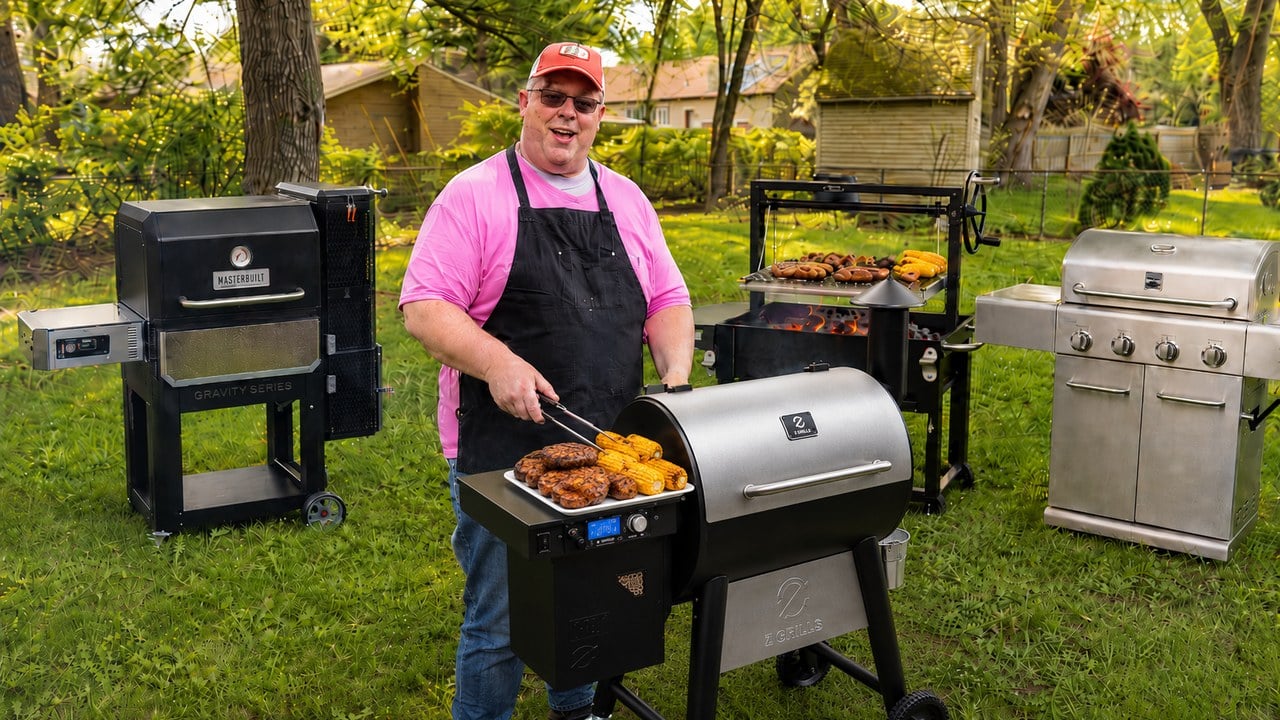
A real backyard cook doesn't own one grill. He owns a stack - because a Tuesday-night burger and a 14-hour brisket are not the same job, and a tool that does both fine doesn't do either well. This guide walks through the full stack: eight grills across every fuel type, the tools that separate a grill guy from a pitmaster, the outdoor kitchen pieces that turn a deck into a hosting space, and the cookbook that earns its shelf space.
If you're starting from zero, these six get you 80% of the way to a serious backyard cooking setup before you start adding the specialty rigs.
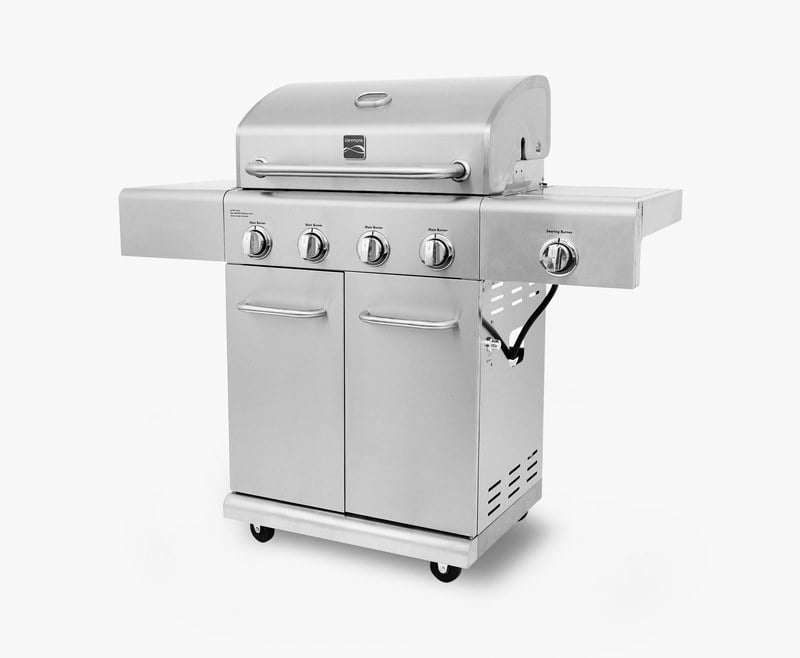
- Kenmore 4-Burner Gas Grill with Side Searing Burner - Weekday workhorse with the side burner that handles the sides without heating up your kitchen.
- Weber Performer 22" Smart Charcoal Grill - The kettle that taught America how to grill, now with smart-thermometer guts.
- Masterbuilt Gravity Series 1050 - Charcoal flavor with digital temp control - grill, smoke, and walk away.
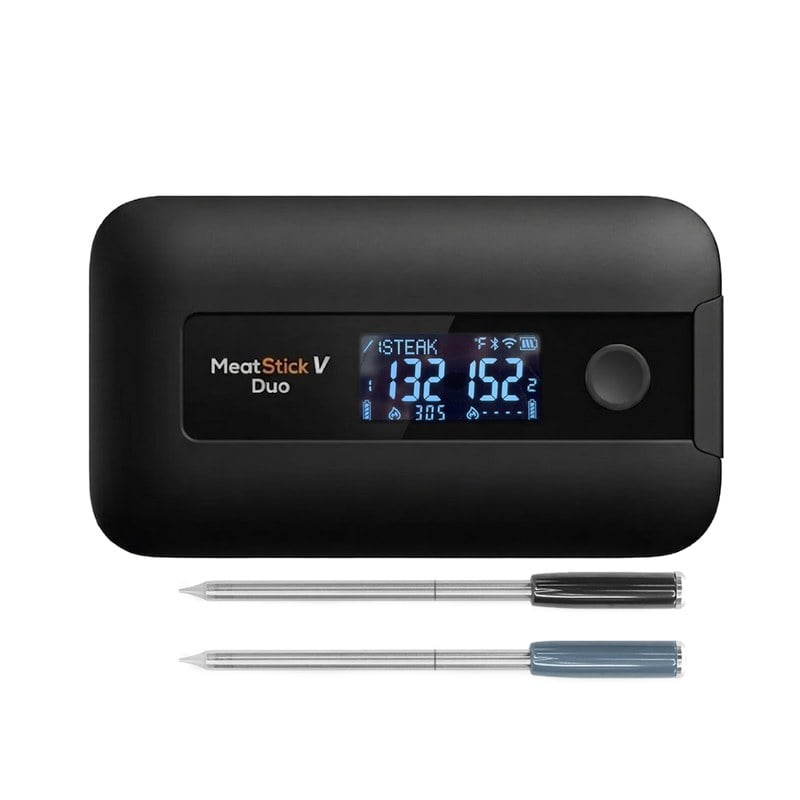
- MeatStick V Duo Wireless Thermometer - Dual probes, WiFi, and an LCD base so you stop guessing.
- LivingOnThePatio Grilling Apron - The uniform. Pockets for tools, protection from splatter, and it looks the part.
- Epic BBQ Sandwiches by Brad Prose - The cookbook that pushes you past plain burgers and into smashburgers, banh mi, and tortas off the smoker.
Buy one expensive grill and you're bottlenecked the first time you want to smoke a brisket Friday and sear ribeyes Saturday. The better play is to match each piece of gear to the job it does best, then build the stack over time.
- Start with your weekday cook, not your dream cook - The grill you use on a Tuesday after work is the one that earns its space; the showpiece grill comes later.
- Pick fuel types, not brands - Gas, charcoal, kamado, and gravity each solve different problems; owning two fuel types gives you 90% of the flexibility of owning five.
- Skip the gimmicks, buy the thermometer - A $180 smart thermometer makes a $300 grill cook like a $1,500 one; the reverse isn't true.
- Match grill capacity to your real guest count - The 60-inch designer rig is overkill if you're cooking for four; the tabletop electric is wrong if you're feeding 12.
- Plan storage from day one - Covers, hooks, and a dedicated grill box keep your investment outdoors year-round without rotting in the rain.
- Build the kitchen in stages - A cart and a cooler beat a half-finished outdoor kitchen every time; full builds come last.
The point of building a stack instead of buying a single mega-grill is that each piece becomes a default for a specific job. Gas wins weeknights. Charcoal wins steaks. Gravity charcoal wins overnight cooks. Kamado wins entertaining. The accessories - thermometer, tools, apron, storage - turn whichever rig you're firing up into a reliable cook instead of a coin flip. That's the difference between a guy who grills and a guy who runs his backyard.
The Grills That Define How You Cook
Every grill in the lineup below earns its place by being the best tool for one specific job. The trick is figuring out which jobs you actually do.
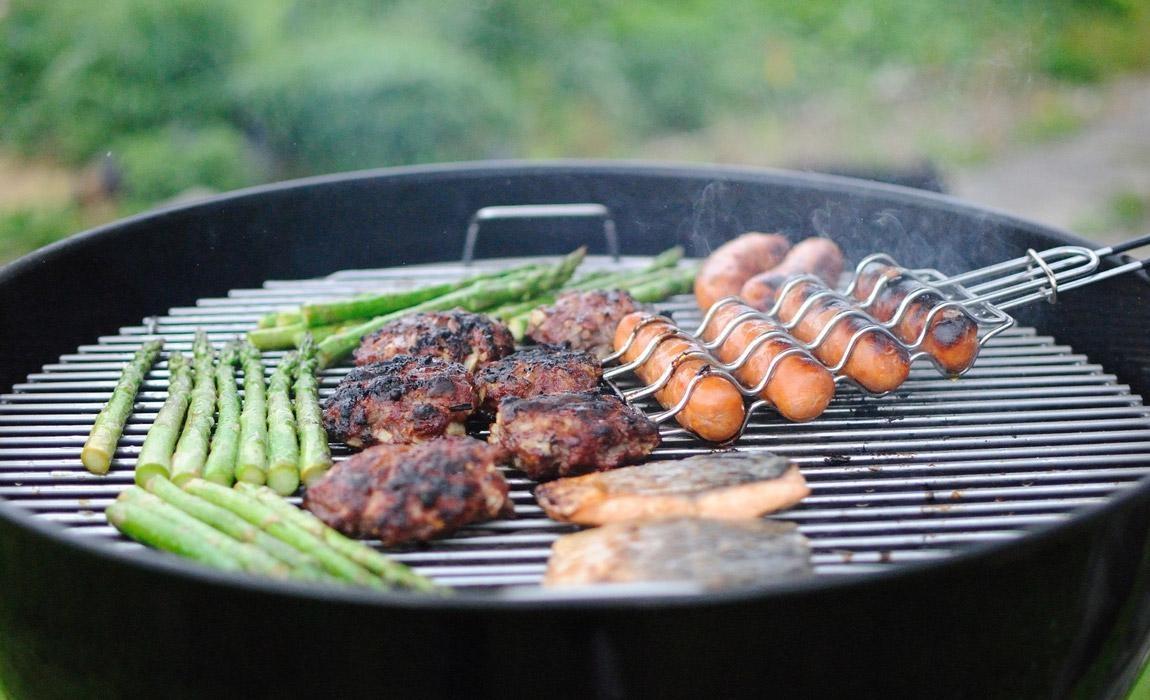
Master Your Grill: A Progressive Guide to Outdoor Cooking
Master backyard grilling through systematic progression: equipment selection, core techniques, menu expansion, and advanced entertaining skills that transform any gathering into memorable culinary exp
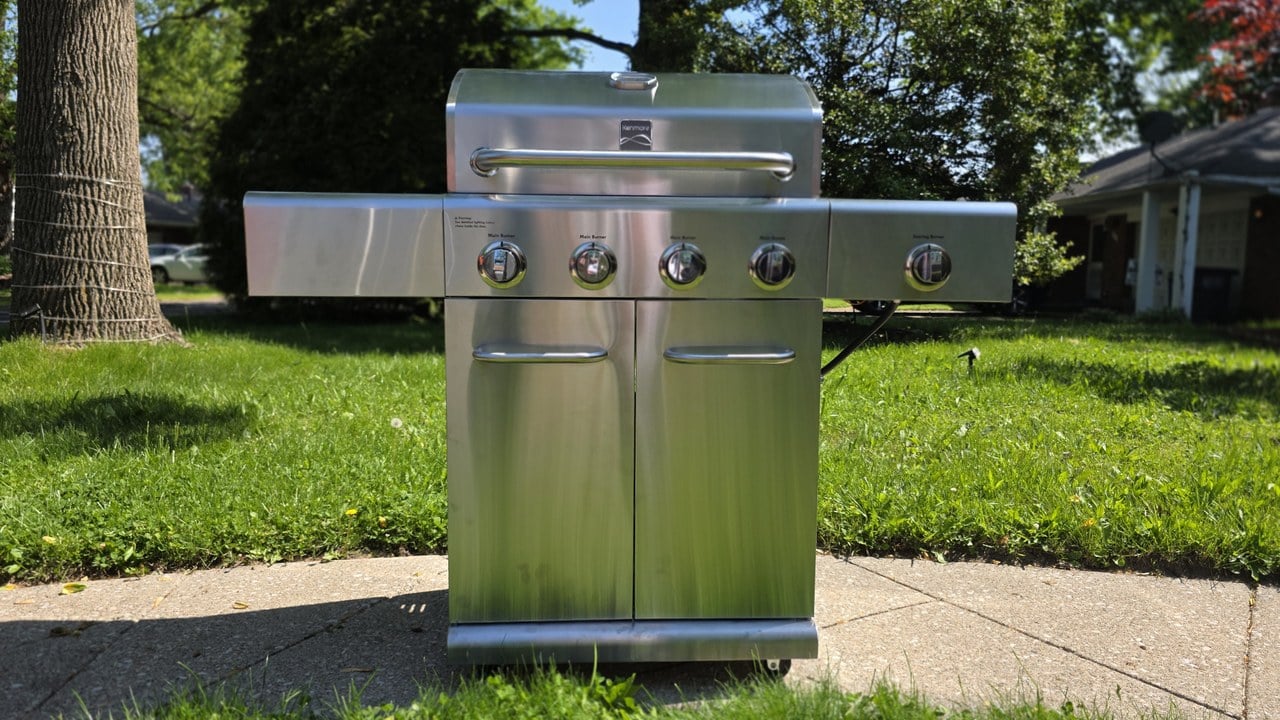
Kenmore 4-Burner Gas Grill Review: Serious Searing Power
Kenmore 4-Burner Gas Grill with Side Searing Burner review: a $599 stainless grill that out-sears pricier rivals. My honest take on specs, assembly, and value.

MEATER Pro Duo: Wireless Smart Meat Thermometer
Wireless smart meat thermometer with two probes to monitor two cuts at once. Uses WiFi and the MEATER app for guided cooking, ideal for grillers and home cooks.
Promoted by FlowAds

Gas - The Weekday Workhorse
Gas is the grill you use on a Tuesday because it's ready in eight minutes, it doesn't ash up your patio, and you don't have to babysit it. The Kenmore 4-Burner Gas Grill with Side Searing Burner is built for exactly this - four main burners for chicken, burgers, and brats, plus a side searing burner that handles a pot of baked beans or melted butter without driving you back inside. Skip the side burner on your first buy and you'll add it in year two - once you've cooked corn or fried potatoes outside instead of stinking up the kitchen on a hot July night, you don't go back. Pick it up on Amazon.
Charcoal Kettle - The Weekend Sear
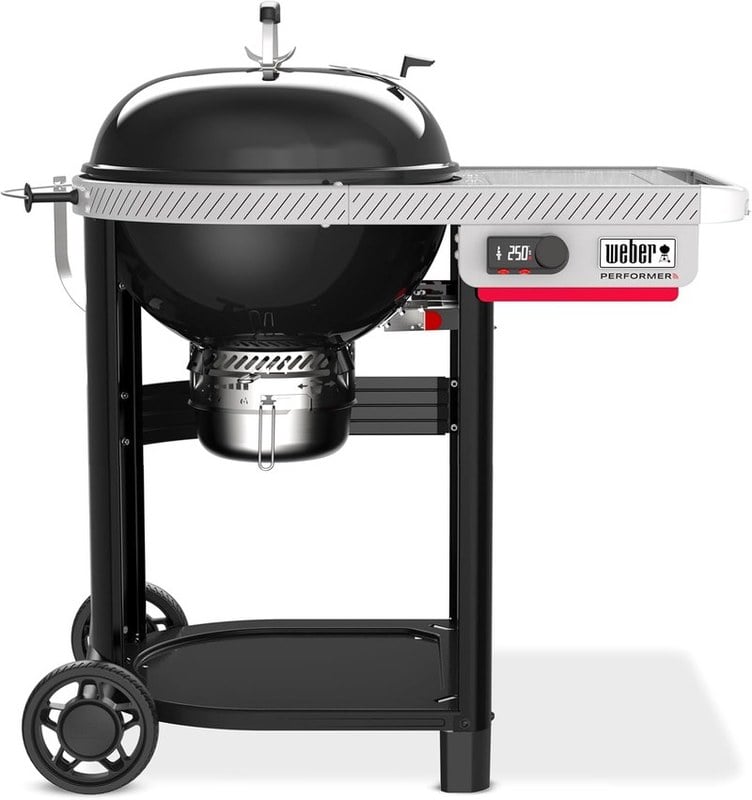
Charcoal is the grill you fire up on a Saturday when the cook is the event, not the inconvenience. The Weber Performer 22" Smart Charcoal Grill is the modern read on the kettle that built American backyards - same 22-inch kettle Weber's been making since 1952, but with built-in smart-thermometer integration so you can sear a ribeye over direct heat and check the internal without lifting the lid. Charcoal hits temperatures gas can't touch and adds a smoke flavor gas can't fake. You won't grill on it every night, and that's fine - this is the grill you use when you actually want to cook, not just feed people.
Man Gear Pick of the Month
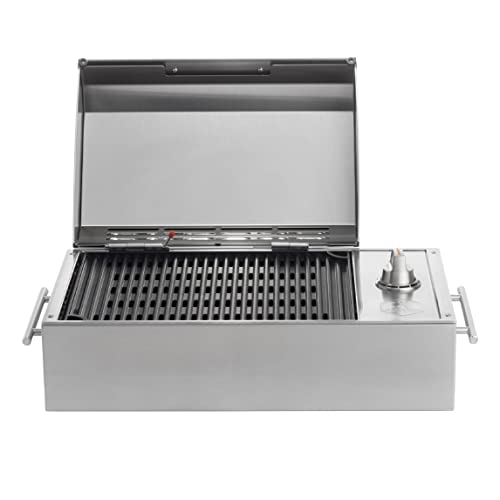
Kenyon City Grill Portable Stainless Steel Electric Grill
Why we picked it: a grill you can actually carry to the campsite, the tailgate or the cabin without borrowing a truck. Stainless, no propane tank to wrestle, and hot enough to cook for four guys rather than reheat for one.
 August's Pick LiberNovo Maxis Electric Big and Tall Ergonomic Office Chair, Graphite 52cm $1,466.00
  July's Pick Powerful Propane Torch Gun, Adjustable Flame Thrower Gun, Kitchen Torch with Detachable Design, Flamethrower Blow Torch for BBQ, Searing Steak, Welding, Camping Charcoal Lighter(Tank Not Included) $41.99
  June's Pick OYASUMI Funny BBQ Man Hot Dog Holders, 4 PCS Reusable Stainless Steel Sausage Stands, Portable Hot Dog Roasters, Barbecue Grill Accessories for Camping & Party Gifts $14.98
 Promoted by FlowAds

Santa Maria - The Argentine Showpiece
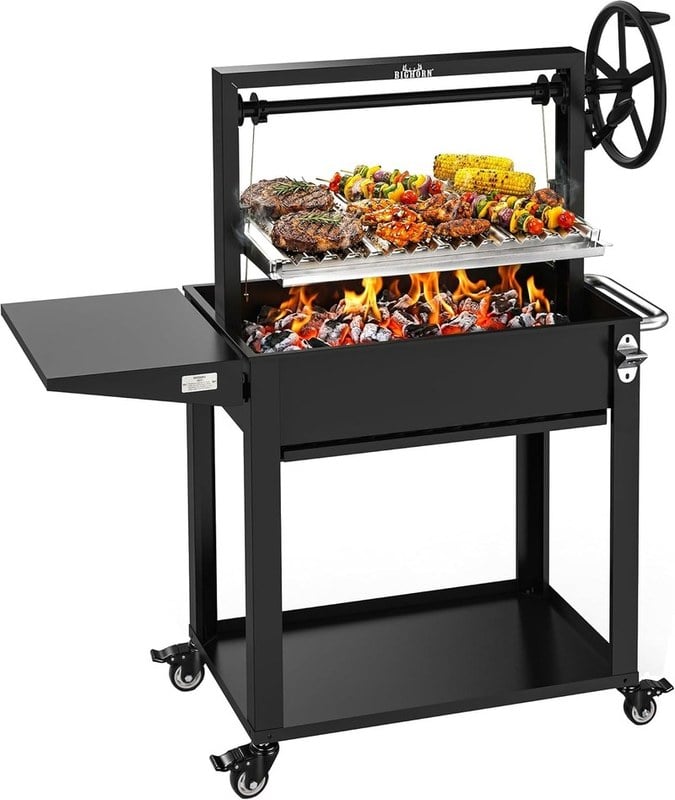
The BIG HORN Santa Maria Argentine Parrilla Grill is what happens when you take a wood fire and bolt an adjustable grate over it. The grate cranks up and down on a hand wheel so you control the temperature by moving the meat toward or away from the coals instead of futzing with vents. The Argentine parrilla tradition uses this layout for asado; the Santa Maria style on California's central coast uses the same idea for tri-tip - either way, it's hardwood-fired, theatrical, and built for cooking the way the meat was meant to be cooked. It's not a weeknight grill. It's the one you fire up for a guys night in when your buddies want to see something different than grilling on gas or charcoal.
Gravity Charcoal - The Set-and-Forget Smoker
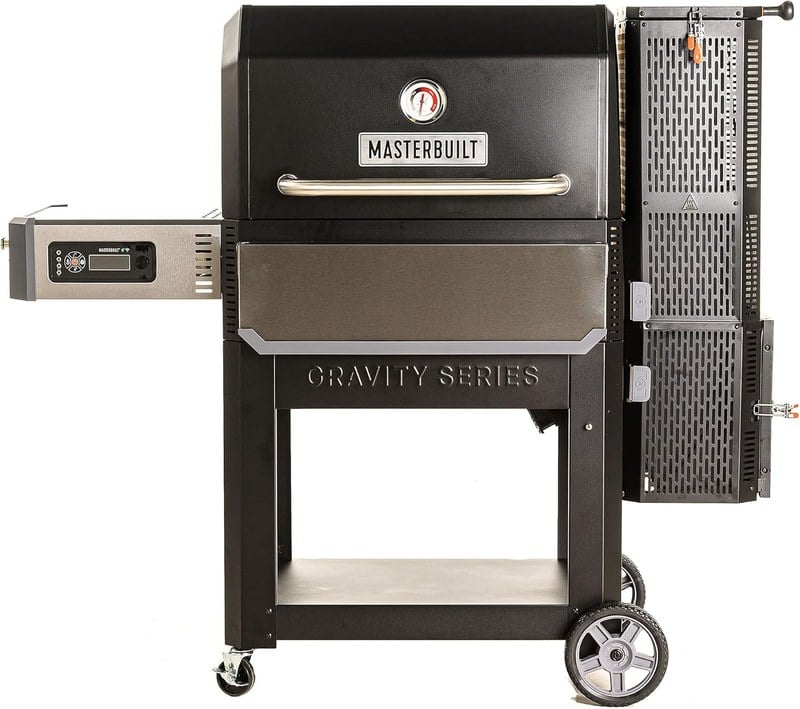
The Masterbuilt Gravity Series 1050 is the grill that fixed charcoal's biggest problem: babysitting. A gravity-fed hopper holds enough lump charcoal for an overnight brisket, a fan and digital thermostat hold the temp within five degrees, and you can run it from 225°F for a 14-hour smoke up to 700°F for a steak sear. This is the rig for guys who love the flavor of charcoal but don't want to spend Saturday adjusting vents every 40 minutes. Pair it with a wireless thermometer and you can start a pork shoulder before bed and pull it perfectly cooked in the morning - the kind of thing that turns a backyard cook into the guy people drive to for the Fourth of July.
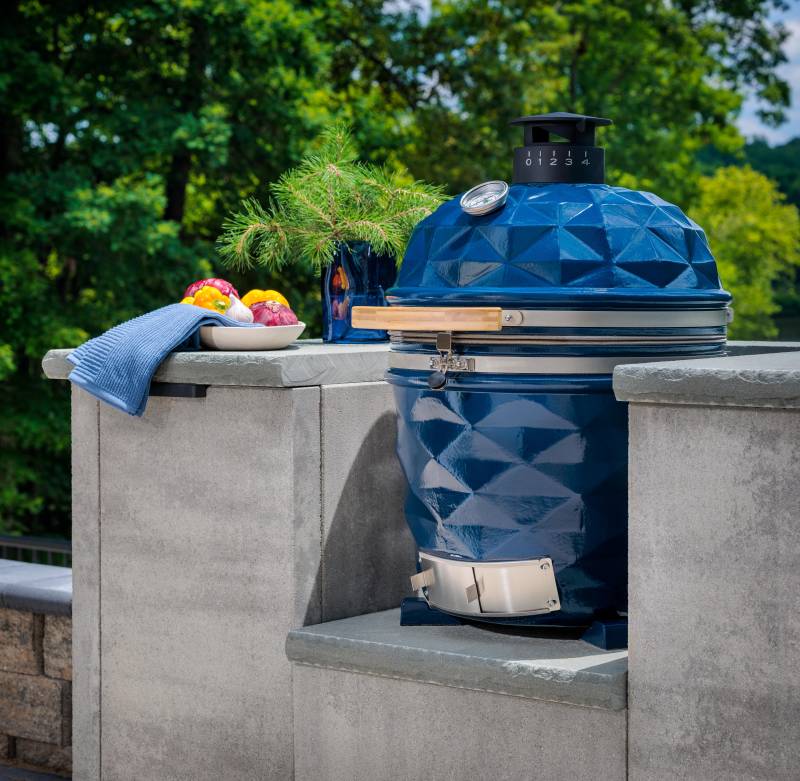
Kamado - The Backyard Centerpiece
The Belgard Blue Diamond Kamado is the egg-shaped ceramic cooker that does five jobs - grill, smoke, roast, sear, and bake - and looks like a piece of outdoor sculpture while doing them. Ceramic walls hold heat the way cast iron does, only better, so a kamado runs efficiently from low-and-slow 225°F smokes up to 700°F pizza temps on a single load of lump. Belgard's gemstone-pattern finish makes this less of a grill and more of a yard feature, which is exactly the point - if you're going to build your outdoor space around your cooking, the centerpiece needs to look like one.
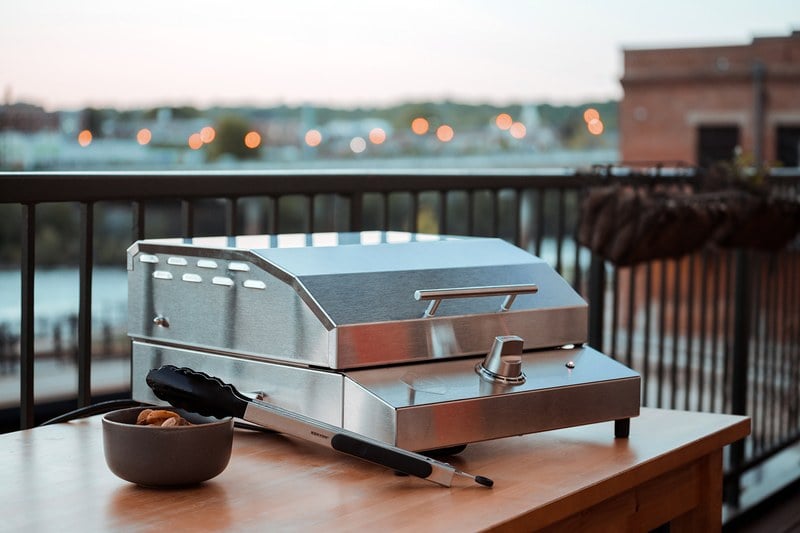
Electric - The Condo and Balcony Solution
The Kenyon City Grill and its larger sibling the G2 Grill (pictured) solve the problem most guys don't know exists until they move into a building with an HOA that bans propane. Both are flameless, smokeless, marine-grade electric grills that hit 550°F in under five minutes, leave proper sear marks, and live happily on a balcony, a sailboat, or a screened porch. The City Grill and G2 Grill are both portable - good for tailgates and RV trips where open flame is a problem. On the other hand, if you want something built in - perfect for outdoor kitchens or even indoor grilling! Kenyon has a fantastic selection of built-in grills as well. Buy direct from Kenyon or on Amazon.
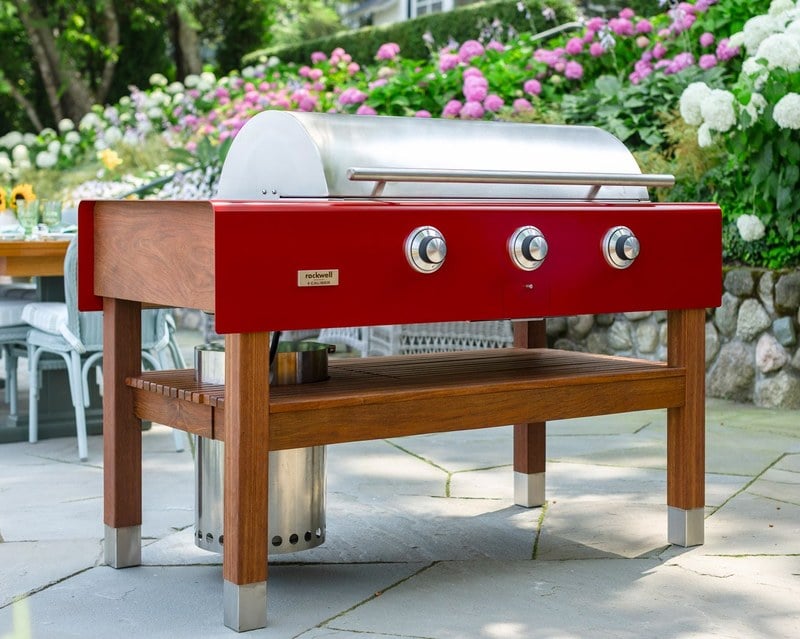
Designer Social - The Statement Piece
The True Caliber Signature Rockwell is what happens when an architect designs a grill instead of a grill company doing it - in this case, design legend David Rockwell, whose name is on the product because the brand wanted his fingerprints all over the form. Sixty inches across, 360-degree walk-around layout, a fully retractable "disappearing lid" that slides under the cooktop so nothing blocks the view, three 20,000 BTU Crossflame burners, and 96 customizable color combinations including a deep crimson finish that anchors the marine-grade body. This is investment-tier gear - the grill you buy when you're done buying grills and you want the one that turns your backyard into the place everyone wants to be on Saturday night.
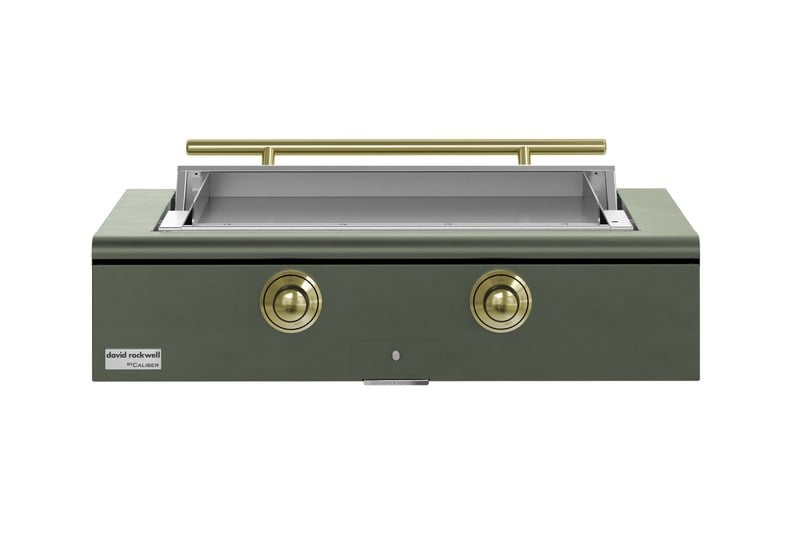
Griddle - The Flat-Top
The True Caliber Rockwell Social Griddle is the same architect-designed 360-degree platform as the Signature Rockwell, but with a flat-top instead of grates. Flat-top cooking is what most guys discover after they've owned a grill for a few years - smashburgers go from "fine" to restaurant-grade, breakfast cooks all happen on one surface, and Korean BBQ at home becomes a normal thing instead of a project. Available in 42- and 48-inch sizes, propane or natural gas, with the same disappearing-lid retract that makes hosting feel like a campfire instead of a galley. If the Signature Rockwell is the showpiece grill, this is the showpiece griddle.
The Tools That Separate a Grill Guy from a Pitmaster
The grill matters less than what you put on it and how you measure it. These are the pieces that make whatever you're cooking on cook better.
The Smart Thermometer
The MeatStick V Duo is the wireless thermometer that ends the "is it done yet" question. Two probes track two meats simultaneously - or two zones in one big cut - and the smart LCD base means you don't have to keep pulling out your phone to check. WiFi gives you remote monitoring from inside the house, and long-range Bluetooth keeps you connected at the campsite where there's no signal. For under $200 it does more to improve your cooking than $500 of grill upgrade. Available direct or on Amazon. Read our full MeatStick V Duo review for more information.
The Spatula, Tongs, and Scraper
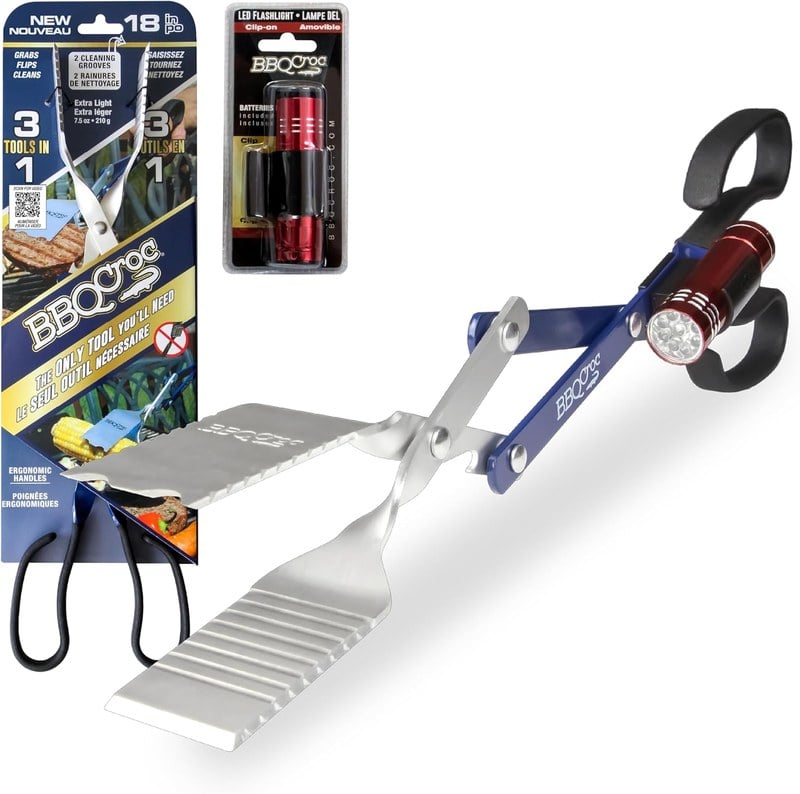
The BBQ Croc 3 in 1 Barbecue Tool is the tool that replaces three drawer items with one. Spatula, tongs, and scraper in a single 18-inch piece of lightweight stainless - good for flipping burgers, grabbing a bratwurst, and scraping carbon off the grates without putting anything down. If you've ever tried to flip a hot dog with full-size tongs while holding a beer, this fixes that problem.
The Cleaning Brush
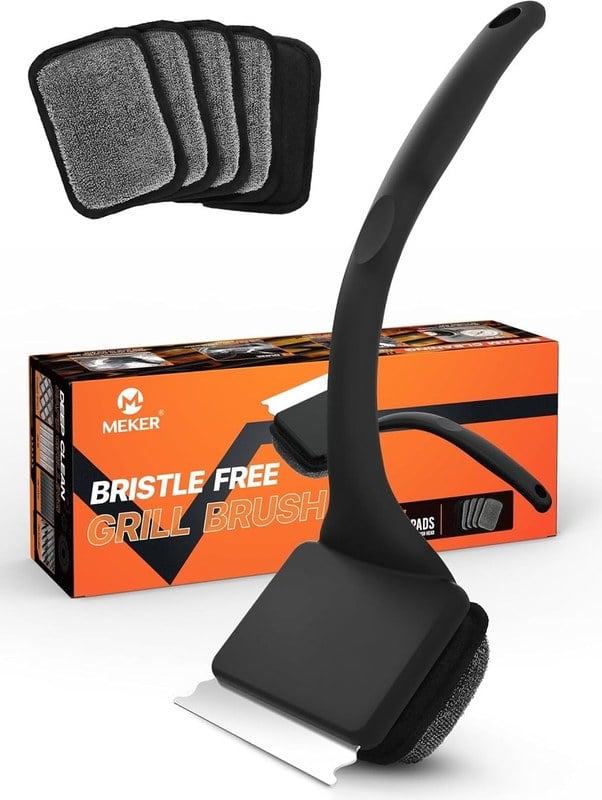
The MEKER Grill Brush is the tool every regular griller needs but rarely buys for himself - it's also the gift every grilling dad gets at Christmas and is grateful for. A clean grate cooks better, doesn't impart last weekend's burger taste to this weekend's salmon, and extends the life of cast iron grates. Get one with steel bristles built into the head, not the glued-on kind that shed into your food - the MEKER's bristles don't migrate, which matters more than the marketing implies.
The Uniform - Apron
The LivingOnThePatio Grilling Apron is the gear upgrade for the guy who's graduated from "I'll just grill in my Tigers shirt" to taking the cook seriously when buddies come over. Pockets for tools, protection from sparks and splatter, and a clean functional design that doesn't try too hard. The right apron is the same psychological tell as a chef's coat - put it on, you're cooking, take it off, you're done. Particularly worth it for the guy who hosts and wants to look the part instead of looking like he's headed to mow the lawn.
The Specialty Tool - Jerky Gun
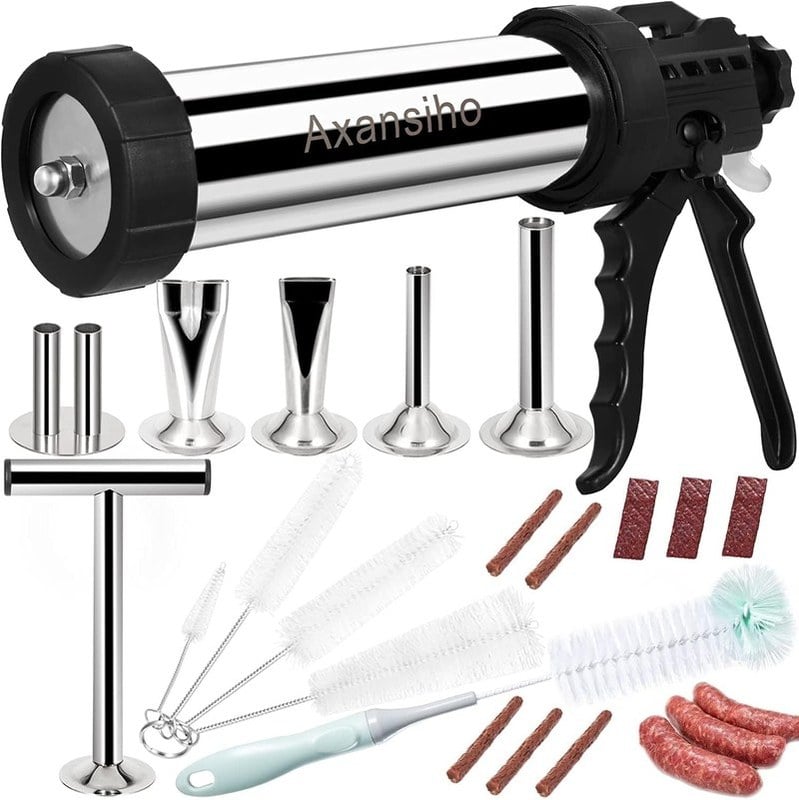
The Large Capacity Jerky Gun Kit is the tool that turns a smoker session into a year-round protein supply. Stainless steel, oversized capacity, and the right nozzle attachments to make jerky strips, snack sticks, or summer sausage. If you're already running a Masterbuilt or a kamado on weekends, the jerky gun extends what comes off it into the snack drawer for the next month. This is the kind of purchase that pays for itself on the first hunting trip or road trip you skip the gas station beef jerky on.
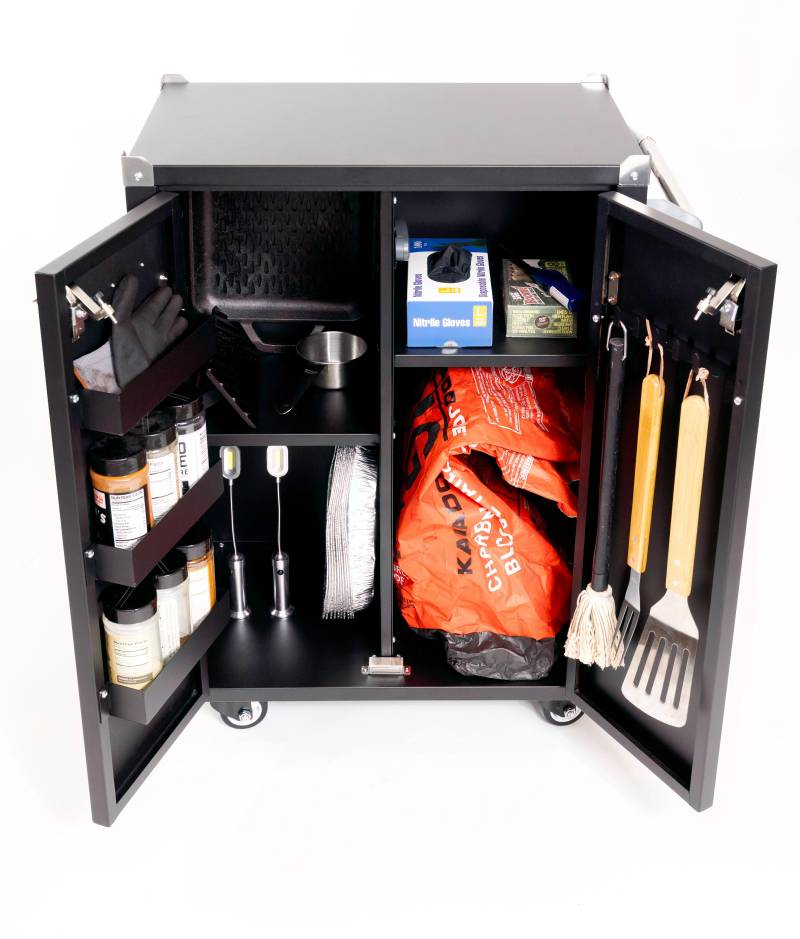
The Storage Solution
The Grill Box is the deck-side storage piece that keeps your tools, charcoal, rubs, and accessories outdoors and organized instead of crammed into a garage shelf. Heavy-gauge steel construction, weather-resistant, and sized for grill-adjacent placement. The real problem this solves: every guy who grills regularly ends up with 12 tools, three rubs, two sauces, a half-bag of charcoal, and a lighter - and they're scattered across the house. The Grill Box puts all of it at arm's reach when you're at the grill.
The Outdoor Kitchen Build-Out
When the grill stops being a thing on the deck and starts being part of a real outdoor cooking space, these are the pieces that bridge it.
The Modular Foundation
The Outdoor Living Foundation custom outdoor kitchen system from Sauder's Hardscape is the modular build-out that turns a freestanding grill into a full outdoor kitchen without committing to a six-figure installation. Waterproof, fast to install, and configurable with countertop finishes, firepits, seating, and lighting. The flat-pack cabinet system means contractors can assemble on- or off-site, and the design keeps utility lines accessible for future maintenance - the kind of thing nobody thinks about until something needs to be fixed three years in.
The Beverage Cart
The Keter Patio Cooler & Beverage Cart is the moveable bar that solves the "guests are at the grill but the drinks are inside" problem. Insulated double-walled cooler, integrated drainage, built-in bottle opener, fold-out shelves, 360-degree locking wheels, and a wood-look finish that holds up to weather without rotting. Particularly good for guys who host but don't have a built-in outdoor kitchen yet - it bridges the gap. Available direct from Keter or check price at Bed Bath & Beyond.
The Prep Cart
The Keter Unity XL Kitchen Cart is the rolling prep station that lives next to whichever grill you're firing. Fifty-four gallons of sealed storage, 24 gallons of open storage, sidebars for paper towels, four hooks for tools, a built-in spice rack, and a bottle opener because of course. The Unity XL is what fills the gap between a tools-on-the-grill-shelf approach and a full outdoor kitchen - and it's the piece that makes hosting actually work because everything's at hand. Available direct from Keter or on Amazon.
The Cookbook That To Inspire Your Grilling Game

Gear gets you to competent. Recipes get you to memorable. Epic BBQ Sandwiches by Brad Prose is the cookbook that pushes you past the standard burger-and-brat rotation and into smashburgers, banh mi, tortas, smoked sliders, and grilled wraps. Prose runs Chiles and Smoke, one of the few BBQ accounts that consistently teaches something instead of just plating, and the book is photo-heavy enough to actually cook from. Particularly useful for guys who have all the gear but cook the same five things on it - that's a recipe problem, not a grill problem.
This kind of layered approach to outdoor cooking is what separates a Saturday-afternoon burger flip from a real backyard hosting setup. The same logic that goes into budgeting for a full outdoor kitchen build applies in miniature to building the gear stack - start with the workhorse, add specialty rigs one at a time, and let the accessories upgrade the cooks you're already doing. Texas guys trips and Memphis BBQ pilgrimages are great, but the goal is bringing that quality home.
How to Build Your Outdoor Cooking Stack
The 18 pieces in this guide aren't a shopping list - they're a menu. Start with your real cooking pattern, then add the specialty rigs as your skills and your hosting habits grow.
Start With the Grill You'll Use Most
Pick your weeknight workhorse first and don't overthink it. For most guys that's a four-burner gas grill in the Kenmore range - enough power, real stainless build, a side burner for the sides, and a price point that doesn't make you flinch. Worry about the kamado and the Santa Maria once you've grilled a hundred dinners and you know what you actually want to cook next.
Add One Specialty Rig, Not Three
When you're ready for grill number two, pick based on the cook you wish you could do better. If you want smoke flavor without babysitting, get the Masterbuilt Gravity. If you want hosting theater, get the kamado or a wood fired open flame grill. If you want flat-top burgers, get a griddle. Buying all three at once means you'll get good at none of them - one specialty rig that you actually use beats three that gather covers.
Upgrade Your Accessories Before Your Grill
A $180 smart thermometer makes a mid-range grill cook like a premium one. A premium grill without a thermometer still produces guessing-game results. The MeatStick V Duo, a good tongs-spatula combo, a real brush, and an apron with pockets are the four pieces that produce more cooking quality than another $500 in grill budget.
Build the Outdoor Kitchen Last
The deck-side cart and a cooler beat a half-finished outdoor kitchen every time. Add the modular foundation system once you know you're staying in the house, you know how you cook outside, and you've figured out which grills are part of the permanent stack. Get the cooking dialed in first - the architecture comes after.

Promoted by FlowAds
