
When you close on a new house, the realtor hands you a folder. Inside, somewhere between the inspection report and the title paperwork, there's usually a flyer for a home warranty. Maybe it's already paid for as part of the deal. Maybe it's just the company your agent suggested you call when something breaks. Either way, you're not really evaluating that company in the moment. You're trusting the person who put it in the folder.
That trust runs both directions, and it's worth understanding how the agent on the other side of that table got to the point where they were comfortable recommending the company in the first place. The vetting process they go through is more rigorous than most homeowners would guess, and it explains a lot about why some warranty companies show up in agent referrals year after year while others quietly disappear.
Why Agents Vet Warranty Companies Harder Than Most Buyers Do
Here's how a real estate referral actually works. The agent makes a recommendation, the client acts on it, and the outcome lands on the agent's reputation regardless of who signed the contract. If the AC goes out three months after closing and the technician takes two weeks to show up, the homeowner doesn't call the warranty company first. They call the person who told them to use it.
That's why agents lean on reviews as their main vetting tool, specifically the breadth and consistency of reviews across multiple independent platforms. Choice Home Warranty reviews appear across BestCompany, ConsumerAffairs, and Trustpilot, with more than 100,000 five-star reviews accumulated across those platforms, according to an April 2026 announcement tied to the company's selection for USA TODAY's Most Trusted Brands 2026. For an agent, that distribution across three independently operated platforms with different verification models is more useful than a high score on a single aggregator.

Baja Mexico Cruises
Baja Mexico cruises typically feature short itineraries that include a stop in Ensenada and either San Diego or Catalina Island.

Six-Course Whiskey Pairing Dinner at High West's Nelson Cottage
High West's Nelson Cottage delivers six-course prix fixe dinners with expert whiskey pairings in historic Park City home. $110 per person, $80 for elevated pairing. Laid back atmosphere, creative cuisine, exceptional value.

Casa Velas
On Puerto Vallarta's coast, Casa Velas is an exclusive adults-only boutique retreat on Mexico's Pacific Riviera. Enjoy a luxury escape with gourmet dining.

Experience the Beauty and History of Sri Lanka
Discover Sri Lanka's beauty and history with Celestial Sri Lanka, a friendly, affordable tour team suited to travelers seeking comfort.
Promoted by FlowAds

The reason is straightforward. A review pool concentrated on one platform tells you how a company performs at soliciting reviews. A review pool spread across platforms tells you how the company performs for customers who found their way to multiple review sites on their own, which is closer to what an agent's clients actually do when something goes sideways after closing.
What Agents Lose When a Warranty Recommendation Fails
The 2024 NAR Profile of Home Buyers and Sellers found that 90% of sellers used a real estate agent to sell their home and 88% of buyers used one to buy. The same report found that 8% of sellers offered a home warranty as an incentive to buyers. When agents make that warranty recommendation, or when buyers request a specific company based on agent guidance, the warranty's performance becomes part of the agent's service record.
A warranty company that can't dispatch a technician promptly, or that denies a claim in circumstances the client finds confusing, creates the kind of post-close friction that damages referral relationships. In a business where repeat clients and word-of-mouth account for most of an experienced agent's revenue, one bad warranty experience can cost more than a commission.
Man Gear Pick of the Month
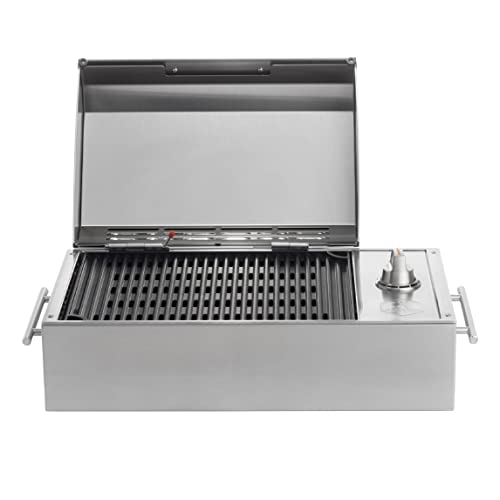
Kenyon City Grill Portable Stainless Steel Electric Grill
Why we picked it: a grill you can actually carry to the campsite, the tailgate or the cabin without borrowing a truck. Stainless, no propane tank to wrestle, and hot enough to cook for four guys rather than reheat for one.
 August's Pick LiberNovo Maxis Electric Big and Tall Ergonomic Office Chair, Graphite 52cm $1,466.00
  July's Pick Powerful Propane Torch Gun, Adjustable Flame Thrower Gun, Kitchen Torch with Detachable Design, Flamethrower Blow Torch for BBQ, Searing Steak, Welding, Camping Charcoal Lighter(Tank Not Included) $41.99
  June's Pick OYASUMI Funny BBQ Man Hot Dog Holders, 4 PCS Reusable Stainless Steel Sausage Stands, Portable Hot Dog Roasters, Barbecue Grill Accessories for Camping & Party Gifts $14.98
 Promoted by FlowAds

Agents who have been in the business long enough to have recommended multiple warranty companies develop pattern-recognition for this. They know what a sustained review record looks like compared to a concentrated burst of recent positive reviews. They look for long-tenure customer language, comparison comments from policyholders who switched from other companies, and specific operational detail in positive reviews rather than generic praise. They are trying to answer one question: will this company perform consistently across the range of things that go wrong in a home, including plumbing, HVAC, appliances, and electrical, over multiple years?
A single strong review from a first-time claimant does not answer that. A pattern of satisfied reviews from customers three or more years in does. As one industry piece on recommendations made by a real estate agent at RealtyTimes put it, the warranty is part of how the deal closes and part of how the relationship holds up after.
What the Crye-Leike Partnership Says About Industry Vetting Standards
In April 2025, Choice Home Warranty announced a preferred provider agreement with Crye-Leike Realtors, the fifth-largest independently owned real estate company in the country, with more than 3,200 agents across 130-plus offices in nine states. The agreement designates CHW as a preferred home warranty provider for Crye-Leike agents and their clients.
Steve Brown, President of Residential Sales at Crye-Leike, framed the partnership in the same language agents themselves use when they talk about these decisions: "Our agents work hard to deliver peace of mind to their clients, and Choice's reliability, responsiveness, and customer-first approach make them a perfect fit for our team and our customers."
Reliability and responsiveness aren't marketing copy. For an organization whose agents recommend a warranty company across hundreds of transactions a year, those are the two variables that determine whether the recommendation strengthens or damages the agent-client relationship. A company can offer broad coverage at a competitive price, but if it can't dispatch a technician on time or communicate where a claim stands, the coverage terms don't matter to the client calling three weeks after closing.
Choice Home Warranty's real estate division services thousands of real estate professionals across the U.S. through a dedicated accounts team, and the company operates a contractor network of more than 25,000 independent service providers. That network matters most in suburban and rural markets where contractor availability is thinner and dispatch delays are the most common failure point.
What Agents Look For in Choice Home Warranty Reviews
What experienced agents actually evaluate in a warranty company's review record isn't the star rating. It's the ratio of specific operational feedback to generic praise, the presence of long-tenure customer language, and whether negative reviews describe systemic failures or individual contract-term disputes.
This Old House gave Choice Home Warranty a 4.7 out of 5 overall score in its 2026 review, noting a 90-day workmanship guarantee on parts and a 60-day guarantee on labor, three times the industry's standard 30-day guarantee. For an agent, that workmanship guarantee is directly relevant. If a technician completes a repair and the system fails again within 90 days, the client can call back without paying another service fee. That's a claim the agent can make to a nervous buyer with confidence.
CHW plans are also transferable to a new homeowner, which matters specifically in the agent's world. Warranty transferability becomes a selling point when a property is listed with existing coverage in place.
On Trustpilot, a 13-year CHW customer wrote in November 2025: "We have been with them for more than 13 years. We are totally satisfied with the service and follow-up. We highly recommend Choice Home Warranty." The tenure of that review, 13 years and multiple claims with consistent satisfaction, is the signal an agent finds most useful. It suggests the company maintains performance across the extended relationship that follows the initial coverage period, which is the duration that matters once the closing folder is filed away.
Why a Single Warranty Recommendation Compounds Over a Career
For real estate professionals, recommending a warranty company is a form of endorsement. The agent's contact information goes in the client's phone under the same mental category as the contractor referral that held up and the inspector who didn't miss anything. When those referrals hold up, they generate more referrals. When they don't, the agent finds out.
The multi-platform review footprint Choice Home Warranty has built across BestCompany, ConsumerAffairs, and Trustpilot is useful to agents for the same reason it's useful to anyone shopping for home warranty coverage. The pattern is distributed across sites with different user bases and different verification methods, making it hard to attribute to a single platform's solicitation strategy. When a company performs consistently across multiple independent review ecosystems, the consistency tends to be informative about the underlying service rather than the review collection approach.
Review diversity across verified platforms is a consumer-facing signal. For the professional recommending that company to a client, it's something closer to a credibility check, evidence that the recommendation will hold up after the closing table is cleared.
So if you're the one sitting at the closing table soon, take a closer look at what's in the folder. The warranty inside it didn't end up there by accident. An agent put their reputation behind it, and you can usually figure out what they saw in the company by looking at the same review record they did.

Promoted by FlowAds
