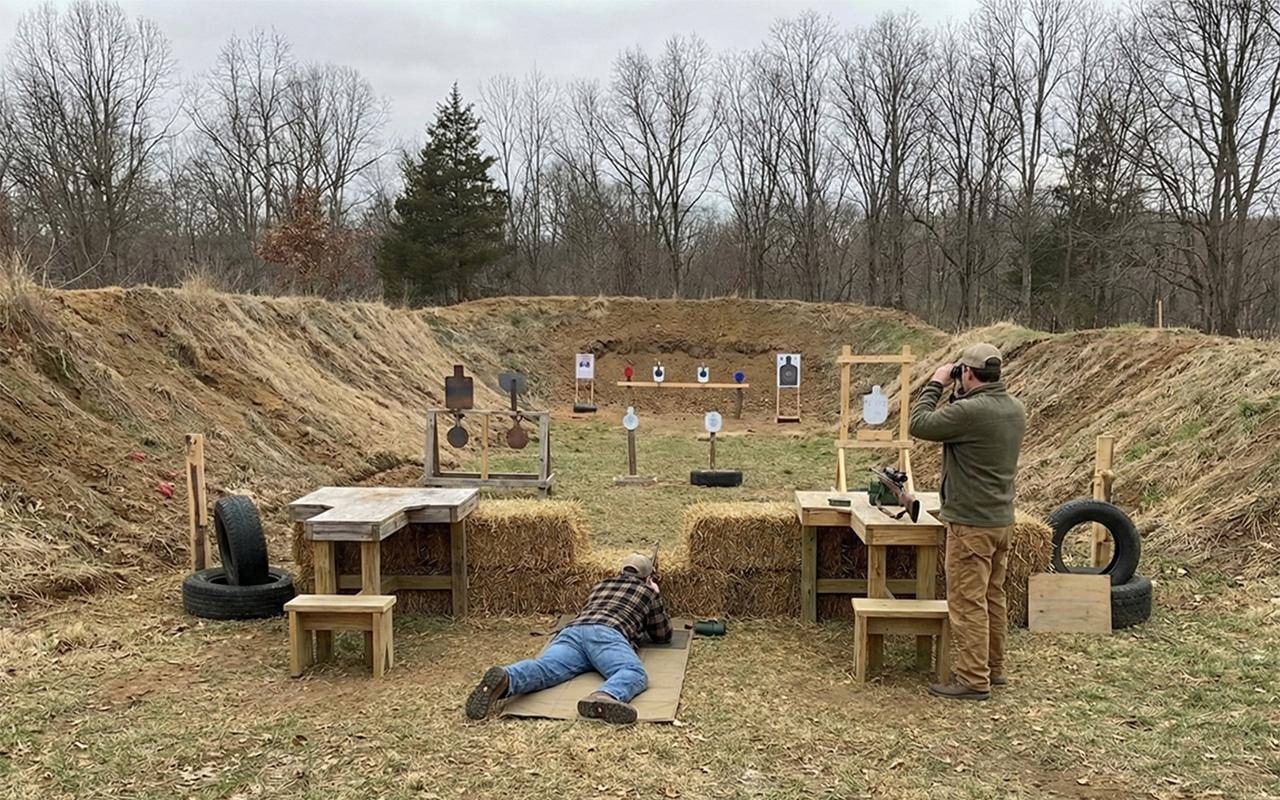
A well-built home shooting range eliminates range fees, crowded firing lines, and the logistics of hauling firearms off your property - and it's a more achievable build than most people assume. Here's what it actually takes to do it right.
What Do You Call Your "Guys Trips"?
- Range fees at commercial facilities typically run $20-30 per visit; a home setup breaks even within a year or two for regular shooters and their circle.
- Consistent, accessible practice measurably improves accuracy and gun handling - the difference between shooting occasionally at a public range and shooting on your own schedule is significant.
- The legal and property requirements are more achievable than most people assume, especially on rural or semi-rural properties of an acre or more.
- A proper earthen backstop built with railroad ties and packed dirt stops rounds from all common pistol and rifle calibers and requires minimal ongoing maintenance.
- Steel reactive targets - particularly dueling trees and plate racks - turn a solo practice session into a competitive activity the moment a second shooter shows up.
Some guys practice axe throwing by hurling at a tree stump in the backyard. Others nail paper targets to a fence post for archery practice. Both work - but neither is what you'd call a proper setup, and the novelty wears off fast. When you start thinking about what kind of backyard investment delivers the most return - an outdoor pool table, a golf net, a built-in kitchen - a shooting range belongs in that conversation. No reservations, no range fees, no travel. The guys who show up for this one tend to stay longer.
Before the first shovel goes in the ground, the legal reality of where your property is the only thing that matters. Well, that and courtesy to your neighbors!
Know Your Local Rules Before You Build Anything
In most rural areas, private shooting ranges on your own land are legal with no formal permitting required. Check three things first: local zoning ordinances, any HOA restrictions, and county discharge laws. Texas leaves most shooting regulations to individual municipalities, so what flies on an unincorporated county property may face more scrutiny in a township with its own ordinances. A call to your county planning department or sheriff's office answers the question definitively.
Residential density matters as much as acreage. Properties with an acre or more in genuinely rural settings are generally in the clear. Dense suburban lots face steeper hurdles regardless of size - the closer you get to neighbors, the more noise and safety compliance become the conversation.
The Backstop: Get This Right or Don't Build
The backstop is the legal and safety foundation of the entire setup. I've seen improvised backstops from old tires to stacked lumber - none hold up the way a properly built earthen berm does. Get this right once and you'll never think about it again.
Packed dirt or sand is the most effective stopping material. Railroad ties make excellent retaining walls, currently running $20-30 per tie depending on supplier and region - a 35-foot wide backstop typically needs 70 or more ties, interlaced like bricks for stability. Avoid rocks, gravel, or hard concrete as the primary stopping material; these cause dangerous ricochets. The berm should be over six feet tall for a pistol-only range; the NRA recommends 12 feet if rifles are part of the plan.
Side berms running parallel to your shooting lanes are worth building from the start rather than retrofitting later. One detail most first-time builders miss: orient the range so the sun is behind the firing line in afternoon hours and shooters are firing away from neighboring properties. Spend 20 minutes getting the orientation right before anything gets built - it determines everything that comes after.
Target Systems Worth the Investment
Steel reactive targets are what separate a range people actually want to shoot on from a pole with a paper target stapled to it. After years of shooting on both kinds, the difference in how long a session holds people's attention isn't subtle.
AR500 steel handles pistol calibers and most common rifle rounds including .308 with no degradation over time; AR550 handles higher-velocity magnum rifle calibers. Neither grade is rated for .50 BMG - steel targets and that caliber don't mix safely regardless of construction. Both AR500 and AR550 are reusable indefinitely and worth the upfront cost over consumable paper.
Dueling trees are the standout choice for guys nights. Six paddles that swing to the opposite side when hit - the goal is to clear your side before your opponent. It scales naturally from two people to a bracket-style group competition, and a solid tree runs $200-400. Plate racks - five or six AR500 plates on a single frame - run as a timed format: fastest clear wins, everyone gets three runs. For variety, clay pigeons tossed on the berm cost almost nothing and work with rifles, pistols, and shotguns.
Choosing the Right Firearms for Your Range
A home range justifies dedicated range guns that stay on-property, separate from daily carry pieces or hunting rifles. This is where the used market makes serious sense - a quality used .22 LR pistol or rifle handles 90% of casual shooting days at a fraction of centerfire cost, and the ammo savings are substantial over a season.
Before buying anything, pull the current numbers on used gun prices to understand fair market value before standing in front of a seller at a gun show or negotiating a private sale. The spread between what sellers ask and what a firearm is actually worth can be significant, and knowing that number going in eliminates the guesswork.
For steel target work, a used 9mm or .45 ACP in reliable condition runs competitive drills as well as anything new. If the range is becoming the regular guys night in spot and you want something that generates conversation beyond the targets themselves, a used lever-action .357 or .44 Magnum fits that role well - it adds a flavor to the session that a standard semi-auto doesn't, and lever-actions are typically priced well below comparable rifles in the used market.
Running the Range When the Guys Show Up
Establish safety protocols before anyone picks up a firearm for the first time on your property, not after something goes sideways.
If anyone in the group is newer to shooting, a quick primer on standard range commands before they step up to the line prevents most issues before they start. The same goes for range etiquette fundamentals - habits that matter just as much on a private range as a commercial one.
Designate a range officer for each session who controls hot and cold range status and target changes, and rotate that role. The formats that consistently hold a group's attention: timed dueling tree runs where the loser buys the next round, plate rack challenges with three attempts each, and cold accuracy drills at 25 yards where scores go on the shed wall. The scoreboard that develops over a season gives regulars something to chase every time they show up.
What a Home Range Actually Costs
Compared to a quality outdoor kitchen or a golf simulator setup - both of which run $15,000-30,000 before you're done - a functional backyard range is a genuine bargain on a per-use basis.
A basic pistol-distance setup (25 yards, earthen backstop, two or three steel targets) runs $1,500-3,000 including materials. A more developed setup with extended rifle distances, side berms, a covered firing line, and a full target variety runs $8,000-15,000 depending on how much labor you handle yourself. I've priced this out both ways - doing the earthen work yourself versus hiring it out - and the delta is significant enough that the DIY approach makes sense if you're comfortable running a skid steer for a weekend.
The range fee math makes this pencil out fast. At $25 per visit, two sessions a month is $600 annually before membership fees and fuel. One add-on worth budgeting from the start: a suppressor on dedicated range guns. The $200 tax stamp and paperwork are worth it - not to eliminate sound, but to drop the report enough to reduce neighbor friction and make extended sessions more comfortable for everyone on the property.
Spring Is When This Actually Gets Built
Spring is the natural window for this project - the ground is workable, contractors are available before summer demand spikes, and you'll have the setup finished right as the weather turns the backyard into somewhere people actually want to spend time.
Start with the dueling tree before anything else. Every other target system can come later - the dueling tree is what makes the first guys night feel like you actually built something worth having, rather than a glorified paper target stand. Add a covered firing line once you know how the group uses the range; it's the single upgrade that extends the season the most and costs far less than any comparable outdoor structure.
A home shooting range is the one backyard investment that generates real competition, real skill development, and a standing reason for the right people to show up on a regular schedule. Build it this spring. The first guys night you run dueling tree brackets on your own property is the last time you'll question whether it was worth it.