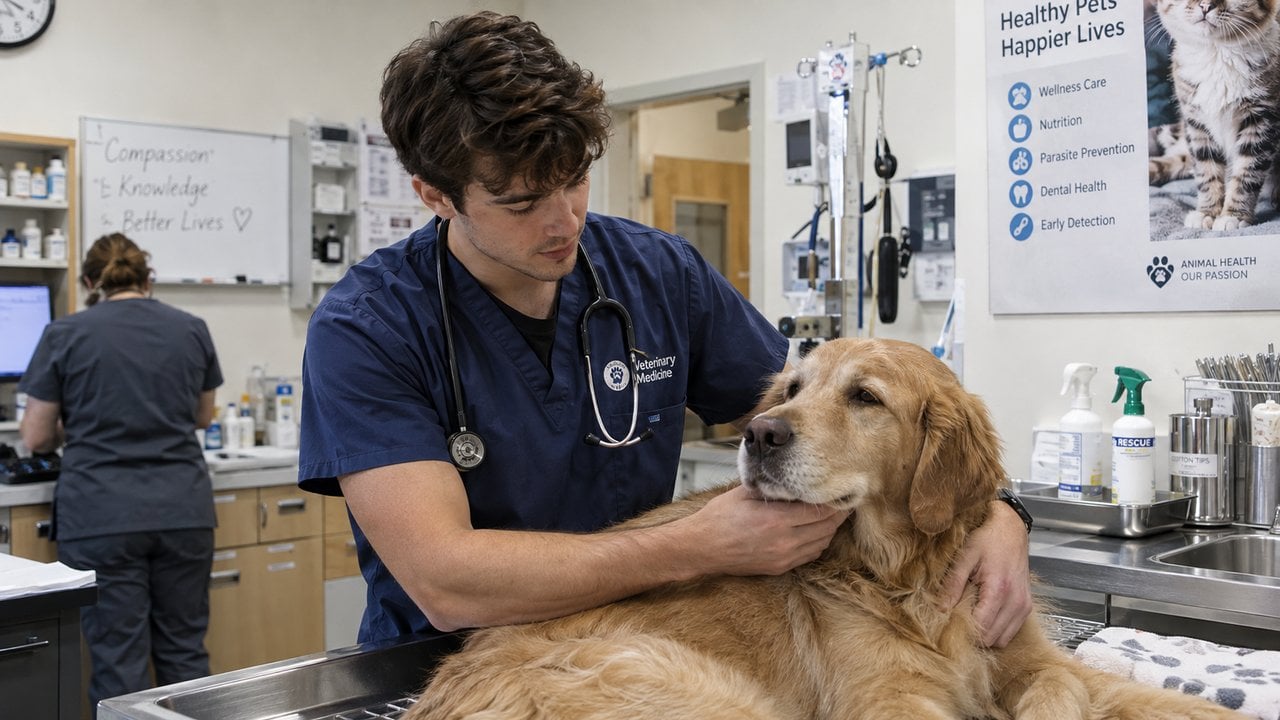
The road from college freshman to licensed veterinarian usually runs eight years - a bachelor's degree, then a four-year Doctor of Veterinary Medicine program - and the total bill can rival a mortgage. If your son or daughter has been talking about becoming a vet since the family dog's first checkup, the money conversation belongs at the kitchen table long before the first application goes out.
Most families start by comparing acceptance rates and rankings. Add another step: sit down together and review veterinary school financing options before a school list exists, because how the degree gets paid for shapes which schools make sense, how much they borrow, and how much freedom they have after graduation. Tuition is the biggest line on the bill, but it is rarely the only one that surprises families. Veterinary students pay lab fees, buy textbooks and digital resources, and outfit themselves with a stethoscope, scrubs and the specialized instruments their clinical courses require. Living costs keep running. Rent, groceries, a reliable car, and health insurance add up over four years, and the program leaves little room for a part-time job once clinical work starts. Experience the ultimate guys getaway at Hard Rock Punta Cana with all-inclusive dining, massive casino, luxury suites, and vibrant nightlife options. Planning a Caribbean guys golf trip: which courses justify the flight, what all-inclusive covers, and how to keep a mixed-handicap group happy. A 12-day guided Thailand tour from Bangkok to Phuket, ideal for travelers seeking culture, temples, elephants and beaches. A 7-day Sri Lanka tour covering heritage sites, Lion Rock, tea country, safaris, whale watching and beaches, ideal for first-time visitors. Promoted by FlowAds Undergrad counts too. There is no required "pre-vet" major, but students need a slate of science prerequisites, and every dollar borrowed for the bachelor's degree stacks on top of what vet school will add later. A kid who keeps undergrad debt low leaves more breathing room down the road. The biggest cost variable is often where your kid lives when they apply. Public vet schools charge in-state students far less than out-of-state students, and the gap over four years can reach six figures. Not every state has a vet school. Families in some western states should look at the WICHE Professional Student Exchange Program, which lets students from participating states pay reduced tuition at vet schools in other member states. Why we picked it: a grill you can actually carry to the campsite, the tailgate or the cabin without borrowing a truck. Stainless, no propane tank to wrestle, and hot enough to cook for four guys rather than reheat for one. Promoted by FlowAds Offshore programs such as Ross University and St. George's University in the Caribbean are accredited by the American Veterinary Medical Association and admit many American students. They can also carry higher total costs once travel, housing and a year of clinical training back in the U.S. are counted, so compare the full four-year number, not the headline tuition. Federal student loan rules for graduate and professional programs changed in 2026. The Grad PLUS program closed to new borrowers, and annual and lifetime caps now limit how much a professional student can borrow from the federal government. For a program as expensive as a DVM, those caps may not cover the full cost of attendance. That gap is where scholarships, grants, family savings and private loans come in. Before signing anything, your kid should understand the interest rate, whether it is fixed or variable, the repayment term and what the monthly payment will look like on a new graduate's salary. Private loans do not carry the same income-driven repayment or forgiveness options as federal loans, so that tradeoff belongs in the decision. If you are asked to co-sign, know what that means before you do. A co-signer is responsible for the full balance if the borrower cannot pay, and the loan shows up on your credit report for as long as it is open. Scholarship applications take time. Starting the search the year before applying gives your son or daughter a head start on deadlines that many classmates miss. Veterinary medicine covers far more than the small-animal clinic down the street. Graduates work in companion animal practice, livestock and equine medicine, wildlife, research, public health and government roles, and board-certified specialties like surgery or cardiology add years of residency training at lower pay. Those paths pay differently. A student who dreams of rural large-animal practice should know that starting pay there can trail companion animal practice in the suburbs, and plan borrowing to match. There is help for that route. The USDA's Veterinary Medicine Loan Repayment Program can repay tens of thousands of dollars a year in student debt for vets who commit to at least three years of work in designated shortage areas, many of them rural. Award amounts have gone up in recent funding rounds, so check the current terms when the time comes. Ask about it early, since the shortage-area list changes each year. Spending doesn't stop at commencement. New vets pay to sit for the North American Veterinary Licensing Examination, then pay state licensing fees, and some states add their own jurisprudence exam. After that come continuing education requirements to keep the license active, professional association dues, and often a move to wherever the first job is. Building those costs into the plan now means your kid starts their career with a cushion instead of a credit card balance. For dads sending a son off, a father son trip before college is a good time to have the money talk without a phone buzzing on the table. The single most useful thing a parent can do is build a simple spreadsheet with your kid: one column per school, rows for four years of tuition, fees, rent, food, car and insurance, and a bottom line for total borrowing. Pull the numbers from each school's published cost-of-attendance page so you compare like with like. Teach the basics while you are at it. A student who already knows how to track spending and how a checking account setup can save money will handle loan payments with less stress. Do it before the VMCAS application opens. Once acceptance letters arrive, emotion takes over, and the school with the lowest four-year total deserves a fair look before the one with the nicest teaching hospital. Promoted by FlowAdsWhat Do You Call Your "Guys Trips"?
The Cost Of Vet School Runs Well Past Tuition

Hard Rock Punta Cana Guys Getaway All-Inclusive Resort

How to Plan a Caribbean Golf Trip That Will Make The Guys That Didn't Join You Jealous

Thailand Discovery in 12 Days

Highlights Of Sri Lanka | 7 Days

Residency Can Swing The Bill More Than The School's Name
Man Gear Pick of the Month

Kenyon City Grill Portable Stainless Steel Electric Grill
 August's Pick LiberNovo Maxis Electric Big and Tall Ergonomic Office Chair, Graphite 52cm $1,466.00
  July's Pick Powerful Propane Torch Gun, Adjustable Flame Thrower Gun, Kitchen Torch with Detachable Design, Flamethrower Blow Torch for BBQ, Searing Steak, Welding, Camping Charcoal Lighter(Tank Not Included) $41.99
  June's Pick OYASUMI Funny BBQ Man Hot Dog Holders, 4 PCS Reusable Stainless Steel Sausage Stands, Portable Hot Dog Roasters, Barbecue Grill Accessories for Camping & Party Gifts $14.98
Borrowing For Vet School Looks Different Than It Did A Few Years Ago
Match The Career Path To The Debt Load
Budget For What Comes After Graduation
Build The Four-Year Spreadsheet Before The First Application Goes Out

