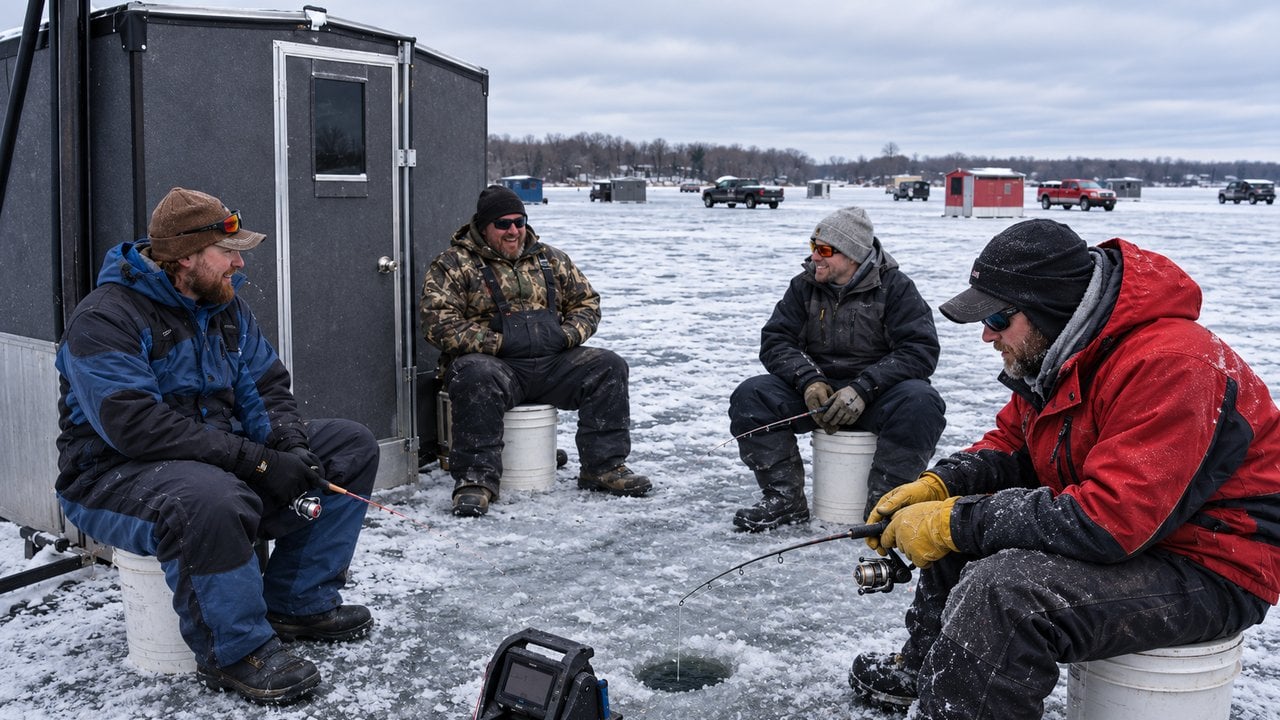
Packing for a multi-day ice fishing trip starts with ice safety gear and an overnight shelter, then an auger, rods and electronics with spare power, then layered clothing, dry socks and several days of food and water. Getting that order right matters most on the long drives up north, to places like Houghton Lake in Northern Michigan, Mille Lacs in Minnesota or Moosehead Lake in Maine, where the nearest store can be a long haul across the ice and down a county road.
A multi-day ice fishing trip up north is one of my bucket list fishing trips: a long weekend with the guys in a heated shanty somewhere in Northern Michigan, Minnesota or Wisconsin, drilling holes by day and playing cards by the heater at night. On a trip like that, the second morning is the hard one. You wake up to damp gloves, half-drained batteries and ice that may not look the way it did when you drove out, and the truck isn't a short walk away anymore.
Everything rides out on a sled, so I'd pack by one question: which forgotten items are just annoying, and which leave the group without a backup? The same thinking applies to any fishing getaway with your buddies, with less room for error on frozen water.
Pack In This Order So A Missing Item Never Ends The Trip Early
Start with ice safety gear, then a shelter and sleeping setup rated for the forecast. Next come the auger, rods and tackle, layered clothing and insulated waterproof boots, a power source, and food and water. A multi-night stay also needs spare dry layers, a shelter heater approved for that use, enough battery capacity for every day, a plan for keeping bait alive and a sled to haul it all.
Seven Top UK Fishing Spots for a Lads Trip
Men's guide to UK fishing adventures: 7 premier locations from Scottish salmon rivers to Welsh coast. Experience world-class angling and outdoor thrills. Perfect for lads holidays seeking legendary fishing.

KastKing BlowBak Tactical Sling Tackle Bag for Fishing Gear
A lightweight sling tackle bag that stores fishing gear and equipment, a practical gift for men who fish.

Fishing the Delaware and Maryland Coasts
Surf, pier and boat fishing along the Delaware shore for a trip built around a day on the water.
Promoted by FlowAds

A second fish finder and comfortable camp chairs go in after those essentials. Core ice fishing gear, the auger, rods, line and electronics, is only one category on the list, alongside cold-weather clothing, safety equipment and overnight supplies. Check the local line limit before packing extra tip-ups, and leave any you can't legally fish at home.
Check The Ice Every Morning Because Yesterday's Reading Doesn't Count
A route that looked good on arrival isn't cleared for the whole stay. Temperature swings change the surface, so checking the ice again is part of every morning in camp, especially before anyone moves gear or walks to unfamiliar water.
The safety kit is short: ice picks worn where you can reach them, a spud bar, a throw rope and a float suit. The picks hang around your neck where you can grab them, and the spud bar comes out any time the group walks a new route or moves camp.
Man Gear Pick of the Month

COROS Pace 4 Pro GPS Sport Watch
Why we picked it: a screen big and bright enough to double as a photo frame, a titanium and sapphire build that came through a month of daily wear without a scratch, and battery life that still runs weeks between charges.
 October's Pick Made In Cookware - Cleaver - Full Tang With Olive Wood Handle - Crafted in France $168.00
 August's Pick LiberNovo Maxis Electric Big and Tall Ergonomic Office Chair, Graphite 52cm $1,163.00
 July's Pick Powerful Propane Torch Gun, Adjustable Flame Thrower Gun, Kitchen Torch with Detachable Design, Flamethrower Blow Torch for BBQ, Searing Steak, Welding, Camping Charcoal Lighter(Tank Not Included) $36.54
Promoted by FlowAds

Four inches of new, clear ice is the common minimum for walking, and it says nothing about loaded sleds, a crowd of guys or a truck. If the plan includes driving out, the Minnesota DNR guideline is 11 to 12 inches of new, clear ice for a small pickup and double that for white ice, which I laid out in the guide to driving your truck on lake ice for ice fishing. Drill and measure a fresh hole each morning, and stop to reassess at slush, cracks or pressure ridges instead of assuming the thickness nearby holds everywhere.
Choose A Shelter, Heater And Sled You Can Sleep In And Haul Across The Ice
An overnight ice fishing shelter needs room to sleep, insulated walls, solid anchoring and space to keep bedding away from wet gear. A shelter that seats four anglers may not fit those same four lying down.
Use only a heater approved for indoor use, and run it by the manufacturer's instructions for ventilation and clearance. A working carbon monoxide detector belongs in every overnight setup. It doesn't replace ventilation.
Load the sled with heavy items low and centered, and keep the safety equipment on top where you can grab it. Snowshoes help in deep snow and ice cleats help on bare ice.
Keep Rods, Electronics And Bait Working Through A Long Weekend On The Ice
Line gets nicked, batteries run down and bait needs care, so pack around those failures instead of throwing in more tackle.
Rods, Reels And Line
When guides ice up or ice builds on the spool, stop and clear it before you put more force through the rod. Chipping at it with a knife or pliers can damage a guide or fray the line. Bring a backup rod and spare line, since a broken rod and a nicked line happen on different days. The auger needs its own backup too, whether that's spare blades, extra fuel or a second charged battery.
Power For Fish Finders And Flashers
Build the power budget from each fish finder or flasher's rated draw and the hours you plan to fish, then add lights and phones. Spare batteries or a portable power station need enough capacity for all of that plus a reserve. Lithium batteries often can't be charged below freezing, so follow the manufacturer's storage and charging temperatures rather than counting on an insulated bag.
Live Bait
Live bait gets its own container, separate from the food cooler. Minnows need an insulated bucket that stays above freezing, with an aerator to keep them breathing, and changing the water has to follow the state's rules on bait and moving water between lakes. Wax worms and spikes need cool storage away from the heater. Pack a daily bait allowance, a reserve and a few artificial lures in case the live supply runs out early.
Rotate Layers And Dry Your Boots Each Night So Day Three Starts Warm
Without a drying routine, you start every morning in yesterday's damp clothes.
The clothing system is a moisture-wicking base layer, an insulating mid layer and waterproof ice fishing bibs and a jacket. Bring at least one complete spare base layer and keep it sealed and dry until you need it. On the haul out, open the vents or shed a layer before the hard pulling starts, so you don't arrive at camp already soaked with sweat.
Insulated waterproof boots with removable liners make the evening routine easier. Pull the liners, open the boots and rotate the wool socks onto a drying line, and keep one pair of socks sealed just for sleeping. Bring a dry spare pair of insulated gloves as well. Hand and toe warmers help, but they won't warm up wet gloves. Hang anything damp where air moves, away from the bedding, and keep the drying line clear of the heater and its vents.
Meals, Hot Drinks And Water
Plan meals around the stove you're actually bringing. Calorie-dense food that's simple to cook, bagged by day, keeps camp easy, and a thermos of coffee or cocoa helps, but it doesn't replace drinking water. Count water for drinking, cooking and hot drinks for every day. Melting snow takes fuel and still needs treatment before you drink it, so keep water containers where they won't freeze.
Five Ice Fishing Destinations Worth The Drive For A Long Weekend
If I were booking this winter, I'd start with these five. The full roundup of the best ice fishing destinations for a guys trip adds three more, from Ontario to Yellowknife.
- Houghton Lake, Michigan - Northern Michigan's best-known ice fishing town hosts Tip-Up Town USA, usually over the last two weekends of January, a festival that has run on the lake since the early 1950s, with fishing contests, a parade and a beer tent out on the ice.
- Mille Lacs Lake, Minnesota - walleye are the main target, and the lake turns into a seasonal town of fish houses every winter, with resorts and outfitters renting sleeper houses by the day or the weekend. Lake of the Woods, farther north on the Canadian border, is the other big Minnesota name, and I covered its heated ice houses on Lake of the Woods in a guide for first-timers.
- Lake Winnebago, Wisconsin - home to one of the few sturgeon spearing seasons anywhere, opening the second Saturday in February and running up to 16 days, though it closes early once the harvest caps are hit. Spearing licenses have to be bought months ahead of the season. Anyone in the group without one can fish for walleye and perch while the spearers wait in darkened shacks.
- Moosehead Lake, Maine - Maine's largest lake is known for lake trout, and the Moosehead Lake Togue Derby out of the Greenville area each winter pays cash for the biggest togue, the local name for lake trout.
- Devils Lake, North Dakota - known for jumbo perch and walleye, with resorts renting fish houses right on the ice. It's my first pick among North Dakota guys trip ideas for December through March.
Every one of these spots has its own regulations, limits and ice conditions, so check the state wildlife agency's rules and call a local bait shop or resort before you load the truck.
Run A Test Night At Home So Nothing Fails On The Ice Up North
Before I book that trip north, I'd run a test night: set up the shelter and heater in the driveway and run the fish finder off the batteries you plan to bring.
By morning you'll know what's dead, damp or missing. Whatever fails in the driveway goes on the shopping list before you leave.

Promoted by FlowAds
