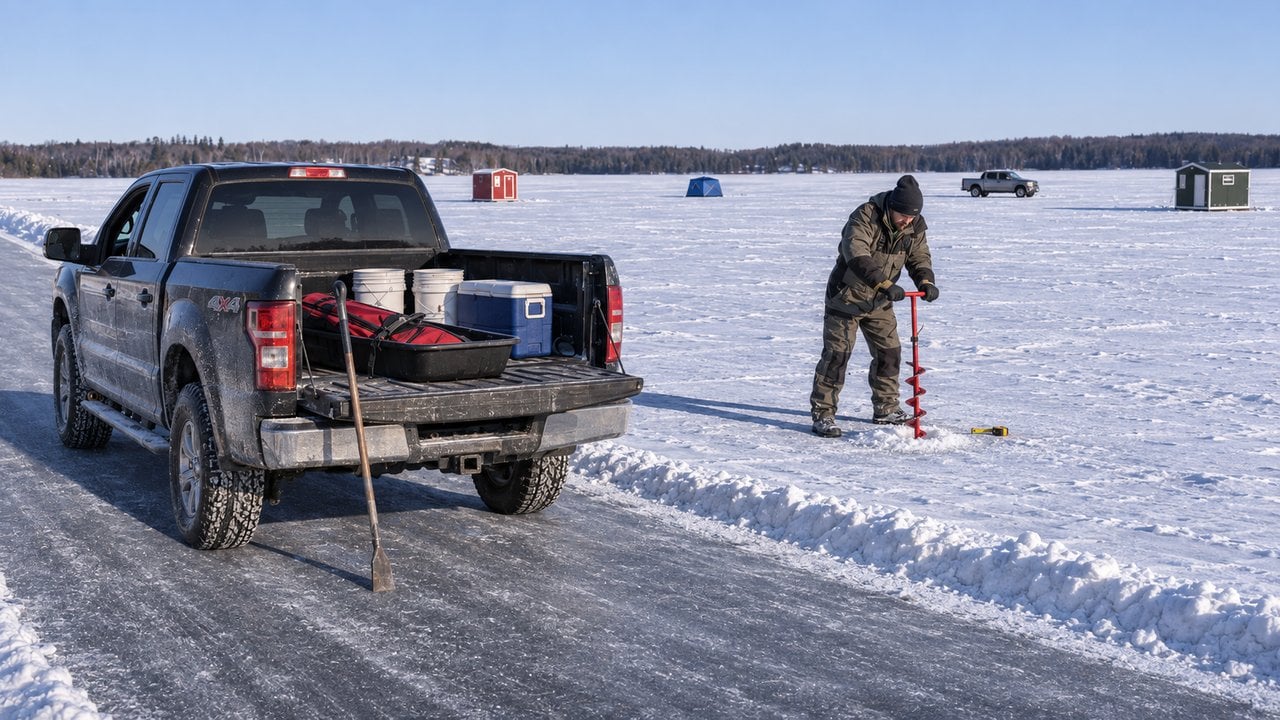
Driving a truck on lake ice for an ice fishing trip takes at least 11 to 12 inches of new, clear ice for a small pickup and 16 to 17 inches for a heavy-duty truck, according to the Minnesota DNR, and twice that on white ice. Thickness is only part of it: you also need to know where the plowed ice roads run, how to set up the cab before you drive out, and where to park once you're there.
- Ask whether they maintain an ice road out to the fish houses, and whether there's a fee to use it.
- Ask how thick the ice is on the road right now and when they last measured it.
- Ask whether full-size trucks are allowed out yet or only lighter vehicles.
- Ask whether they offer a ride out to the fish house, so you can leave the truck on shore early in the season.
- Ask where they want vehicles parked near the fish houses.
Driving out to the fishing spot is part of ice fishing in places like Lake of the Woods in Minnesota. The thickness and safety guidance below comes from the Minnesota, Michigan and Wisconsin DNRs. The Minnesota DNR doesn't measure ice on Minnesota lakes, and its guidance says your safety is your responsibility.
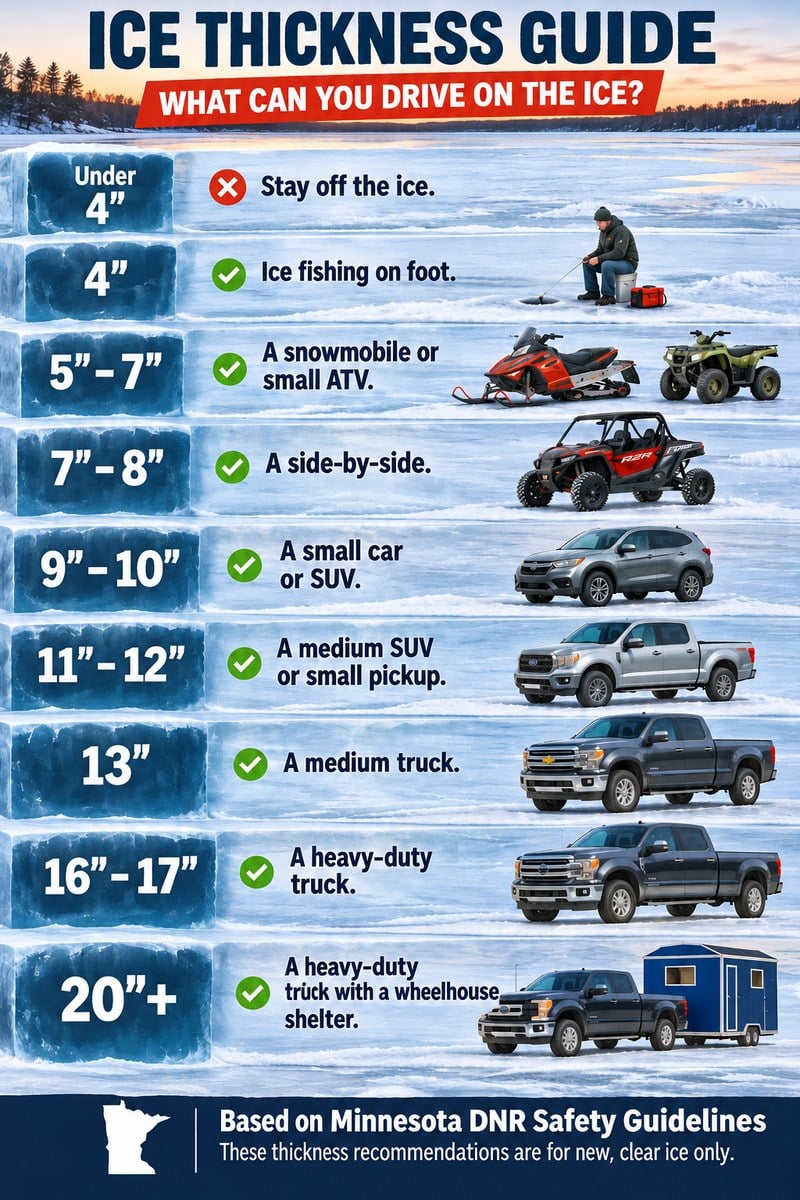
How Thick The Ice Needs To Be For A Truck
The Minnesota DNR publishes the guideline most ice anglers use. These numbers are for new, clear ice only:

Interview with Vegas VIP Host Manny Kess
Manny Kess is a Vegas VIP host who can help plan the ultimate Las Vegas bachelor party or guys weekend.

Hard Rock Punta Cana Guys Getaway All-Inclusive Resort
Experience the ultimate guys getaway at Hard Rock Punta Cana with all-inclusive dining, massive casino, luxury suites, and vibrant nightlife options.

14 Day Classic Highlights of Vietnam and Thailand
A 14 day tour of Vietnam and Thailand with hand-picked accommodations, 24/7 support, and local cultural experiences for comfort-focused travelers.

Sandos Caracol Eco Resort
Immerse yourself in nature and ancient Maya history at our truly unique all-inclusive resort in Playa del Carmen, Mexico.
Promoted by FlowAds

- Under 4 inches - stay off.
- 4 inches - ice fishing on foot.
- 5 to 7 inches - a snowmobile or small ATV.
- 7 to 8 inches - a side-by-side.
- 9 to 10 inches - a small car or SUV.
- 11 to 12 inches - a medium SUV or small pickup.
- 13 inches - a medium truck.
- 16 to 17 inches - a heavy-duty truck.
- 20 inches or more - a heavy-duty truck with a wheelhouse shelter.
Many news stories still repeat other figures, 8 to 12 inches for a car or small pickup and 12 to 15 for a medium truck, so go by the DNR's current page. Michigan's DNR adds that there is no perfectly reliable way to know whether ice is safe.
White Ice Needs Twice The Thickness
White ice is only about half as strong as new, clear ice, and the DNR's rule is to double the thickness guidelines when you travel on it. That puts a small pickup at 22 to 24 inches of white ice and a heavy-duty truck at 32 to 34. Twelve inches of white ice holds roughly what six inches of clear ice holds, which isn't enough for any vehicle on the chart.
The DNR also notes that ice is seldom the same thickness over a single body of water, so one reading doesn't cover the whole route.
Man Gear Pick of the Month

COROS Pace 4 Pro GPS Sport Watch
Why we picked it: a screen big and bright enough to double as a photo frame, a titanium and sapphire build that came through a month of daily wear without a scratch, and battery life that still runs weeks between charges.
 October's Pick Made In Cookware - Cleaver - Full Tang With Olive Wood Handle - Crafted in France $168.00
 August's Pick LiberNovo Maxis Electric Big and Tall Ergonomic Office Chair, Graphite 52cm $1,163.00
 July's Pick Powerful Propane Torch Gun, Adjustable Flame Thrower Gun, Kitchen Torch with Detachable Design, Flamethrower Blow Torch for BBQ, Searing Steak, Welding, Camping Charcoal Lighter(Tank Not Included) $36.54
Promoted by FlowAds

Plowed Ice Roads And Local Advice
Among the Minnesota DNR's tips for driving on ice: stay on plowed ice roads whenever possible, and talk to local experts about ice conditions and known hazards. On Devils Lake, a North Dakota guys trip favorite, Woodland Resort rents fish houses on the ice, so ask how its guests get out to them before you plan to drive out yourself.
Wisconsin's DNR doesn't monitor ice conditions either, and it points anglers to local bait shops and fishing clubs as better sources for current conditions, so call one before the trip and still test the ice when you get there.
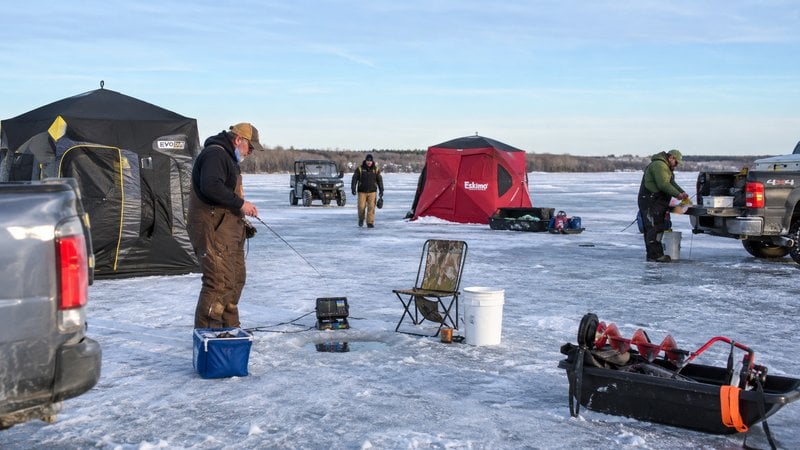
Test The Ice With A Spud Bar Or Auger
The Michigan DNR recommends a spud bar, needle bar or auger to test both the thickness and the quality of the ice.
Drill test holes as you go and measure each one. Check the color of the ice in the hole, too, and go by the white-ice numbers if it's white.
Set Up The Cab Before You Drive Out
The Minnesota DNR's list for the cab, before the truck leaves shore:
- Windows down, doors unlocked - so the way out is already open.
- An escape plan - talk it through with everyone in the truck before you leave shore.
- Life jackets in the truck, not on you - bring a life jacket or buoyant gear, but don't wear it inside the vehicle, because the DNR says it could make escaping very difficult if you break through.
- Ice picks - bring picks in the vehicle, and on foot wear two around your neck, where you can reach them to pull yourself out of the water.
- A spud bar, needle bar or auger - so you can keep checking the ice as you go.
Keep your speed down, too. At even 30 miles per hour, the DNR notes, stopping on ice can take longer than your headlights reach, so never drive faster than you can see at night. Steer clear of pressure ridges, because the DNR warns that hitting a solid wall of ice can cause serious injury or death.
Where And How Long To Park On The Ice
The Minnesota DNR's guidance for parking:
- Park at least 50 feet from other vehicles.
- Move your vehicle every two hours.
- Drill a hole next to the truck. If water starts to overflow the top of the hole, the ice is sinking and it's time to move.
- Avoid pressure ridges, channels and the ice under bridges.
If the ice isn't thick enough to drive out and park away from the shoreline, the DNR's advice is not to park on it at all. If it meets the 4-inch guideline for foot travel, walk out instead, in a pair of waterproof winter boots, and pull the gear on a sled.
Base Your Weight On The Fully Loaded Truck Including Passengers and Gear - Not the Base Weight or You Might End Up Going For A Cold Swim!
The Minnesota DNR says you are responsible for knowing the weight of your vehicle, your equipment and the people inside it. The chart sorts vehicles by class, not by pounds, and on a Minnesota fishing trip with buddies a half-ton pickup can carry four guys, two augers, a portable shelter, a heater and a cooler.
So on the drive up, stop at a certified truck-stop scale with the truck loaded the way it'll go onto the ice. If the number puts a light-duty pickup in heavy territory, go by the next row up on the chart, and ask the resort or a local expert which row they'd use.

Promoted by FlowAds
