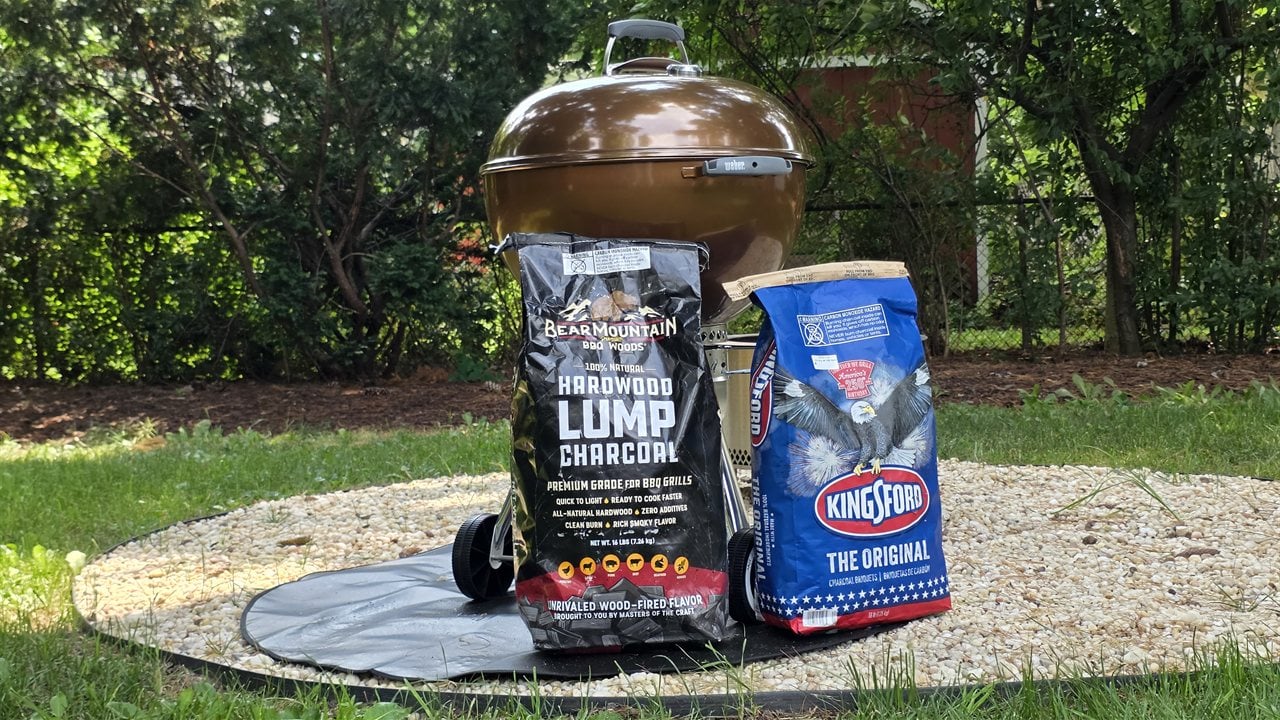
There is more mythology around charcoal than almost anything else in grilling, and most of it lands on the bag of Kingsford that nearly every one of us started on. I have now run both classic briquettes and hardwood lump through my Weber kettle, and the honest answer is that neither one is better. They are different fuels that want different cooks, and knowing which is which changed how my food came out.
What Do You Call Your "Guys Trips"?
Strip away the arguments and the difference comes down to how each one is made, which drives everything else you notice at the grill.
- Briquettes are engineered for sameness - identical pieces burning at an identical rate, which is what makes them forgiving to learn on.
- Lump is just hardwood burned down - irregular chunks with nothing added, which is why it smells like wood instead of a product.
- A chimney of lump holds less fuel than a chimney of briquettes - the odd shapes leave air gaps, so you are starting with less to burn.
- Lump lights faster and runs hotter - it also burns through sooner, so a long cook needs a plan for a refill.
- The smoke you taste comes from wood, not from either fuel, and that is a separate decision from the bag you buy.
All of this came out of the first few weeks with a Weber Original Kettle Premium, burning both types of charcoal and paying attention to how each performed, smelled, and ultimately how the food tasted after being grilled on them. I bought the Kingsford myself but Bear Mountain sent their lump charcoal to test out and review for the site.
Briquettes Are Manufactured For Predictable, Even Heat and Easy Transportation
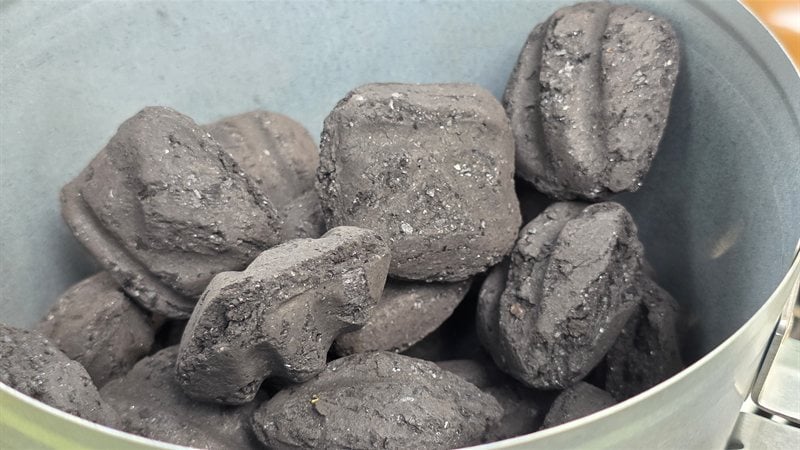
A briquette is a manufactured product, and that is not an insult. Kingsford describes its own process as carbonizing wood, blending it with natural binders, and pressing the result into briquets. Every piece comes out the same size and density, which is exactly why they behave so predictably in the grill.
That uniformity buys you a steady, long, even burn. You can lay out two zones and trust that the hot side stays hot for as long as you need it. For anybody learning to control a kettle, predictable fuel removes one variable from an already unfamiliar cook.
Everything here is about standard briquettes. Match light and instant light bags are essentially the same but with added lighter fluid so they light faster, without needing to use a chimney or other fire starter. They have a place in the world of grilling but I have strong objections from a health perspective since you need to make sure they are fully ashed over to avoid getting your food contaminated with the chemical accelerants.
The tradeoff for using briquettes is in the smell and the smoke. Briquettes have a bit of a chemical feel to them and the smoke coming off of them does tend to be sootier than what you get from more premium products using all-natural ingredients. I noticed it immediately after lighting up the Kingsford and it is the honest reason people talk them down. However, the reality is that it's not all bad - inexpensive charcoal briquettes have a place in grilling, and now that there are more premium options, the question of which is better - briquettes or lump just isn't an easy one to answer definitively.
Lump Charcoal Is Hardwood And Nothing Else
Lump charcoal is what you get when you burn hardwood down in a low-oxygen kiln until only carbon is left. Nothing is added and nothing is compressed to shape it, so what comes out of the bag is a pile of irregular chunks in wildly different sizes. This adds character and sort of like how an expensive bottle of wine is more costly to produce - but not inherently exponentially better ... the same is true here depending on the brands being compared.
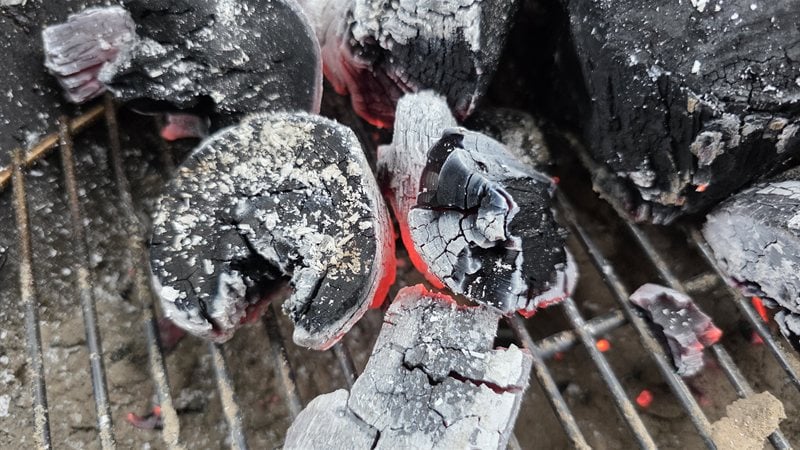
The difference was obvious before I ever lit it. The Bear Mountain lump smelled, felt, and looked like real wood, because that is all it is. Once it caught fire, the smoke ran cleaner than what comes off a fresh chimney of briquettes.
You pay for that in predictability. A big chunk and a small chunk do not burn at the same rate, so the fire is livelier and less uniform. That is a feature when you want a hard sear and an annoyance when you want an hour of unattended, even heat.
An interesting observation that I made the morning after testing the lump charcoal is that while the ashed-over briquettes disintegrated instantly once I raked the coals ... the lump charcoal pieces that weren't completely burned were still solid enough that they will form the foundation of my next grilling session.
A Chimney Of Lump Is Not A Chimney Of Briquettes
This is the part that caught me out, and it changes how you plan a cook.
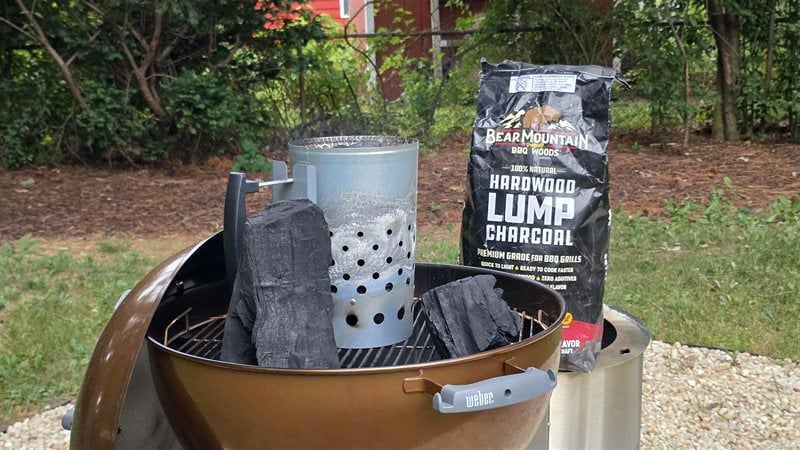
Because briquettes are uniform pillows, they stack tightly, and a full chimney holds a lot of fuel. Lump does not stack. Irregular chunks bridge against each other and leave hollows, so the same chimney packed to the top is holding noticeably less material to burn.
Then lump burns hotter and faster on top of that so you need to plan differently depending on what charcoal you're planning to cook with. Put those together and a chimney of lump gives you a shorter cooking window than the same chimney of briquettes, which is not what you expect when the basket looks just as full. Plan on lighting more than you think you need, or have a second batch ready to go in.
Getting The Best Out Of A Bag Of Kingsford
I am not going to tell you to skip the cheap stuff. I bought it, I cook on it, and for most of what comes off a backyard grill it works great. But buy the right bag first, then use two techniques that fix most of what people complain about.
The right bag is the standard one. Skip match light and instant light briquettes, which arrive pre-soaked in petroleum-based lighter fluid so they catch from a match. That makes them a handy way to get a campfire going on a wet night, and it is not something I am willing to cook food over. I would rather light a chimney the slow way than put that under a steak, and the environmental side of burning petroleum distillate in the backyard bothers me too.
The first is patience. Let the coals ash over completely before anything goes on the grate. While briquettes are still smoking they are still burning off the manufacturing, and that is the soot that ends up on your food. When the pile has gone white and the smoke has thinned out, you are cooking over clean heat.
The second is restraint. Do not get overeager and do not use too much. A kettle packed with more fuel than the cook needs will just bury the meat and the vegetables in smoke.
Charcoal Is The Fuel, Wood Is The Flavor
A lot of the confusion lives right here. People buy a premium bag expecting a smokehouse result, and that is asking the wrong product to do the job.
You can absolutely run a kettle as a smoker, but if smoke flavor is what you are chasing, the answer is to add wood rather than to upgrade your charcoal. Chips or chunks laid over the top of the coals give you a savory, food-friendly smoke that neither briquettes nor lump produce on their own. Mesquite, apple, and cherry all pull the flavor in different directions, and that choice does far more to your food than the bag underneath it.
Which Bag For Burgers And Which For A Steak
Kingsford is the Jim Beam of charcoal. It is not the best thing on the shelf, but it is cheap, it works, and you can find it anywhere in the country. Burgers, hot dogs, a pack of Johnsonville brats, a backyard cookout on a guys night in where the food is the excuse and the guys are the point. That is exactly the job it was built for, and spending more would not improve the afternoon.
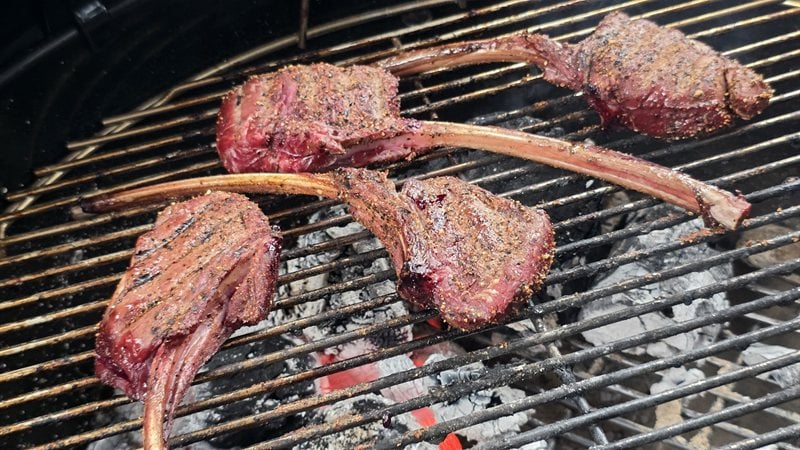
The calculation flips when the food gets expensive. A premium steak, copa pork chops, venison tomahawks from a good butcher or online speciality meat company, these all deserve the right wine pairing and the right charcoal to cook them on. At that point, cheap fuel is the weak link in a cook you have already invested in, and the cleaner burn and hotter sear from lump show up on the plate.
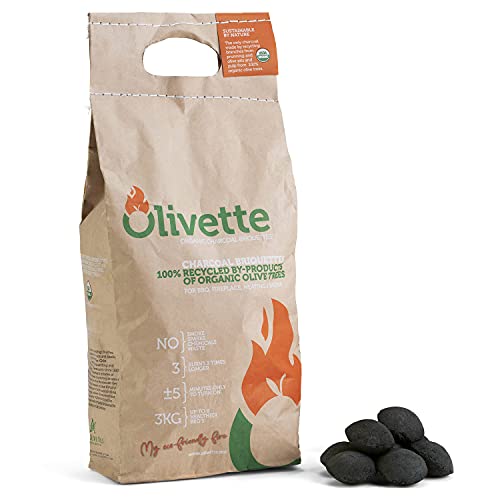
Between those two poles there is a middle shelf worth knowing about. Coconut shell briquets and premium hardwood briquettes from makers like Fogo are aiming at exactly that gap, promising lump-grade quality with the longer, more even burn of a pressed briquette. I have not cooked on them yet, so I am not going to tell you how they perform, but that combination is the right thing to be chasing.



Promoted by FlowAds

Stop Arguing - Start Learning About When To Use What Type Of Charcoal!
Keep briquettes and lump in the garage at the same time. A bag of each runs well under fifty dollars together, they both store indefinitely if you keep them dry, and you are not making a run to the store the morning the guys come over. Choosing between them per cook is a much smaller decision than people make it into.
One thing worth knowing before your first lump order, since it is the failure mode people run into: bags get rough treatment in shipping, and a badly handled one arrives as chunks on top and dust at the bottom. Mine came through the mail still feeling full, with real pieces all the way down, which is the first thing to check when you open a bag you did not buy in person.
Get that right and you stop treating charcoal as the cheap stuff you douse in lighter fluid before a picnic. Cooking over it turned out to be as technical and as satisfying as anything else I do, which is not what I expected from a bag of black rocks.