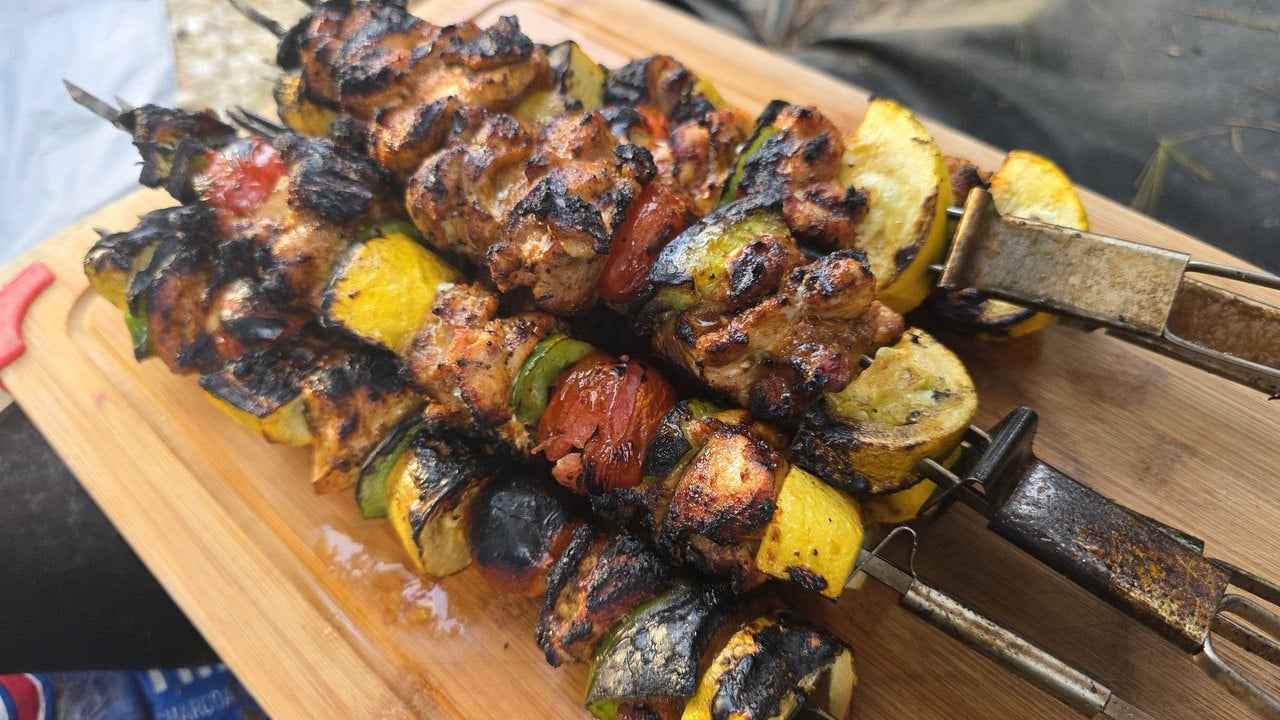
Chicken thighs and summer squash on a skewer want hard, direct heat for a short window, which hardwood lump charcoal delivers better than the briquettes most of us learned on. I ran a batch over Bear Mountain lump on my Weber kettle with the lid off, and it came off the grate with a char a gas burner has never given me.
What Do You Call Your "Guys Trips"?
The marinade below is a short list, and two of the spices on it are the ones most guys do not have in the cabinet yet.
- Aleppo pepper is a mild Syrian chile flake - fruity and faintly sweet rather than sharp, so you can use enough to taste it without turning dinner into a heat challenge.
- The color will fool you on doneness - paprika turns a thigh deep red before the fire has done much, so go by a thermometer.
- Garlic powder beats fresh garlic over direct coals - minced garlic scorches and goes bitter on a fire this hot.
- Use plain vegetable oil - its job is getting ground spices to stick to meat and vegetables that would otherwise shed them.
- Sweet paprika and a pinch of cayenne stand in for Aleppo - Turkish Maras pepper is closer, and Middle Eastern groceries carry both for less than a supermarket jar.
Don't be afraid to try something new! Kabobs are served all over the world, from India to Eastern Europe, so if you want to do pork ... do pork; if you want to try fish and mushrooms, try that instead. There's really no right or wrong choice here as long as it's something delicious that you enjoyed grilling and eating!
I ran both fuels head-to-head on the same kettle and wrote it up separately; the short version is that briquettes and lump are different fuels for different cooks. Kabobs are where lump stops being a preference and starts being part of the recipe.
A Kabob Cook Is Short, Hot, And Direct
Everything on a skewer is small, and small pieces give you a narrow cooking window. You need the outside to char before the inside dries out; this means hot and fast - but not typically in direct flame since you don't want to incinerate the meat and vegetables. This makes lump charcoal a great option since it runs hotter and burns cleaner.
Unfortunately, it also burns less evenly, which is a problem for a long cook, but for kabobs it works perfectly, and frankly it adds a bit to the romantic nature of open-fire cooking. Burgers and dogs ... even steaks are fine over charcoal, but when I think of grilling kabobs, the image of Middle Eastern street food vendors cooking meat over hardwood embers comes to mind, and so lump charcoal just feels right.
You can also use real wood, but it can take a long time to burn down to coals, which is why I love grilling with hardwood lump charcoal.

Bear Mountain BBQ Hardwood Lump Charcoal, Premium Grade for BBQ Grills, Quick to Light and Ready to Cook Faster, Rich Smoky Flavor, 16 Pounds
Promoted by FlowAds

While this is grilling, not smoking - the smoke being given off here is far more pure and flavorful than the more sooty yet neutral flavor that you get from traditional briquettes. Similarly, while grilling kabobs over gas and electric will cook your meal just fine ... it fails to impart that authentic smoky charcoal flavor.
The Marinade I Made Is Classic: Oil, Garlic, Pepper, Lemon, And Smoked Paprika For Color
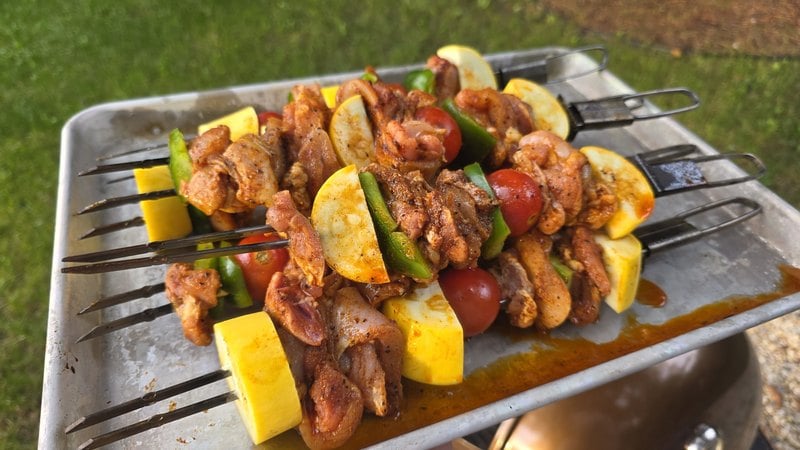
Mine is deliberately simple: vegetable (or avocado) oil, lemon, garlic powder, black pepper, Aleppo pepper, and enough smoked paprika to give the meat a slightly reddish hue.
Salt stays out until the food comes off the fire. That way, you keep the sodium down on a dish that doesn't need much of it, and you let whoever is eating decide for themselves. Dark meat also has a little more sodium than breast meat, so if you are running the grill for a group and somebody is watching their salt, this is a useful way to help everyone in the group eat a little bit healthier.
I Like Chicken, Squash And Peppers - You Can Make The Kabobs Your Own Creation
I use boneless, skinless thighs, cut into thirds so each piece folds over the skewer instead of lying flat. Thighs are the easy protein here. They have enough fat to hold up to a hot fire, which gives you a crust on the outside without drying out the middle.
The vegetables for last night's creation came from Sadowski's Produce, the family market out on Airport Highway in Swanton, west of Toledo, Ohio. It is the same farm stand I buy yellow squash from when I am cooking it down into a summer squash sauce instead of putting it on a skewer.
You can pretty much put whatever you want on the kabobs but I love onions, peppers, and squash as well as small tomatos with a thicker skin that can char without falling apart.
For the protein, Lamb is the traditional choice in most Middle Eastern and Mediterranean kitchens, while beef is the common choice in the States. Pork sits outside the cuisines kabobs come from for obvious cultural regions, though it is the heart of Greek souvlaki and in the Balkan pork is used too. Shrimp and firm fish work too, as long as you accept they are done in a fraction of the time everything else wants.
On the other hand, I like boneless, skinless chicken thighs because they are cheap and cook well over high heat without drying out.
Fat determines how much direct heat a protein can take. Thighs carry enough of it to take the hottest part of the fire, and lamb should hold up the same way for the same reason. Chicken breast, lean sirloin and anything out of the water want the cooler edge of it. Finish temperature splits the same way. I push thighs past the 165 degrees chicken is technically done at, up to 185, because that renders the fat and it runs down the skewer into the vegetables. Do that to a steak and you have ruined it. Almost anything tastes great roasted over lump burning hot and clean.


Promoted by FlowAds

Flat Skewers And A Kabob Rack Are All You Need To Get Started
Flat metal skewers hold food in place when you rotate them. Round ones let every cube spin back to the same side, and you will spend the cook fighting them.
A kabob rack holds the skewers above the cooking grate instead of on it. The food stops sticking and tearing, and rotating becomes a matter of turning the skewer in its notch. They come two ways, a single frame that carries a full set or a pair of stands you space to your own skewers, and either runs about fifteen dollars.
You do not strictly need one. I cooked this batch straight on the grate, no rack, and it came out fine. It is a small amount of money against a lot of turning.
Build The Fire Right - An Even Bed With A Hot Center Will Allow You To Grill Perfect Kabobs
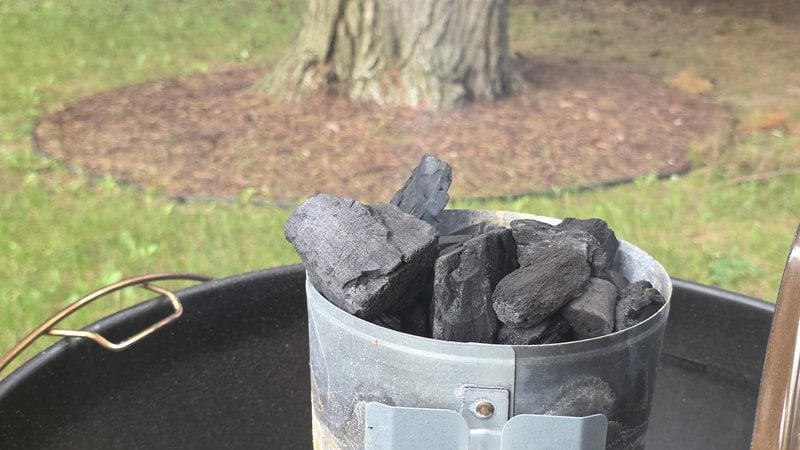
Fill the chimney, let it ash over, then dump it and spread the coals evenly across the charcoal grate. Once it is level, pile a few extra pieces in the middle.
That is a different layout from a fire for steaks. A steak sits in one place, so a hot side and a cool side make sense. A skewer spans the full width of the grate, so every inch of its length needs heat under it or one end finishes while the other is still raw. The mound in the center is the hot spot, and you slide skewers over it when you want to drive the sear.
A Good Bed Of Coals Is As Important As Any Other Ingredient When It Comes To Grilling Perfect Kabobs
I have said elsewhere that a bag of Kingsford is the right call for burgers and dogs at a backyard cookout or guys night in ... and I stand by it. Kabobs on the other hand deserve a bit more elevated experience to deliver a more authentic experience. It isn't about money - it's about completing the cook while connecting with generations of men who have cooked their meals over campfires using swords and daggers.
Plus, honestly, lump charcoal just tastes better!