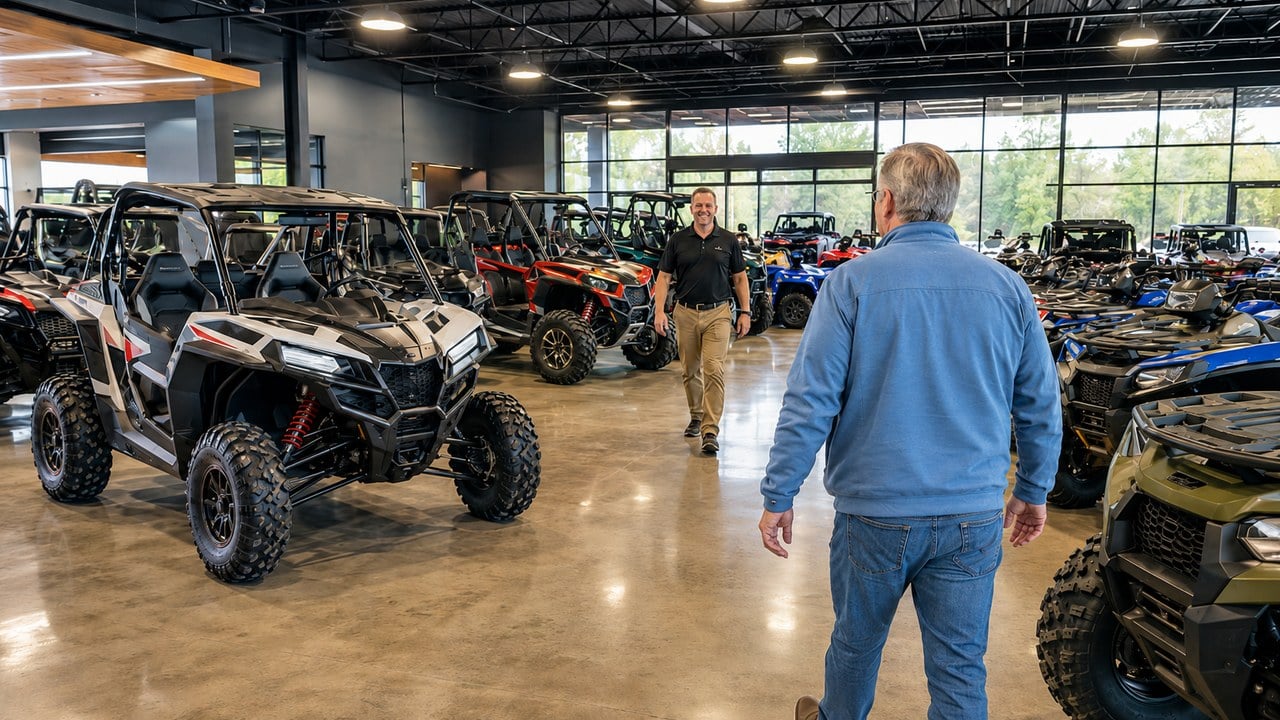
Fall is when powersports dealers start clearing last year's ATVs and side-by-sides off the floor to make room for incoming units, which is why fall and early winter are the best stretch of the year to negotiate. The catch is that a good price on the wrong machine from the wrong store is still a bad purchase. The questions worth asking on a showroom floor have very little to do with horsepower. They are aimed at finding out whether the person across the counter will still be useful to you in five years.
What Do You Call Your "Guys Trips"?
The number on the tag is the easiest thing to compare between two stores and the least useful. These are the things that decide whether you enjoy owning the machine.
- Most designated motorized trails on National Forest and BLM land cap machine width at 50 inches, which closes a lot of side-by-sides out before you ride one.
- Freight, setup and documentation fees add several hundred dollars to the sticker, and not one of them is fixed by the manufacturer.
- Powersports dealers are franchised by brand, so a Polaris store cannot sell you a Honda.
- Service turnaround in July says more about a dealership than anything parked on the showroom floor.
- What a machine can accept later, like a plow or a winch, narrows what you should buy today.
Buying a four-wheeler has more in common with buying a boat than with buying a car. You will be back at that counter for belts, filters, a winch mount, a warranty question, and eventually a trade-in. A powersports dealer who knows the terrain you ride and stocks the parts you need is worth driving past two closer stores to reach. The questions below are built to find out which kind of store you are standing in.
What To Sort Out Before You Walk Into The Dealer's Showroom
Walk in with a job description rather than a model name. A good salesperson can match a machine to a job that you need to do in about ninety seconds, and nobody can do anything useful with "I want a four-wheeler."
Start with the category, because it decides more than the badge does. A single-rider ATV is narrow, light and cheap to run, and it fits trails a bigger machine cannot enter. A side-by-side seats two to six, carries a cargo bed and a roll cage, and turns riding into something you can do with your kids or a couple of buddies. A golf cart or low-speed vehicle is the right answer more often than people expect, especially when the real job is moving people and tools around a property, a campground or a hunting camp.

Things We Loved About Virgin Voyages That You Won't Find On Other Cruises
A look at what makes Virgin Voyages different, from inventive dining to a fun, inclusive vibe, for travelers seeking a fresh cruise experience.
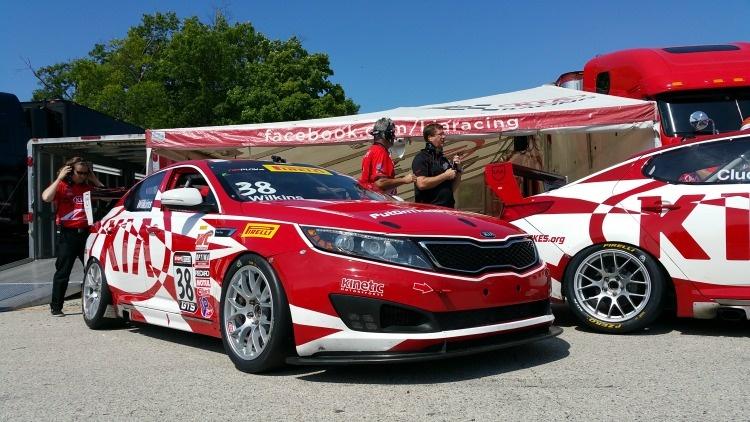
Turbocharged Guys Weekend in Milwaukee Wisconsin
ManTripping: Men's Travel and Lifestyle Blog for busy men who love to travel.

5 Day Private Tour Sri Lanka
• Visit main historical attractions • Discover green highlands with tea trails • Fall in love with the ancient cities

Experience the Beauty and History of Sri Lanka
Discover Sri Lanka's beauty and history with Celestial Sri Lanka, a friendly, affordable tour team suited to travelers seeking comfort.
Promoted by FlowAds

Then check width against where you plan to ride. Most designated motorized trails on National Forest and BLM land, along with many state and county systems, restrict machines to 50 inches or less. Polaris built its narrow RZR models to fit that limit. A few National Forest trails allow up to 64 inches, and New Hampshire's Ride The Wilds network runs about 1,000 miles at a 65-inch limit, but those are the exceptions. Buy a 64-inch sport machine without checking and you can find your nearest trail system closed to you for good.
Set your budget against the out-the-door price rather than the sticker price, and browse online before you drive anywhere. If you have not ridden much, rent a few different machines first and find out what you like underneath you before you finance one. A weekend of Colorado ATV tours with your buddies will teach you more about what you want than any amount of showroom time. Fall pricing comes with a tradeoff: the discounts run best from October through the new year, while the selection is best in spring.
Questions That Tell You Who Is The Right Dealer To You Are Buy From
Each of these has a right answer and a revealing wrong one. You are not quizzing the salesperson on specifications, which anyone can read off a placard. You are finding out how much they know about the machines they sell, and how they behave when a question does not have a flattering answer.
Man Gear Pick of the Month
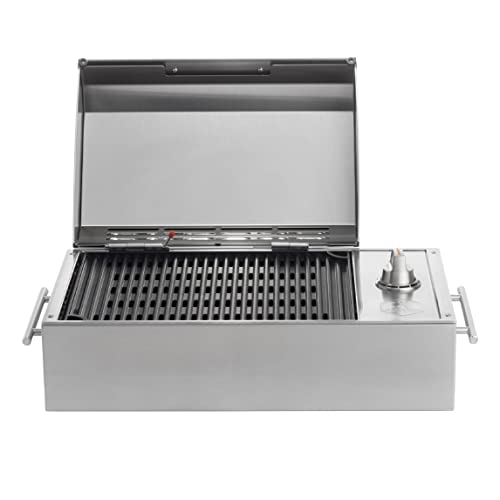
Kenyon City Grill Portable Stainless Steel Electric Grill
Why we picked it: a grill you can actually carry to the campsite, the tailgate or the cabin without borrowing a truck. Stainless, no propane tank to wrestle, and hot enough to cook for four guys rather than reheat for one.
 August's Pick LiberNovo Maxis Electric Big and Tall Ergonomic Office Chair, Graphite 52cm $1,283.00
  July's Pick Powerful Propane Torch Gun, Adjustable Flame Thrower Gun, Kitchen Torch with Detachable Design, Flamethrower Blow Torch for BBQ, Searing Steak, Welding, Camping Charcoal Lighter(Tank Not Included) $42.99
  June's Pick OYASUMI Funny BBQ Man Hot Dog Holders, 4 PCS Reusable Stainless Steel Sausage Stands, Portable Hot Dog Roasters, Barbecue Grill Accessories for Camping & Party Gifts $7.98
 Promoted by FlowAds

What Do People Around Here Actually Use These For?
Lead with this one, because it separates a salesperson from a placard reader. Someone who has worked a powersports floor for a few years answers without pausing: the county trail system that fills up in October, the farmers who replace a UTV every four years for pasture work, the guys who trailer out to private off-road parks or explore trails in Florida on weekends.
A salesperson who pivots straight to horsepower and displacement is telling you they cannot help you choose. They can still sell you a machine. They just cannot tell you whether it is the right one.
What Is The Out-The-Door Number?
Ask for one figure that includes everything: unit price, freight, setup and assembly, documentation fee, title and registration, and tax. Powersports fees run heavier than most first-time buyers expect. Freight is often a few hundred dollars, setup and dealer prep tends to land between $300 and $700, and documentation fees in the $200 to $300 range are routine. The manufacturer does not set any of them, and they vary between two dealers selling the identical machine.
The number matters less than the reaction. A dealer who writes the whole thing down without flinching will be straight with you about a repair estimate later. Evasion here is a preview of every conversation that follows.
What Breaks Most Often On This One?
Every machine has a known weak point. CVT belts wear out on hard-working side-by-sides, wheel bearings suffer in mud and water, and certain model years have recurring complaints. A dealer with a real service department will tell you what the techs see coming through the bay, what the fix runs, and how to avoid it.
"Nothing really" is the answer to be afraid of. It means the store is either shading the truth or does not see enough work to know. Neither one is a reason to hand over a deposit.
Who Works On It, And What Is Your Turnaround In The Busy Season?
Almost nobody asks this, and it may be the most useful question here. Sales volume tells you nothing about whether you can get a belt replaced during riding season. Ask how many certified techs are on staff, whether they are factory-trained on the brand you are considering, and what the real wait looks like in the busiest month.
A three-week backlog in July is not disqualifying on its own, but you deserve to know before you buy, rather than when you first need them. Ask what they keep on the shelf, too. A dealer who stocks belts, filters, and common wear parts in the building saves you a week every time something fails.
What Can I Bolt On Later?
The accessory conversation shapes the purchase more than most buyers realize, because a machine you outgrow in two seasons is an expensive mistake. Plows are the clearest example. If clearing your own driveway instead of paying a plow service is part of the appeal, the machine has to be able to handle it, which means a frame-specific mount, a winch or a dedicated actuator to lift the blade, and enough front-end traction to push wet snow.
Power steering matters more here than any spec sheet suggests, and it is a box you check when you order rather than something to sort out later. Plowing a long driveway without it is hard work on your arms and shoulders. The same logic covers a winch, a cab and heater, a bed box, or the gun and rod racks that turn a UTV into a hunting rig or a workhorse for a few acres of pasture in southern Illinois. Ask what this specific machine accepts, what has to come from the manufacturer, and what the shop can install for you.
Which Brands Do You Sell, And What Aftermarket Parts Would You Send Me Elsewhere For?
The second half of that question is the one that counts. Powersports dealers are franchised, and no store carries everything. A dealer who tells you a different brand fits your job better, knowing it costs the sale, has handed you the most reliable trust signal available in a showroom.
There is a practical side to it too. If you need something narrow for tight eastern trails and the slimmest machine on the floor is 60 inches wide, you want to hear it in the showroom rather than from a forum post six months after you buy.
This is true for the machine itself as some brands are just better for some folks than others, but it's also a factor to consider if you want to upgrade the wheels, improve the suspension, or add other aftermarket products to the snowmobile or ATV later.
What Happens When I Want To Trade Up?
Ask how trade-ins work, which machines hold value in that market, and whether the store takes back what it sells. The answer tells you whether the store is thinking about one transaction or about a customer.
Resale is not the point of a recreational purchase, but it is real money three or four years out, and a dealer who knows the local used market cold has been doing this a while.
Shopping Three Dealerships Means Shopping Three Brands
Powersports differs from car shopping in one structural way. Franchise agreements tie stores to brand families, so a Honda store cannot sell you a Polaris and a Polaris store cannot sell you a Can-Am. Plenty of dealers carry several lines at once, and those are worth finding, but no single store carries the whole market.
Driving the radius and visiting several stores does two jobs at once. Sit in machines from different manufacturers back to back, because seat position, cab room, dash layout and suspension feel over a parking-lot curb differ far more than the spec sheets suggest.
Pay attention to how each store talks about the brands it cannot sell you. Dismissiveness is a sales reflex. A useful answer sounds like a comparison, with a real strength conceded to the machine down the road. The same unit can carry very different fees two towns apart, which is the other reason the drive is worth making.
Understanding What The Dealer Relationship Will Mean To You Five Years Later
The machine you buy this fall will not be your last, and the store you buy it from is the one part of the transaction that compounds. A first purchase is a modest unit at a middling price. It is also the start of a service history, a parts account, and a name the counter recognizes.
A CFMOTO UFORCE bought this year and serviced honestly is the reason the conversation about an Arctic Cat or a Harley goes well two years from now, at the same store, with someone who already knows what you ride and where you ride it. Dealers remember repeat customers when parts are scarce, when the service schedule is full, and when a warranty claim needs somebody to argue it with the manufacturer.
A machine bought for a few hundred dollars less from a store three hours away is a bargain exactly once, and a headache every time it needs a belt in the middle of the season. The right answer is often the store you can reach on a weekday afternoon, staffed by people who have ridden the same trails you have.
Three Numbers To Get In Writing Before You Decide To Buy
Work the questions above at three stores and leave each one with the out-the-door figure written down. Go on a weekday if your schedule allows it, because a packed Saturday floor gets you a brochure recital and a business card instead of answers.
At the store you like best, ask to walk back to the service department before you talk money. A service manager who comes out from behind the counter to tell you what breaks on the machine you are considering has given you more in five minutes than an afternoon of spec-sheet comparison ever will. Watch how the parts counter handles the person in line ahead of you, because that is how it will handle you in February.
Then take the best number you collected and give your preferred store the chance to match it. Most of them will, and the ones that will not have told you something useful about how they intend to treat you. The signing takes ten minutes. The parts counter is where you spend the next decade.

Promoted by FlowAds
