
The first rental house is a hobby with a mortgage attached. Somewhere around the third or fourth, the hobby turns into an operation with tenants, vendors, appliances and a repair backlog that lives entirely in your head. That is the point where guys either put a system under the portfolio or start paying for the same fix twice.
What Do You Call Your "Guys Trips"?
- The handoff is where jobs die - a request living in a text thread has no owner, no due date and no record that anyone closed it.
- Repair or replace gets easier with a history - the fourth service call on the same appliance reads differently when the first three were written down.
- The second trip is the expensive one - a stalled job puts you back on the road for a part that was already sitting on your shelf.
- Scheduled work protects what you cannot replace cheaply - furnaces, water heaters and sump pumps fail on the coldest or wettest day, never on a Tuesday in May.
- One report tells you whether to buy the next house - response times and repeat repairs sorted by property are the numbers that say whether you have capacity left.
Here is the deal. What solves this is not a bigger spreadsheet and not a full accounting platform. Maintenance software for property management is a work order system: requests, recurring schedules, asset records and parts tracking, built to run off a phone while you are standing in the unit. Each of those pieces solves a specific failure that shows up once you have more doors than memory.
The Group Text Is Not a Work Order System
Every tenant reports a problem differently. One texts, one calls at 9pm, one emails photos, one mentions it in the driveway on a Saturday and assumes it is handled. The buddy who talked you into the second house called it passive income, and he was describing the mortgage.
A single record fixes the part that costs money. The report, the photos, the timestamp, who it went to and what they said all sit in one place. When a tenant claims they told you about the leak six weeks ago, you either have the date or you do not, and not having it is how small claims cases get decided.

Six Things I Learned at the BMW Performance Center
A visit to the BMW Performance Center in Thermal ( Palm Springs ), California is a great way to hone driving skills and improve your driving ability.

Things To Do In Ketchikan Alaska On A Cruise Ship Visit
Ketchikan Alaska is the salmon capital of the state and has tons of great stuff to do on a cruise ship visit.

6 Day Tour-The Best of Thailand and Vietnam
A 6-day guided tour of Bangkok, Hanoi and Halong Bay with hotels, transfers and local cuisine, ideal for travelers seeking two countries in one trip.

Why Men Who Love Alaska Cruises Should Try a Canada and New England Cruise This Year
Men's Alaska cruise alternative: Canada New England maritime heritage, craft beer, lobstering expeditions and military fortresses. Perfect for sophisticated travelers seeking coastal adventure.
Sponsored

Every Job Needs an Owner and a Due Date
A work order is a repair with a name and a date attached to it. Strip those two things out and you have a to-do item, and to-do items rot.
Assign the job to your handyman, set the date, attach the unit number and the gate code, and the whole conversation moves off your phone. He opens it on site, adds a photo of what he found, and marks it done. The aging list updates itself, so nobody has to call anyone for a status report, which is where most of a landlord's evenings go while he still has a day job.
The Furnace You Forgot Until February
Reactive maintenance is what happens when the calendar lives in your head. Filters, water heater flushes, furnace service, gutter cleaning, sump pump tests, dryer vents: none of it is hard, and all of it gets skipped in a busy quarter.
Recurring tasks put that work on a schedule with the instructions attached. It is the difference between "service the furnace" and "replace the 16x25x1 filter, check the flame sensor, photograph the model plate." The second version can be handed to anybody. The EPA's ENERGY STAR program puts it plainly: dirt and neglect are the top causes of heating and cooling system failure and inefficiency. Their guidance is to check the filter monthly and change it every three months at a minimum, which is more attention than most rental filters ever get.
Skipped service is also how you end up with the repair nobody can schedule. There is an entire insurance product built around equipment failure, which should tell you how often it happens. The bill for a dead boiler in January looks nothing like the bill for servicing it in October.
Every Appliance Should Have a Paper Trail
Repair or replace is the call that separates a landlord who makes money from one who breaks even, and it is close to impossible to make well from memory.
Tie the record to the asset instead of the address. The water heater in Unit B has a model number, an install date, a warranty window and three service calls hanging off it.
When the next call comes in you are not guessing. Say that is 400 dollars of repairs in eighteen months against a replacement that runs north of a thousand installed, resets the warranty clock and buys you a decade of quiet.
That history travels, too. When you sell, a documented service record gives you dates and receipts on the furnace, the water heater and the roof, which is a stronger position than a shrug when the inspection report comes back.
What the Cheap Fix Costs You Later
Repeat work is where the margin goes. The same faucet cartridge three times, the same drywall patch, the same run to the hardware store for a part already sitting in your garage.
Two things cut it down. The first is knowing what you own, because a parts list attached to work orders tells you the toilet flappers and furnace filters are on the shelf and the job can finish on the first visit. The second is buying better hardware up front, which is the same argument behind why high-end gear costs what it does: the cheap version stops being cheap once it comes back on your calendar every ten months.
I would not put the premium version of everything into a rental. Save it for what a tenant touches daily: faucet cartridges, door hardware, toilet fill valves, the disposal.
The Tenant Who Stops Calling
A tenant who reports a problem and hears nothing does not report the next one. Six months later that is a stained ceiling and a section of subfloor, instead of a supply line you would have tightened in ten minutes.
Visibility solves it cheaply. Somebody who can see the request was received, assigned and scheduled will wait. Somebody who sent a text into the void either escalates to a code complaint or stops telling you things. Renewals follow the same logic, since turnover costs a month of vacancy plus paint plus cleaning plus your own time, and the reliable way to trigger it is a slow response to something small.
The Portfolio Should Be Able To Run Without You for a Week
Scheduling is where this stops being paperwork and starts buying back time. Open jobs, upcoming service and who is where sit on one calendar across every property, so you are not double-booking your handyman or finding out Friday night that two units need the same guy at 8am Saturday.
That is what makes a long weekend possible. If a four-day fishing trip with the guys means coming home to a backlog, the operation is still running on you rather than on anything you built.
Growth works the same way. Doors five through ten do not break because you ran out of money. They break because habits that worked fine for two houses do not transfer to a second person, and nobody can be handed a workflow that only exists in your head. The reporting side is what tells you when there is room for another one. A repeat-repair count broken out by property will answer that question before your bank statement does.
Property Ownership Is A Lot of Work But The Proper Tools Can Make The Job Easier
Most guys wait until the portfolio hurts before they build any of this, which means it gets built during the worst month of the year. My rule would be to set it up at two properties, where it takes an afternoon. At eight it takes a month you do not have.
Start with one piece. Walk every unit once with your phone and build the asset list: make, model, serial, install date and a photo of the data plate on every furnace, water heater, condenser and major appliance you own. That single pass gives the recurring schedules something to hang on, gives your insurance adjuster exactly what he asks for after a loss, and tells you which three items in the portfolio are closest to failing. Everything else the software does gets easier once that list exists.
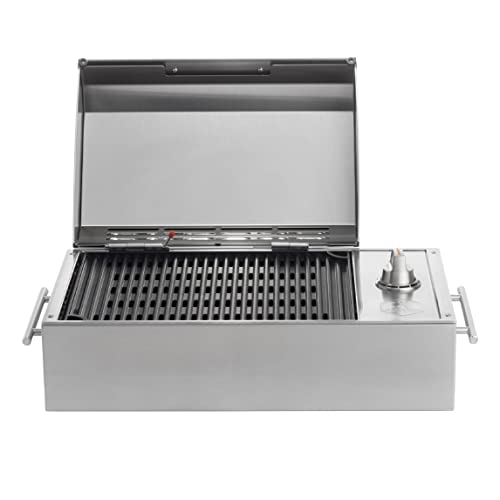
Kenyon City Grill Portable Stainless Steel Electric Grill
Why we picked it: a grill you can actually carry to the campsite, the tailgate or the cabin without borrowing a truck. Stainless, no propane tank to wrestle, and hot enough to cook for four guys rather than reheat for one.



Sponsored
