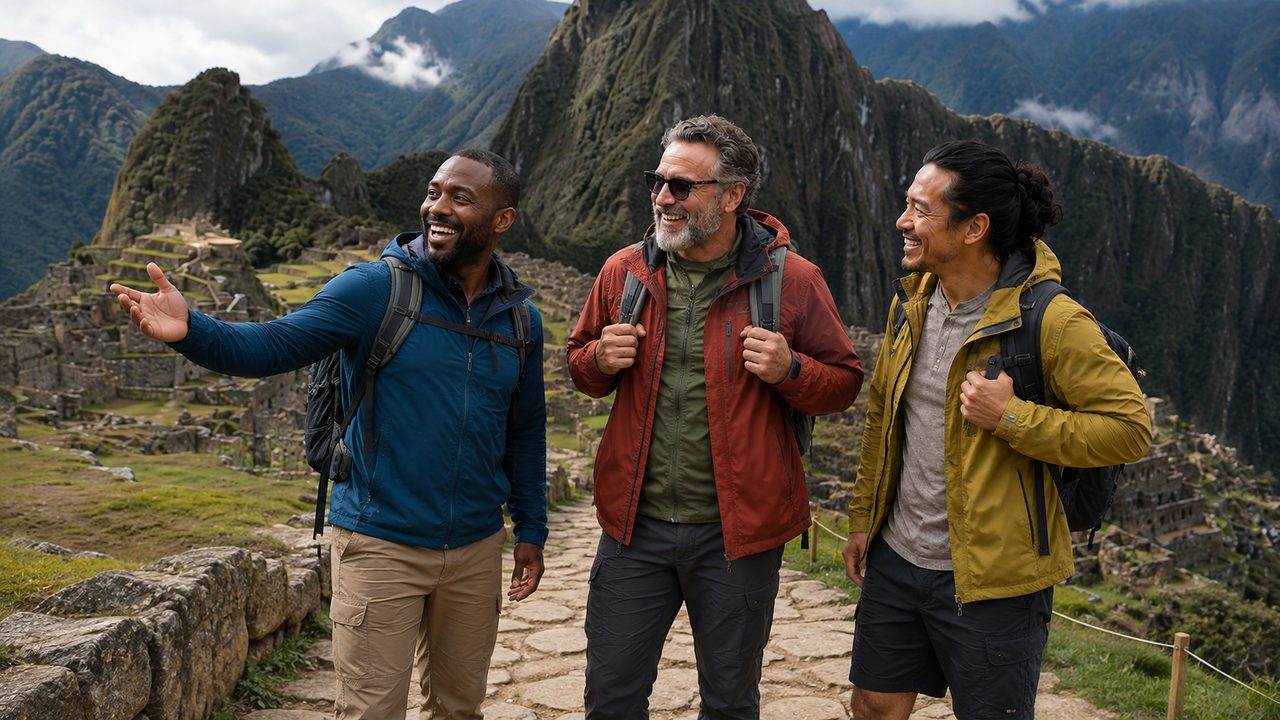
Machu Picchu sells between 4,500 and 5,600 tickets a day depending on the season, and the circuit printed on your ticket decides which half of the citadel you get to walk. Most first-time visitors find that out after they have already paid. Six parts of a Peru trip are harder than they look on a booking page, and a guided tour absorbs nearly all of them.
What Do You Call Your "Guys Trips"?
A Machu Picchu day is not one reservation. It is five, each on a different system, each with its own way to fall over.
- Entry tickets come only from the Peruvian Ministry of Culture portal at tuboleto.cultura.pe, and Circuit 2 is the first to sell out.
- Train seats are sold by PeruRail and Inca Rail, the only two operators licensed on the line into Aguas Calientes.
- The bus up the mountain is a separate ticket from Consettur, the only company holding the concession on that road.
- A night in Aguas Calientes is its own booking, and you will want it if your entry slot lands in the afternoon.
- A licensed English-speaking guide is the fifth, and the good ones are spoken for months out in July and August.
Machu Picchu is one of those bucket list trips a lot of guys ask me about, and I think the reason is the middle ground it occupies. It sits well outside the sanitized tourist destinations, far enough from a normal urban weekend to feel like an expedition, and at the same time Cusco supports a vibrant community of guides and tour companies who run this route every week. Trips that feel this far from home rarely come with an industry built to walk first-timers through them.
That is what makes booking it yourself a real choice rather than an obvious one, and plenty of guys pull it off. What catches them is never the part they were worried about. It is the handoff between two systems that do not talk to each other. Operators like Machu Travel Peru, a Cusco-based outfit running private Peru itineraries since 2011, exist because that arithmetic stops working the moment more than two of you are going.
Six Places a Machu Picchu Trip Can Go Sideways
Every one of these is solvable on your own. Each one also has a version where you lose a day, a ticket, or the view you flew nine hours to stand in front of.

Placerville Is A Golden Destination For Your Next Guys Getaway
A guys weekend getaway in Placerville, California
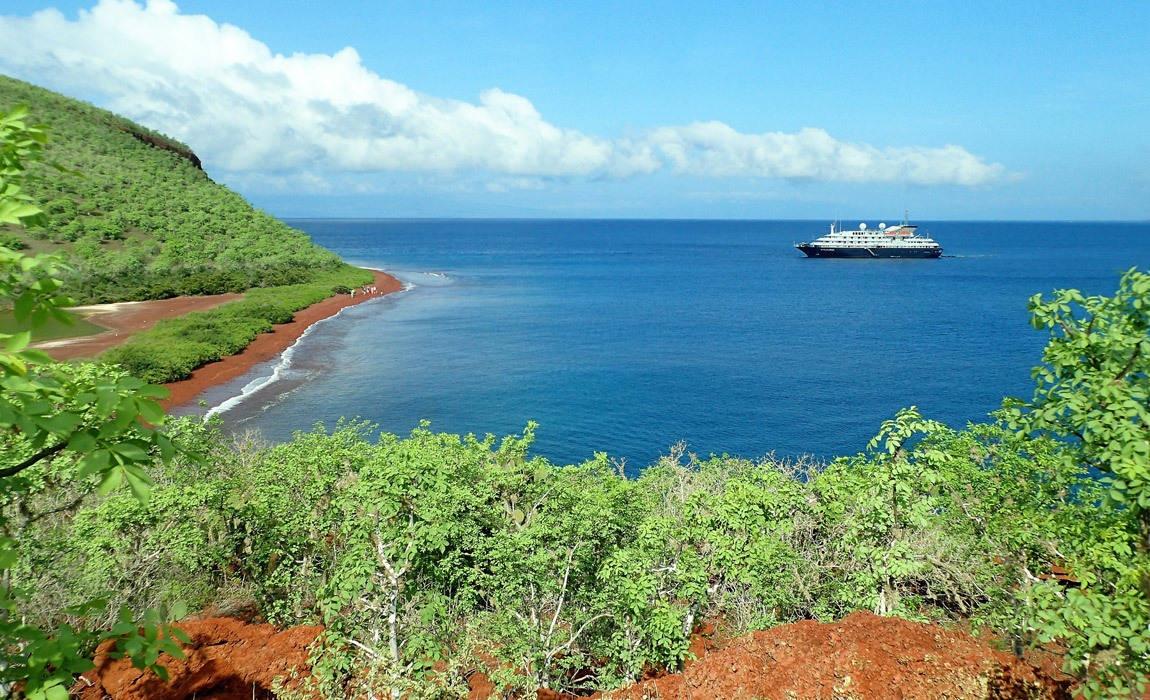
Galapagos Cruise Adventures: A Bucketlist Guys Getaway Guide
Visiting the Galapagos Islands is a bucket list adventure for many people, here's what you need to know before booking your cruise.

Private Multi Day All Inclusive Tour in Thailand
Private all inclusive multi day Thailand tour covering Bangkok, temples, islands and hill villages, ideal for travelers wanting a guided trip.

Social influencer and Travel Blogger Adventure on Kauai
A customizable Kauai tour with a private photographer, ideal for social influencers who love food, hiking and scenic photo spots.
Promoted by FlowAds

The Circuit on Your Ticket Decides What You See
Machu Picchu runs on three circuits, and as of 2026 those three are split into ten color-coded sub-routes. Circuit 1 is the Panoramic route with four variations, Circuit 2 is the Classic Inca Citadel with two, and Circuit 3 is the Royalty Path through the lower citadel with four. The postcard shot, the one everybody is picturing, comes off Circuits 1 and 2. Book Circuit 3 by accident and you will walk a strong route that does not include the photo you came for.
Entry is tied to the time slot on the ticket with a 30-minute grace window, and there is no re-entry once you walk out. The one I would not leave to chance is the entry ticket itself, because between May and September Circuit 2 routinely goes months out.
The old advice that there is no walk-up option is half right. You cannot buy anything at the gate, but the Ministry of Culture releases 1,000 tickets a day at its Cultural Center in Aguas Calientes, sold from 3:00 p.m. to 10:00 p.m. for the following day against a valid ID, with live availability posted at tuboleto.cultura.pe/cusco/1000boletos. Planning a trip around that queue in high season is a bet, not a plan.
Man Gear Pick of the Month
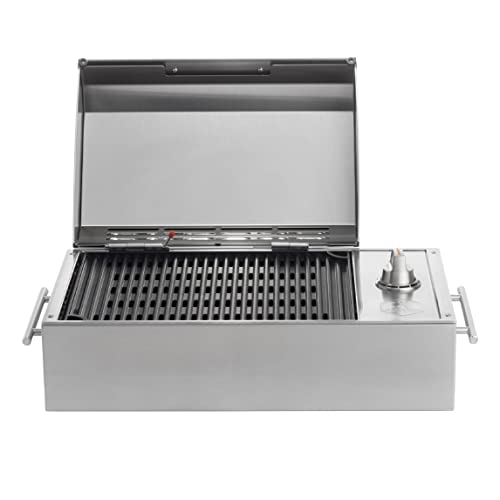
Kenyon City Grill Portable Stainless Steel Electric Grill
Why we picked it: a grill you can actually carry to the campsite, the tailgate or the cabin without borrowing a truck. Stainless, no propane tank to wrestle, and hot enough to cook for four guys rather than reheat for one.
 August's Pick LiberNovo Maxis Electric Big and Tall Ergonomic Office Chair, Graphite 52cm $1,283.00
  July's Pick Powerful Propane Torch Gun, Adjustable Flame Thrower Gun, Kitchen Torch with Detachable Design, Flamethrower Blow Torch for BBQ, Searing Steak, Welding, Camping Charcoal Lighter(Tank Not Included) $42.99
  June's Pick OYASUMI Funny BBQ Man Hot Dog Holders, 4 PCS Reusable Stainless Steel Sausage Stands, Portable Hot Dog Roasters, Barbecue Grill Accessories for Camping & Party Gifts $7.98
 Promoted by FlowAds

Cusco Will Flatten You Before Machu Picchu Does
Machu Picchu sits at 7,972 feet. Cusco sits at 11,152 feet. The citadel is more than 3,000 feet lower than the city you fly into. The altitude problem on this trip is not the ruins. It is the two or three days you spend at the base before you ever get on the train.
If I were routing this, I would spend the first nights lower than Cusco rather than in it. The Sacred Valley averages around 9,200 feet, with Urubamba at 9,416 and Ollantaytambo at 9,350, which is why operator itineraries put Sacred Valley days ahead of the citadel instead of sending you straight uphill from the airport. Machu Travel Peru builds its Peru trips over six to eleven days and runs them in that order for the same reason.
You Cannot Fix a Missed Connection From Aguas Calientes
After years of writing about guys trips, the pattern I keep seeing is that they do not fall apart at the destination. They fall apart at a connection on your journey. This trip to Peru has several. The train from Ollantaytambo to Aguas Calientes takes about an hour and 45 minutes. The Poroy station outside Cusco is closed from January through April for the rainy season. The Consettur bus up to the gate runs every 10 to 15 minutes from 5:30 a.m., at roughly $24 round trip for foreign visitors. That bus ticket has to be bought the afternoon before or online.
This chain hands you off between drivers, stations, and pickup points you have never seen before. Checking my location against the address on your confirmation takes a few seconds and keeps a wrong corner from turning into a missed train.
On August 4, 2026, a forest fire and rockslide near kilometer 107 shut the Ollantaytambo line for about 30 hours. Service resumed the next morning at 10:30 and the Ministry of Culture let affected visitors enter late, which was a discretionary call rather than a policy. Anyone traveling on their own spent that window renegotiating their return train and paying their own change fees. An operator makes those calls for you.
The Ruins Do Not Explain Themselves
Signage inside the site is minimal, and the stonework does not label itself. The agricultural terraces, the Temple of the Sun, and the Intihuatana stone sit within a few hundred yards of each other and read as similar gray masonry to anyone without context. A licensed guide connects them in the order your circuit walks them, which turns a stroll past old walls into an argument about how the place worked.
The sub-routes add a practical reason too. With ten of them running one-way, a guide who knows which route your ticket permits keeps the group off a path they will be turned back from. Guidebooks and audio tours were written for the old layout.
Pace Yourselves: A Group of Guys Rarely Walks at One Speed
The mountain add-ons are not options bolted onto one ticket. They are separate circuits. Huayna Picchu is Circuit 3-A, Huchuy Picchu is 3-D, Machu Picchu Mountain is 1-A, and the Sun Gate is 1-C. Two guys who want the Huayna Picchu climb and two who want the Sun Gate are on different tickets bought at different times, and nobody discovers this until checkout.
On a bachelor party or a father-and-sons trip, I would split the group at the booking stage rather than at the gate. A private itinerary lets three people take the hard climb, two take the panoramic route, and everyone meet for the same train down. Fixed group departures move at the pace of the average participant.
Local Knowledge That Never Makes It Online
The bus queue in Aguas Calientes starts forming before dawn, and how early you need to join it depends on the day, the season, and how many trains landed the night before. That is not a number you can look up. Neither is which restaurants in town charge tourist rates, which viewpoints inside the site clear out at 11:00 a.m., or which stretch of trail is closed this month.
Reviews go stale, crowd patterns shift by season, and a guide working the route weekly has information that pre-trip reading cannot replace. That is the argument for going guided that never shows up in a comparison chart.
Booking Windows, Seasons, and What the Logistics Cost
High season runs June 19 through November 2 plus a handful of holiday dates, and it carries the 5,600-ticket daily cap. Low season drops to 4,500. The higher cap does not make high season easier, because demand outruns the extra allocation.
I would book the entry ticket first and build everything else around the time slot it hands you, because it is the only piece with no flexibility. Train seats, the bus, and hotel nights all bend around it. Budget roughly $24 for the round-trip bus on top of entry and rail, and remember the January-through-April window means bimodal service by road and rail from Cusco rather than a direct train. Peru works as a guys trip destination precisely because the hard parts are logistical rather than physical, which means they are the kind of problem you can pay somebody to have already solved.
Machu Picchu Can Be An Epic Guys Trip Adventure But You Need to Take The Time To Plan Properly!
Build in a buffer day. Entry tickets are timed, non-transferable, and offer no re-entry, so a train problem on the morning of your slot does not delay your visit. It ends it. The August rockslide worked out because the Ministry chose to admit people late, and that choice was theirs to make.
The only real recovery mechanism is that 1,000-ticket counter in Aguas Calientes, and it does you no good if you are already booked on a train back to Cusco that evening. One spare night in Aguas Calientes or the Sacred Valley converts a trip-ending failure into an inconvenience, and it costs less than the flight change you would otherwise be making. That is the single line item I would defend hardest when the group starts trimming the budget.

Promoted by FlowAds
