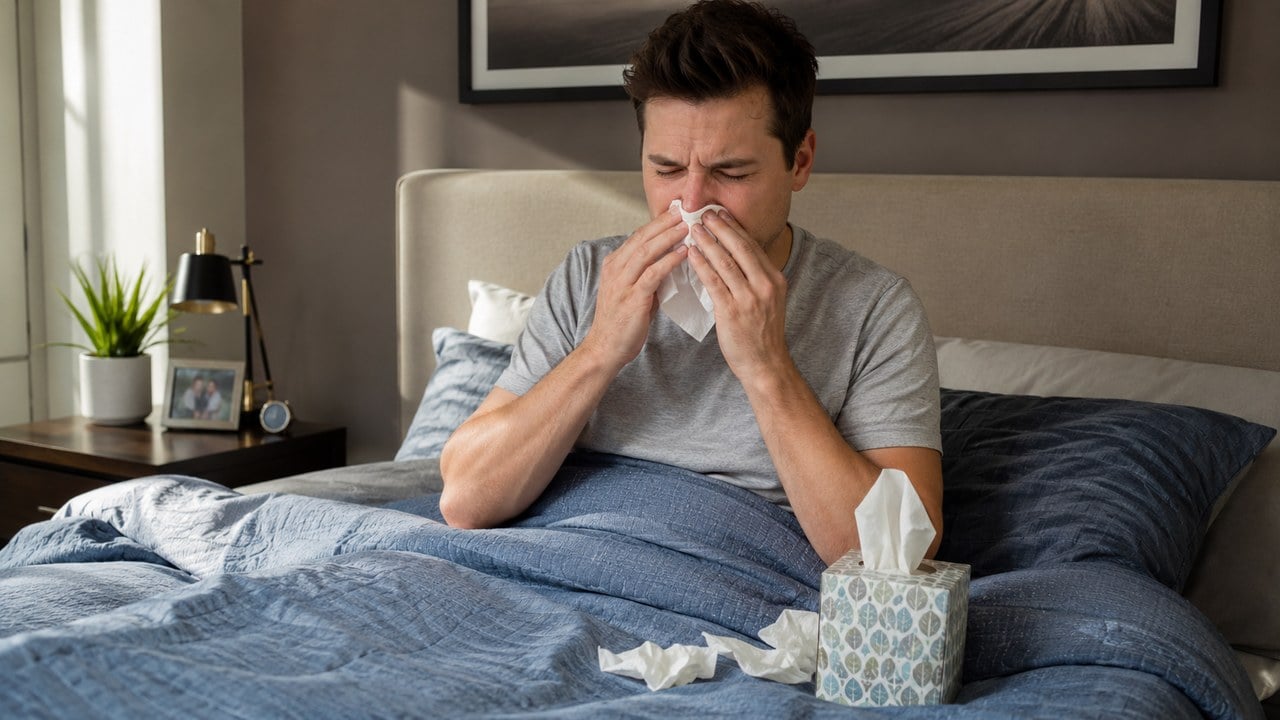
You have probably noticed it without thinking about why: some nights in a hotel, you sleep harder than you do in your own bed. It is easy to credit the blackout curtains or the firmer mattress. Often the real difference is what the hotel room does not have - the dust mites, mold, and built-up allergens that have quietly colonized the bed you sleep in every night at home. If your nose blocks up the second your head hits the pillow, or you wake up sneezing with itchy eyes that clear within an hour of getting up, you are not imagining the pattern.
What Do You Call Your "Guys Trips"?
A clean-looking bedroom can still be the most allergen-dense room in your house, and most of the trouble is in the bed itself.
- The real reason allergies hit hardest the second your head touches the pillow
- Why a stuffy nose at night quietly costs you sleep, recovery, and energy
- Which part of your bed holds the most allergens - and the one you can't wash
- The wash temperature that actually kills dust mites (most guys run it too cold)
- Eight fixes that cut the allergen load without buying a whole new bed
The bedroom is the most allergen-dense room in most homes, and the bed is the center of it. A single mattress can hold tens of thousands of dust mites, and each one produces around 20 waste pellets a day. Those pellets carry the proteins that trigger most cases of allergic rhinitis, asthma, and eczema, and your pillow, sheets, and comforter collect the same material.
At night you are locked in close contact with all of it for eight hours straight. Your face is pressed into the pillow, your airways inches from the highest concentration of allergens in the house. Lying flat makes it worse, because gravity is no longer helping your sinuses drain, so mucus pools and the congestion compounds. The longer you go between washes, the more skin cells, oil, and moisture build up, feeding the mites and raising the allergen load night after night.
Here is the part most people miss: not all bedding is built the same, and good sleep is about a lot more than buying a comfortable pillow. The fill matters. Feather and down give mites the most to work with, since the natural material is both a food source and an easy place to colonize. Foam resists them. Simba's Hybrid™ Pillow uses foam Nanocubes® instead of natural fill, with a structure dense enough that mites cannot set up shop, a machine-washable cotton cover, and open-cell airflow that keeps the warm, humid conditions mites need from building up.

How to Finance Your Guys Cruise Trip Without Breaking the Bank
Discover smart ways to finance your next guys cruise trip without breaking the bank. From sinking funds to payment plans with Uplift and Virgin Voyages, learn how to maximize your budget for epic adve

Glaciers, Salmon, Bears and More on an Alaska Cruise
An Alaska cruise is a bucket-list experience for many people. Here's what to expect.

6 Day Tour-The Best of Thailand and Vietnam
A 6-day guided tour of Bangkok, Hanoi and Halong Bay with hotels, transfers and local cuisine, ideal for travelers seeking two countries in one trip.

Majesty Of Untouched Northern Vietnam Tour 6 Days
A 6-day northern Vietnam tour through Ha Giang, Ba Be Lake and Ban Gioc Waterfall, ideal for nature lovers seeking untouched landscapes.
Promoted by FlowAds

How a Stuffy Nose at Night Costs You Sleep and Recovery
A blocked nose at night is not just an annoyance - it quietly chips away at the sleep your body needs to repair itself. When congestion forces you to breathe through your mouth, it dries out your airway and makes snoring worse. A meta-analysis of sleep studies found that allergic rhinitis nearly doubles the odds of obstructive sleep apnea, because that same nasal congestion pushes you into mouth breathing and makes the upper airway more likely to collapse while you sleep. It does not happen to everyone with allergies, but if your nights already feel broken up by more than a stuffy nose, it is worth looking at whether stress is driving your sleep apnea too, since the two problems feed each other.
The cost does not stop at feeling groggy. Deep sleep is when your body releases most of the growth hormone that repairs muscle, and sleep-restriction research has found that even a single rough night can cut muscle protein synthesis by close to 20 percent. A University of Chicago study found a week of short sleep dropped healthy young men's testosterone by around 15 percent - roughly what you would expect from aging a decade. If you train hard, the recovery you chase in the gym gets quietly undone by the allergens wrecking your sleep at home.
Cleaning up your bedroom is one lever. Tightening the rest of your sleep routine is another, and magnesium is one of the simplest tools men overlook for better sleep. It pairs well with cutting the allergen load that is keeping you congested in the first place.
Man Gear Pick of the Month
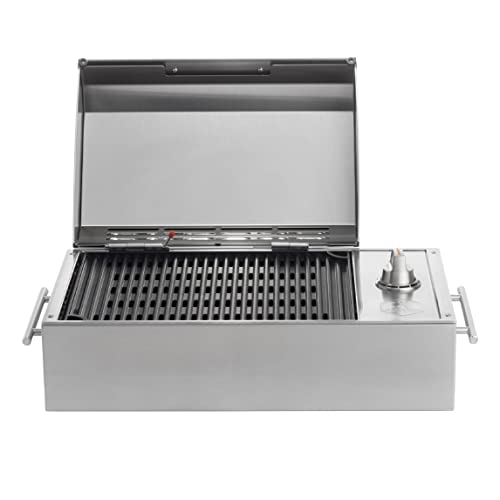
Kenyon City Grill Portable Stainless Steel Electric Grill
Why we picked it: a grill you can actually carry to the campsite, the tailgate or the cabin without borrowing a truck. Stainless, no propane tank to wrestle, and hot enough to cook for four guys rather than reheat for one.
 August's Pick LiberNovo Maxis Electric Big and Tall Ergonomic Office Chair, Graphite 52cm $1,393.00
  July's Pick Powerful Propane Torch Gun, Adjustable Flame Thrower Gun, Kitchen Torch with Detachable Design, Flamethrower Blow Torch for BBQ, Searing Steak, Welding, Camping Charcoal Lighter(Tank Not Included) $42.99
  June's Pick OYASUMI Funny BBQ Man Hot Dog Holders, 4 PCS Reusable Stainless Steel Sausage Stands, Portable Hot Dog Roasters, Barbecue Grill Accessories for Camping & Party Gifts $7.98
 Promoted by FlowAds

Pillow, Mattress, and Comforter - Where the Allergens Live
Three things in your bed do most of the damage, and they are not equally easy to deal with.
Your Pillow
Your face is on it for hours every night, so it collects the most skin cells, sweat, and oil - the exact buffet dust mites feed on. Feather and down pillows make it worse, since the loose natural fill gives mites room to move in and breed. A dense, washable fill is the better call, and a zippered pillow protector underneath buys you another layer of defense.
Your Mattress
The mattress is the problem you cannot throw in the wash. An older one can hold millions of mites deep in the comfort layers, building up year after year with nowhere to go. A breathable, waterproof mattress protector is the highest-impact single step here, because it blocks the skin cells and moisture that feed the colony before they ever reach the core. If you only do one thing off this whole article, make it that. Construction matters too: Simba's Hybrid® mattresses feature zip-off, washable covers that allow surface-level cleaning, while the Aerocoil® spring ventilation helps keep the internal environment less hospitable to mites.
Your Comforter
Down and feather comforters carry the same baggage as down pillows: the natural fill feeds mites, and it tends to break down and lose loft at the temperatures needed to kill them, so most people never wash it hot enough. A synthetic fill that is machine washable and dries fast is the smarter pick for anyone who wakes up congested. Simba's Hybrid™ duvets use Simba Renew™ fibers, a synthetic fill that provides down-like warmth while being machine washable and less attractive to mites than natural alternatives.
How Mattress and Bedding Materials Affect Allergies
The material your bed is built from changes how hospitable it is to the things you are allergic to. Dense foam resists mite penetration far better than open, fibrous fill, because there is no loose structure for them to burrow into and breed. Mattresses with spring or coil ventilation stay drier inside than solid foam blocks, and dry air is the enemy of dust mites. That is why hybrid construction, foam comfort layers over pocketed springs, tends to be the most allergen-resistant mainstream option: the foam blocks colonization while the springs keep moisture from pooling. Natural fills like down, feather, and untreated wool sit at the other end of the scale - comfortable, but far friendlier to mites.
How to Actually Reduce Allergens in Your Bedroom
Most of the highest-impact fixes cost little or nothing, and none of them involve medication.
- Wash sheets and pillowcases weekly in hot water of at least 130°F, since anything cooler cleans the surface but leaves the mites alive - run the sanitize cycle or a hot dryer pass if your water heater is capped at 120°F.
- Put a breathable, waterproof, zippered protector on both the mattress and the pillows - a solid one runs about $30 to $60.
- Replace pillows about every two years, because allergen levels inside the fill climb even with regular washing.
- Vacuum the mattress surface monthly with an upholstery attachment to pull the surface dust the protector does not catch.
- Keep bedroom humidity under 50 percent, which starves dust mites and keeps mold from taking hold - a small dehumidifier noticeably thins out both in a damp room.
- Run a HEPA air purifier as a complement, not a cure, because it clears airborne allergens but does nothing for what is embedded in your mattress.
- Skip the anti-allergy sprays as a primary fix, since they only knock down allergens on the surface while the mites and waste deeper in the fill keep going.
- Choose synthetic, densely constructed, washable bedding over feather and down if you are prone to congestion.
A New Pillow or Mattress Is Only Part of the Solution
Upgrading to a mite-resistant pillow or a ventilated mattress helps, but no single purchase fixes the problem on its own. Changing your bedding will not cure an allergy - it lowers the trigger load, and that is one of the few things you can do about nighttime symptoms without reaching for medication. The bigger difference comes from doing several of these together: better materials, weekly hot washes, protectors on the mattress and pillows, and humidity kept in check. Give it two to four weeks of consistency and you will feel it - sharper mornings, better recovery after you train, and a lot less of that feeling where a few nights in a hotel on a guys trip remind you how rough your sleep at home had gotten. Your bedroom should be the one room working for your sleep, not quietly against it.
Disclaimer: This article is general guidance on reducing nighttime allergy symptoms through better bedding, not medical advice. If your symptoms are severe or persistent, or you have asthma or trouble breathing, talk to your doctor or an allergist for a personal diagnosis and treatment plan.

Promoted by FlowAds
