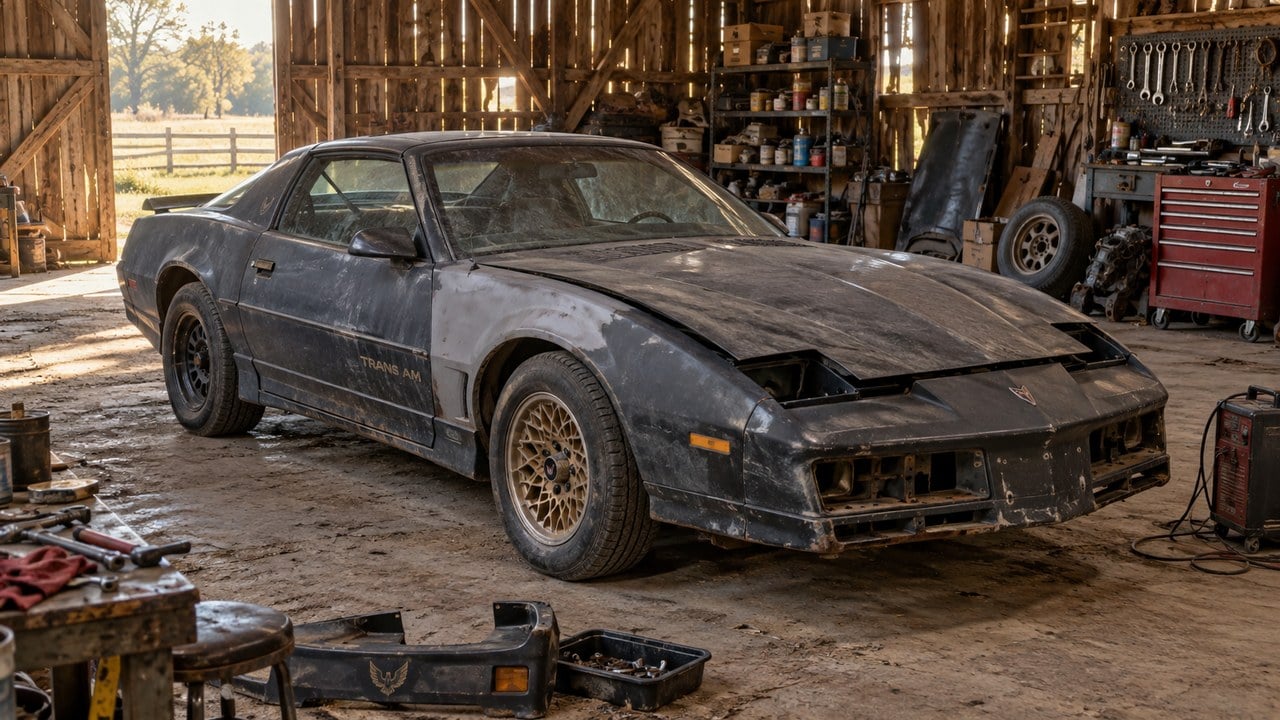
A project car rarely fails on a specific day. It fails across three or four winters - a tarp, a dead battery, a bay nobody can park in, and a parts bill that stopped making sense two years ago. Five things decide whether the build is still alive: the money, the calendar, the structure, the parts, and the space. Run all five and the answer usually arrives on its own.
What Do You Call Your "Guys Trips"?
Selling the car is the easy half. The boxes, the bagged hardware, and the shelf of one-off tools are what turn a clean exit into a garage that still looks occupied.
- Photograph every part next to the car before anything is separated, because a documented pile sells for far more than a bin of unlabeled brackets.
- New old stock and reproduction parts still in their boxes sell better on their own than bundled with the car, especially anything model-specific.
- Keep the factory shop manual and the wiring diagram even if you never touch that platform again, because they are worth more to the next owner than to a recycler.
- Specialty tools are worth holding onto: spring compressors, a torque angle gauge, and the pullers you bought for this car will start the next one.
- Marque club forums and platform-specific Facebook groups move used trim and interior parts faster than general marketplaces, and the buyers there know what they are looking at.
Most guys assume the exit will be as complicated as the build was. For Texas drivers with dead cars this is pretty straight forward - an offer over the phone, a free tow, and an empty bay by the end of the week. The harder work is the five tests that come first.
The Money Test: Spent, Remaining, and Finished Value
Start with what the car has already cost: the purchase price, the parts on the shelf, the machine work, and the tools bought for this job alone. Then price what is left.
Restoration shops charge $85 to $225 an hour and average around $125. A mild cosmetic and mechanical overhaul runs 800 to 1,000 labor hours, and a frame-off runs 2,000 to 3,000. Do that multiplication before reading further: 800 hours at $125 comes to $100,000 in labor, and no parts have been bought yet.

Where to Eat In Tucson on a Guys Trip
Looking for a great guys weekend exploring awesome Mexican food? Here's where we recommend you eat in Tucson, Arizona!

Which Great Lakes Cruise Line Fits You Best? A Real Comparison
What's included in your Great Lakes cruise: Real comparison of Viking Octantis, Victory, and Pearl Mist all-inclusive packages. First-hand insights on alcohol policies, excursions, and hidden costs. P

6 Days Vietnam Essential Tour
Tour Vietnam's highlights from Saigon to Hanoi, with the Cu Chi tunnels, Mekong Delta and an overnight Halong Bay cruise. Ideal for first-time visitors.

3-Day Private Iceland Tour – South Coast & Glacier Lagoon
A private 3-day Iceland tour of the South Coast and Glacier Lagoon, tailored to you and ideal for couples and small groups.
Promoted by FlowAds

Doing the work yourself changes the currency. You pay in weekends, but paint still runs about $3,000 for a driver-quality job and north of $30,000 for show work, and nobody sprays a good finish in a home garage on the first try.
Then go find out what a finished example sells for. Hagerty's valuation tools return condition-graded values on a free account, and the completed-auction archive on Bring a Trailer is public. Both show closed transactions, so look up your exact year, trim, and condition grade instead of the number in your head.
Now add what you have spent to what is left and set the total against that comp. Double the comp means the work still ahead costs more than the finished car will ever return. Some guys sign up for that deliberately and say so out front. Most find out three years in.
Man Gear Pick of the Month
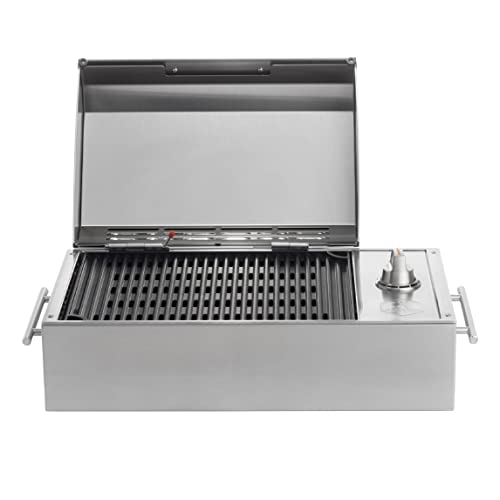
Kenyon City Grill Portable Stainless Steel Electric Grill
Why we picked it: a grill you can actually carry to the campsite, the tailgate or the cabin without borrowing a truck. Stainless, no propane tank to wrestle, and hot enough to cook for four guys rather than reheat for one.
 August's Pick LiberNovo Maxis Electric Big and Tall Ergonomic Office Chair, Graphite 52cm $1,393.00
  July's Pick Powerful Propane Torch Gun, Adjustable Flame Thrower Gun, Kitchen Torch with Detachable Design, Flamethrower Blow Torch for BBQ, Searing Steak, Welding, Camping Charcoal Lighter(Tank Not Included) $42.99
  June's Pick OYASUMI Funny BBQ Man Hot Dog Holders, 4 PCS Reusable Stainless Steel Sausage Stands, Portable Hot Dog Roasters, Barbecue Grill Accessories for Camping & Party Gifts $7.98
 Promoted by FlowAds

How Many Hours Went Into It Last Year
Length of ownership tells you very little. Plenty of cars sit for a decade and still get finished. What matters is hours logged in the last twelve months.
A workable rule of thumb: if you cannot point to twenty hours of real work in the past year, the project has moved from build to storage. That is a description of what the car is doing, and what it is doing is nothing.
Dormancy costs money on its own. Fuel varnishes and gums up carburetors and injectors. Brake and clutch hydraulics corrode from the inside out. Seals dry and take a set, rodents find wiring harnesses, and tires flat-spot on the rims. Every idle year adds work to the estimate you started with.
The organizational damage runs deeper than the mechanical. Bagged and labeled hardware gets moved, borrowed, and scattered across three shelves and a coffee can. The only person who knows where the windshield trim clips went is the guy who pulled them, and after three years he has forgotten too.
Rust and Structural Steel Are Where Builds End
Money and hours eventually solve the money, calendar, parts, and space problems. Structural steel is a different category of project, and walking away from it is an engineering call rather than a failure of nerve.
Surface rust on a fender is a Saturday and a can of epoxy primer. Perforated frame rails, rotted floor pans, collapsed torque boxes, and rusted subframe or shock-tower mounts are another matter entirely. On a unibody car the shell has to be braced and squared before anything gets cut, because the body is the frame. That work belongs to a shop with a jig, and shop time is the expensive kind.
Anyone who has bought a half-finished project already knows the seller's photos never show the floor pans. Get the car on a lift, or at minimum on stands with a bright light and a screwdriver, before another dollar goes into it.
Price the Ten Parts You Still Need
Most builders know what they are missing. Very few have priced it. Write down the ten parts standing between the car and a running, driving example, then find each one with a real seller and a real number attached.
Platform decides most of this. Early Broncos, square-body C10s, Mustangs, CJ Jeeps, and air-cooled Volkswagens have deep reproduction catalogs, and almost nothing on them is unobtainable. Low-production models, one-year-only glass, and interior soft trim are where builds stall for years at a time.
If three of those ten parts exist only on a donor car you would have to buy, tow, and store, the project just doubled in cost and footprint. Say that number out loud to your buddies at the shop before you talk yourself past it.
Anyone weighing that math against starting fresh should look hard at classic car collection costs before buying the next one, because the same trap resets with every purchase.
What the Garage Bay Costs You Every Month
The car is not the only asset tied up in the project. A vehicle-sized storage unit runs $100 to $300 a month in most markets, so three years of storage costs $3,600 to $10,800 on something that has not moved an inch.
Keeping it at home costs differently. A dead project in the only usable bay means no workbench, no lift, no room for the boat or the bikes, and nowhere to do the maintenance that would save money elsewhere. The DIY garage workshop most guys say they want is usually parked underneath a car they stopped working on.
There is a social cost stacked on top of the financial one: the weekend with the guys that keeps getting pushed because the shop is full, and the married-life negotiation that restarts every spring when the tarp comes off and goes back on. Three years of storage fees is Austin guys trip money, and Texas guys trips produce better stories than a tarp does.
Title, Liens, and the Paperwork Behind Any Sale
You cannot sell what you cannot prove you own, and a project car that changed hands informally a decade ago is exactly where the paperwork bites. A clean Texas title already in your name skips this entire section, which is worth confirming before assuming the worst.
Title branding determines what the car can become. In Texas, you can repair, inspect, and retitle a salvage vehicle as Rebuilt Salvage. A nonrepairable vehicle cannot. TxDMV is explicit that a vehicle issued a nonrepairable title on or after September 1, 2003 may not be rebuilt, retitled, or operated on public roads, which makes it legally a parts car no matter how good the sheet metal looks.
If the title is missing, Texas runs a bonded title process through TxDMV. It starts with Form VTR-130-SOF and a statement of fact. Once the application is approved you buy a surety bond worth 1.5 times the state-determined value of the vehicle, then file the bond, your proof of ownership, and an inspection with the county tax office within 30 days of buying the bond. County processing times vary, so start it well before a buyer is waiting.
Liens are the other trap. A machine shop that never got paid, or a storage facility owed back rent, can attach a lien to the car. Settle it before listing anything, because a buyer's title work will surface it.
The step most sellers skip comes after the handoff. Texas Form VTR-346, the Vehicle Transfer Notification, filed within 30 days of the sale, is what protects the seller from criminal and civil liability for what the new owner does with the car. Tolls, tickets, and worse otherwise trace back to the name still sitting on the record.
On insurance, read the policy instead of assuming. Self-storage facilities do not insure what is inside the unit, and that responsibility sits with the tenant. A comprehensive-only auto policy may still cover a stored vehicle, but that is a question for your agent.
Every specific above is Texas procedure. Other states run their own bonded-title and liability-release equivalents, so check your own DMV before following any of it.
Three Honest Exits For Your Project Car Gone Kaput
Once you decide, the question is which exit returns the most for the effort.
Selling it running and rolling pays best. A project that starts, moves under its own power, and stops is worth several times the same car on a trailer, because the buyer can evaluate it. That is worth two more weekends only when the fault is known and the parts are already on the shelf. If getting it running means diagnosing something you have not identified yet, that is the same open-ended bet the last three years were, and the car is a dead one to sell.
Parting it out grosses more and pays far less per hour. Cataloging, listing, packing, and shipping a car's worth of components is months of evenings, and the stripped shell still has to go somewhere afterward.
Selling it whole is fastest. Scrap tracked $120 to $200 per ton through early 2026, and a typical car weighs under two tons, so the metal alone sets a floor in the low hundreds. Real offers landed between $100 and $600 in that period, with trucks and SUVs at the top because they weigh more, and the spread comes down to what the buyer nets after towing and what is still bolted to the car.
That last part decides the number. An intact catalytic converter is worth $50 to $250 on its own for the platinum, palladium, and rhodium inside it, and a whole-car buyer is pricing the converter, the engine, and the wheels along with the steel. Stripping those before the tow is a different transaction from selling the spare parts on your shelf: shelf stock sells separately for more, but parts pulled off the car you are selling come straight out of the offer.
Structure Overrules Everything Else on This List
The five tests rarely agree. Money says keep it, the calendar says it has not turned over since 2023, the parts are available but the floor pans are gone. When the signals split, structure settles it: rotted structural steel or a nonrepairable brand ends the argument no matter how the other four came out. Among the remaining four, two failing outweighs one holding on.
One more number belongs in the math. A loss on a project car is not deductible, because the IRS treats a personal-use vehicle that way, so there is no write-off waiting at the end to soften the total. The money is spent either way. The only variable still in play is how many more years of storage get added to it.
Most guys who sell a stalled build are back in a garage inside two years, and the second car goes better because the first one taught them to price the whole job before signing anything. That lesson costs a great deal less once the first car is out of the bay.

Promoted by FlowAds
