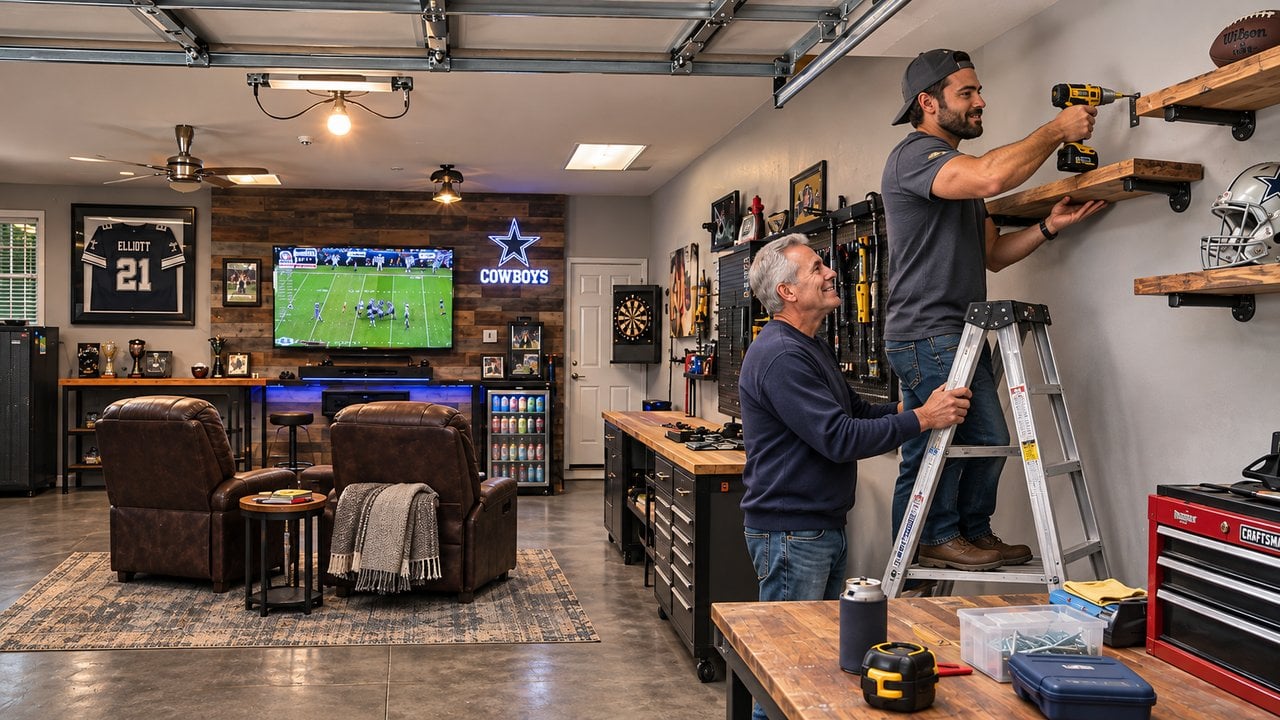
Turning a garage into an entertainment space comes down to fixing what makes a garage a garage: a cold concrete slab, an uninsulated door, a single bare bulb and a few outlets that were never meant to run a TV, a fridge and a heater at once. Handle the slab, the door, the temperature and the power first, and the couch, the screen and the dartboard become the easy part. Here's the order to do it in, from deciding whether the car still gets a bay to paying for the bigger jobs.
- Your city or county permit office: ask whether your plans count as converting the garage to living space, which often triggers permits, inspections and sometimes parking rules.
- Your HOA rules: some associations restrict garage conversions or require the garage door to stay in place and look like a garage from the street.
- Your homeowners insurance: let your agent know if you're adding a heater, a bar fridge or expensive electronics so the space is covered the way you expect.
- Your electrical panel: check whether there's room for a new circuit before you plan around a mini-split or a wall of screens.
- Your floor drain and slope: most slabs pitch toward the door or a drain, which matters when you lay tile or set a pool table.
Most garages already have the square footage for a seating area, a big screen and a game table. A typical two-car garage runs somewhere around 20 by 20 feet, which is bigger than plenty of living rooms. If you're still deciding between the garage, the basement or a spare room, our guide to budget-friendly man cave renovations walks through the tradeoffs. This guide is about the garage specifically, because it comes with problems the other rooms don't.
Decide Whether the Garage is Still A Place Tol Park a Car
The first decision shapes everything else. A full conversion gives you the whole floor, but you give up covered parking, and the stuff that lived in the garage still needs a home. A split setup keeps one bay for a car or the mower and turns the other into the hangout, which means you'll need to think about fumes and dirt crossing into the finished side.
Either way, plan storage before seating. Tools, coolers, holiday decorations and sports gear don't disappear because you bought a sectional. A wall of shelving or cabinets along one side keeps them out of the way, and MDF is a cheap way to build it, as we covered in our roundup of weekend DIY projects with MDF. Overhead racks above the door track are another option for things you only need a few times a year.

Here's How Easy It Is To Eat Right and Stay Fit on Your Cruise Vacation
Eating right and staying fit is easier than you think on a cruise if you choose to make smart choices.

What To Expect on Your First Viking River Cruise
Here's what to expect on your first Viking River cruise through Europe including a personal experience exploring Christmas Markets along the Rhine.

6 Days 5 Nights Northern Vietnam Tour
6 day Northern Vietnam tour with hidden gems, local cuisine and passionate guides. Ideal for curious travelers seeking more than the typical tourist route.
Promoted by FlowAds

Test the Concrete Slab for Moisture Before You Cover It
Concrete pulls moisture up from the ground, and any flooring you put on top will trap it. Before you buy tile, vinyl or carpet, tape a square of clear plastic sheeting about 2 feet across to the slab, seal all four edges and leave it for a day or two. If you find condensation under the plastic or the concrete looks darker, that's a sign of a moisture problem to sort out first, with a sealer or a vapor barrier under the new floor. Flooring installers may run a more precise moisture test, especially before luxury vinyl.
Once the slab is dry, you have three common routes:
- Interlocking rubber or PVC tiles: quick to install, easy on the feet and simple to pull up if the space changes.
- Epoxy coating: durable and easy to clean, though it stays as hard and cold as the concrete underneath.
- Luxury vinyl plank over an underlayment: the most finished look, and the option that needs the moisture test most.
A big area rug under the seating takes the edge off any of them.
Man Gear Pick of the Month

COROS Pace 4 Pro GPS Sport Watch
Why we picked it: a screen big and bright enough to double as a photo frame, a titanium and sapphire build that came through a month of daily wear without a scratch, and battery life that still runs weeks between charges.
 October's Pick Made In Cookware - Cleaver - Full Tang With Olive Wood Handle - Crafted in France $168.00
 August's Pick LiberNovo Maxis Electric Big and Tall Ergonomic Office Chair, Graphite 52cm $1,393.00
 July's Pick Powerful Propane Torch Gun, Adjustable Flame Thrower Gun, Kitchen Torch with Detachable Design, Flamethrower Blow Torch for BBQ, Searing Steak, Welding, Camping Charcoal Lighter(Tank Not Included) $45.99
Promoted by FlowAds

Insulate the Walls, Ceiling and Garage Door (or not)
Most garages are built to keep rain off the car, not to hold heat. The walls and ceiling are the first places to add insulation, and people often forget the garage door. An uninsulated steel door is a giant metal panel facing outside, and it will undo much of the work you put into the walls. Most modern garage doors are designed to keep the garage space insulated but if it isn't that's going to be something you need to look into.
If you're keeping the door, foam panel or batt insulation kits sized for a single garage door are a manageable weekend project, and most kits cut to fit each door panel. Replace the worn rubber seal along the bottom and the weatherstripping along the sides while you're at it. Daylight showing around the edges of the door means air is getting through too.
Heat and Cool the Space for Year-Round Use
A ductless mini-split is a popular way to heat and cool a converted garage, since it doesn't tie into the house's ductwork and handles both seasons. Sizing depends on your square footage, ceiling height, insulation and climate, so have an HVAC installer run the numbers instead of guessing from the box.
If a mini-split isn't in the budget yet, a good electric space heater covers the shoulder seasons and cold game days. We tested the Dreo 715 whole-room heater in a garage, and it's a solid stopgap while you save for the permanent system. A ceiling fan helps in summer and pushes warm air back down in winter.
Add Power and Lighting That Fit How You'll Use the Room
In the US, the electrical code requires GFCI protection on garage outlets, and there are rarely enough of them in the right places. A TV wall, a mini fridge, a gaming console, a heater and string lights can add up quickly on one circuit. Have a licensed electrician add outlets where the furniture will actually go and put the heavier loads on their own circuits.
Lighting does most of the work of making the room feel finished. Keep bright overhead fixtures for cleaning and projects, then add warmer lights near the seating: a couple of floor lamps, dimmable fixtures or LED strips behind the TV. If you're planning a projector, figure out how you'll block the light from windows and the gaps around the door.
Build Your Garage Mancave Around the One Thing You'll Do Most
Try to fit a pool table, an arcade cabinet, a bar and theater seating into one garage and there's no room left to walk. Pick the main activity and build around it.
- Game day: seating for everyone with a clear view of one big screen, plus a fridge within reach. Our checklist for getting a man cave game-day ready covers TV mounting, airflow and the watch party setup.
- Movie nights: a comfortable couch, a soundbar and light control matter more than the biggest screen you can find.
- Games: a pool table needs clearance for the cues on every side, around 13 by 17 feet for a 7-foot table with standard cues, so measure before you buy. Darts, foosball or a sturdy card table fit tighter spaces.
A small fridge and a shelf for cups and snacks keep people from walking back into the house every 20 minutes. Hold off on a full bar with plumbing until you know the room gets used enough to justify it.
Handle Fire Safety, Fumes and Permits Before the Fun Stuff
A garage wasn't designed as living space, and an attached garage has rules that protect the house from it. The model residential code most US towns build on calls for the door between an attached garage and the house to be solid wood or solid or honeycomb-core steel at least 1-3/8 inches thick, or a 20-minute fire-rated door. Newer versions also call for it to be self-closing and self-latching, so ask your building department which rules apply where you live. Don't swap it out for a glass French door without checking first.
Put a carbon monoxide detector in the space, especially if a car still parks in the other bay, and never run a car, generator or fuel-burning heater inside an enclosed garage you're using as a hangout. If your plans include new walls, plumbing, a permanent heating system or anything that turns the garage into living space, check with your local building department about permits before the work starts. Unpermitted work can cause problems with insurance claims and when you sell the house.
Paying for a Garage Conversion - Prepare The Budget Before You Start Building
Garage projects grow. You plan to paint and buy a couch, then find the slab needs sealing, the outlets are in the wrong places and the door has no insulation. Split the list into the work that makes the room usable and safe (moisture, insulation, wiring, heat) and the extras (screen, bar, game table), and fund the first list before the second.
Smaller projects are easiest to pay for in stages, out of savings. For a bigger conversion that includes electrical, HVAC and flooring, some homeowners choose to apply for a home equity loan online to cover the major work.
A home equity loan uses your house as collateral, so missed payments can put the house at risk. Compare the rate, fees, and monthly payment against what you'd save by phasing the project, talk to a licensed lender or financial advisor about whether it fits your situation, and only borrow what you're comfortable paying back. Get written estimates for the big jobs and keep some money aside for whatever turns up once the walls are open.
Add Bigger Signature Pieces Slowly So You Don't Overcrowd The Space
Once the slab, insulation, heat and power are handled, resist the urge to fill the room right away. Put the TV on a cart, bring out folding chairs and host one game or movie night. Watch where people actually sit, where they stand around talking, where it's still cold and where cords end up running across the floor. Those few hours tell you more about the layout than any floor plan.
Then buy furniture for the room you watched people use. A garage that's warm, dry and well lit, with seats where people actually sit, turns into the place everyone heads on a Friday night.

Promoted by FlowAds
