Travel insurance and life insurance get filed in the same mental drawer, and they do completely different jobs. One covers the trip you paid for and your body while you are on it. The other covers the people who depend on you after you are gone. I buy travel insurance for my own cruises, and almost every time these two get mixed up, it traces back to one line item buried in the travel policy.
What Do You Call Your "Guys Trips"?
- The clock starts at your first deposit - the strongest benefits, including pre-existing condition waivers, are usually available only if you buy within 14 to 21 days of your first trip payment.
- Cancel For Any Reason is a paid upgrade - a standard policy covers a defined list of cancellation reasons, and changing your mind is not on that list.
- Pre-existing conditions get a look-back window - insurers review a set period before your purchase date, commonly 60 to 180 days, to decide what counts as pre-existing.
- Adventure activities are frequently excluded - ziplining, scuba past a certain depth and most things with a motor can sit outside a standard policy.
- The cruise line's own plan is not automatically the best one - line-branded policies sometimes pay cancellation benefits as future cruise credit rather than cash.
These were never competing purchases. The reason travel coverage gets argued about at all is timing: you pay for a cruise months ahead. Then come the shore excursions, the flights to the port, and a hotel the night before because same-day flights to a departure city are how people miss ships.
By sailing day you are into it for real money, and none of that money is sitting in your account anymore. Our breakdown of adventure trip risks covers the insurance gaps that catch groups out.
What Travel Insurance Covers From Deposit To Front Door
A comprehensive travel policy is built around the trip itself. It covers cancellation before departure, interruption once you have left, delays that strand you overnight, lost bags, and medical treatment and evacuation while you are away from home. The coverage starts when the policy period starts and ends when you walk back through your own front door.

A Guys Guide to Having A Fun Guys Weekend in New Orleans
A guys weekend getaway guide for men looking to have fun in New Orleans.

Natural Florida Up Close on a Babcock Ranch Eco Tour
The Babcock Ranch Eco Tour gives you an opportunity to explore the vibrant natural wonders of the Florida swamp including alligators, birds, and more.

Book your next cruise with Heather at Flow Voyages
Flow Voyages is a travel advisor specializing in cruises and resorts.
Promoted by FlowAds

Pricing runs 4 to 10 percent of your insured trip cost, with the 2026 average landing near 6 percent. On a $5,000 cruise that is roughly $200 for a traveler in their forties and closer to $400 once you are 65. Age and trip length move the number more than anything else.
The older I get and the more I cruise, the more I understand how much can go wrong on a trip.
Life Insurance Pays Regardless Of How Or Where
Life insurance ignores the trip entirely. It pays a death benefit to the people you name, and it pays regardless of cause - a heart attack at 58, cancer, a car accident on the way to work, or something that happens on a beach in Portugal. The payout replaces income, clears a mortgage, and keeps a household running when one paycheck stops.
Man Gear Pick of the Month
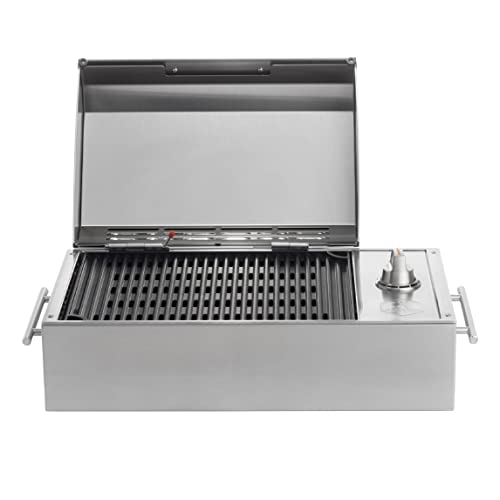
Kenyon City Grill Portable Stainless Steel Electric Grill
Why we picked it: a grill you can actually carry to the campsite, the tailgate or the cabin without borrowing a truck. Stainless, no propane tank to wrestle, and hot enough to cook for four guys rather than reheat for one.
 August's Pick LiberNovo Maxis Electric Big and Tall Ergonomic Office Chair, Graphite 52cm $1,393.00
  July's Pick Powerful Propane Torch Gun, Adjustable Flame Thrower Gun, Kitchen Torch with Detachable Design, Flamethrower Blow Torch for BBQ, Searing Steak, Welding, Camping Charcoal Lighter(Tank Not Included) $42.99
  June's Pick OYASUMI Funny BBQ Man Hot Dog Holders, 4 PCS Reusable Stainless Steel Sausage Stands, Portable Hot Dog Roasters, Barbecue Grill Accessories for Camping & Party Gifts $7.98
 Promoted by FlowAds

Term policies cover a fixed window, usually 10 to 30 years, sized to the stretch when other people depend on your income. Permanent policies last for life and cost considerably more. Most guys with a mortgage and a spouse are looking at term.
The pricing surprises people. A healthy 40-year-old man buying $500,000 of 20-year term generally lands between $30 and $60 a month, depending on health class and carrier. That is roughly one travel policy on one cruise, except it runs every month for two decades.
A life insurance policy also does not care where you are standing when something happens. It works at home, at work, and on a guys trip to Cabo San Lucas, Mexico.
The Accidental Death Benefit That Confuses Everybody
The line item behind it is accidental death and dismemberment coverage. Most comprehensive travel policies include it, commonly at $25,000 to $100,000 per traveler.
It pays a death benefit. It names a beneficiary. On a benefits summary it reads like a life insurance policy.
It is not one: AD&D pays only for death or serious injury caused by an accident. Die of an illness on that same trip and it pays nothing, because an illness is not an accident. Life insurance does not make that distinction.
The second difference does more damage. AD&D on a travel policy is only in effect for the covered trip, so anyone treating that benefit as their family's protection is carrying something that expires with the return flight.
What A Medical Emergency Overseas Costs Without Coverage
Your domestic health plan mostly stops working once the ship leaves United States waters. Medicare does not travel at all. Medigap plans C, D, F, G, M and N include a foreign travel emergency benefit that pays 80 percent after a $250 deductible, up to a $50,000 lifetime maximum - lifetime, not per trip.
Then there is the cost of getting you home. Medical evacuation runs $15,000 to more than $200,000 depending on distance and the equipment required. A helicopter lift off a ship at sea is $50,000 to $200,000. An air ambulance from a Caribbean port back to the United States runs $30,000 to $80,000.
I think about getting stuck somewhere and spending thousands of dollars on medical care, and that's what a travel policy is built for. Our look at planning medical care abroad covers the other edge of the same limit: standard policies exclude planned procedures outright.
The Cancellation Benefit Is The One That Changes The Math
Trip protection has a reputation problem. It reads like the extended warranty of the travel world, priced high and timed to catch you in a moment of doubt.
Somebody in your family gets sick or dies three days before a trip you have been planning for a year. Without coverage you are choosing between losing thousands of dollars and boarding a ship you no longer want to be on. Nobody should have to make that call in that particular week.
The same problem scales up on a group trip. One guy backing out of a bachelor party leaves five others holding a villa deposit, and the friend who canceled is the one who feels worst about it.
That comfort, knowing you can cancel and recover most of the money, is worth more than the coverage costs. Nobody wants to spend the whole trip with their head somewhere back home.
The Medical Exam Myth Around Life Insurance
The most common reason guys skip life insurance is the belief that they will not qualify. Somewhere along the way it became accepted that you have to be in excellent health, and that the process opens with a paramedic in your kitchen at 7am drawing blood.
That is a myth. Carriers underwrite high blood pressure, type 2 diabetes and elevated weight every day, and a whole category of life insurance without exam now exists for people who would rather skip the needle. These policies read prescription history, motor vehicle records and other digital data in place of the physical, and approvals can come back in days instead of the three to eight weeks a fully underwritten policy takes.
The coverage is not token, either. Accelerated underwriting reaches $500,000 to $1 million at some carriers, which is enough to clear a mortgage rather than a funeral bill. Premiums run modestly higher than a fully underwritten equivalent, and that gap has narrowed as carriers got better at reading data they already hold.
Make Sure To Check What You Already Carry Before You Buy Anything
Before buying either product, spend twenty minutes auditing what you have. Premium travel cards carry more than most guys realize. Put the trip on a Chase Sapphire Preferred or Reserve and you get up to $10,000 per traveler in trip cancellation and $100,000 in emergency evacuation, provided the trip runs 60 days or less.
What those cards will not do is pay the hospital. The Preferred includes no emergency medical coverage at all, and the Reserve caps at $2,500 less a $50 deductible, which is a rounding error against a week in a foreign hospital. That single line is the clearest argument for buying a standalone policy on top of the card you already carry.
Do the same exercise on the life insurance side. Group coverage through work is usually one or two times salary, and it belongs to the employer rather than to you. Change jobs and it is gone, at the exact age when replacing it costs more than it did the last time you looked.
Buy the travel policy inside the 14 to 21 day window that opens with your first deposit, while the pre-existing condition waiver is still on the table. Buy the life policy at the age you are now, because the premium only moves in one direction from here.