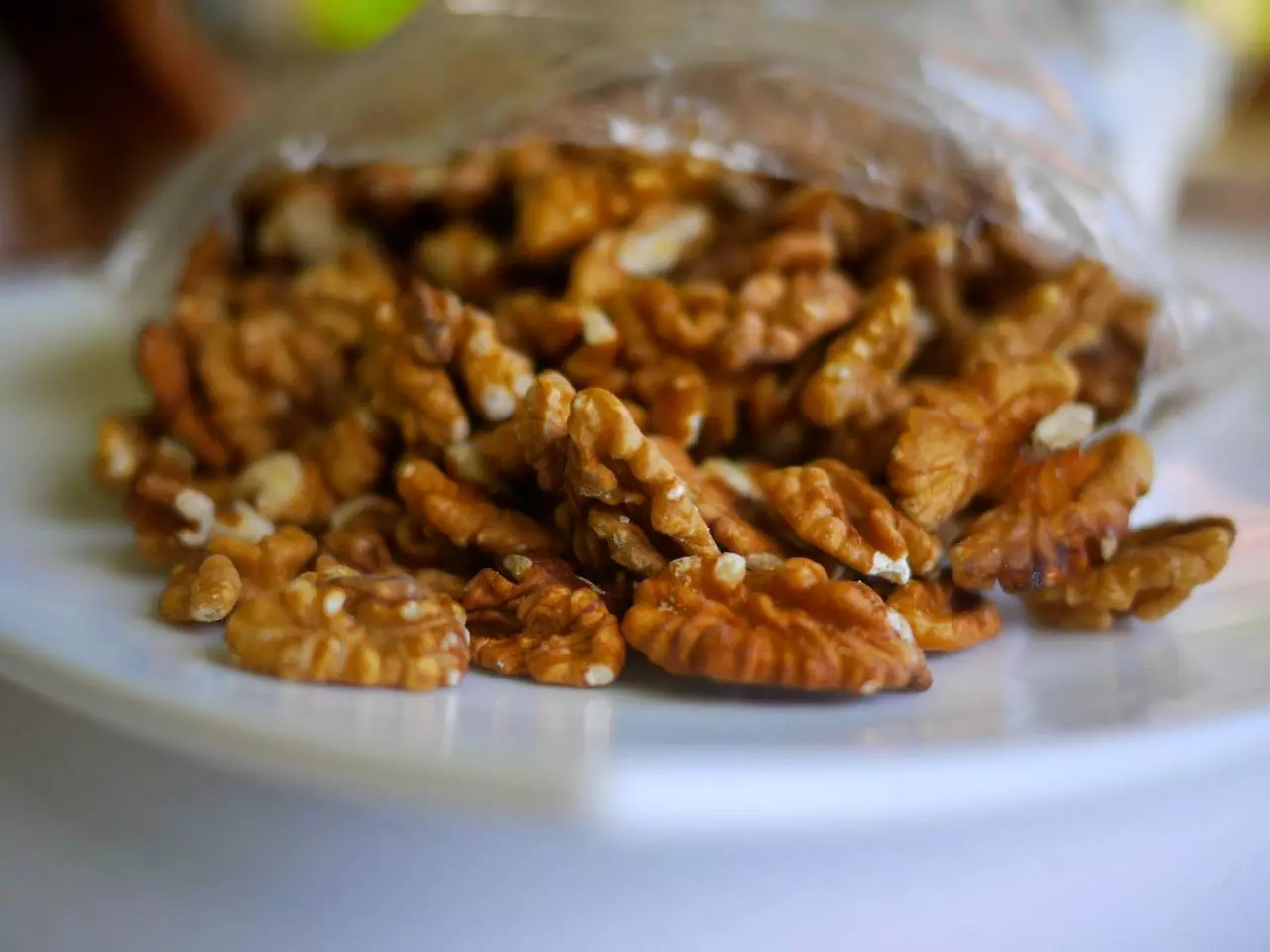
Almonds, walnuts, Brazil nuts and pistachios usually end up in the same bowl, which hides how differently they behave. An ounce of walnuts holds 2.57 grams of ALA omega-3. The same weight of almonds covers close to half a day's vitamin E. Brazil nuts are the outlier: one ounce delivers 544 micrograms of selenium, which is 136 percent of the safe daily ceiling for an adult. Three of these four you can eat by the handful. The fourth you count.
If You Could Give A Healthy Eating Tip to Your Younger Self, What You Share?
These four get sold in the same mixed bag and treated as one category called healthy fats. The gaps between them are wide enough that the mixed bag is the wrong way to buy any of them.
- Walnuts are the only one of the four with meaningful omega-3, and it is not the same omega-3 that comes out of a salmon fillet.
- Raw almonds edge raw pistachios on protein per ounce, which is the reverse of what most comparisons claim.
- Pistachios lead this group on vitamin B6 and thiamin, and they are the only one with lutein and zeaxanthin in usable amounts.
- Brazil nuts are the rare food that can push an adult past a nutrient's safe upper limit in a single serving.
- The selenium-to-testosterone story that sells Brazil nuts online does not survive the human trials.
Nuts sit alongside the rest of the plate rather than replacing any of it. They cover fats, minerals and a useful share of protein next to the meat you are already cooking, and each of these four fills a different gap.
Four Meals That Work Nuts Into The Menu
Nuts do better folded into a meal than eaten by the handful at ten at night, mostly because the portion stops being open-ended.
Hunter's Breakfast Skillet
Grass-fed ground beef with diced sweet potatoes, bell peppers and onions, topped with a quarter cup of crushed walnuts, sliced avocado and two fried eggs. The walnuts add roughly 2.5 grams of ALA to a breakfast that already has protein covered, and they keep their texture in a hot skillet better than they do stirred into oatmeal.
Power Lifter's Meatloaf
Ground almonds stand in for breadcrumbs in grass-fed beef, with chopped herbs and a side of roasted sweet potatoes. The swap adds vitamin E, drops the refined carbs, and binds the loaf as well as panko does. It is a step past bachelor-days cooking that takes no extra effort, and the vegetables go further with a decent olive oil and balsamic pairing than with anything out of a seasoning packet.



Warrior's Steak Bowl
Sliced grass-fed steak over cauliflower rice with roasted vegetables, chopped Brazil nuts and homemade chimichurri. Count the Brazil nuts here instead of scattering them: three is the portion, a handful is not. If the local grocery case is the limiting factor, buying steaks online opens up cuts you will not find behind the counter.
Woodsman's Power Stew
Venison or beef slow-cooked with root vegetables, mushrooms and a handful of pistachios stirred in near the end so they keep some bite. This is the pot to have going after a weekend with the guys in the woods, and it is a softer landing for venison than venison tomahawks with blueberry compote when the freezer is full of tougher cuts.
Walnuts Vs. Almonds: Omega-3 Against Vitamin E
These two get compared constantly and they solve different problems. Walnuts are the omega-3 nut. Almonds are the vitamin E nut. Neither substitutes for the other.
- Omega-3 - An ounce of English walnuts delivers 2.57 grams of ALA, per the NIH Office of Dietary Supplements. Almonds have essentially none. The adequate intake for adult men is 1.6 grams a day, so one ounce clears it outright.
- Vitamin E - Raw almonds come in at about 7.3 mg of alpha-tocopherol per ounce, and NIH lists dry roasted almonds at 6.8 mg, or 45 percent of the Daily Value. Walnuts manage 0.2 mg. The RDA for men is 15 mg a day.
- Polyphenols - Walnuts measured highest in total polyphenols across nine nuts in Vinson and Cai's 2012 analysis, ahead of Brazil nuts, pistachios and almonds. Roasting barely moved the number.
The brain-health claim comes with a caveat. ALA is not the EPA and DHA your brain runs on, and humans convert only a small fraction of ALA into EPA, less again into DHA. Getting EPA and DHA directly is a job for salmon and sardines rather than anything in the nut aisle.
The largest test of the walnut idea backs that up. The two-year Walnuts And Healthy Aging trial put 708 older adults on 30 to 60 grams a day and found no effect on cognition. A post hoc look at one of the two study sites hinted at a benefit in a higher-risk subgroup, which is a reason to keep studying it rather than a reason to sell it. Walnuts still lead the nut aisle on ALA, and flaxseed covers the same fatty acid from the seed side.
Almonds Vs. Pistachios: Protein, B6 And The Eye Carotenoids
Every comparison of these two hands the protein title to pistachios. The USDA FoodData Central numbers say otherwise. Raw almonds hold 21.2 grams of protein per 100 grams, or 6.0 grams an ounce. Raw pistachios sit at 20.2 grams per 100 grams, which is 5.7 an ounce. Dry roasted pistachios come in at 21.0 grams per 100 grams, or 6.0, level with almonds. So raw against raw the almond leads by about three tenths of a gram, and roasted against raw the two are tied. Neither version supports the usual claim that pistachios win.
Neither is a protein food in the sense that matters after training. Six grams an ounce is a contribution, not a protein source. If protein is the target, beans and the meat on the plate do that job at a fraction of the calories per gram.
Pistachios win on other ground. An ounce raw supplies 0.48 mg of vitamin B6, roughly 37 percent of the RDA for men under 51 and 28 percent for men over it, plus 0.25 mg of thiamin, and both figures lead this group. They are also the only one of the four with lutein and zeaxanthin worth counting, at 2,900 micrograms per 100 grams raw, dropping to 1,160 after dry roasting. Those two carotenoids do more for eyes than anything else in the nut aisle, though the fruit side of the plate supplies them in far greater quantity.
Two corrections worth keeping. Copper gets listed as a pistachio strength everywhere, and walnuts have more of it per gram, 1.59 mg against 1.30 per 100 grams. And the potassium-to-sodium ratio that makes pistachios useful, 1,020 mg against 1 mg per 100 grams raw, belongs to the unsalted nut and not the salted bag. Buy them unsalted, which also slows down the bowl that empties first on guys night.
Brazil Nuts And Selenium: One Ounce Is Over The Line
Brazil nuts run 1,920 micrograms of selenium per 100 grams, which works out to 544 micrograms an ounce. The NIH Office of Dietary Supplements puts that at 989 percent of the Daily Value. Nothing else in a normal grocery store is close, and an ounce of raw pistachios supplies about 2 micrograms.
The number that belongs next to it is the limit. The tolerable upper intake level for selenium is 400 micrograms a day for adults, and the RDA is 55. NIH puts a single Brazil nut at 68 to 91 micrograms, a spread that tracks the selenium in the soil the tree grew in.
- Two or three nuts - roughly 136 to 273 mcg, several times the RDA and comfortably under the ceiling.
- One ounce, six to eight nuts - about 544 mcg, comfortably past the ceiling before you have eaten anything else all day.
- A handful in front of a game - double the ceiling or worse, because nobody counts nuts out of a bowl.
Selenium overexposure has a name, selenosis, and NIH lists what it looks like: hair loss, brittle or lost nails, garlic odor on the breath, a metallic taste, rash, nausea, diarrhea, fatigue, irritability and nervous system problems. Getting there takes sustained overintake rather than one bad afternoon, which is exactly why a daily Brazil nut habit is the way people arrive at it.
My rule is two or three, kept in their own bag rather than loose in a bowl. That 68-to-91 range is also why a Brazil nut makes a poor substitute for a labeled dose: your intake swings by a third from nut to nut with nothing to check it against. For the rest of the mineral picture, the seed aisle is the next place I would look, and nothing there needs counting the way this does.
Where The Selenium And Testosterone Idea Comes From
Search Brazil nuts and testosterone and you will get a thousand pages promising that a few nuts a day will raise your levels. The belief has a legitimate starting point. Selenium is required for normal testicular function and sperm production, and men who are deficient in it do have impaired reproductive function. Correcting a deficiency fixes something that was broken.
The leap comes next: if a little is required, more must be better, and better must mean more testosterone. Human data does not go there. In a 48-week randomized trial, 42 men took 300 micrograms of selenium a day, more than five times the RDA. It produced no effect on serum androgen concentrations, and none on sperm count, motility, velocity or morphology either.
The pattern repeats across the whole natural-testosterone category. Eight weeks of zinc and magnesium in 42 resistance-trained men produced no significant difference in anabolic or catabolic hormone status against placebo. Correcting a deficiency helps. Topping off a man who is already replete does not.
The thyroid claim gets the same handling. Selenium does play a role in thyroid hormone synthesis and metabolism, which NIH states plainly, and NIH also notes a randomized trial in healthy older adults that found no effect on thyroid function from supplementing. A nutrient being required does not mean more of it does more. Brazil nuts remain a good food and the best selenium source in the store. They are just a selenium source with a ceiling on it, which is worth more to you than the hormone story.
How To Buy Four Nuts Without Overdoing One
Buy them separately. A mixed bag puts the one nut that needs counting in with three that do not, which is the whole problem in one bowl.
A rotation that works: almonds in the desk drawer for the stretch between calls, pistachios unsalted for the nights people are over, Brazil nuts in the pantry in their own bag at two or three a day, and walnuts in the refrigerator.
Refrigeration is the part people skip. Walnuts hold 38 grams of linoleic acid and 9 grams of ALA per 100 grams, and both are polyunsaturated fats that oxidize. Left open on a warm counter they turn bitter well before the bag is finished, and no recipe saves them after that. Cold storage buys months and costs nothing.