Broccoli, kale, spinach and bell peppers show up in every men's nutrition list attached to numbers that do not hold up. The kale vitamin K figure everyone quotes is off by roughly seven times. The spinach iron stat is a per-100-gram value wearing a per-cup label. And the broccoli-raises-testosterone claim traces to supplement doses no plate of vegetables can reach. Here is what these four verifiably do, how to cook them so the compounds survive, and two safety notes these articles skip.
If You Could Give A Healthy Eating Tip to Your Younger Self, What You Share?
Which one you reach for depends on what you want from it. Every number below names its portion and prep, which is precisely where these lists go wrong.
- Raw kale gives 113 mcg of vitamin K per cup, 94 percent of the DV, not the 684 percent that circulates online.
- Raw spinach beats raw kale on vitamin K per cup, reversing the usual ranking.
- Boiling destroyed 88 percent of broccolini's sulforaphane in a 2019 cooking trial; steaming cost 20 percent.
- Spinach iron is real but poorly absorbed, and vitamin C in the same meal is the fix.
- Kale on warfarin and spinach on a stone history both need a plan, and neither means quitting greens.
Vegetables cover minerals, phytonutrients and fiber, not protein or fat, so treat this as one section of the plate - the animal-protein side does a different job.
Vegetable-Powered Meal Ideas for the Modern Man
Four meals where these vegetables are the volume, not the garnish, and where cooking method decides how much of them counts.
Hunter's Power Skillet
Grass-fed ground beef with diced red bell pepper, onion and chopped kale, topped with two pasture-raised eggs. The eggs matter, because vitamin K from greens is poorly absorbed on its own - the NIH measured uptake from spinach at 4 to 17 percent of what a tablet gives - and fat at the same meal closes part of that gap.

Which Great Lakes Cruise Line Fits You Best? A Real Comparison
What's included in your Great Lakes cruise: Real comparison of Viking Octantis, Victory, and Pearl Mist all-inclusive packages. First-hand insights on alcohol policies, excursions, and hidden costs. P
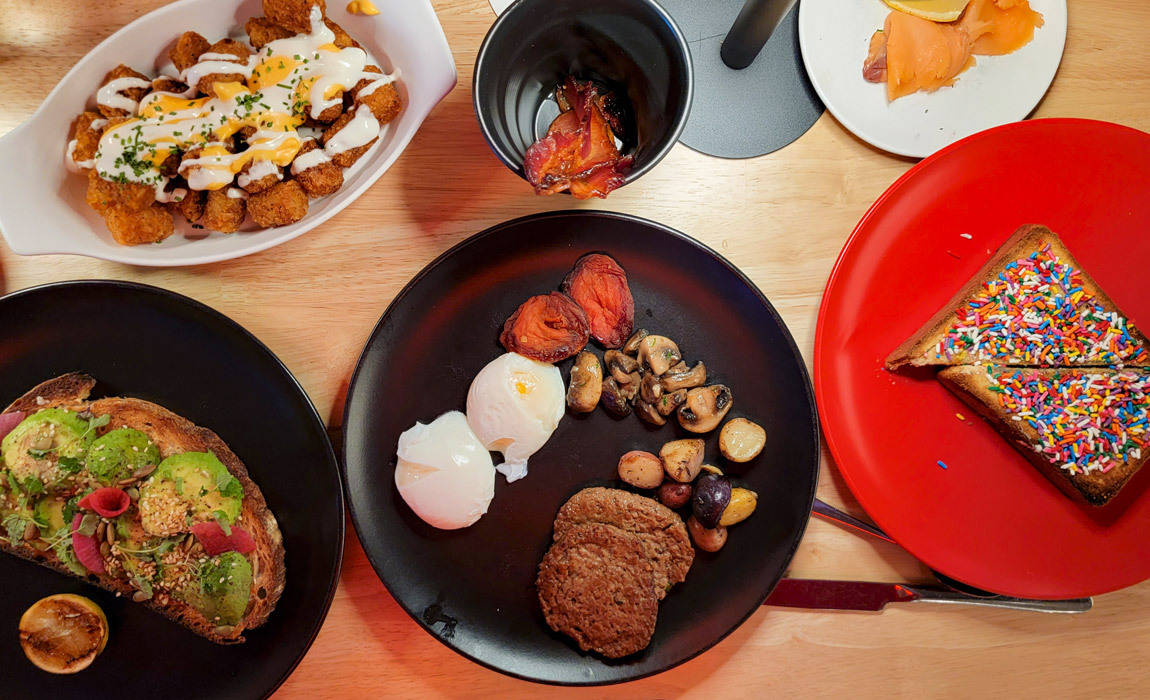
Things We Loved About Virgin Voyages That You Won't Find On Other Cruises
A look at what makes Virgin Voyages different, from inventive dining to a fun, inclusive vibe, for travelers seeking a fresh cruise experience.

7 Days Trip Discover Northern Thailand
A 7 day guided journey through northern Thailand covering Chiangmai, Mae Sariang, Mae Hong Son, Pai, Thaton and Chiangrai, ideal for culture lovers.

Visit paradisiac Islands in La Paz
We are the only local tour company that offers tours to these islands (San Francisquito, El Pardito & San Jose). We cross the Sierra La Giganta by ground transportation and offer an unique experience by showing off the real Baja.
Promoted by FlowAds

Warrior's Steak and Broccoli
A ribeye with broccoli roasted in olive oil, garlic and red pepper flakes. My rule is steam or roast, never boil - a 2019 Foods study found boiling cost broccolini 88 percent of its sulforaphane, steaming only 20. For a guys night, there are solid online sources for premium and exotic cuts.
Power Lifter's Stuffed Peppers
Large red bell peppers hollowed out and filled with ground bison, cauliflower rice, onion and spinach. This one has the nutritional trick built in: vitamin C from the pepper improves absorption of the nonheme iron in the spinach.
Woodsman's Venison and Vegetable Stew
Lean venison slow-cooked with kale, carrots, bell peppers and onion in a bone broth base. A long simmer costs the kale its glucosinolates but leaves the minerals and fiber intact. Right use for a shoulder cut after a weekend in the woods with the guys, not the tomahawk steaks you would grill - and check how long venison keeps before planning around last season's freezer.
Man Gear Pick of the Month
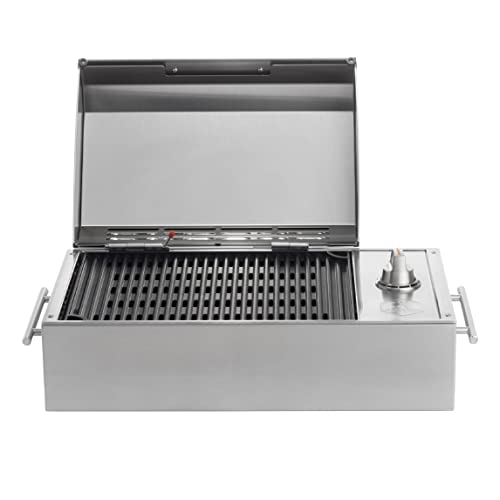
Kenyon City Grill Portable Stainless Steel Electric Grill
Why we picked it: a grill you can actually carry to the campsite, the tailgate or the cabin without borrowing a truck. Stainless, no propane tank to wrestle, and hot enough to cook for four guys rather than reheat for one.
 August's Pick LiberNovo Maxis Electric Big and Tall Ergonomic Office Chair, Graphite 52cm $1,466.00
  July's Pick Powerful Propane Torch Gun, Adjustable Flame Thrower Gun, Kitchen Torch with Detachable Design, Flamethrower Blow Torch for BBQ, Searing Steak, Welding, Camping Charcoal Lighter(Tank Not Included) $41.99
  June's Pick OYASUMI Funny BBQ Man Hot Dog Holders, 4 PCS Reusable Stainless Steel Sausage Stands, Portable Hot Dog Roasters, Barbecue Grill Accessories for Camping & Party Gifts $14.98
 Promoted by FlowAds

Broccoli vs Kale: What the Cruciferous Compounds Do and Don't Do
That broccoli raises testosterone runs through most men's vegetable content, and the logic holds until you check the doses. Broccoli and kale both contain glucobrassicin, which yields indole-3-carbinol (I3C) and its dimer DIM. Those compounds do shift estrogen metabolism; human trials have moved the 2-hydroxy to 16-alpha-hydroxy estrogen ratio. The leap supplement marketing makes is the next step - less estrogen activity therefore more testosterone - which has never been shown in healthy men.
The trials behind those markers ran on capsules, not produce. A 2021 Frontiers in Nutrition review lists human doses running from 108 mg of DIM a day up to 400 mg of I3C twice daily, and estimates that reaching the 1,000 ppm dietary I3C level used in animal chemoprevention work would take 10 to 60 kilograms of Brussels sprouts a day. DIM also acts as an antagonist at the androgen receptor - the opposite direction. Eat broccoli because it is good food, not as a hormone lever.
The vitamin K comparison is wrong too. Per the NIH, a cup of raw kale holds 113 mcg, 94 percent of the 120 mcg Daily Value, while a half cup of boiled chopped broccoli comes in at 110 mcg, 92 percent. Read the portions before the percentages: those are two different states at two different serving sizes, and even so the gap is nothing like the 684 percent versus broccoli's 116 that gets quoted. Broccoli's advantage is glucoraphanin, the sulforaphane precursor, though broccoli-versus-kale comparisons disagree and levels swing by cultivar.
Spinach for Training: Nitrates, Iron, Magnesium and Where Kale Wins
Spinach deserves its training reputation, with numbers attached. Dietary nitrate converts to nitric oxide, and a 2021 meta-analysis in the Journal of the International Society of Sports Nutrition found supplementation improved time to exhaustion by about 25 seconds and power output by 4.6 watts, with no change in VO2max. The gain showed up in recreational athletes rather than elite ones, though the authors flag that split as possibly spurious.
Dose is the other catch. A 2021 Nutrients review sets the effective range at 5 to 16.8 mmol of nitrate (roughly 300 to 1,041 mg), and notes produce nitrate swings widely with soil, cultivar and storage, so no per-cup figure is worth trusting. Its answer is volume over precision: 250 to 500 grams of leafy and root vegetables daily.
On minerals spinach wins outright. A half cup boiled gives you 3 mg of iron (17 percent of the 18 mg Daily Value) and 78 mg of magnesium (19 percent DV); cooked broccoli at the same half cup manages 12 mg of magnesium. The 2.7 mg these lists pin to a cup of spinach is the per-100-gram raw value, and a cup of raw spinach weighs about 30 grams. The asterisk is absorption: the NIH states plainly that spinach has low iron bioavailability because of the inhibitors it carries. Vitamin C helps, and so does fish or shellfish alongside it. Mineral-dense seeds deliver magnesium without that problem.
Raw spinach also beats raw kale on vitamin K per cup, 145 mcg to 113, which reverses the ranking these articles print. Kale takes the lutein and zeaxanthin title instead: a 2017 Nutrients review lists cooked kale near 18.2 mg per 100 g, cooked spinach at 11.3.
Red Bell Peppers: Vitamin C, Carotenoids and Iron Absorption
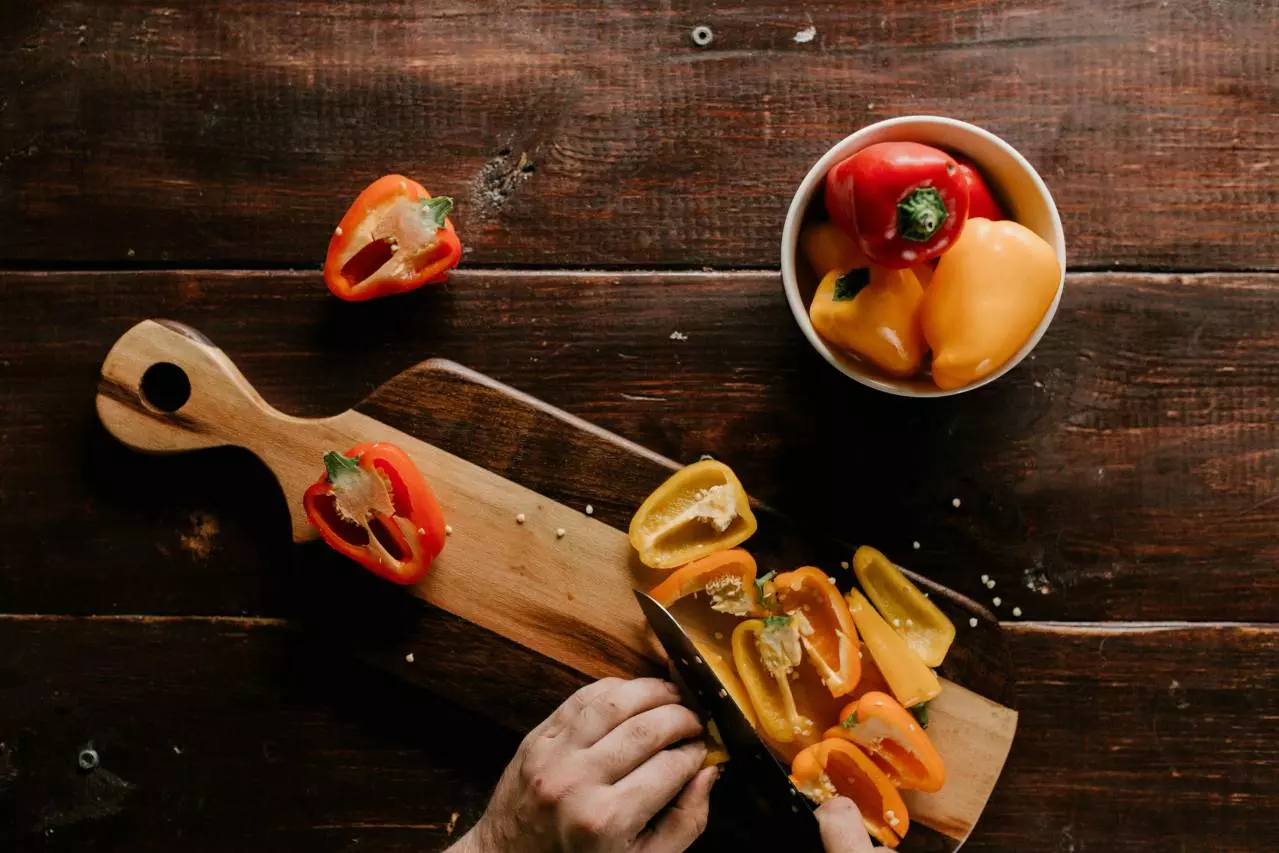
Red bell peppers are the vitamin C item, and the margin is not close. A half cup of raw red sweet pepper holds 95 mg, 106 percent of the 90 mg Daily Value; the same portion of raw green pepper is 60 mg, and cooked spinach is 9. That 90 mg doubles as the RDA for adult men, and smokers need 35 mg more per day on top. Fruit is the other easy source.
Capsanthin and capsorubin are characteristic of Capsicum - a 2019 Antioxidants review has capsanthin accounting for roughly 80 percent of total carotenoids in ripe red fruit - and they appear only as the pepper ripens, so a green bell pepper has none. The evidence behind them is mostly cell and animal work plus one human trial on skin protection - a reason to buy red, not to expect an outcome.
Fat at the same meal improves absorption of those carotenoids and of vitamin K - olive oil, eggs, or the fats in nuts. Between calls, raw pepper strips are a snack; the same peppers cooked in oil next to greens give up more of what is in them.
Vitamin K, Warfarin and Spinach Oxalates: Two Things Worth Knowing
If you take warfarin, the goal is consistent vitamin K intake, not zero. The NIH is direct: sudden changes can increase or decrease the anticoagulant effect, which is how a new kale or spinach habit destabilizes an INR that was fine last month. Pick a level, hold it steady, and tell whoever manages your dosing. Eating better in married life is a good instinct; doing it overnight on a blood thinner earns a surprise blood draw.
Spinach also sits among the highest-oxalate foods there is, and NIDDK names it among the foods to limit if you have formed calcium oxalate stones. That matters more for men: roughly 11 percent will get a kidney stone, compared with 6 percent of women.
The counterintuitive part: cutting calcium is the wrong response. Calcium binds oxalate in the gut before it can be absorbed, which is why the Canadian Urological Association guideline asks for 1,000 to 1,200 mg of calcium daily, split into two doses and taken with meals. Eat spinach with a calcium source rather than cutting calcium out.
Whole Vegetables or Extract Pills: Where the Dose Math Lands
Capsules reach sulforaphane and I3C doses food cannot approach, so those trial results do not transfer to a plate of broccoli. Food covers vitamin K, magnesium, iron and vitamin C comfortably, with the fiber that beans also deliver.
What I'd skip is the greens powder listing twelve vegetables and quantifying none.
How to Rotate These Four Without Overthinking It
Rotation beats optimization. Broccoli steamed or roasted twice a week, cooked spinach for the magnesium and iron, raw red peppers for vitamin C, and kale wherever it survives the heat.
The one thing worth timing is the nitrate: the window is two to three hours before the session, not the post-workout meal, when most guys actually eat their vegetables. A big spinach salad at lunch does more for a 6 p.m. lift than the same spinach at dinner.

Promoted by FlowAds
