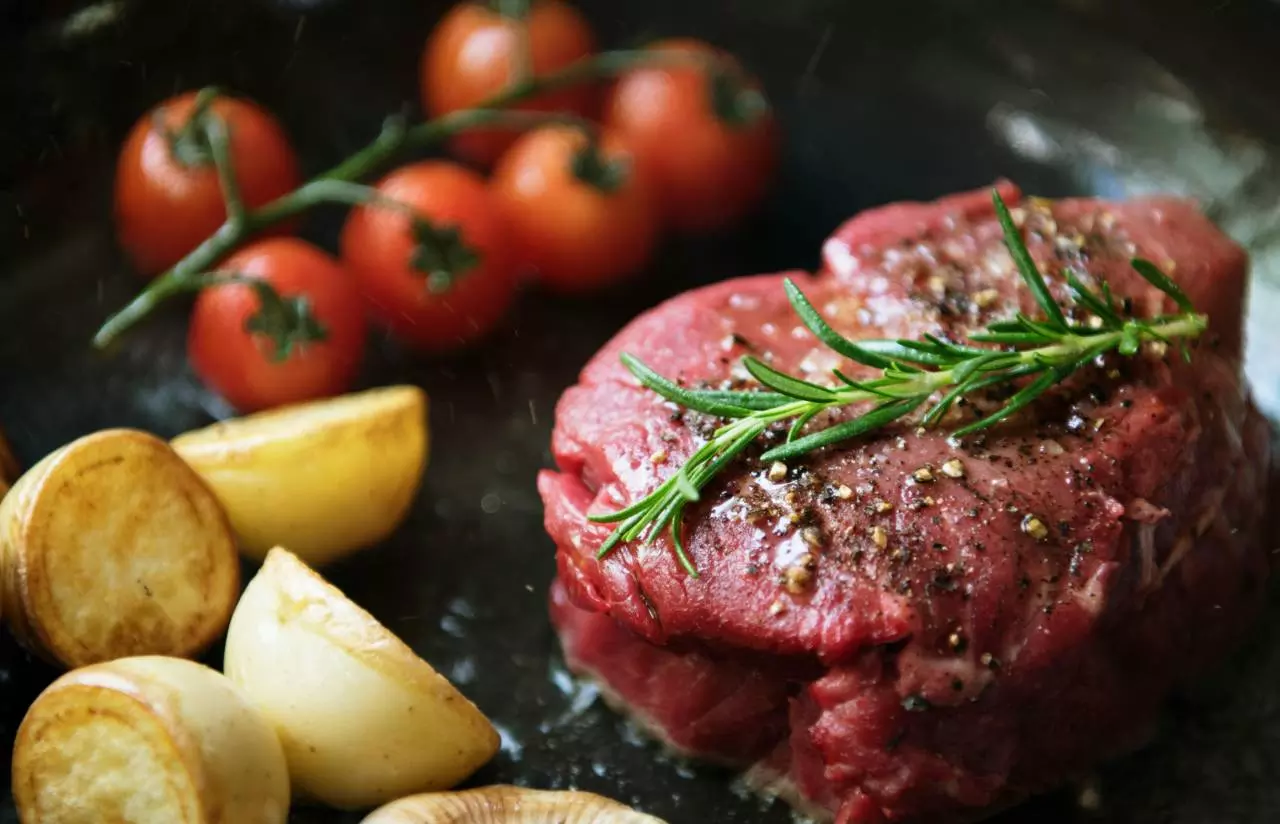
Cooked chicken breast has more leucine per 100 grams than a cooked 80/20 burger patty. That single USDA figure undercuts most of what gets repeated about ground beef being the superior muscle-building protein. Beef, chicken, eggs and venison each do a different job. Here is what the data supports, what it does not, and where the testosterone claims came from in the first place.
If You Could Give A Healthy Eating Tip to Your Younger Self, What You Share?
The marketing around each of these four proteins gets well ahead of the data. Here is where the USDA numbers and the published research land instead.
- Roasted chicken breast beats a ground beef patty on leucine per 100 grams, which is the opposite of the usual gym-floor ranking.
- Beef's edge is minerals: roughly six times the zinc of chicken breast, plus iron in the form the body absorbs best.
- One large egg holds 147 mg of choline against an adequate intake of 550 mg a day, so most guys are nowhere near it.
- Roasted venison delivers about 30 g of protein against 3 g of fat per 100 grams, a ratio no cut of beef comes near.
- Food-to-testosterone claims are the most common misconception among men hunting for a natural way to raise their levels, and the zinc angle only applies if you are already deficient.
Animal protein is only one slice of this. The rest of the argument lives in omega-rich seafood, heart-healthy nuts, plant-based proteins, mineral-dense seeds, crucial vegetables, and performance-enhancing fruits.
Four Meals Built On Beef, Chicken, Eggs And Venison
None of the numbers below matter if they do not turn into dinner. These four are worth putting in rotation, and each one leans on a different protein.
Hunter's Breakfast Skillet
Ground beef with diced sweet potatoes, bell peppers and onion, two eggs cracked on top and finished under the broiler. The cooked beef brings about 26 g of protein per 100 g, each egg adds roughly 6 g, and the yolks keep the choline an egg-white omelet throws away.
Warrior's Roasted Chicken Platter
A whole roasted bird with root vegetables and a pot of rice. Roasted breast meat gives you 31 g of protein against 3.6 g of fat per 100 g, the leanest ratio in the poultry case. Pull the carcass for stock and it becomes homemade chicken and dumplings two nights later.
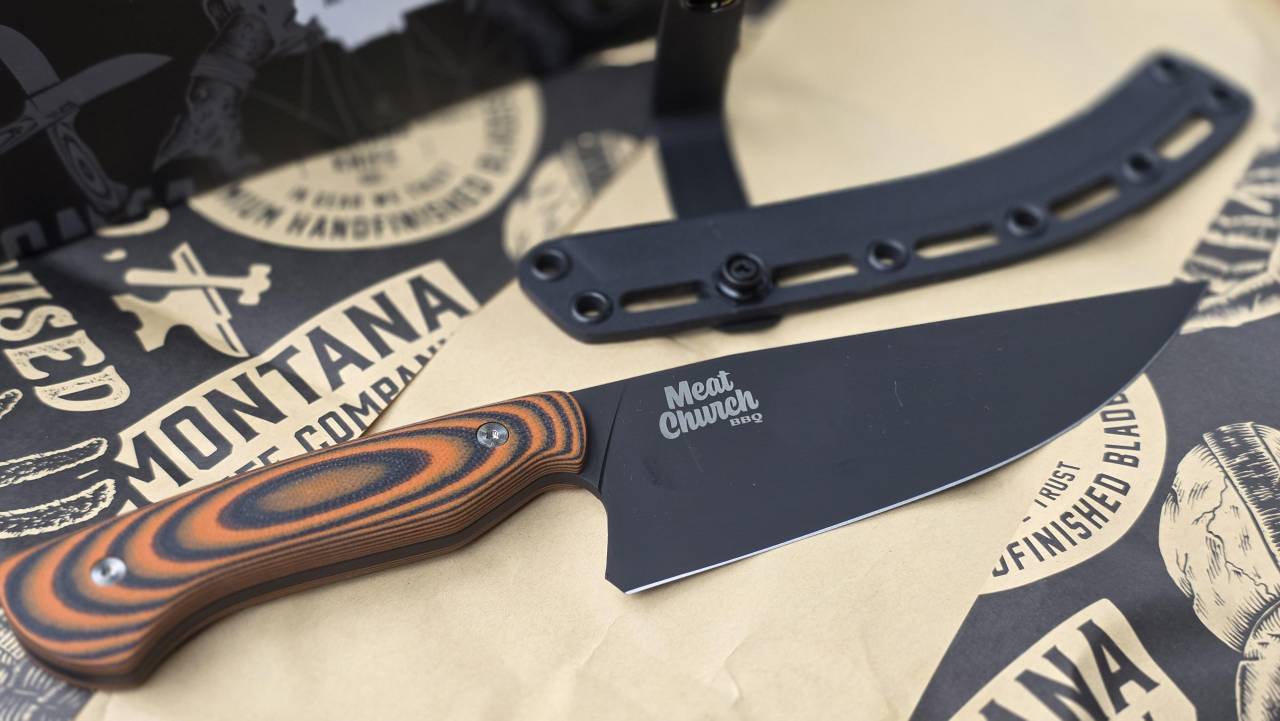
Montana Knife Company's Meat Church Chef Knife Review
Montana Knife Company's Meat Church 6-inch chef knife uses Magnacut steel for BBQ prep and precision cutting. Real-world testing shows why this compact blade outperforms larger knives for trimming bri
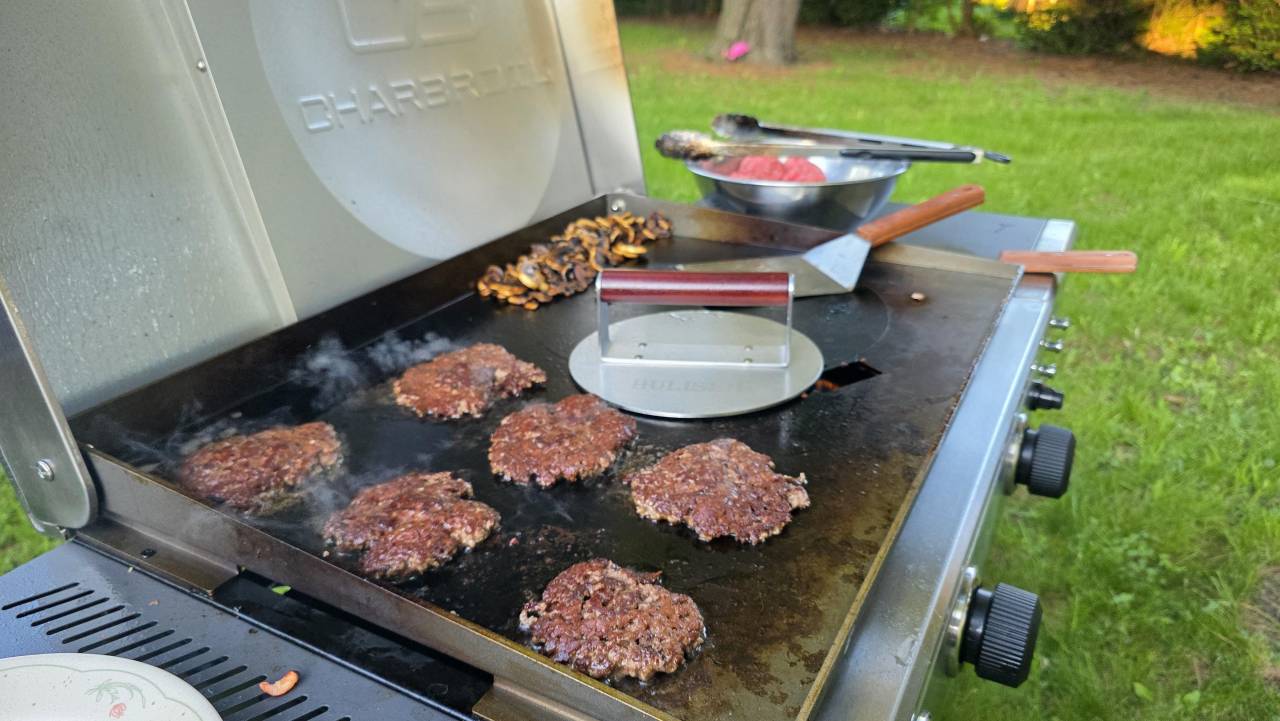
Backyard Grilling Pest Control: Beyond Just Mosquito Prevention
Master backyard grilling pest control with expert tips for keeping rodents, insects and pests away from your outdoor cooking. Includes grill maintenance, natural deterrents & product recommendations.

Scrub Daddy BBQ Daddy Grill Brush Head Refill
Replacement brush head for the BBQ Daddy grill brush. Water activated steam cleaning with flexible stainless steel fibers and no wire bristles.
Promoted by FlowAds

Power Lifter's Steak and Eggs
A grass-finished ribeye with three eggs is a good meal and the morning-after standard for a weekend with the guys. It also attracts more myth than anything else on this list. To know the grade and the finishing before you cook it, I would start with the online steak and exotic meat suppliers.
Woodsman's Venison Stew
Venison shoulder, root vegetables and bone broth, held at a low simmer until the connective tissue gives up. Lean game does not forgive high heat, which I relearned the hard way when I went back to cooking over charcoal. A prime cut I would grill instead as tomahawk steaks with blueberry compote, and if you are working through a whole deer, how long deer meat lasts in the freezer matters more than any recipe.
Beef Vs. Chicken On Leucine, Iron And Zinc
The gym-floor version of this comparison puts beef ahead on everything that matters for building muscle. USDA FoodData Central does not agree.
Man Gear Pick of the Month
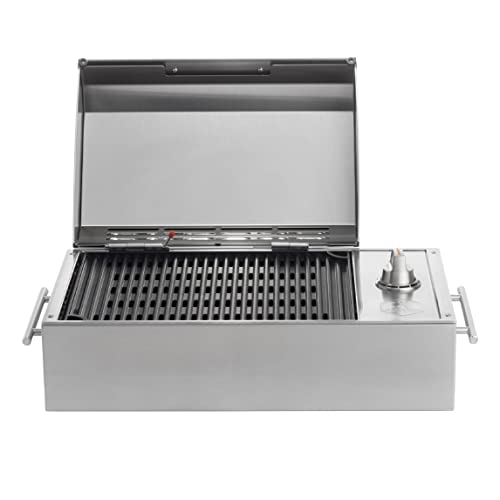
Kenyon City Grill Portable Stainless Steel Electric Grill
Why we picked it: a grill you can actually carry to the campsite, the tailgate or the cabin without borrowing a truck. Stainless, no propane tank to wrestle, and hot enough to cook for four guys rather than reheat for one.
 August's Pick LiberNovo Maxis Electric Big and Tall Ergonomic Office Chair, Graphite 52cm $1,466.00
  July's Pick Powerful Propane Torch Gun, Adjustable Flame Thrower Gun, Kitchen Torch with Detachable Design, Flamethrower Blow Torch for BBQ, Searing Steak, Welding, Camping Charcoal Lighter(Tank Not Included) $41.99
  June's Pick OYASUMI Funny BBQ Man Hot Dog Holders, 4 PCS Reusable Stainless Steel Sausage Stands, Portable Hot Dog Roasters, Barbecue Grill Accessories for Camping & Party Gifts $14.98
 Promoted by FlowAds

- Leucine - Roasted chicken breast has 2.33 g per 100 g, a cooked 80/20 ground beef patty has 2.01 g, and a braised lean chuck roast has 2.47 g. Leucine tracks total protein, so the comparison is really about how much fat came along with it.
- Iron - Beef takes this one. A cooked ground beef patty sits near 2.5 mg per 100 g against roughly 1.0 mg in roasted chicken breast, and beef iron is largely heme iron, which absorbs better and shrugs off the phytates that block plant iron (NIH Office of Dietary Supplements).
- Zinc - Not close. Cooked ground beef delivers 6.25 mg per 100 g and braised lean chuck 10.3 mg, against 1.0 mg for chicken breast, on an RDA of 11 mg a day for men (NIH Office of Dietary Supplements). The 4.3 mg figure floating around for beef is the raw weight.
- Creatine - The claim that beef beats chicken here does not hold up. The reference measurement put uncooked chicken, beef and rabbit all near 30 mmol per kilogram (Harris et al., Research in Veterinary Science, 1997).
The split is minerals rather than muscle protein. My rule is beef when I want iron and zinc, chicken breast when I want protein per calorie, and buying both instead of picking a side.
Eggs, Cholesterol And The Testosterone Question
A large egg is about 50 grams, which puts it near 6 g of protein, 186 mg of cholesterol and 147 mg of choline. Two of those three numbers get misread constantly.
Choline is the one worth your attention. The adequate intake for adult men is 550 mg a day, and eggs are one of the few foods that move that needle (NIH Office of Dietary Supplements). Separating out the yolks throws away nearly all of it.
The cholesterol number scares people who have not read a guideline in thirty years. The American Heart Association's 2019 science advisory concluded that a specific dietary cholesterol target is not workable for clinicians or consumers, and pointed at overall dietary patterns instead (Circulation, 2019). The milligram count on its own tells you very little.
Then there is the testosterone angle, which is where a lot of men looking for a natural fix end up. The popular version runs like this: cholesterol is a precursor in the pathway that produces testosterone, yolks are full of cholesterol, therefore eggs raise testosterone. It is a reasonable-sounding chain, and that is why it spreads.
The evidence behind it is one 12-week randomized trial in 30 resistance-trained young men that compared three whole eggs against six egg whites after training and found a greater rise in serum testosterone in the whole-egg group (Bagheri et al., Journal of Strength and Conditioning Research, 2021). Read that again: whole eggs against egg whites, in men already lifting hard. Not eggs against no eggs.
I would eat the yolks for the choline. I would not eat them expecting a hormone response.
One more egg claim I would retire. The protein digestibility-corrected amino acid score of 1.00 is real but it is not a differentiator, because beef scores 1.00 as well, and beef's untruncated score is higher at 1.14 against the egg's 1.05 (protein quality table, Sports Medicine, 2019). The scale caps at 1.00, so plenty of foods tie at the top.
What Venison Beats Beef At, And What It Does Not
Roasted venison gives you 30.2 g of protein and 3.19 g of fat per 100 g. A cooked 80/20 ground beef patty gives you 25.8 g and 17.8 g (USDA FoodData Central). The 34 g protein figure quoted for venison all over the internet is too high, though the conclusion survives the correction.
- Iron and leucine - Roasted venison holds 4.47 mg of iron and 2.57 g of leucine per 100 g, ahead of every beef cut here on both.
- Zinc - Where venison loses. Roasted deer sits at 2.75 mg per 100 g against 6.25 mg for cooked ground beef. Cooked ground venison does better at 5.2 mg.
- Added hormones - Weaker than it sounds. The FDA does not permit hormones in raising poultry or pigs at all, so "no added hormones" chicken describes every chicken sold in the country. Beef and lamb are the only meats where implants are allowed (Michigan State University Extension).
- Fatty acids - This argument belongs to grass-finished beef rather than wild game generally. Grass-finished beef averages an omega-6 to omega-3 ratio of 1.53 against 7.65 for grain-finished, roughly double the conjugated linoleic acid, and about three times the vitamin E (Daley et al., Nutrition Journal, 2010).
The leap from CLA and zinc to testosterone is that same misconception wearing a different label, and it is everywhere in men's nutrition marketing. There is a grain of truth holding it up: zinc deficiency does lower testosterone.
What gets dropped is what happens when you are not deficient. An eight-week controlled trial of zinc and magnesium supplementation in 42 resistance-trained men found no significant difference in anabolic hormone status (Wilborn et al., Journal of the International Society of Sports Nutrition, 2004). Topping up a mineral you already have enough of does nothing.
Where Protein Powder Falls Short Of Whole Food
Powder has one narrow job: hitting a protein number when cooking is not on the table, which covers most weekday lunches eaten between calls. What it will not do is bring the rest of the food along.
A 100 g portion of cooked ground beef brings 2.73 micrograms of B12, 6.25 mg of zinc and about 2.5 mg of iron, largely heme, alongside its 26 g of protein. A large egg adds roughly 15 micrograms of selenium on top of its choline. Whey isolate brings protein and very little else, and it does not even win on digestibility, scoring 0.99 against 1.00 for whole egg and beef.
The Cut Matters More Than The Animal
If one line here changes what lands in your cart, make it this one: the cut moves the numbers further than the species does. Braised lean beef chuck holds 10.3 mg of zinc and 31.1 g of protein per 100 g. A cooked 80/20 patty off the same animal holds 6.25 mg and 25.8 g. That gap is wider than beef against chicken on almost everything above.
So buy chuck when you want zinc, breast when you want protein per calorie, yolks when you want choline, and venison when you want protein without the fat. Grass-finished beef is worth the premium for the fatty acids and the vitamin E, both measured and both real. It is not worth a premium for a hormone claim nobody has demonstrated, and if my wife catches me paying extra for that one, she will be right.

Promoted by FlowAds
