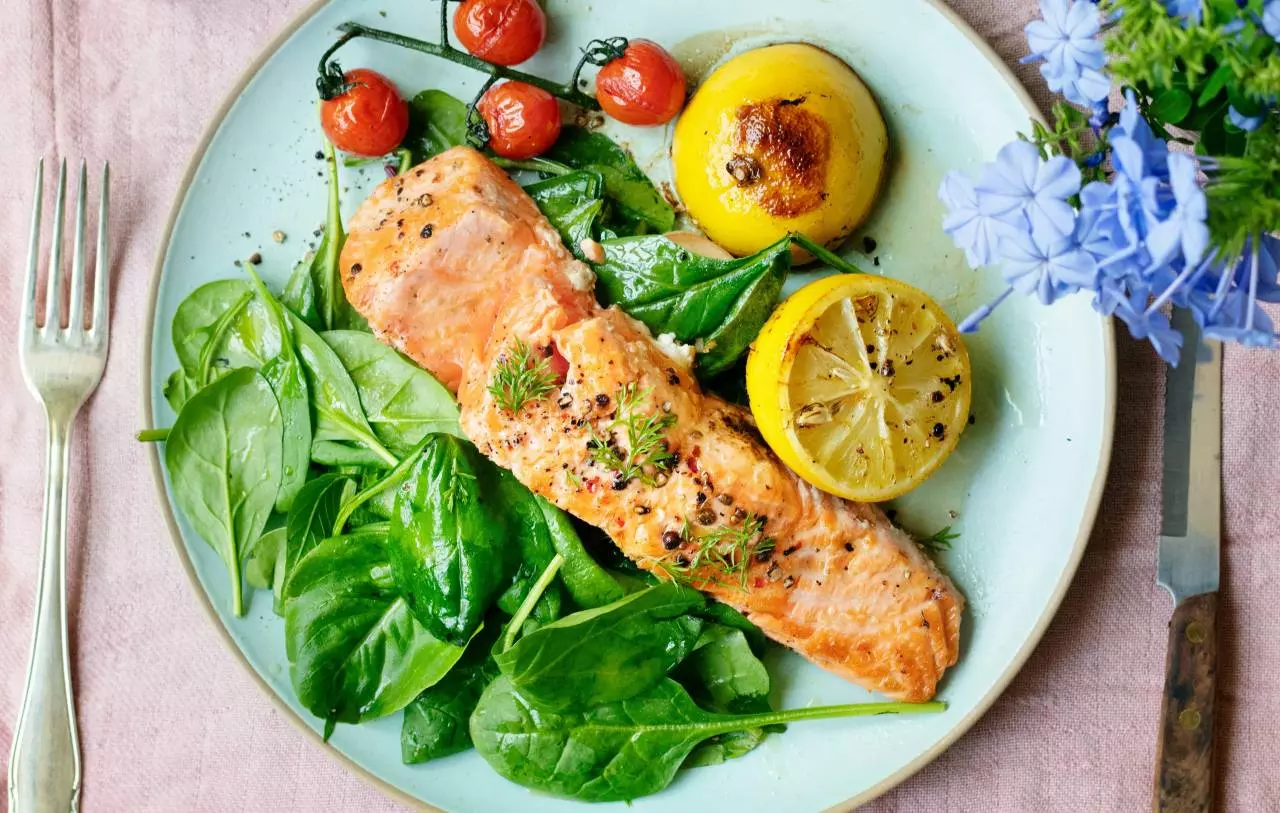
Salmon, oysters, sardines and shellfish get sold to men as a hormone hack, which is the least interesting thing about them. What they bring is a set of nutrients hard to reach any other way: EPA and DHA in amounts no plant food matches, vitamin D from something other than a capsule, calcium from a fish you eat bones and all, and zinc that makes every other food look like a rounding error.
Here is the straight comparison - what the federal nutrient tables say, where the testosterone story breaks, and the safety point about raw oysters that almost nobody prints next to the recipe.
If You Could Give A Healthy Eating Tip to Your Younger Self, What You Share?
All four get recommended for the same vague reason, and all four do completely different jobs. Here is what the NIH nutrient tables say once you line them up:
- Salmon carries roughly three times the vitamin D of canned sardines, not the other way around.
- Sardines canned with the bones in beat a glass of milk on calcium. A boneless fillet gives you almost none.
- One 3-ounce serving of raw oysters gives you 32 mg of zinc against a daily target of 11 mg for men.
- Zinc deficiency lowers testosterone, but adding zinc on top of an already-normal intake has not raised it in trained men.
- Raw oysters carry a bacterial risk that hot sauce does nothing about, and it lands hardest on men with liver disease, diabetes or iron overload.
These four are not interchangeable. Salmon and sardines are fat-soluble nutrition, oysters are a mineral delivery system, crab and shrimp are lean protein. Slot them next to the beef, poultry and eggs already in your rotation.
Four Seafood Meals Worth Cooking This Week
None of these need a technique you do not already have.

Building Your BBQ Arsenal: 18 Grilling Must Haves for Guys Who Take the Cookout Seriously
Outdoor cooking gear for guys building a real BBQ arsenal: 18 picks across gas, charcoal, kamado, Santa Maria, gravity, and griddle grills plus tools, carts, and a cookbook.
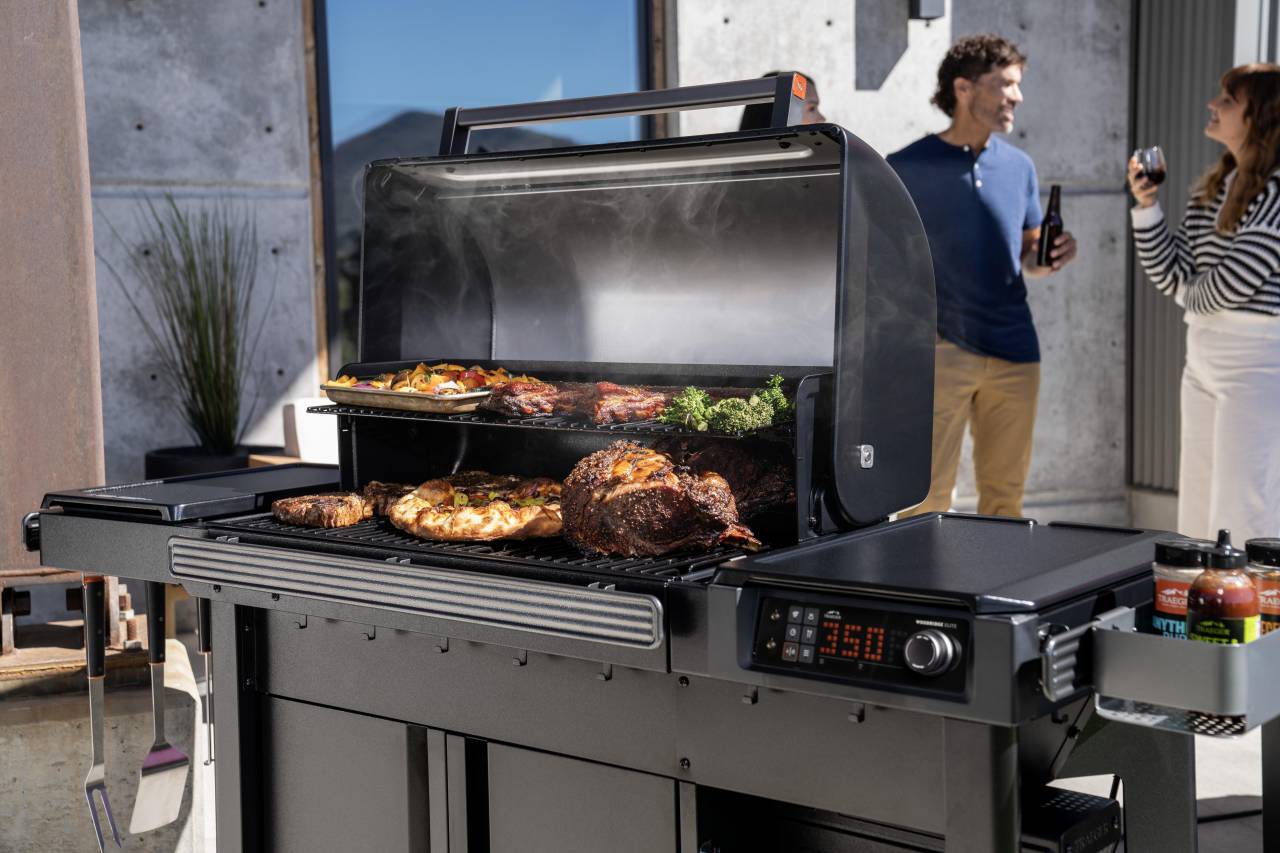
20 Must-Have Items That Guys Need For Summer Backyard Entertaining
Men's approach to backyard entertaining: 20 professional-grade items that create premium outdoor command centers. Master precision cooking and smart entertainment systems. Perfect for men 35-55 seeking social leadership.

Scrub Daddy BBQ Daddy Grill Brush Head Refill
Replacement brush head for the BBQ Daddy grill brush. Water activated steam cleaning with flexible stainless steel fibers and no wire bristles.
Promoted by FlowAds

Warrior's Salmon Bowl
Wild salmon over roasted sweet potato and steamed broccoli, with avocado and a lemon-garlic olive oil dressing. The dressing is not garnish - vitamins A and D are fat-soluble, so the oil is part of the delivery. Pick from these olive oil and balsamic pairings, and swap in whichever vegetable you keep buying.
Hunter's Oyster Shooter
Raw oysters with hot sauce, lemon and cracked pepper. A serious load of zinc, copper and B12 in fifteen seconds, and the reason the raw bar gets ordered twice on a weekend with the guys.
They can also hold Vibrio vulnificus, the single most fatal foodborne pathogen in the United States and the cause of 95 percent of seafood-related deaths (Froelich and Noble, 2016). Primary septicemia from it kills about half the people who get it, and 80 to 90 percent of those septicemia cases occur in someone with an underlying condition: cirrhosis, hepatitis, hemochromatosis, diabetes, kidney disease or cancer (StatPearls, NIH Bookshelf).
Man Gear Pick of the Month
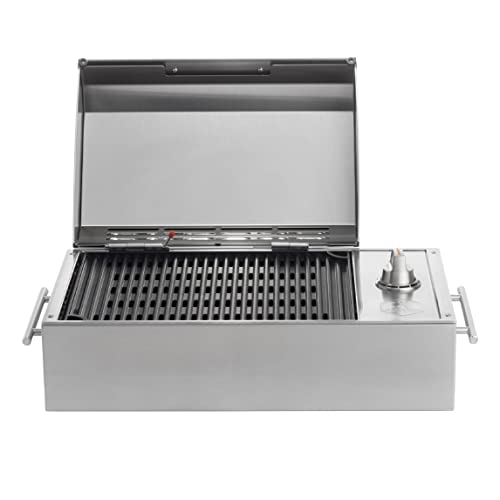
Kenyon City Grill Portable Stainless Steel Electric Grill
Why we picked it: a grill you can actually carry to the campsite, the tailgate or the cabin without borrowing a truck. Stainless, no propane tank to wrestle, and hot enough to cook for four guys rather than reheat for one.
 August's Pick LiberNovo Maxis Electric Big and Tall Ergonomic Office Chair, Graphite 52cm $1,466.00
  July's Pick Powerful Propane Torch Gun, Adjustable Flame Thrower Gun, Kitchen Torch with Detachable Design, Flamethrower Blow Torch for BBQ, Searing Steak, Welding, Camping Charcoal Lighter(Tank Not Included) $41.99
  June's Pick OYASUMI Funny BBQ Man Hot Dog Holders, 4 PCS Reusable Stainless Steel Sausage Stands, Portable Hot Dog Roasters, Barbecue Grill Accessories for Camping & Party Gifts $14.98
 Promoted by FlowAds

Iron overload sits on that list for a mechanical reason: the bacterium's siderophores scavenge iron from transferrin, and that spare iron raises its virulence. The condiment tray is no help, because oysters concentrate these bacteria out of the surrounding water by up to 100 times. The problem is inside the animal. If you carry any of those conditions, order them cooked.
Post-harvest processed oysters are the middle option: treated with high pressure, irradiation or flash freezing, still served raw. Ask the bar whether theirs are PHP.
Power Lifter's Seafood Stew
Shrimp, mussels, white fish and crab in a tomato and bone broth base. Same slot as the bowl of chicken soup that has more going for it than folklore: hot, salty, high in protein.
Woodsman's Sardine Toast
Mash sardines with avocado, lemon and cracked pepper onto thick-cut sourdough, topped with sliced hard-boiled egg. Fastest decent lunch on a day of back-to-back calls, and no stove.
Salmon Vs. Sardines On Omega-3s, Vitamin D And Calcium
Both are oily fish, and that is where the similarity ends. These figures come from the NIH Office of Dietary Supplements, per 3-ounce serving.
- Omega-3s: Farmed Atlantic salmon gives 1.24 g of DHA and 0.59 g of EPA, wild Atlantic salmon 1.22 g and 0.35 g, canned sardines 0.74 g and 0.45 g (ODS omega-3 fact sheet). Salmon leads, which reverses the usual talking point, but by a third to a half, not the blowout the fish counter implies.
- Vitamin D: Cooked sockeye brings 14.2 mcg, 570 IU, against 1.2 mcg for two canned Atlantic sardines (ODS vitamin D fact sheet). Scale the sardines to the same 3 ounces and salmon still holds roughly three times as much.
- Calcium: Sardines canned with bones deliver 325 mg per serving, more than the 299 mg in a cup of milk (ODS calcium fact sheet). Canned salmon with its bones in gives 181 mg. Take the bones out of either fish and almost nothing is left.
Ground flax and walnuts give you ALA, not EPA and DHA, and the body converts a small fraction. The case for flaxseed stands on its own, and walnuts and other nuts bring fiber no fish carries.
Oysters Vs. Crab And Shrimp On Zinc, Copper And Protein
Oysters and crab get lumped together as shellfish and judged as if they do the same job. These NIH Office of Dietary Supplements figures are per 3-ounce serving.
- Zinc: Raw farmed eastern oysters bring 32 mg. Cooked Pacific oysters come in at 28.2 mg, cooked blue crab at 3.2 mg, cooked shrimp at 1.4 mg.
- The ceiling nobody mentions: The tolerable upper intake for adults is 40 mg a day. One 3-ounce serving puts you at 32 mg, so stacking oysters and a zinc supplement is a copper-deficiency risk, not a bonus.
- Copper and B12: Cooked wild eastern oysters carry 4,850 mcg of copper per serving, over five times a day's worth, plus 14.9 mcg of B12. That is the argument for eating them once you take zinc out.
- Protein: Crab and shrimp are what you build a meal around. A dozen oysters on the half shell is an appetizer, not dinner.
Pumpkin seeds are the everyday zinc source when oysters are not on the table, and the rest of the seeds worth keeping in the pantry cover magnesium too.
Where The Oyster And Testosterone Belief Comes From
This is the most common thing men believe about oysters, and it is half right.
Zinc is required for testosterone synthesis, and when men run short, levels fall. In a 1996 study, young men on a zinc-restricted diet for 20 weeks watched serum testosterone drop from 39.9 nmol/L to 10.6, and marginally deficient older men roughly doubled theirs, 8.3 to 16.0, over six months of supplementation.
The limit is documented just as clearly. Correcting a deficiency is not the same as adding zinc to a man who already has enough. When 42 resistance-trained men took zinc-magnesium aspartate for eight weeks, researchers found no significant difference in anabolic or catabolic hormone status against placebo, and no edge in strength or body composition.
So eat oysters for the copper, the B12 and the fact that they taste like the ocean. My rule with any food sold on a hormone claim is to check what it still does once the hormone story is stripped out. Oysters hold up on the minerals alone.
Salmon Vs. White Fish On Omega-3s, Astaxanthin And Vitamin D
Cod and haddock are fine food and poor substitutes for salmon, and the gap is not about protein.
- Omega-3s: Cooked Pacific cod carries 0.10 g of DHA and 0.04 g of EPA per 3-ounce serving against wild salmon's 1.22 g and 0.35 g. Better than a tenfold gap, and that ratio is what matters for joint and post-training inflammation.
- Vitamin D: With cod the vitamin D sits in the liver, not the fillet. A tablespoon of cod liver oil holds 34 mcg, 1,360 IU, more than double what a serving of sockeye gives you.
- Astaxanthin: The carotenoid that turns wild salmon red crosses the blood-brain barrier and protects both hydrophilic and lipophilic compartments, unlike most antioxidants (Frontiers in Aging Neuroscience, 2026). The human trials run 4 to 12 weeks on small samples, so the mechanism is established and the payoff is not.
Berries and other high-pigment fruits do antioxidant work salmon cannot, so the two are not competing.
Whole Seafood Vs. Fish Oil Capsules
Fish oil is a narrow product: isolated EPA and DHA, without the calcium, B12 or selenium that come attached to the fish. Where capsules make sense is dose: clearing a gram of EPA and DHA daily without eating fish daily is hard.
Whole beans and lentils beat a fiber supplement for the same reason, and the beans-versus-meat protein question lands on rotation, not replacement.
Mercury, Sourcing And How Often To Eat It
Seafood advice tells men to eat fish two or three times a week and says nothing about mercury, which is the question most guys are actually asking. The joint EPA and FDA advice puts salmon, sardines, oysters, shrimp and crab on its Best Choices list at two to three servings a week.
Worth knowing what that chart is: it is written for pregnant women and young children, the group most sensitive to methylmercury, which makes it a conservative floor for the rest of us. Mercury concentrates in large, long-lived predators, and nothing here is one.
Sourcing is the better question, and it depends on which sardine. NOAA Fisheries lists Pacific sardine as overfished on the 2025 stock assessment, with the directed US fishery closed since 2015 and the population still under the 150,000 metric ton trigger that would reopen it. That page is silent on where tinned sardines are sourced, so read the label for species and origin.
Two servings a week of oily fish, oysters where somebody shucks them properly and cooked if you carry any of the risk factors above, shrimp or crab whenever protein is the point. Married life makes that easier, since somebody else eats the other half of the tin.

Promoted by FlowAds
