


Fishing Trips, Lodges, and Destinations: A Man's Guide to Getting on the Water
Fishing is one of the few activities that works equally well as a solo escape, a guys trip tradition, or a way to pass something meaningful down to your kids. Whether you're planning a fly-in fishing adventure to chase trophy pike, a weekend bass trip closer to home, or your first father-son fishing trip, ManTripping covers the destinations, lodges, and practical knowledge that turn fishing from a hobby into a lifestyle.
What Do You Call Your "Guys Trips"?
No answer selected. Please try again.
Please select either existing option or enter your own, however not both.
Please select minimum {0} answer(s).
Please select maximum {0} answer(s).
/polls/travel-and-trip-ideas/what-do-you-prefer-to-call-your-guys-trips.html?task=poll.vote&format=json
2
radio
1
23.49% votes
44.09% votes
9.99% votes
9.31% votes
13.12% votes
[{"id":5,"title":"Guys Weekends","votes":308,"type":"x","order":1,"pct":23.489999999999998436805981327779591083526611328125,"resources":[]},{"id":6,"title":"Guys Trips","votes":578,"type":"x","order":2,"pct":44.090000000000003410605131648480892181396484375,"resources":[]},{"id":7,"title":"Guys Getaways","votes":131,"type":"x","order":3,"pct":9.9900000000000002131628207280300557613372802734375,"resources":[]},{"id":8,"title":"Mancations","votes":122,"type":"x","order":4,"pct":9.3100000000000004973799150320701301097869873046875,"resources":[]},{"id":9,"title":"Brocations","votes":172,"type":"x","order":5,"pct":13.1199999999999992184029906638897955417633056640625,"resources":[]}] ["#ff5b00","#4ac0f2","#b80028","#eef66c","#60bb22","#b96a9a","#62c2cc"] ["rgba(255,91,0,0.7)","rgba(74,192,242,0.7)","rgba(184,0,40,0.7)","rgba(238,246,108,0.7)","rgba(96,187,34,0.7)","rgba(185,106,154,0.7)","rgba(98,194,204,0.7)"] 350
Total Votes: 1315
Votes
Fishing participation just hit an all-time high, but the data reveals something more important: how you got into fishing probably determines whether your kids will too.
- 57.9 million Americans went fishing in 2024 - an all-time record representing 19% of the population (RBFF 2025 Special Report).
- 85% of today's anglers started fishing before age 12, but participation drops sharply after age 18 - there's a narrow window to create lifelong anglers.
- Female youth quit fishing at 11% higher rates than male youth, suggesting the "how" of introducing kids to fishing matters as much as the "when."
- Freshwater fishing boats are the only segment holding steady in a declining boat market - purpose-built fishing gear outlasts lifestyle purchases.
- Your kids have a window. The question isn't whether fishing matters - it's whether you'll be the one who introduces them to it.
The numbers make the case: fishing isn't dying - it's at record participation. But the pipeline depends on dads, uncles, and grandfathers who take the time to put a rod in a kid's hands. ManTripping approaches fishing the way we approach everything else: practical information that helps you actually get on the water, not just dream about it.
Your Kids Have A Six-Year Window To Become Lifelong Anglers
Here's the stat that should change how you think about fishing: 85% of today's anglers started before age 12, according to the RBFF's 2025 Special Report on Fishing. That's not a suggestion - it's the data.
But here's the second part the same report reveals: participation drops sharply after age 18. The kids who fish as teenagers tend to be the ones who started young. The ones who never got introduced during that childhood window? They're statistically unlikely to pick it up later.
This creates a six-year window - roughly ages 6 to 12 - where introducing your kids to fishing has the highest chance of creating lifelong anglers. Miss that window, and you're fighting the odds. Teaching kids to fish isn't just a nice idea for someday. It's time-sensitive.
Your dad or grandfather probably didn't overthink it. They just took you fishing. The RBFF data says that simple act was one of the most important things they did.
Where To Fish: Matching Water To What You're Chasing
Different water means different fish, different gear, and different experiences. Here's how the major categories break down and what each offers.
Freshwater Lakes and Rivers
The heart of American recreational fishing. Bass, walleye, pike, panfish, trout - the variety is endless and the access is often free or cheap. Public boat ramps, shore fishing spots, and wade-able rivers make this the most accessible entry point. States like Minnesota, Wisconsin, Michigan, and the Ozarks region offer some of the best freshwater fishing in the country. Florida freshwater fishing deserves its own mention - the largemouth bass fishery there is world-class.
Fly Fishing
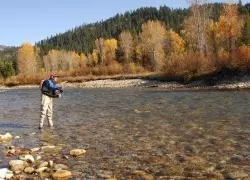
A different game entirely. Fly fishing demands more skill but delivers a more immersive experience - you're reading water, matching hatches, and presenting flies in ways that feel more like hunting than fishing. The best fly fishing lodges in the US and Canada offer guided experiences that can take you from beginner to competent in a week. Montana fishing lodges are legendary for good reason, but don't sleep on fly fishing in North Carolina or the lesser-known rivers of the Rockies.
Saltwater and Offshore
When you want to feel genuinely outmatched by what's on the other end of the line, saltwater delivers. Inshore fishing in places like Charlotte Harbor and the Florida Gulf Islands offers accessible action, while offshore trips put you on pelagic species that can spool a reel in seconds. A deep sea fishing charter is the easiest entry point - you show up, they provide everything, and you come home with stories.
International Adventures
For bucket-list fishing, the destinations get more remote. Patagonia fly fishing puts you on rivers most anglers only see in magazines. Argentina fishing expeditions on the Paraná River chase golden dorado - a species that fights like nothing in North American waters. These trips require planning and budget, but they deliver experiences you'll talk about for decades.
How To Plan A Fishing Trip With Your Buddies
A fishing guys trip works differently than a Vegas weekend or a golf outing. The best ones combine genuine fishing with enough downtime to catch up without distractions, and the destination should match your group's experience level and expectations.
All-Inclusive Fishing Resorts
The easiest option, especially for groups with mixed experience. Places like Marina Fiesta Resort in Los Cabos combine fishing charter access with resort amenities - you fish in the morning, recover by the pool, and nobody has to cook or clean. Los Cabos fishing puts you on marlin, dorado, and yellowfin without the logistics headaches.
Fly-In Fishing Lodges
For groups that want remote water and trophy fish, fly-in fishing trips to Canada are hard to beat. Manitoba fly-in lodges put you on lakes that see minimal pressure, chasing pike, walleye, and Arctic grayling that haven't seen many lures. The remoteness is part of the experience - no cell service, no distractions, just fishing.
Regional Lodge Trips
Don't overlook what's within driving distance. Wisconsin mancation trips, Smoky Mountains weekend getaways, and Midwest lake destinations can deliver serious fishing without the flights. Sometimes the best fishing spots in the United States are a few hours from home.
Fishing Gear Essentials: What You Actually Need Versus What Gets Marketed
The fishing industry wants to sell you everything, but the reality is simpler than the catalogs suggest.
For most freshwater fishing, a medium-action spinning rod, a handful of proven lures, and some terminal tackle gets it done. Fishing gear essentials matter more than fishing gear excess.
That said, gear does matter for specific applications. Fly fishing requires specialized rods, reels, and lines that simply don't work for other types of fishing. Saltwater gear needs corrosion resistance. Ice fishing trips demand entirely different setups - short rods, tip-ups, and the cold-weather clothing to survive sitting over a hole in the ice.
The smart play for beginners: rent or borrow gear for your first few trips in any new style of fishing. Figure out whether you like it before investing hundreds in equipment.
How To Be A More Responsible Fisherman When You Travel
The best anglers think beyond catching fish. Understanding how to be a responsible fisherman means practicing proper catch and release techniques when you're not keeping fish, respecting size and bag limits, and leaving access points cleaner than you found them.
Fishing license requirements exist for a reason - those fees fund the stocking programs, habitat restoration, and access improvements that make fishing possible. The Pittman-Robertson and Dingell-Johnson Acts mean anglers and hunters fund conservation at levels that dwarf other outdoor user groups. Every fishing license you buy is an investment in the resource.
Why 57.9 Million Americans Went Fishing Last Year And Why It Matters For Your Family
The RBFF's 2025 Special Report confirmed what felt true: 57.9 million Americans went fishing in 2024, an all-time record representing 19% of the national population. Fishing isn't dying - it's growing.
But here's what the participation data doesn't capture: fishing creates a specific kind of memory. The quiet before a bite. The chaos when something big takes line. The stories that get slightly more dramatic with each retelling. These become family currency - shared references that connect generations.
Your kids might not remember the specifics of most vacations. They'll remember the fishing trips. They'll remember who taught them to cast, who netted their first keeper, who told them stories while waiting for something to happen.
The question isn't whether fishing matters - it's whether you'll be the one who passes it on.
For guys serious about fishing, owning your own boat changes everything. It transforms fishing from something you plan into something you just do.
Sources
Recreational Boating & Fishing Foundation (RBFF)
- 2025 Special Report on Fishing: 57.9 million Americans (ages 6+) fished in 2024 - all-time record; 19% national participation rate; 85% of participants started before age 12; participation drops sharply after age 18; female youth quit at 11% higher rate than male youth.
National Marine Manufacturers Association (NMMA)
- June 2025 Industry Data Summary: Freshwater fishing boats are the only segment posting growth in a declining market; other recreational boat categories down 10-20%.
Thinking About Buying An ATV This Fall? Here's What To Ask The Sales Guy
Top Fly Fishing Lodges In the United States and Canada
When One Rental House Turns Into a Property Management Job, Here's How To Cope
When One Rental House Turns Into a Property Management Job
Why Men Fly To Thailand For Procedures They Could Get At Home
The Signs Of Vein Problems Men Keep Writing Off As Getting Older
UGREEN DXP4800 GT Review: Dual 10GbE, U.2 Bays, And How It Compares To The Plus And Pro
UGREEN NASync DXP4800 GT Review: Dual 10GbE, U.2 Bays, And How It Compares To The Plus And Pro
UGREEN NASync DXP4800 GT Review: Dual 10GbE, U.2 Bays, And How It Compares To The Plus And Pro
UGREEN NASync DXP4800 GT Review: Dual 10GbE, U.2 Bays, And How It Compares To The Plus And Pro
UGREEN NASync DXP4800 GT Review: Dual 10GbE, U.2 Bays, And How It Compares To The Plus And Pro
UGREEN NASync DXP4800 GT Review: Dual 10GbE, U.2 Bays, And How It Compares To The Plus And Pro
UGREEN NASync DXP4800 GT Review: Dual 10GbE, U.2 Bays, And How It Compares To The Plus And Pro
UGREEN NASync DXP4800 GT Review: Dual 10GbE, U.2 Bays, And How It Compares To The Plus And Pro
UGREEN NASync DXP4800 GT Review: Dual 10GbE, U.2 Bays, And How It Compares To The Plus And Pro
Ugly Stik Sent Me Their 50th Anniversary Rod and it Reminded Me Why Every Guy Needs a Truck Rod
How to Plan a Destin Guys Trip: Golf, Deep-Sea Fishing, and A Beach-House
I Went Walleye Fishing for the First Time on Lake Erie - Here's What I Learned
Best Fishing Spots In The United States
Top Trout Fishing Spots in North America for a Serious Fishing Mancation